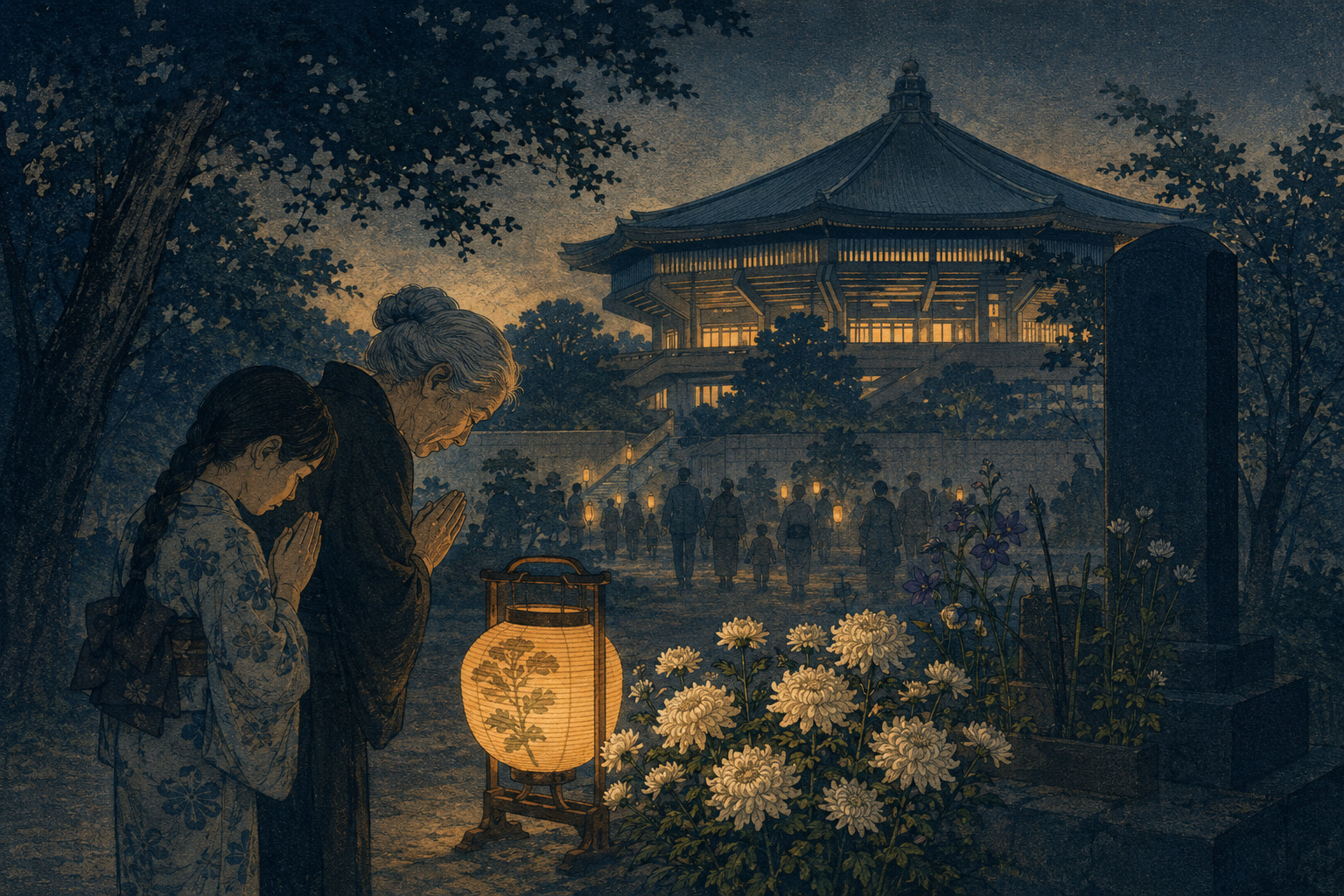
Silence at Noon, Lanterns at Dusk
The middle day of Obon, when families welcome their ancestors, coincides with the 81st-anniversary memorial ceremony for Japan’s war dead at the Nippon Budokan. In Kumamoto, people gather at damaged temples and graves while volunteers trade holiday time for dust and debris. Rising travel costs, congested roads, full trains and dangerous heat reveal modern Obon as a vast social system built to carry memory and movement together.
Four Stories to Read First
Remembrance, calendars, prayer and service
Four From the August 14 Edition
The wider Kumamoto earthquake and recovery story
Today’s News: 19 Stories
15 new stories + 4 from August 14
The Silence at Noon: Obon and Japan’s 81st Year of War Remembrance
Private remembrance and the national Budokan ceremony meet on August 15. The imperial broadcast, bereaved families and unrecovered remains raise questions of mourning and responsibility.
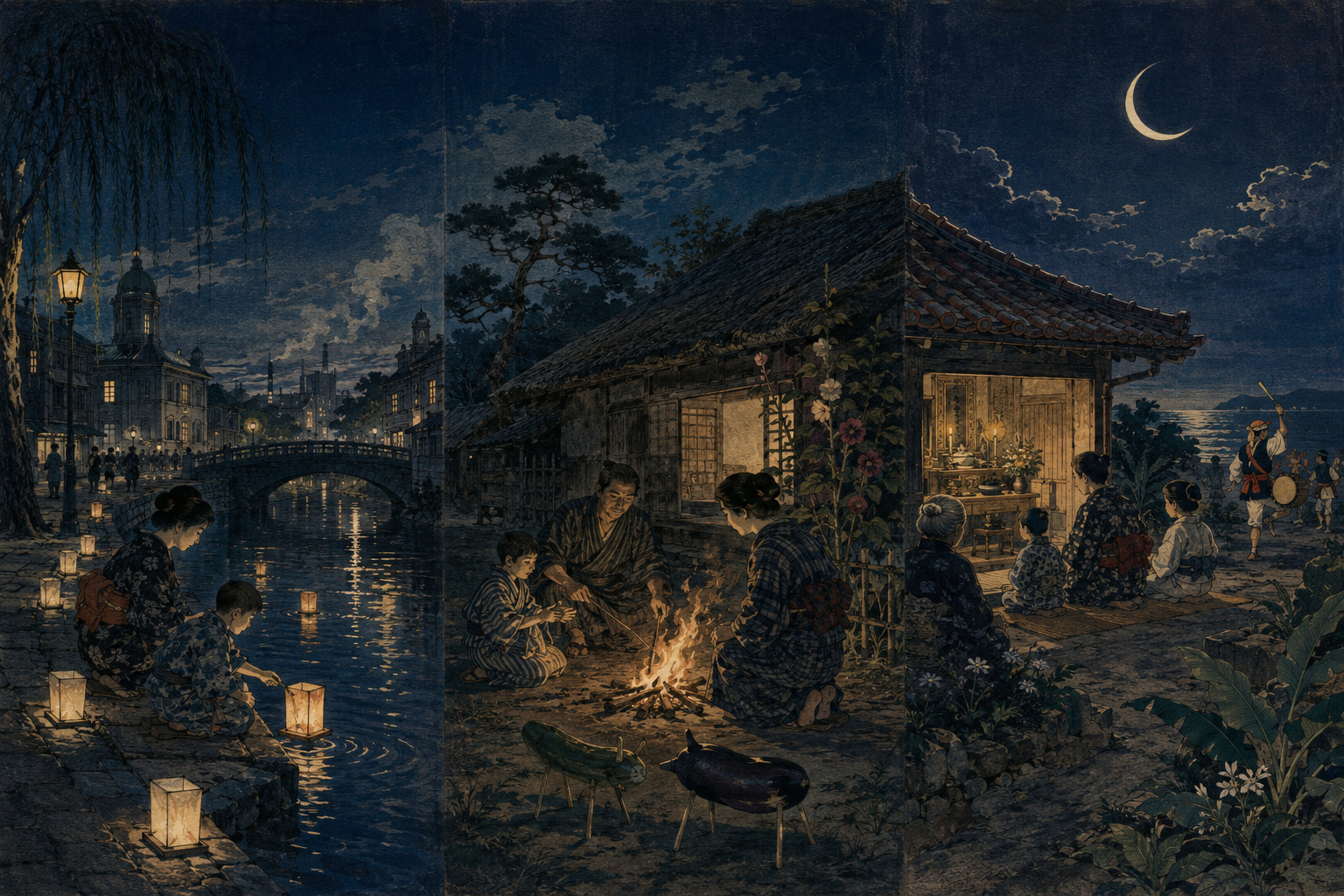
Three Obons, One Country: How Japan Learned to Remember on Different Calendars
July Bon, month-late August Bon and lunar Obon grew from ancient rites, the abrupt 1873 calendar reform, agriculture, migration and regional identity.
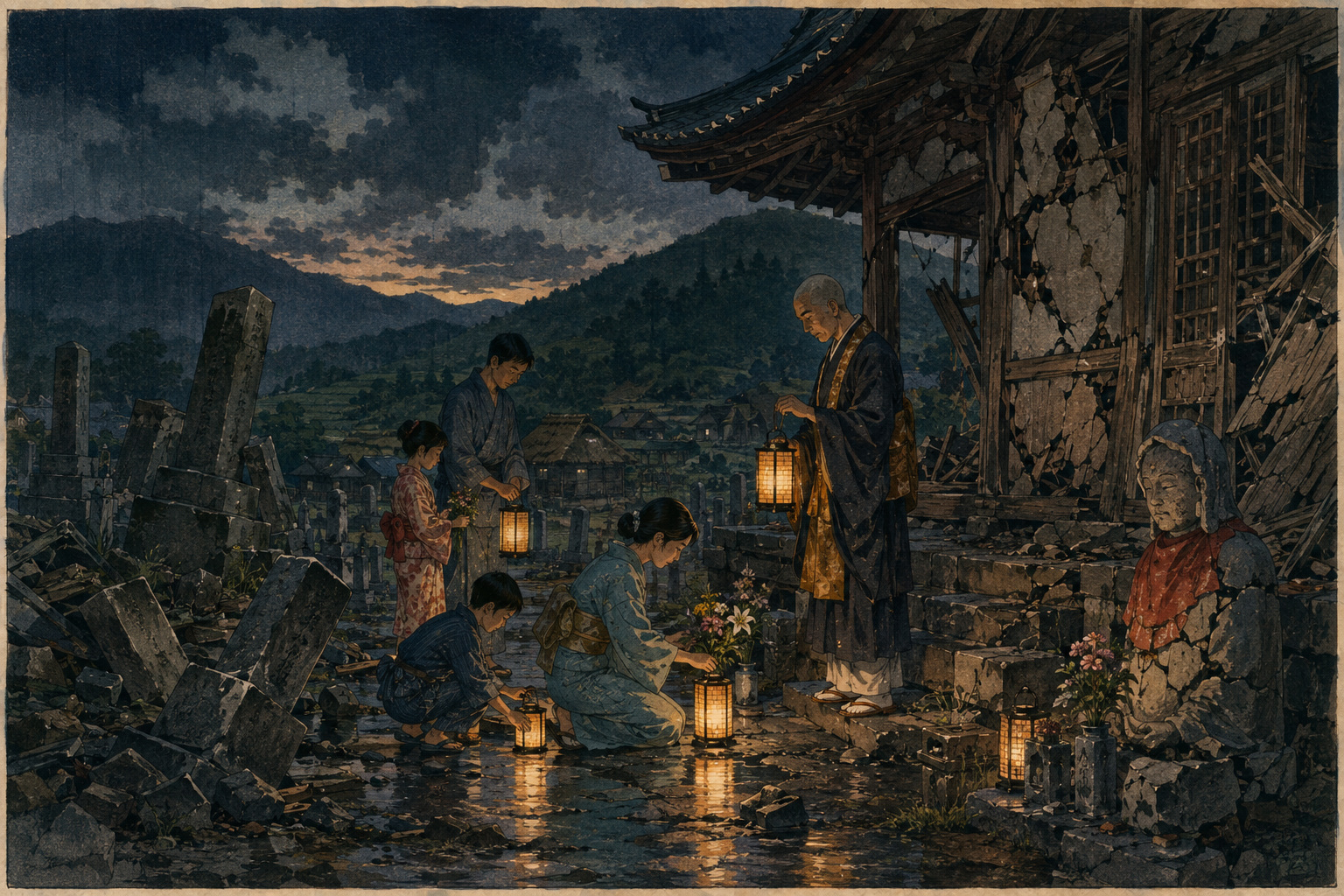
When the Temple Is Unsafe but Obon Arrives: Kumamoto’s Broken Places of Memory
Halls, sacred objects and gravestones remain damaged in Yatsushiro and Uki. Priests and families must preserve remembrance while its physical places are unsafe.
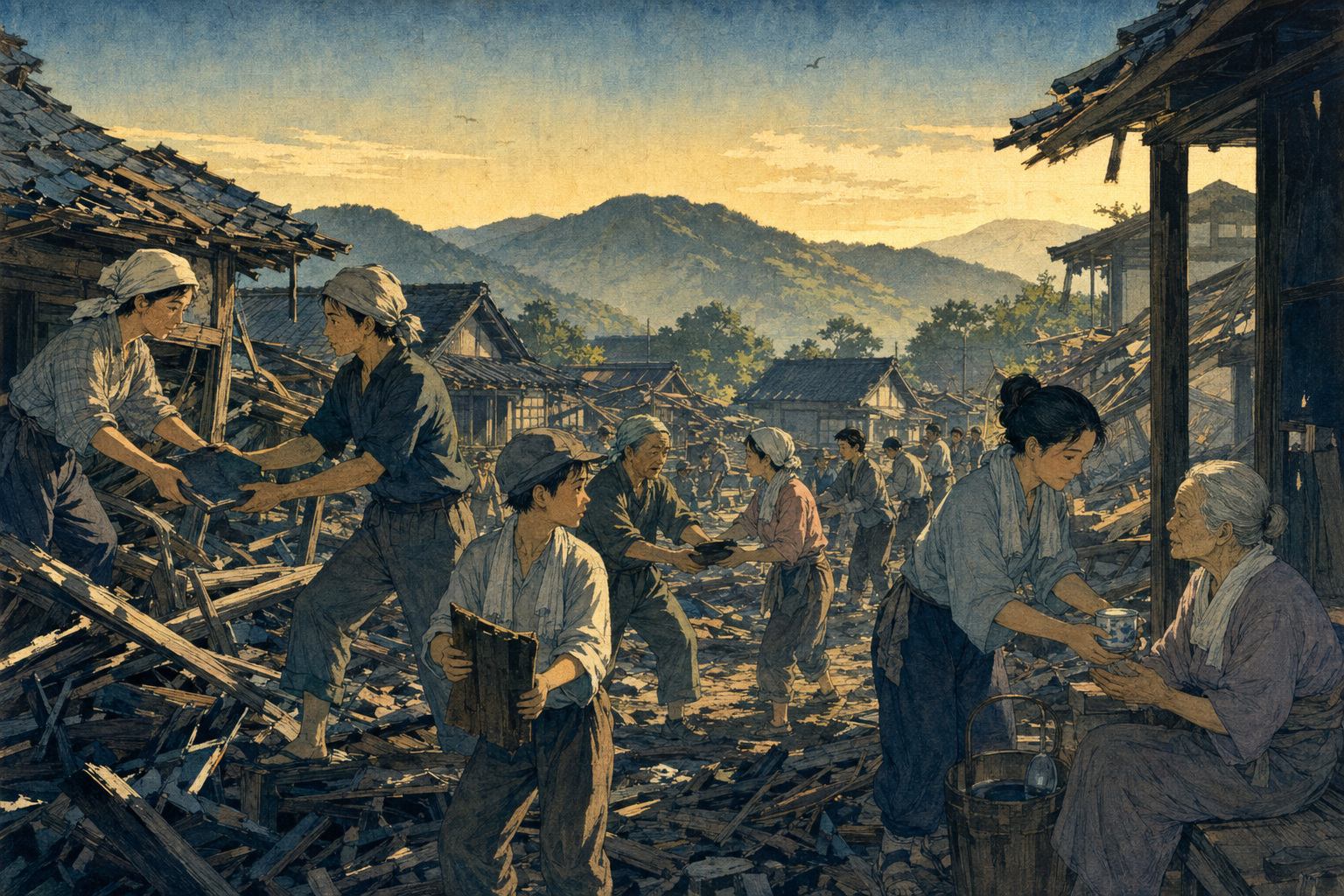
Obon in Work Gloves: The Volunteers Clearing Kumamoto’s Broken Homes
They traded holidays and homecoming for dust masks, safety shoes and debris. The story also follows the hidden coordination that turns goodwill into useful work.
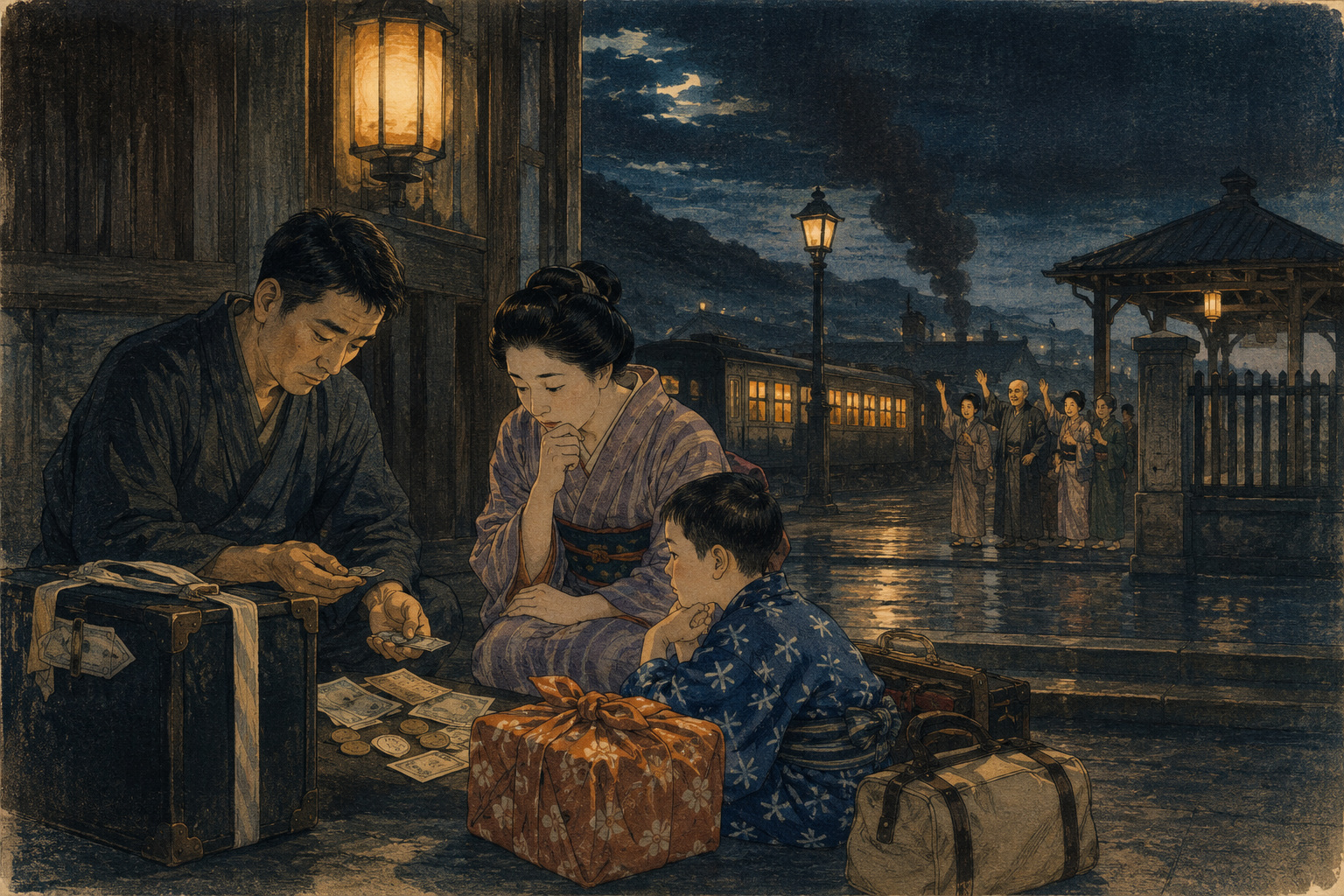
The Price of Going Home: Obon’s Household Budget Test
A survey found 47.1% had no homecoming planned, while half of intended returnees felt costs had risen. Fares and inflation are weakening the family migration.
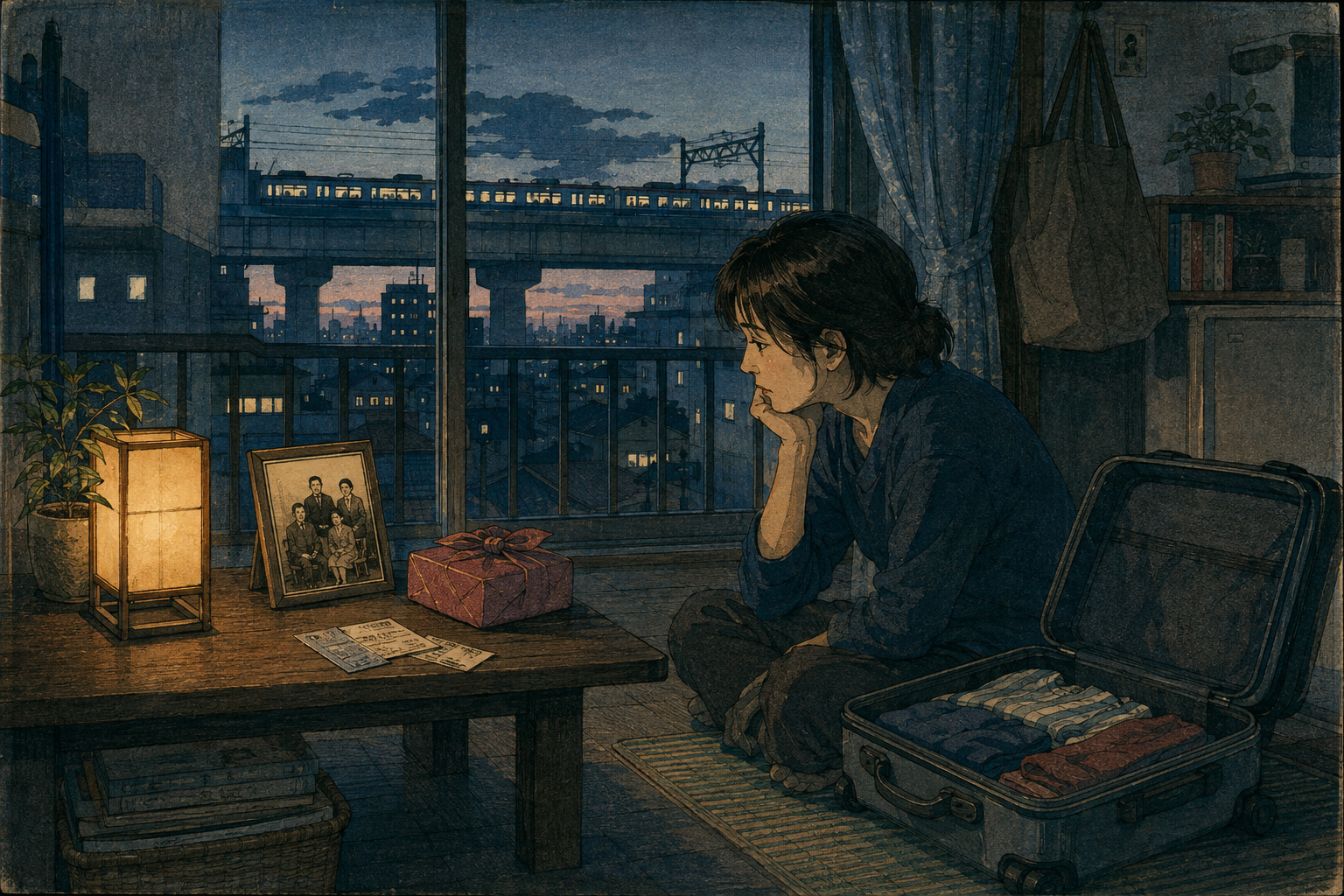
The Holiday That Comes Home to One: Living Alone and the Remaking of Obon
Only 25.8% of surveyed people aged 20–49 who lived alone planned a family-home visit. Single-person households are remaking duty, rest and remembrance.
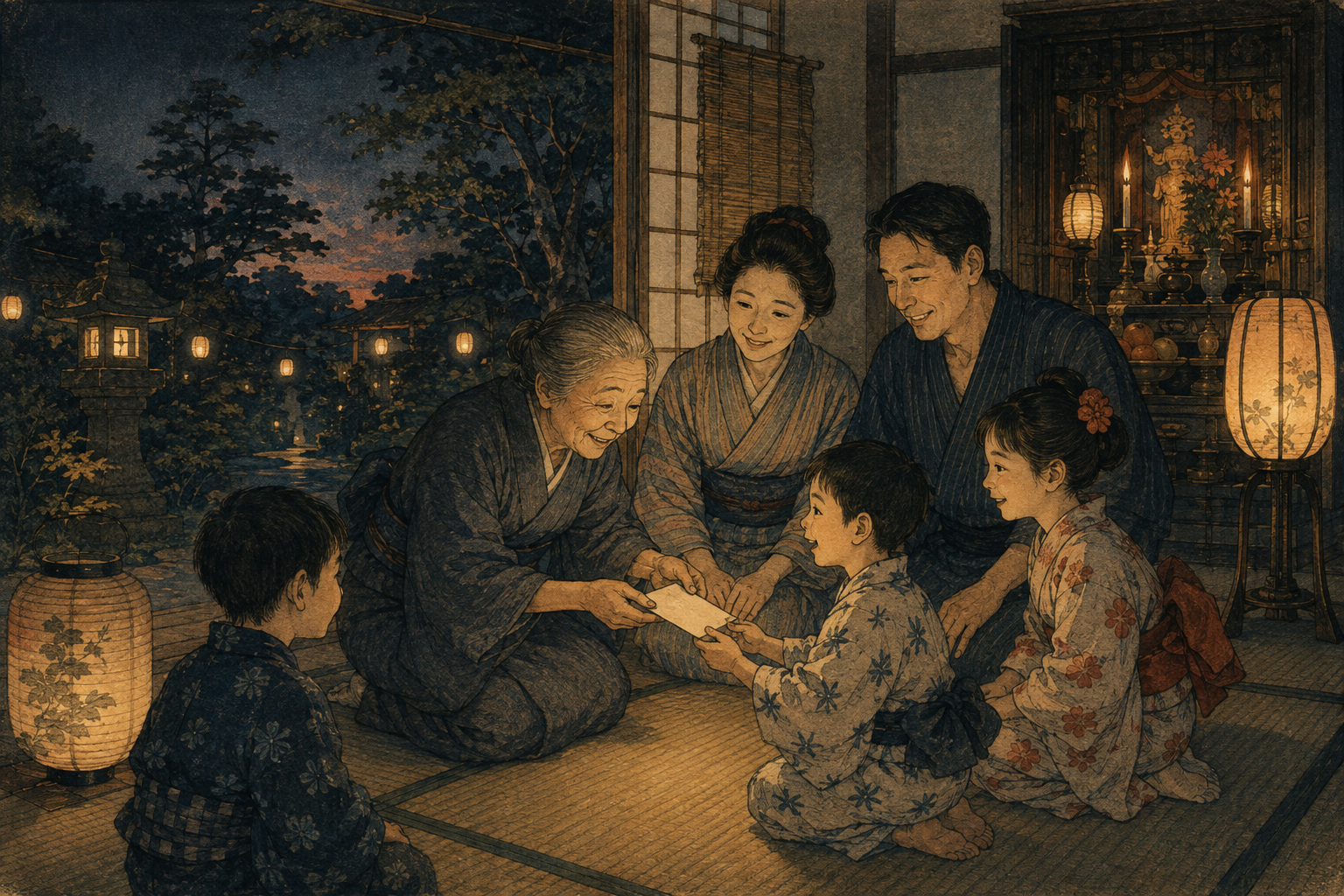
The Little Envelope That Wanted to Become a Tradition: Obondama and Japan’s Summer Gift Economy
A named summer pocket-money custom grew through an envelope maker, Japan Post and family reunion. The modal surveyed gift was ¥1,000–¥4,999—not a ¥10,000 average.
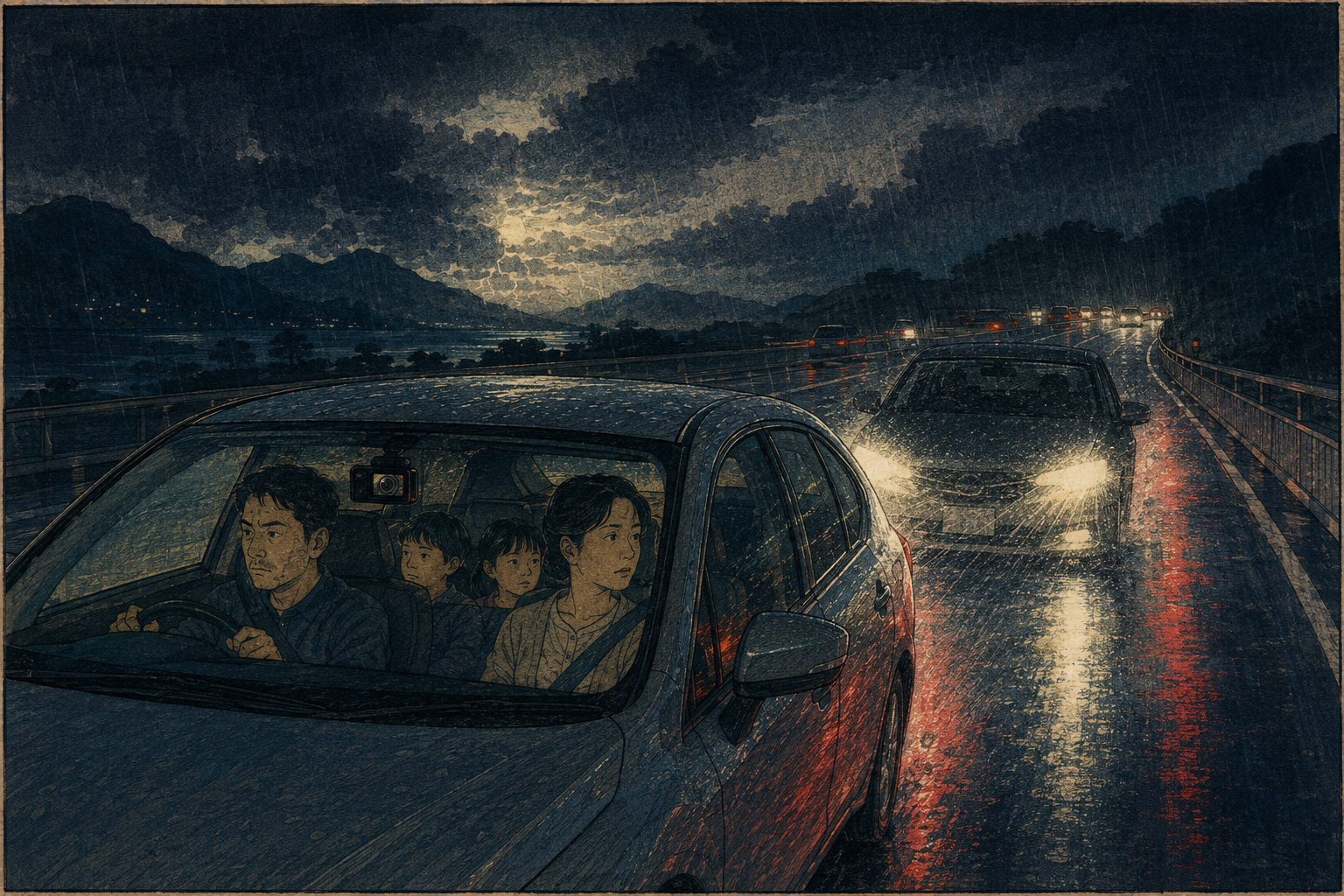
The Road Home Is Watching: Obon Driving After Japan’s Tailgating Reckoning
A survey found 36.3% of frequent drivers reported aggressive-driving victimization within five years. Law, dashcams, wrong-way vehicles, rain and fatigue shape the risk.
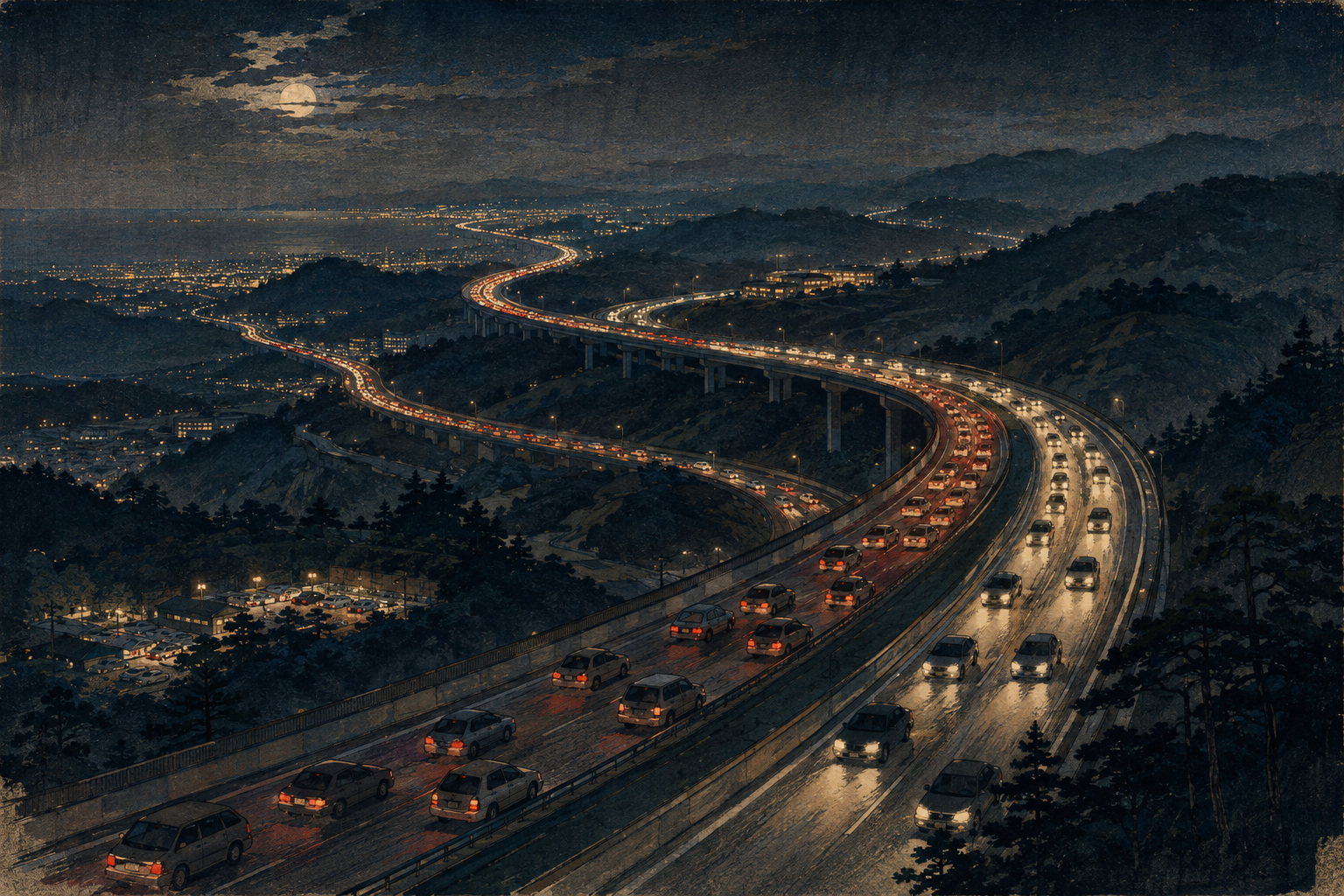
The Queue That Travels Backward: Inside Japan’s Two-Peak Obon Migration
Japan forecast 436 queues of at least 10 km and two outbound peaks. Sags, braking waves and lane changes turn homecoming into traffic physics.
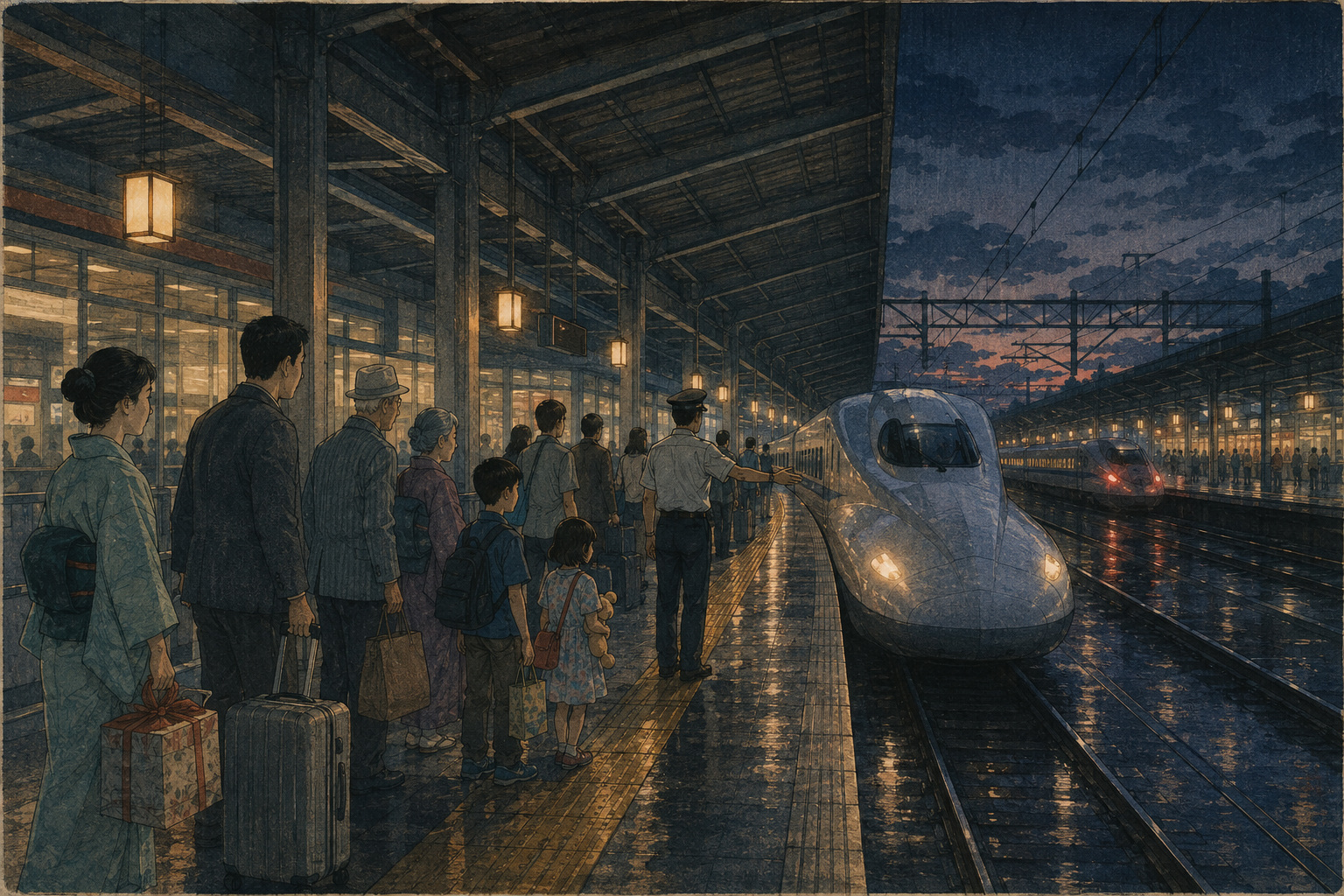
Two Days to Return: Inside Japan’s 2026 Shinkansen Obon Rush
The return rush divided across August 15 and 16. Reservations, extra trains and Nozomi’s all-reserved policy show how railways made homecoming measurable.
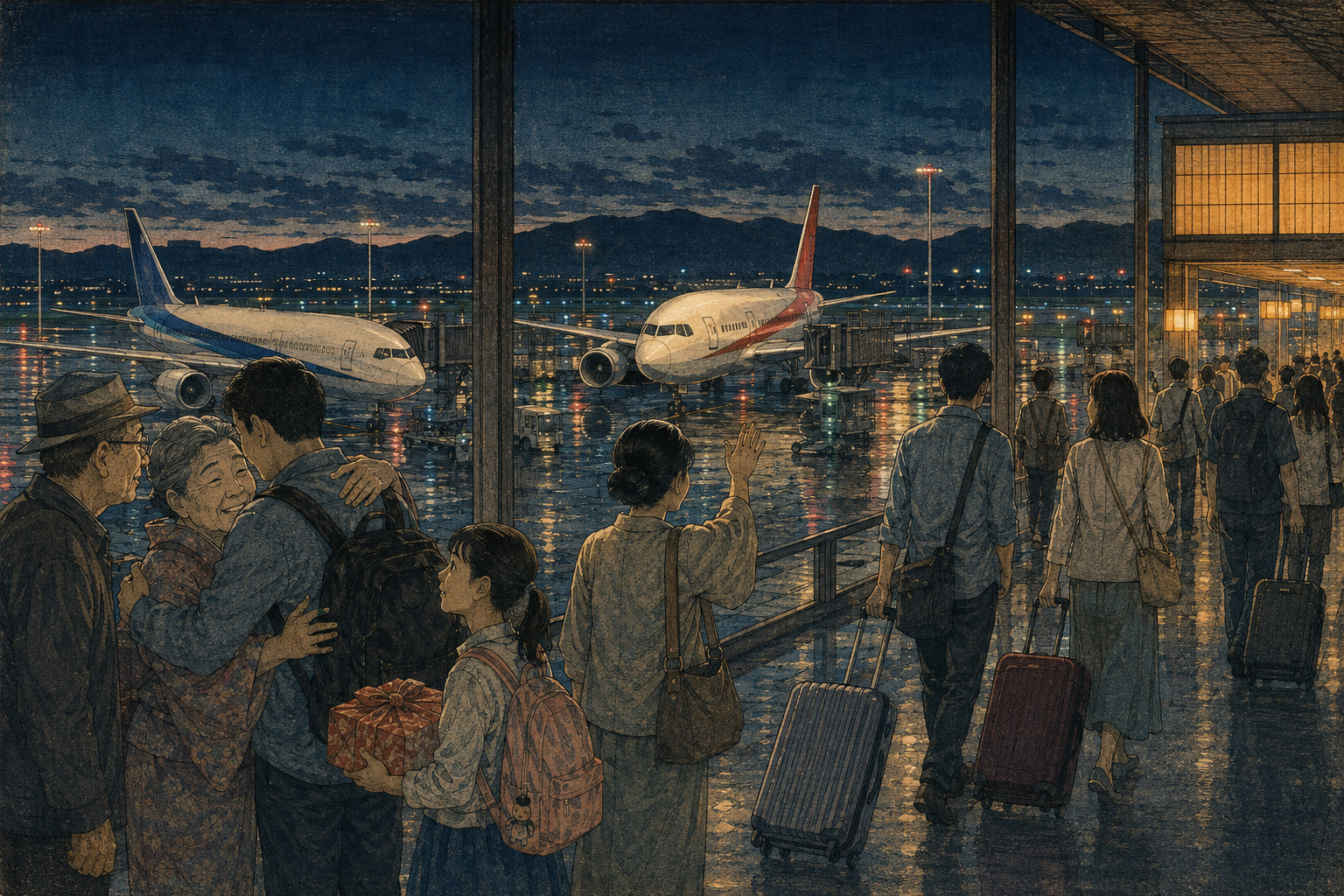
Three Journeys on One Departure Board: Japan’s 2026 Obon Air Migration
Homecoming, domestic tourism and international travel share the same airport corridors. Reservations reveal the pull of Hokkaido, Okinawa and the postwar air network.
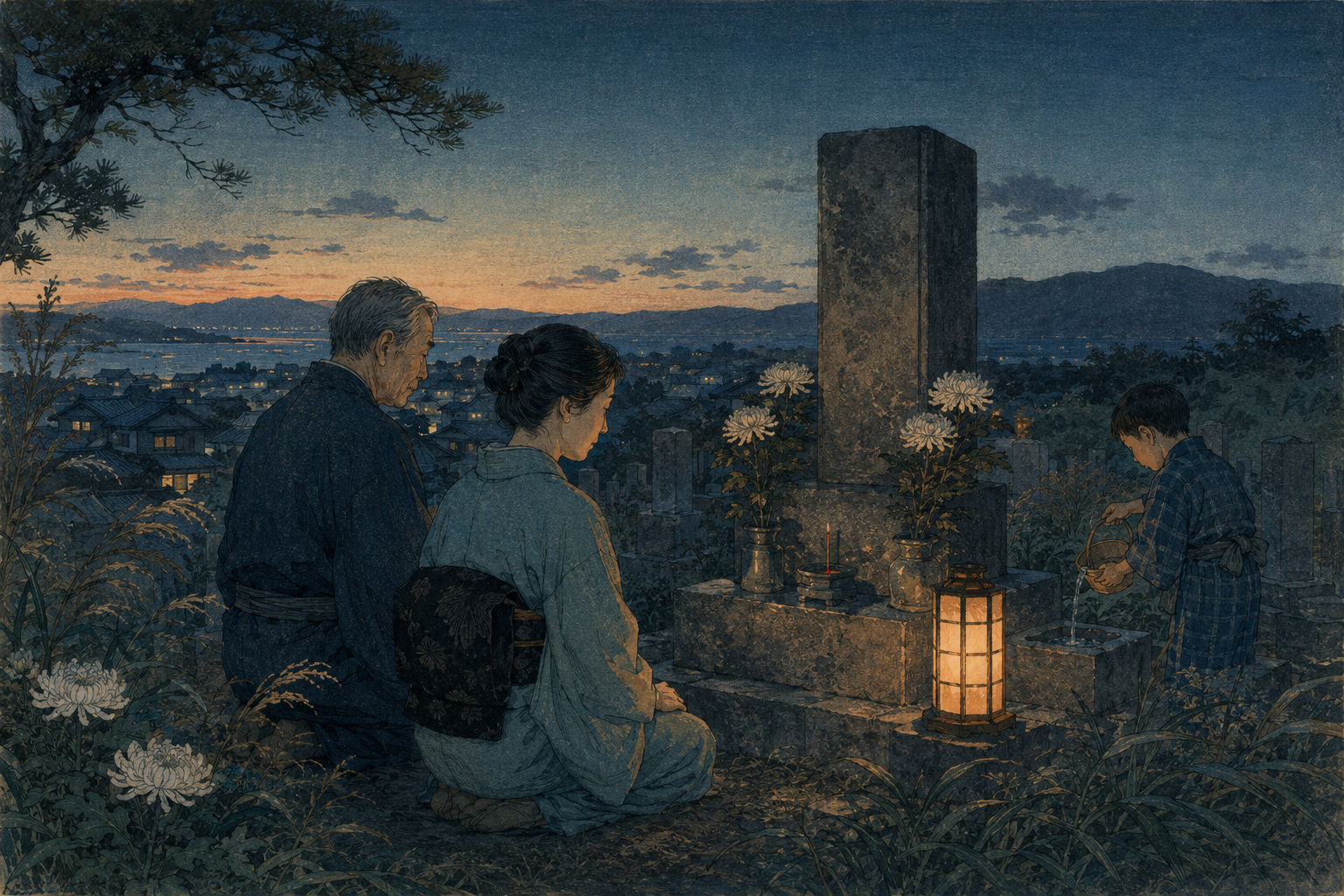
Where Grief Has an Address: Why Japan Still Goes to the Grave
Visitors report calm, gratitude and a sense of connection after visiting a family grave. Ritual psychology and family-grave history explain the power of physical place.
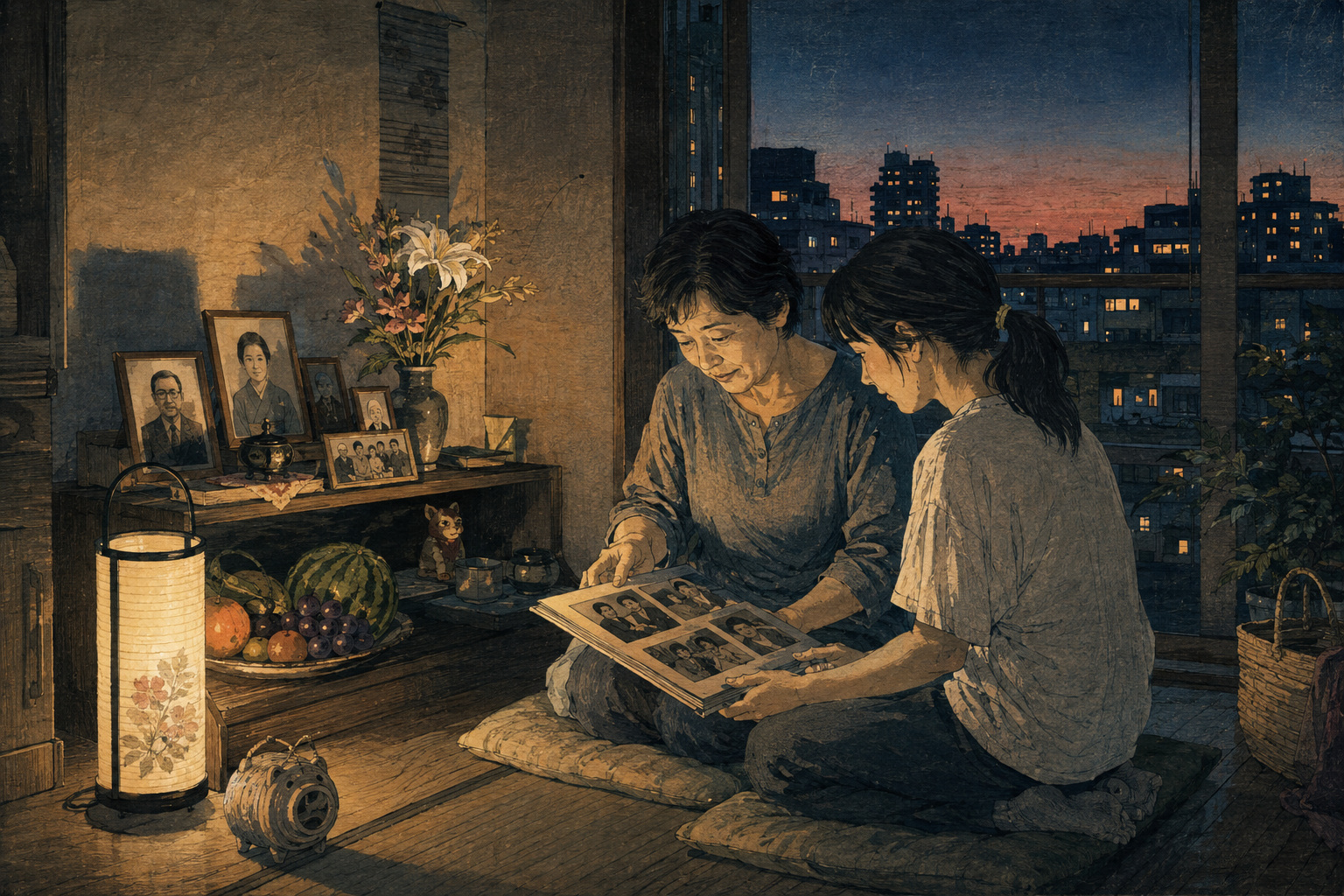
A Corner of the Living Room for the Dead: Japan’s Changing Obon
Photographs, keepsakes, small altars and pet memorials create private spaces of remembrance when a cemetery visit is impossible.
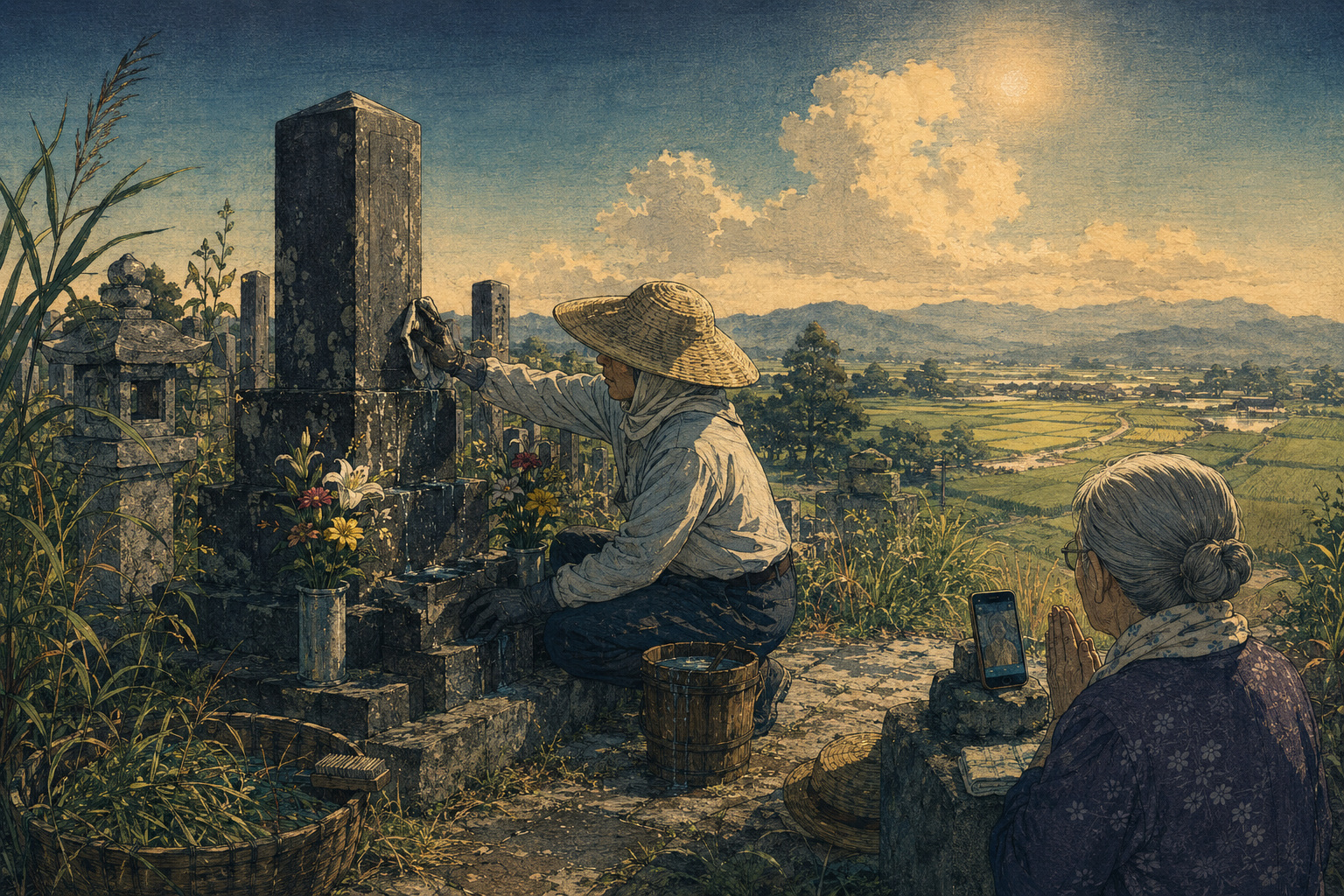
Someone Else Carries the Water: Japan’s Obon Grave-Cleaning Economy
Distant cemeteries, aging and temperatures above 37°C are driving demand. Workers clear vegetation and wash stone to keep a family duty alive.
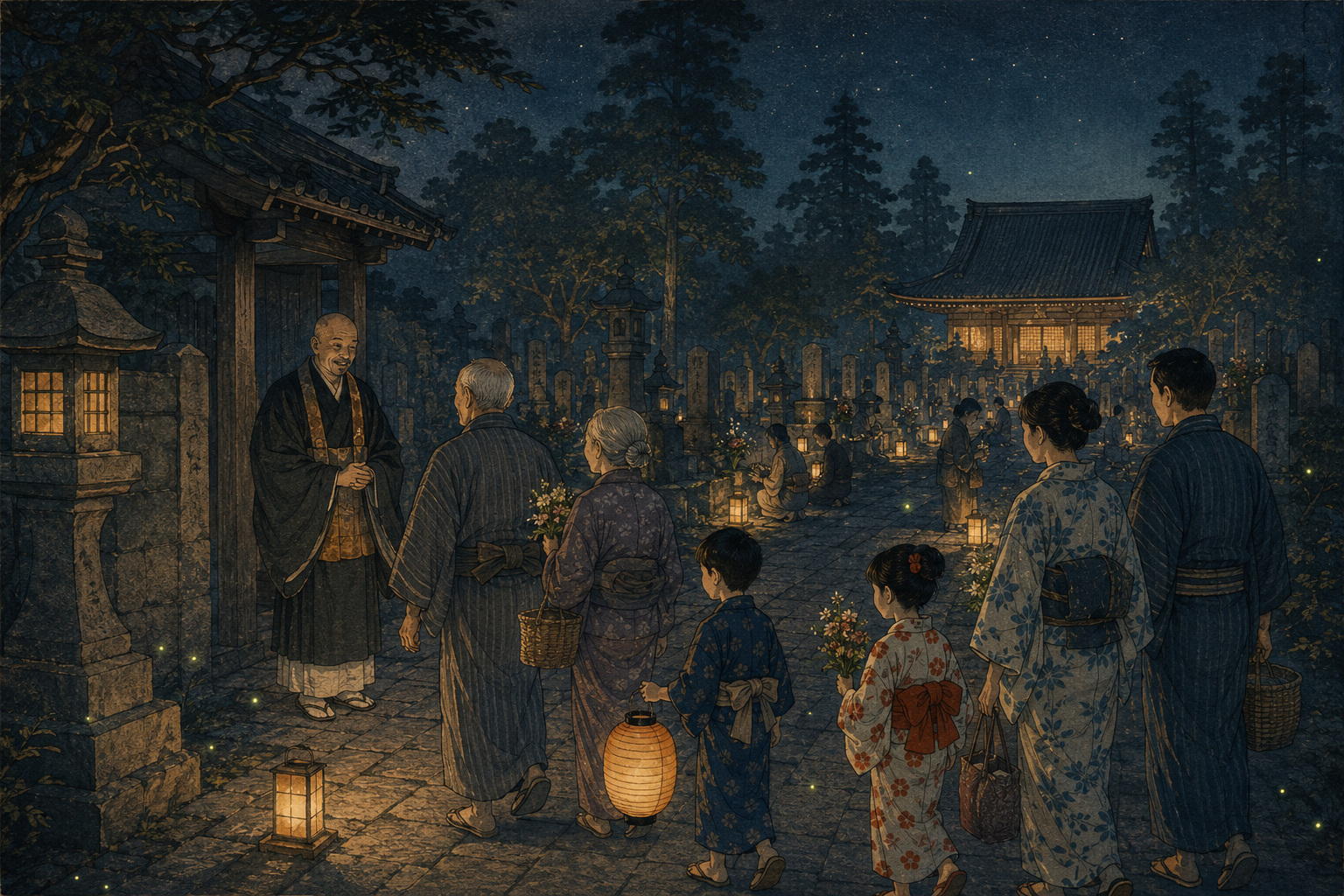
When the Cemetery Waits for Sunset: Japan’s New Obon Night
Temples are moving visits into the evening to protect older families from dangerous heat. Lantern light and climate adaptation create a new ritual time.
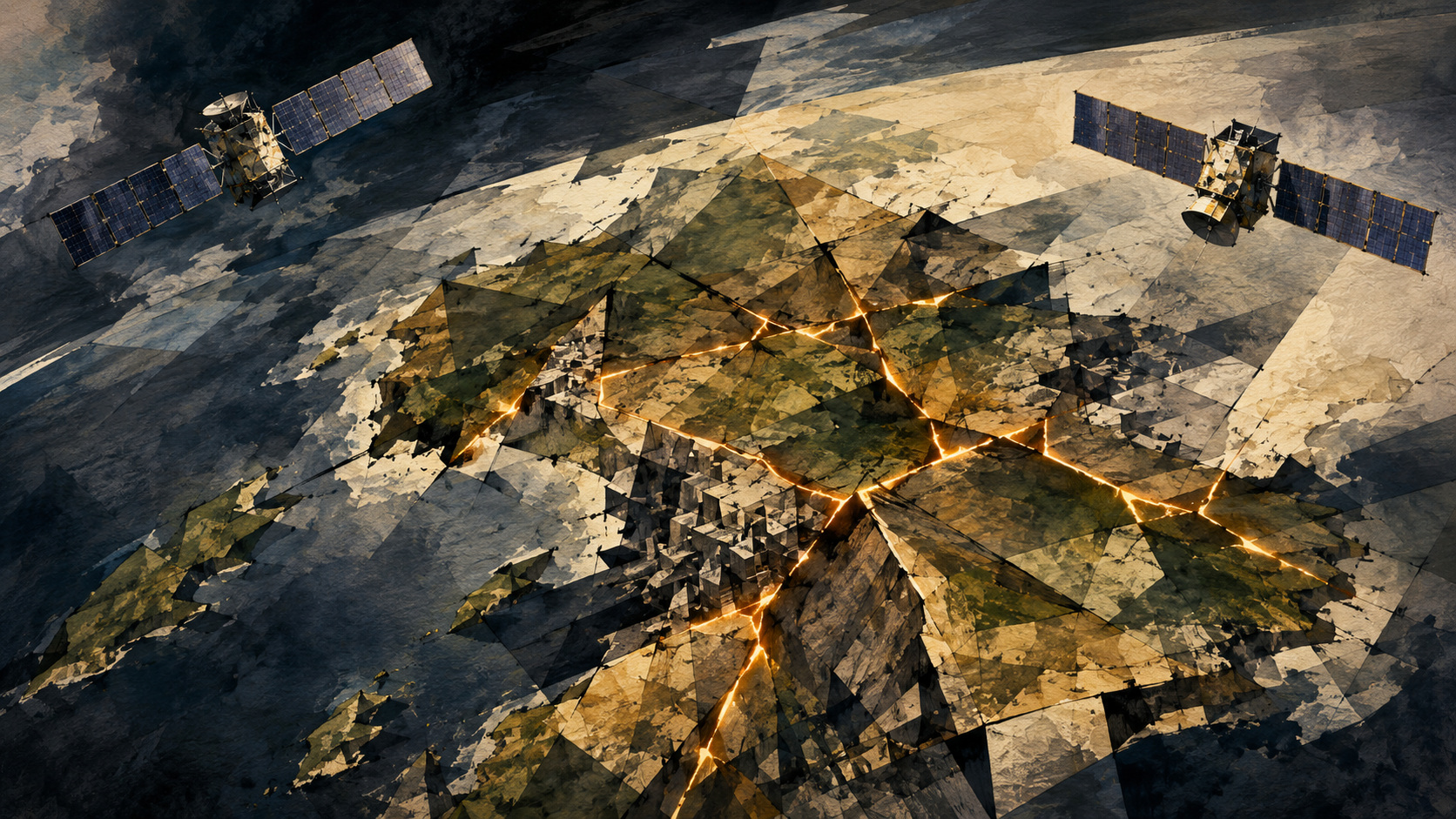
The Ground Moved in Three Directions: How Daichi-2 and Daichi-4 Mapped Kumamoto’s Earthquake
Two radar satellites captured eastward, northward and downward shifts, helping researchers interpret fault movement and update surveying and recovery plans.
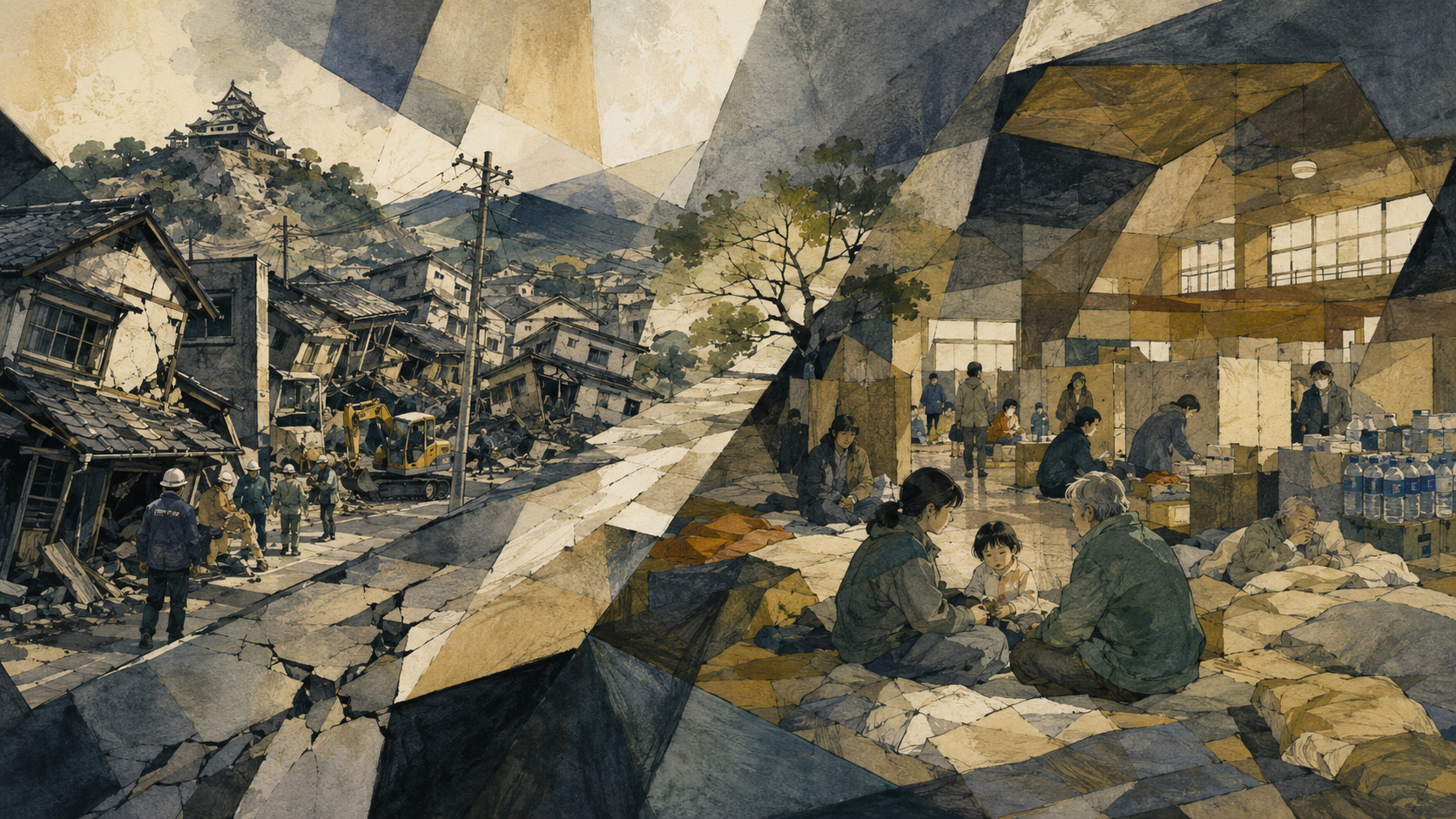
Two Weeks After the Earthquake, the Numbers Point to the Next Disaster
Thirty-nine people were dead, 3,585 remained in 81 shelters and 26,906 homes were damaged or suspected damaged as recovery entered its hardest phase.
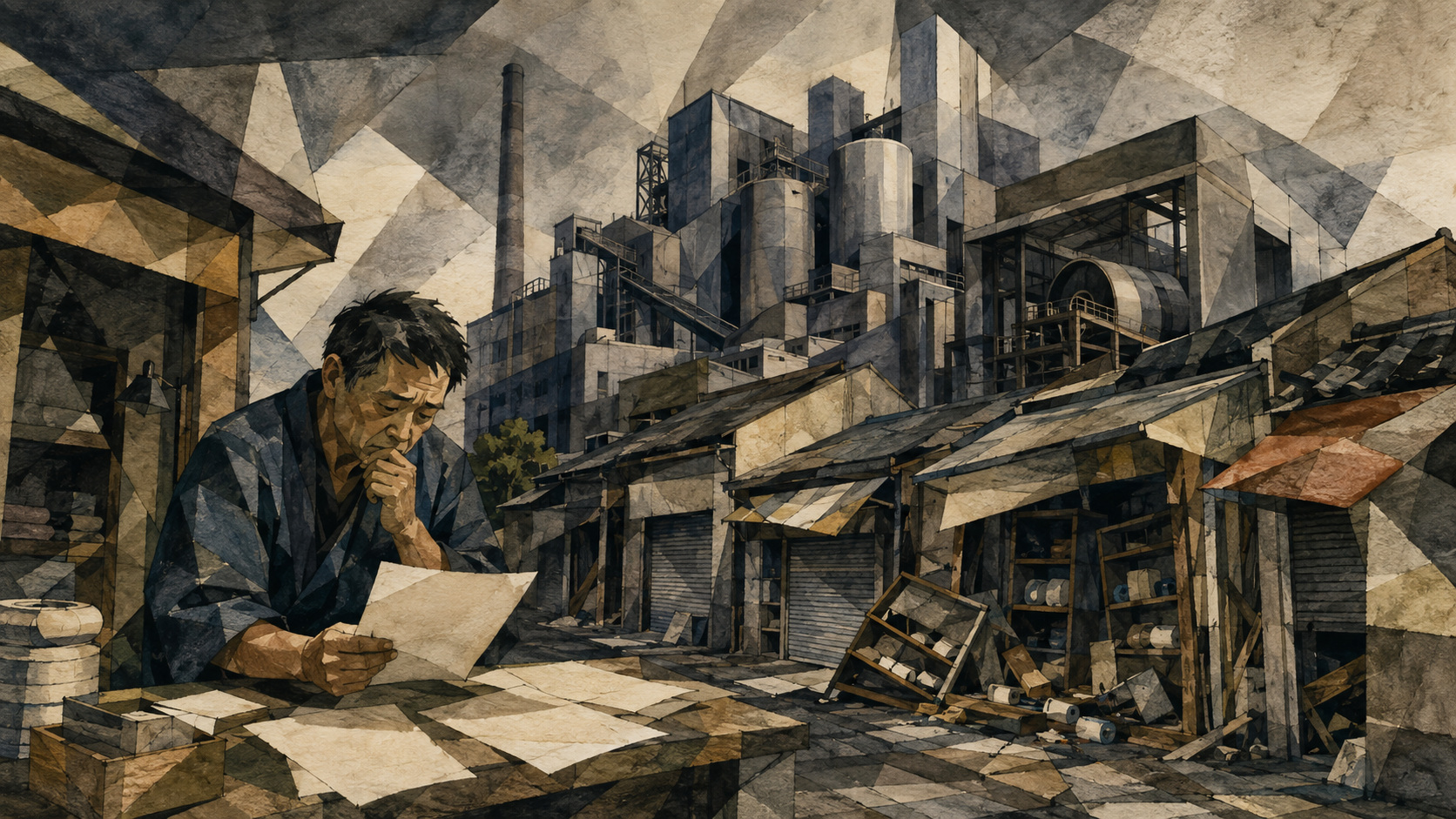
The Factory Fell Silent in a Paper Town
Business losses were estimated near ¥9 billion with about 380 consultations. The Nippon Paper mill shutdown reaches jobs and the city’s trading network.
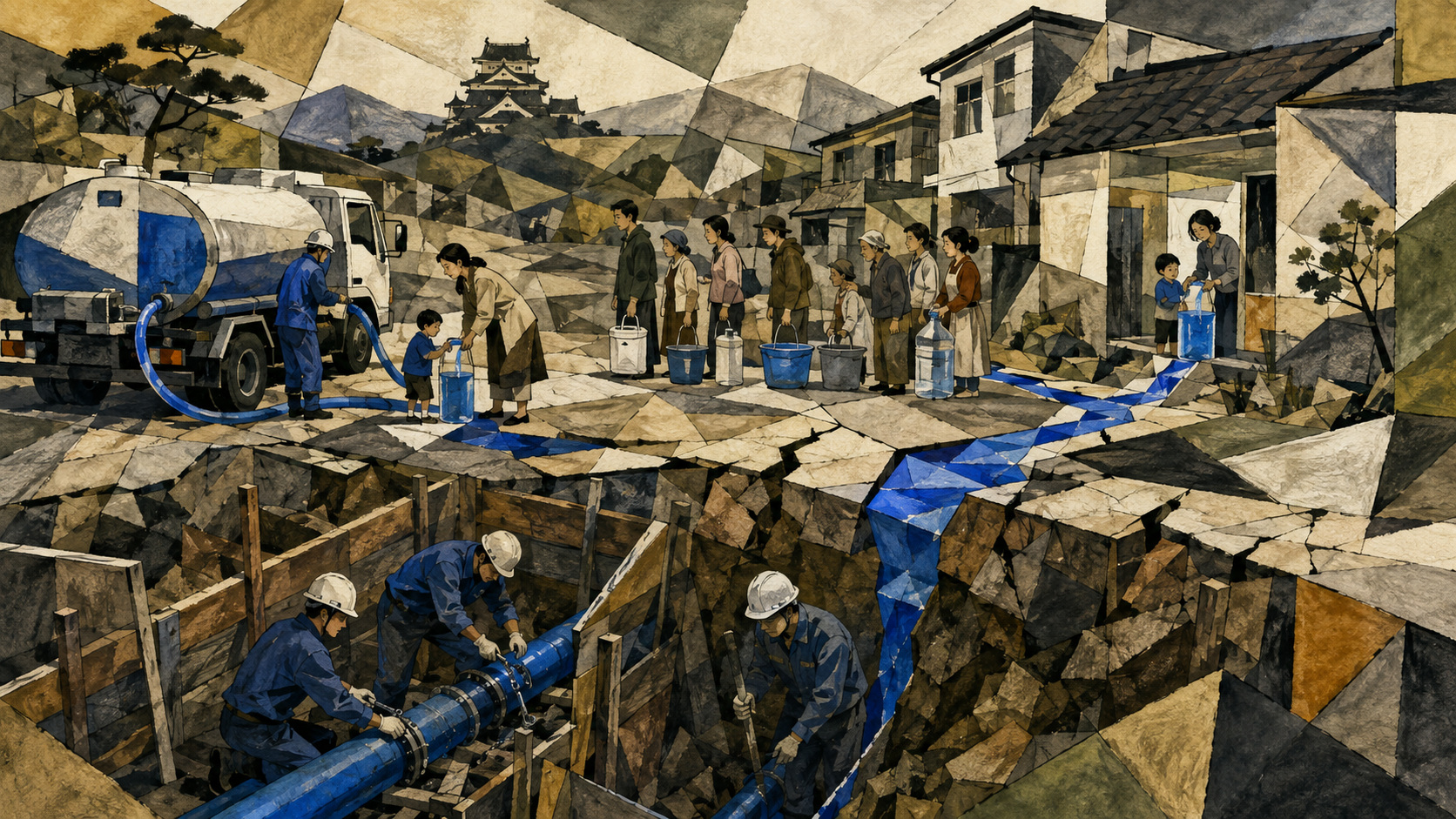
Until the Pressure Returns: 29,200 Homes and the Search for Invisible Leaks
About 29,200 homes remained classified as without water while crews searched for underground leaks and tested a damaged distribution network.
20. Today’s Art Choice
Kobayashi Kiyochika · the luminous darkness of modern Japan
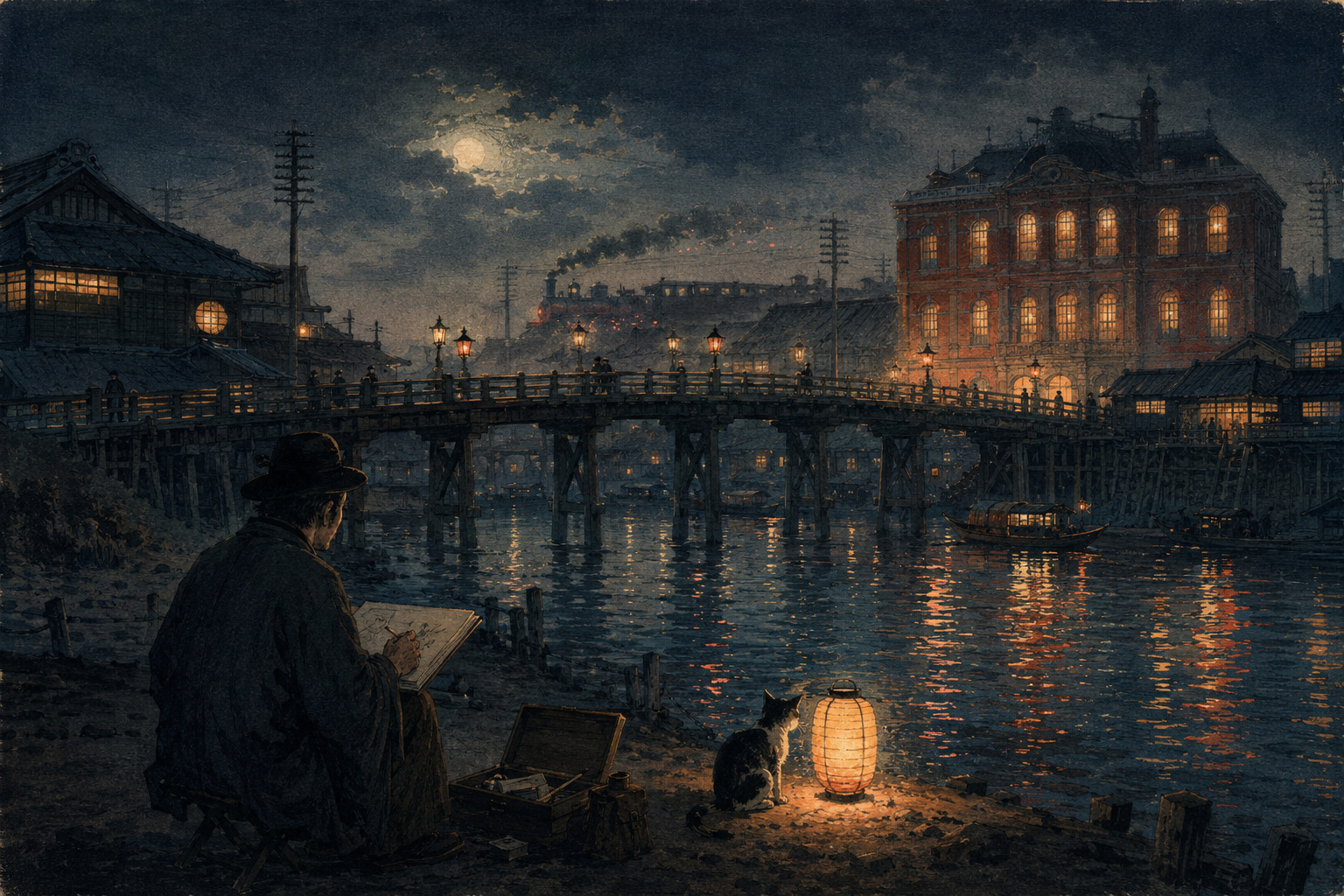
Today’s Art Choice: Kobayashi Kiyochika and the Luminous Darkness of Modern Japan
Deep indigo nights, glowing windows, fires, bridges, trains and solitary figures: how Kiyochika transformed Meiji Tokyo through light and shadow—and how that legacy also reached troubling war propaganda.
