A modular synthesizer sends sound through the air and floor until the room itself seems to vibrate. A voice produced with the whole body rises into a scream and then gives way to silence. A moving digital image and an analogue body appear to pull apart, only to reveal that they are still connected somewhere underneath.
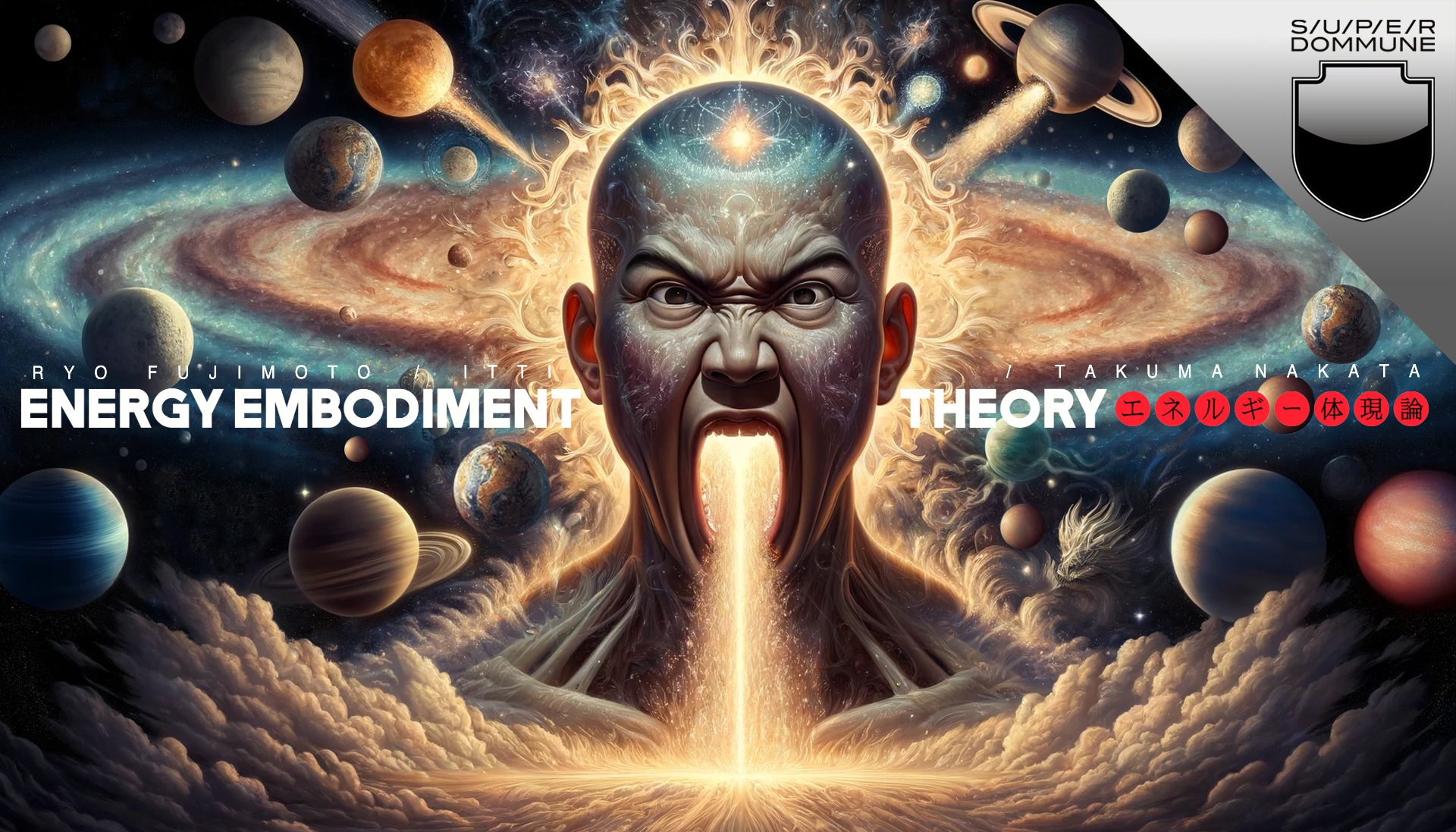
That is not a review of a performance already seen. It is how Ryo Fujimoto asks a first-time visitor to imagine a possible moment inside ENERGY EMBODIMENT THEORY, the September 22 programme at SUPER DOMMUNE in Shibuya. In written answers to Japan.co.jp, Fujimoto describes an evening in which sound, movement, image and physical vibration are meant to arrive before an audience has time to classify them. [1]
That sentence provides a useful way into a programme whose title can otherwise sound abstract. For Fujimoto, “energy” here is an artistic term rather than a scientific claim about a measurable physical quantity. He is interested in what happens when something difficult to see directly—an impulse, memory, emotion or bodily drive—changes breathing, tightens muscles, becomes sound, moves air and reaches another person.
An invisible force takes form
Asked what “energy embodiment” means to him, Fujimoto gives a concrete answer: it is an invisible force taking form through voice, vibration and movement. He does not describe voice simply as a vehicle for delivering words or demonstrating technique. Instead, he calls it the most immediate signal emitted by a living body. [1]
That approach is consistent with his current artist profile, which identifies him as a “Ritual / Voice / Body & Sound Artist” and describes a practice moving among Wild Voice / Sakebi, beat, song and electronics. The profile frames the body as the origin of those shifts rather than as a performer standing outside the sound. [3]
In the interview, Fujimoto puts the idea in less theoretical terms. Emotions and memories may remain latent when they stay inside the mind, he says, but when they alter breath and muscles and become a scream or beat, they can touch another person. His goal is to move among voice, screams, beats, song and electronic sound until what is inside the body takes audible form and begins changing the people and space around it. [1]
Three friends, three different routes into the same room
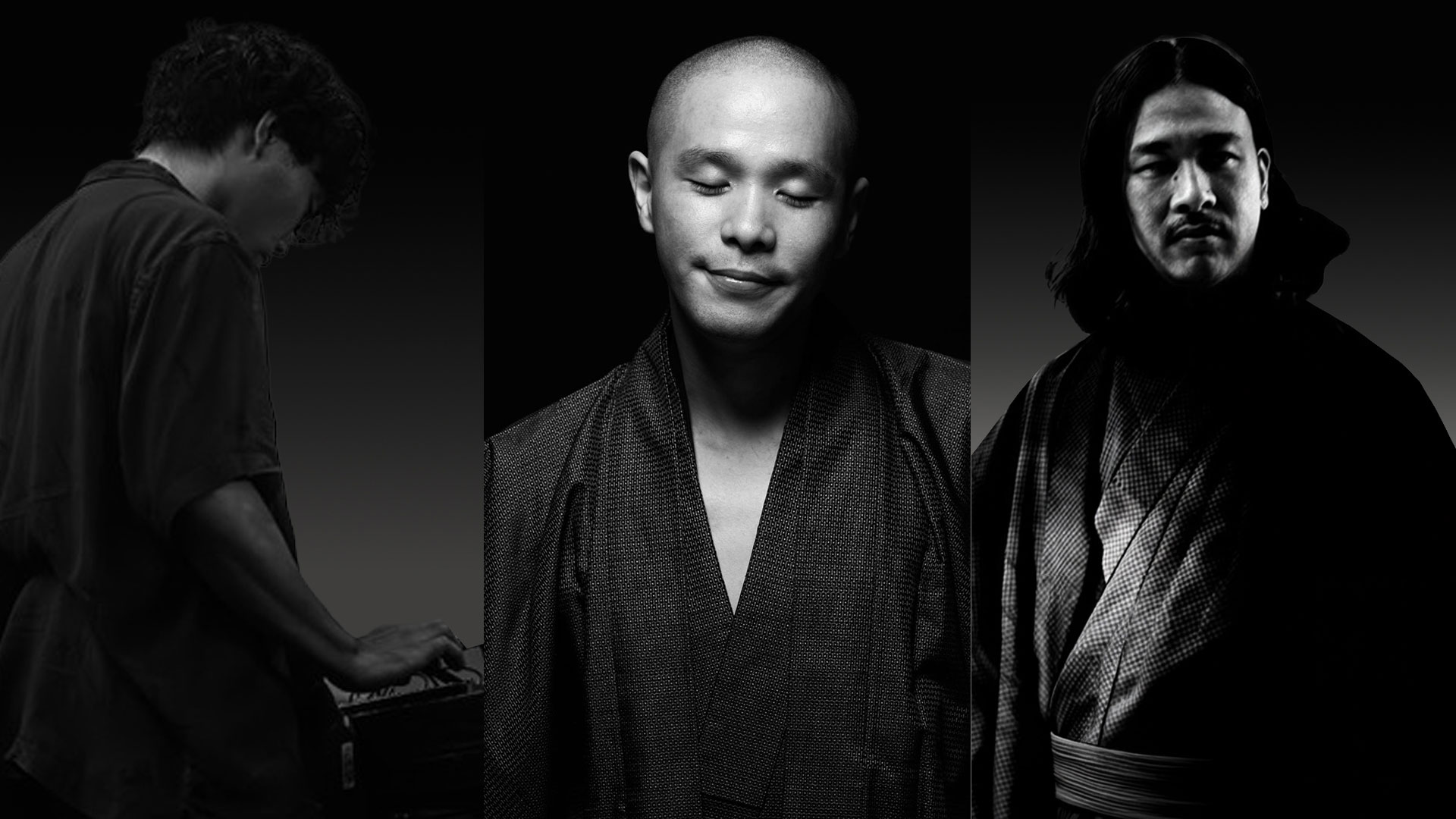
The September programme brings together Fujimoto, Itti and Takuma Nakata. The official DOMMUNE listing presents them as three distinct practices: Fujimoto working from the body and voice, Itti producing across space and structure, and Nakata presenting the audiovisual work auve. [2]
The interview adds the personal history missing from a programme listing. Fujimoto says the three have known one another and been friends for about ten years. They are not together because their work resembles one another, he says, but because each approaches the question of how energy becomes perceptible from a different direction. [1]
The evening will be built around individual performances, but Fujimoto does not want them understood as three sealed sets. He describes a continuity in which traces of one performance remain in the room and are taken up by the next. The different forms gradually overlap, he says, not necessarily onstage all at once but within the audience’s own accumulated experience of the evening. He deliberately leaves some details undisclosed so that the structure can still contain discovery. [1]
The camera sees one performance; the room feels another layer
SUPER DOMMUNE makes the distinction between watching and physically attending unusually visible. The studio is also a broadcast environment. The official listing announces a livestream while admitting a limited in-room audience, meaning the same performance is encountered through two very different sensory arrangements. [2]
Fujimoto does not dismiss the livestream. He says the camera can sharpen attention to facial expression and visual detail. But the force that moves a performance forward, in his account, comes from people physically present: their breathing, tension and bodily response. [1]
Some of what matters to him resists transmission. A microphone can carry low frequencies, but it cannot reproduce the exact physical pressure of those frequencies against a body in that room. A camera can show motion, but it cannot make the viewer feel the air displaced by it. Nor can a livestream fully reproduce the shifting tension created by performers and audience occupying the same confined space.
This is also why the venue is more than an address. DOMMUNE has spent years treating broadcast technology not simply as documentation but as part of how performance becomes public. An earlier programme under the same ENERGY EMBODIMENT THEORY title appeared there in May 2024 with Fujimoto, Takeshi Nishimoto and SARO, establishing the title as a continuing artistic frame rather than a one-night label created for the 2026 lineup. [6]
Where Nakata’s image becomes sound
Nakata’s auve offers one of the clearest examples of the programme’s crossing of sensory categories. Documentation from Flying Tokyo describes the work as analysing images and converting information from them into sound, using different forms of pixel analysis to uncover rhythm and tempo within rapidly changing visuals. The same project has been presented as an audiovisual performance in which a single artist carries the process from image to music. [5]
That background does not tell us exactly what Nakata will do on September 22, and Japan.co.jp is not treating a previous presentation as a script for the coming performance. It does, however, show why “image” in this programme should not be understood merely as decoration behind sound. The visual layer can participate in generating what is heard.
Itti enters from another direction. The official event text identifies him as a Tokyo-based producer who has appeared at MUTEK.AR in Buenos Aires and describes his work in terms of crossing space and structure. [2] Fujimoto’s interview suggests that the contrast among the three practices is the point: difference is not something to smooth away but material for the evening to carry forward.
A small room inside a much larger Tokyo
When asked what the event says about Tokyo’s experimental scene, Fujimoto resists turning one night into a definition of the city. Instead, he points to increasingly porous boundaries among music, visual art, bodily performance and technology. The important question, in his view, is no longer which genre owns a work but how different methods can alter perception and change the experience of a space. [1]
He also draws attention away from the cultural landmarks a visitor is most likely to recognize. Tokyo’s cultural life, he says, is continually reshaped in small spaces and through encounters among people whose fields do not obviously belong together. That is a useful point for a performance taking place on the ninth floor of a major commercial complex: a room reached through Shibuya PARCO can still function as a laboratory for practices that do not fit cleanly into concert, gallery or theatre categories.
Fujimoto calls Tokyo a city “still in motion,” where incompatible forms can collide and generate a new state. [1] The description is less a claim that Tokyo has one coherent experimental identity than an argument that its cultural energy lies partly in refusing to settle into one.
No specialist knowledge required
The most welcoming part of Fujimoto’s answer may be the simplest. Experimental music, he says, does not require specialist knowledge, and there is no correct way to listen. He is not particularly comfortable with “experimental music” as a category in the first place. Instead of searching too hard for a hidden meaning, he asks visitors to notice what happens to their own bodies as sound approaches. [1]
A listener can close their eyes. They can watch the images instead. They can feel uneasy, calm, frightened, curious or want more. Fujimoto treats those reactions not as failures to understand but as part of the encounter. The point is not to pass a test of taste or vocabulary.
That may be the most precise invitation to ENERGY EMBODIMENT THEORY. Do not begin by asking whether you know enough about experimental sound. Begin with the room, the floor, the pressure of a frequency, a body producing a voice and an image changing in front of you. Understanding can arrive later—if it needs to arrive at all.
The evening at a glance
| When | Tuesday, September 22, 2026, 7:30–9:30 p.m. JST |
|---|---|
| Where | SUPER DOMMUNE, Shibuya PARCO, ninth floor |
| Address | 15-1 Udagawacho, Shibuya-ku, Tokyo |
| Artists | Ryo Fujimoto · Itti · Takuma Nakata |
| Admission | ¥3,000 |
| Studio audience | Limited to 50, according to the official listing |
| Booking | Official Peatix booking page |
| Programme | SUPER DOMMUNE official listing |
The official programme says the event will also be livestreamed and warns studio visitors that they may appear on camera. [2]
- Ryo Fujimoto, written interview response supplied to Japan.co.jp, September 2026.
- SUPER DOMMUNE, “エネルギー体現論 / ENERGY EMBODIMENT THEORY,” September 22, 2026 programme.
- Ryo Fujimoto, official profile.
- Ryo Fujimoto, official artist statement.
- Flying Tokyo 2024, final presentation; Takuma Nakata’s auve.
- SUPER DOMMUNE, ENERGY EMBODIMENT THEORY, May 9, 2024.
