One safe transit does not end the crisis
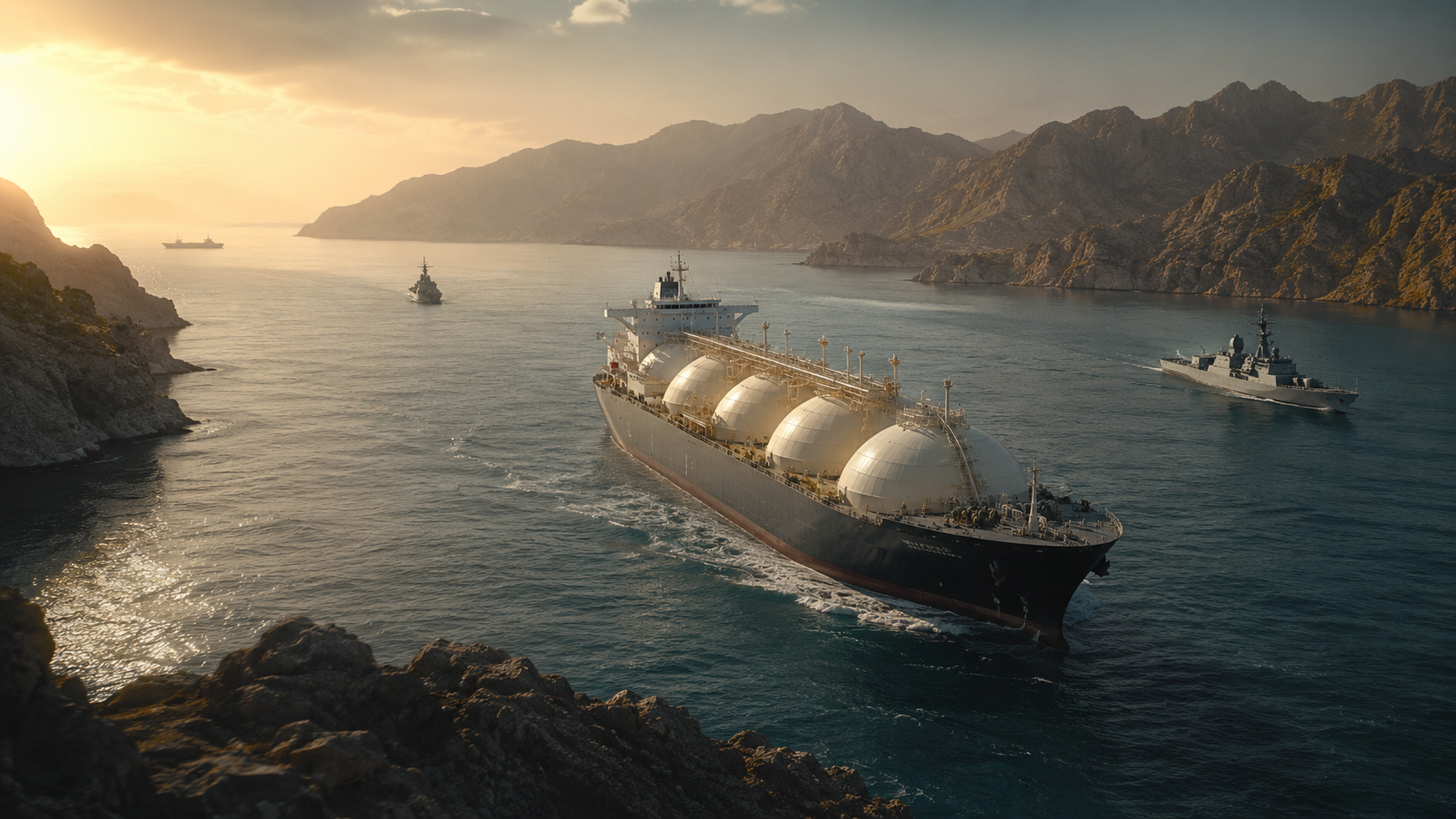
A Japan-owned vessel has made it through the Strait of Hormuz. Japan’s foreign ministry said the ship, with three Japanese crew members on board, passed through the waterway on Friday and exited the Gulf without incident. In a week of maritime anxiety, that is the kind of sentence governments want to be able to say plainly: the ship moved, the crew is safe, the passage was completed.
But this is precisely the moment when Japan should avoid confusing relief with resilience. The Strait of Hormuz can appear small on a map. In the Japanese economy, it is not small at all. It is connected to gasoline stations, power plants, petrochemical feedstocks, aircraft fuel, freight costs, food prices, electricity bills and corporate earnings.
The word “reopening” has a calming sound. Yet there is a difference between a waterway being passable and a waterway being trusted. A ship may pass through while insurers remain cautious, shipowners hesitate, crews worry, military commanders watch radar screens, and energy buyers search for backup cargoes. In shipping, confidence is cargo. Without it, the route is open only in the narrowest sense.
Why Hormuz is Japan’s problem
The Strait of Hormuz links the Persian Gulf to the Gulf of Oman. It is the maritime gate for energy exports from a region that includes Saudi Arabia, the United Arab Emirates, Kuwait, Iraq, Qatar and Iran. It is far from Tokyo in geography, but very close to Tokyo in energy mathematics.
Japan is a resource-poor industrial power. It imports the overwhelming majority of its fossil fuels. The Agency for Natural Resources and Energy has long described Japan’s low energy self-sufficiency as a structural challenge, especially after the Fukushima Daiichi accident reduced the role of nuclear power. Renewables have expanded, but they do not yet remove the need for imported oil and gas across transport, industry and power generation.
Reuters has reported that Japan depends on the Middle East for the bulk of its oil supply and that a large share of that oil moves via Hormuz. The International Energy Agency notes that most oil and oil products passing through the strait are bound for Asia. The IEA also highlights the strait’s importance for liquefied natural gas, especially Qatari and UAE LNG. In other words, a Hormuz crisis is not simply a Middle East story. It is an Asian fuel-price story. It is a Japanese household-cost story.
The memory of 1973: when Japan saw its weak point
Japan’s modern energy-security consciousness was forged in the oil shocks of the 1970s. The first shock in 1973, triggered by war in the Middle East and producer-state oil strategy, exposed the vulnerability of an economy built on imported energy. Japan had been racing through high-speed growth. Suddenly, fuel was no longer background infrastructure. It was a national weakness.
The shock did not remain in ministries and boardrooms. It reached ordinary life: price increases, conservation campaigns, production adjustments and consumer panic. The famous household images of the period are not simply nostalgic oddities. They are reminders that energy security becomes social psychology very quickly. When people fear scarcity, behavior changes before the tanks are empty.
Japan responded with conservation, strategic reserves, diversification, nuclear power, LNG, and an industrial culture of efficiency. It became one of the world’s great energy-saving economies. Yet half a century later, the country still depends heavily on imported molecules moving through risky places. Technology improved. Cars became more efficient. Solar panels spread. But aircraft still burn fuel, factories still require heat, chemical plants still need feedstocks, and cities still demand stable power. History has not repeated itself. It has returned wearing newer equipment.
Why ships do not return instantly
When a crisis eases, shipping does not snap back like a light switch. Shipowners do not make decisions from diplomatic headlines alone. They consider war-risk insurance, crew safety, naval advisories, cargo contracts, port conditions, flag-state guidance and the behavior of other vessels. A strait may be politically reopened while the commercial system remains half-frozen.
Large tankers and LNG carriers are not bicycles. They cannot pivot casually. Voyages are planned over weeks. Cargoes are tied to contracts. Insurance prices translate geopolitical risk into hard costs. If ships that were stranded or delayed suddenly begin moving again, ports and loading terminals can become bottlenecks. Energy flows through the sea, but it flows in queues.
For Japanese companies, the question is not only whether one ship passed safely today. It is whether next month’s crude procurement can be secured, whether summer electricity demand can be met affordably, whether aviation and logistics costs rise, whether petrochemical feedstocks become more expensive, and whether a weaker yen magnifies every imported fuel bill.
Japan’s toolkit: reserves, rerouting, alternative crude — and limits
Japan has strategic petroleum reserves. They are a legacy of the 1970s and a crucial buffer. Reserves do not make energy cheap. They buy time. Time is the most valuable commodity in an energy crisis because it allows governments and companies to negotiate, reroute, substitute and avoid panic.
Japan can also look for alternative cargoes. The United States, Latin America, Africa, Southeast Asia, Alaska and Russia’s Far East may appear in procurement discussions depending on sanctions, logistics and price. But crude oil is not generic. It can be light or heavy, sweet or sour. Refineries are configured around particular crude slates. Replacing Middle Eastern crude is not as simple as swapping one barrel label for another.
Rerouting is also expensive. Longer routes burn more fuel, increase charter time and raise insurance costs. Some Gulf producers have pipeline routes that bypass Hormuz, but they cannot fully replace the strait. For LNG, the constraints are even sharper. The IEA has emphasized that key Qatari and UAE LNG flows have no simple alternative route to global markets.
The thin line of Japanese diplomacy
Japan is not a military actor in the Gulf in the way the United States is. But it is also not a bystander. The Ministry of Defense has documented Japan’s information-gathering activities in the Middle East, established after a 2019 Cabinet decision to strengthen the posture needed to protect Japan-related vessels. That mission reflects a simple reality: Japanese economic life moves on ships.
The diplomatic line is delicate. The United States is Japan’s central security ally. Gulf states are crucial energy partners. Iran is a country with which Japan has long maintained diplomatic channels. Tokyo often tries to preserve room for dialogue, but a crisis makes every bridge shake. Move too close to one side and another becomes suspicious. Stay too vague and no one is reassured.
What Japan wants is clear: safe navigation for Japan-related vessels, freedom of maritime transit, stable energy supply and regional de-escalation. How to get all four at once is not clear. Military deterrence, diplomacy, insurance markets, shipping practice and international law all meet in one narrow body of water.
From the strait to the electricity bill
Hormuz can feel distant because it belongs to the language of tankers, navies and maps. But the economic transmission chain is shorter than it looks. Crude and LNG prices influence gasoline, jet fuel, delivery costs, plastics, fertilizer, power generation and household utility bills. A story that begins with a tanker can end as a number on a receipt.
A weak yen makes that chain more painful. Japan buys much of its energy in dollars and pays domestic wages and bills in yen. When fuel prices rise and the yen weakens, the country is hit by two waves at once. The shock reaches households slowly, but it reaches them.
That is why Hormuz is not an abstract strategic-policy topic. It is connected to solar power, nuclear restarts, LNG procurement, battery storage, energy efficiency, electric vehicles, industrial fuel switching and demand reduction. These usually appear as separate debates. In a crisis, they collapse into one question: how much of Japan’s daily life must depend on distant sea lanes?
The Seventh Strategic Energy Plan meets reality
Japan’s Seventh Strategic Energy Plan is built around the S+3E concept: Safety plus Energy Security, Economic Efficiency and Environment. As a framework, it is sensible. In a crisis, it becomes brutally difficult.
Cheap energy can increase dependence on risky imports. Fast decarbonization requires grids, storage, land, permitting and industrial adjustment. More nuclear power brings Fukushima’s memory, safety regulation, local consent and waste questions. LNG emits less carbon than coal but remains imported fuel tied to shipping routes and global price shocks.
The lesson of Hormuz is therefore not simply “buy from somewhere else.” It is “do not let one weak point become too large.” Real energy security is not a single heroic solution. It is a system that can take a hit without breaking.
What this safe passage really tells Japan
The safe transit of a Japan-linked vessel matters. It means lives were protected, a ship moved, and diplomacy and operations produced at least one concrete result. But it is too early to call that normalization.
Normalization would mean shipowners feel able to treat the route as commercially manageable; insurers calm down; ports and terminals avoid major congestion; military miscalculation becomes less likely; and prices move away from panic. Reopening is the beginning of that process, not the end.
For Japan, the next questions are practical. Can remaining Japan-linked vessels move safely? Can fuel procurement for summer and autumn be secured without severe cost escalation? Can the country remember the lesson after the headlines fade? Energy security is easy to discuss during a crisis. The hard part is investing in it after the crisis has become boring.
- The safe passage of one Japan-owned vessel is good news, but not full normalization.
- Japan remains structurally exposed to Middle Eastern oil and Hormuz-linked shipping.
- Strategic reserves buy time, but they do not eliminate price and logistics risk.
- Alternative crude and rerouting are possible, but technically and commercially costly.
- The deeper question is how Japan combines renewables, nuclear, LNG, reserves, efficiency and demand reduction into a more resilient system.