Utsunomiya Bear Hunt Puts a City on Alert
A wild black bear sighting in Utsunomiya closed every municipal primary and middle school, turning a local public-safety scare into a national symbol of Japan’s changing relationship with wildlife.
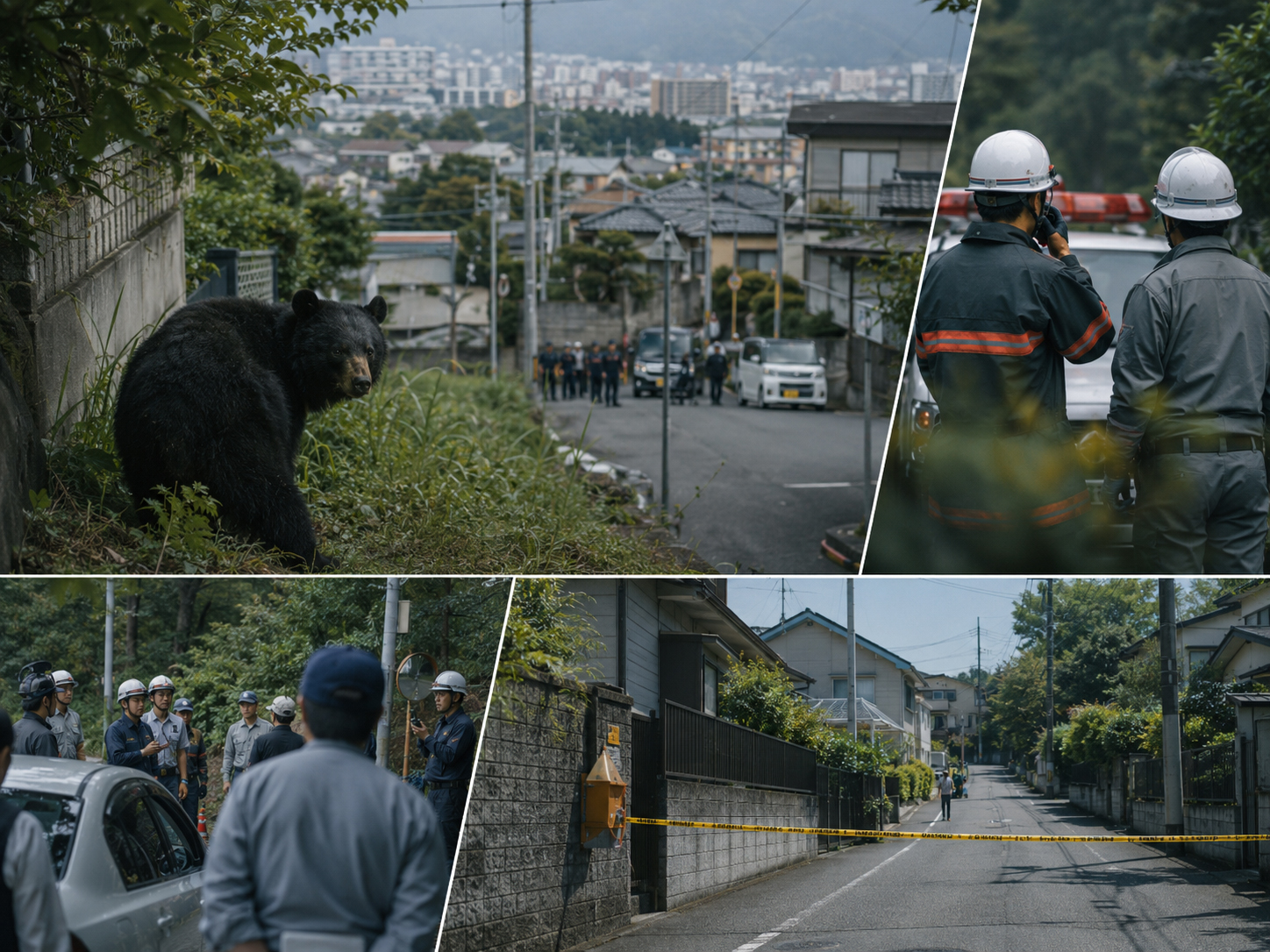
A wild black bear captured in Utsunomiya after a multi-day search had already done something rare: it shut down all 94 municipal primary and middle schools in a city of about half a million people roughly 100 kilometers north of Tokyo.
Reuters reported that the bear was first seen near a residential park, then prompted repeated sightings and citywide precautions before being tranquilized and removed. AP reported that no injuries were reported, and that authorities had urged residents to stay indoors, lock windows and doors, and avoid leaving garbage outside at night.
Why the school closures mattered
Closing 94 schools was a blunt but understandable measure. A bear moving through parks, neighborhoods, campuses and residential streets creates a problem that cannot be handled only by warning people to be careful. Children walking to school, after-school activities, and garbage collection all become part of the risk map.
Utsunomiya’s response showed how quickly a wildlife incident can become an urban-management issue: police, hunters, veterinarians, school officials, public announcements, social media alerts, drones, and parents all entered the same emergency loop.
This was not a zoo story. It was a city-safety story — about what happens when Japan’s forest edge moves into the school zone.
The broader bear problem
Bear encounters have been rising in Japan, including in places closer to towns and cities. Reuters reported that fiscal 2025 saw 238 victims, including 13 deaths, and that the government formed a task force in 2026 to reduce casualties.
Experts have pointed to several overlapping causes: poor wild food supplies in some years, climate stress, rural depopulation, less hunting, and expanding bear populations. Empty or aging rural communities can create quieter corridors that allow bears to move closer to human settlements.
Japan.co.jp’s view
When local news reveals national change
The Utsunomiya bear was captured, but the issue was not captured with it. Japan’s bear problem sits at the intersection of climate, aging rural communities, shrinking hunting capacity, urban expansion, and animal conservation. The local scare is over; the national policy problem remains.
What to watch next
Watch whether Japan’s new bear-management task force leads to practical local support: better warning systems, more trained responders, clearer garbage rules, controlled culling where necessary, and help for towns that lack enough hunters or wildlife officers. The next Utsunomiya may not be far from a school, a factory, or a commuter station.