Tokyo Rewrites Its Megaquake Playbook
Japan has revised its basic plan for a major earthquake directly beneath the capital region, aiming to cut projected deaths and building losses while putting more emphasis on fire prevention, household readiness, and seismic circuit breakers.
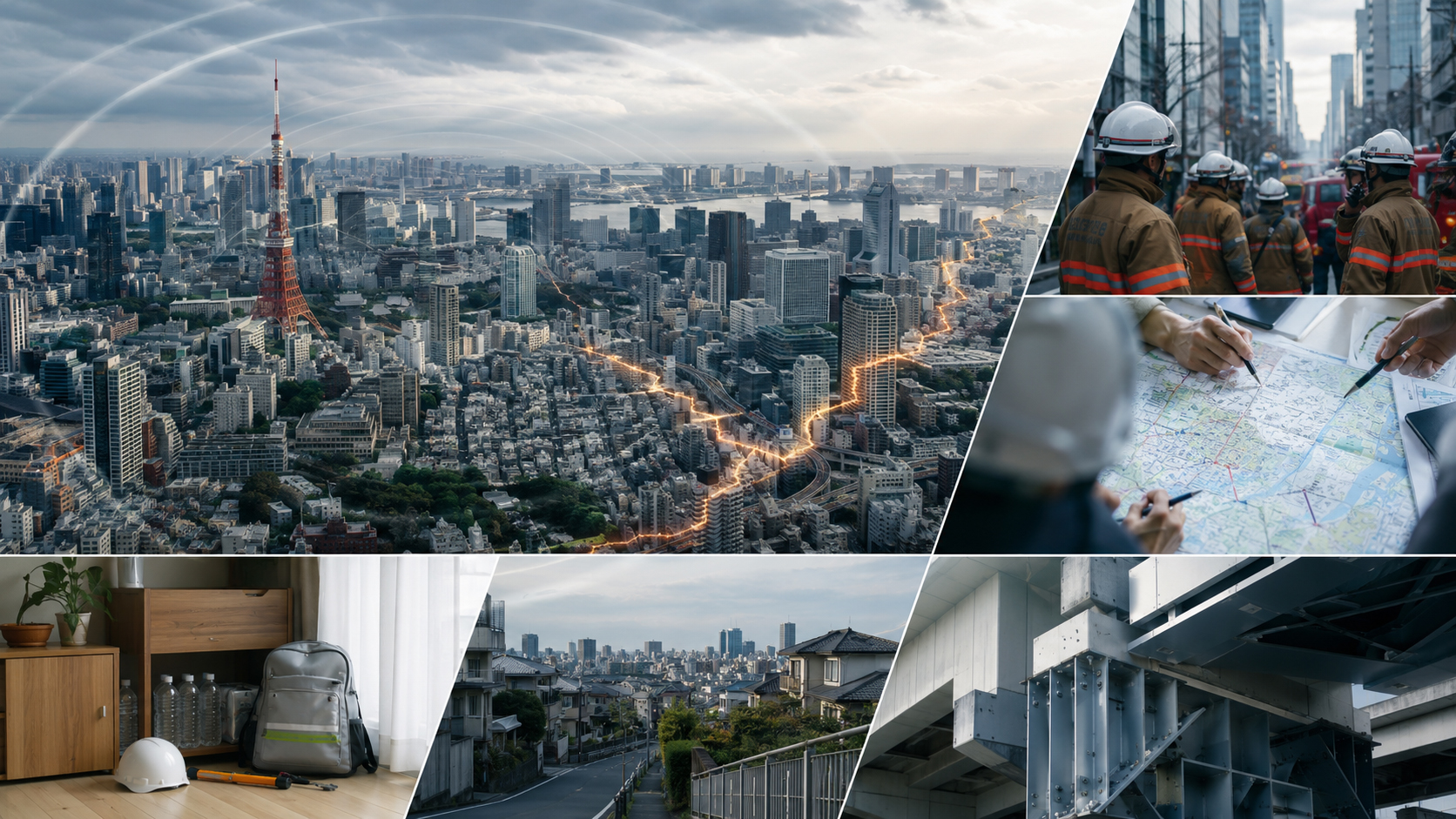
Japan’s government has revised its long-term basic plan for a possible major earthquake directly beneath the Tokyo metropolitan area, the first major rewrite since 2015. The update sharpens the goal: reduce deaths and destroyed or burned buildings to half or less of the latest estimates, while expanding practical preparedness in homes, neighborhoods, and infrastructure systems.
The revised framework follows updated damage assumptions released in late 2025. Those estimates suggested a severe capital-region quake could kill as many as 18,000 people and destroy or burn about 400,000 buildings in a worst-case scenario. Officials say the point of the new plan is not to forecast the day of the next disaster, but to lower the human and economic toll when a strong quake comes.
What changed in the new plan?
The plan places heavier emphasis on measures that can actually save lives in dense urban neighborhoods after the initial shaking. Fire remains a central concern in a Tokyo megaquake scenario, especially in tightly packed residential areas. That is why the updated strategy highlights seismic circuit breakers designed to cut power automatically after a quake, reducing the risk of electrical fires.
Officials also want more work on retrofits, evacuation systems, local stockpiles, public information, and support for vulnerable residents, including older people and those who may need help moving quickly after a disaster.
Preparedness is not fearmongering. It is the practical work of reducing casualties, slowing fire spread, strengthening homes, and helping people respond faster in the first critical hours.
Why the household matters
For readers, the most important part of this story may be the shift toward household readiness. A major urban quake is not only a government problem. It is also a home problem: securing furniture, storing water, keeping flashlights and batteries ready, planning family contacts, and knowing the nearest evacuation route.
What Japan.co.jp sees
Japan.co.jp’s View
Tokyo’s revised plan is best read as a realism document. It accepts that a capital-region quake may not be preventable, but insists that the death toll and fire damage can still be pushed down. That makes this less a story about catastrophe than a story about discipline: homes, wiring, evacuation drills, local infrastructure, and urban resilience.
Why this matters beyond Tokyo
Tokyo is the main focus, but the lesson is national. Dense cities across Japan face similar questions: how to cut fire risk, how to help neighborhoods act quickly, and how to translate abstract disaster planning into useful action in ordinary homes and apartment buildings. The capital is a test case for the country’s broader resilience strategy.