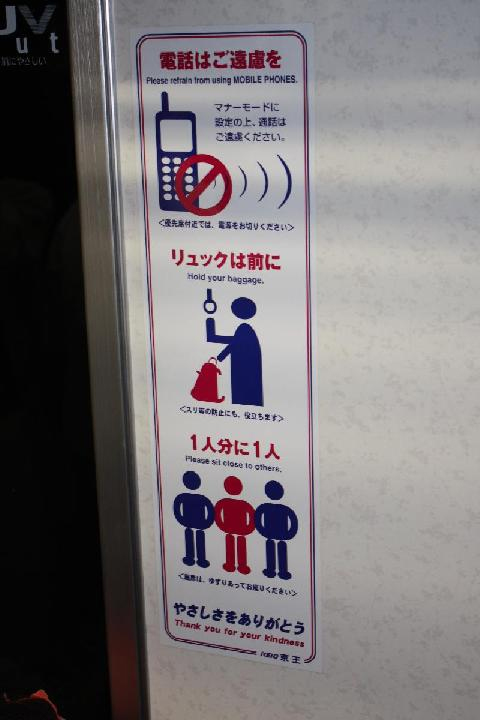
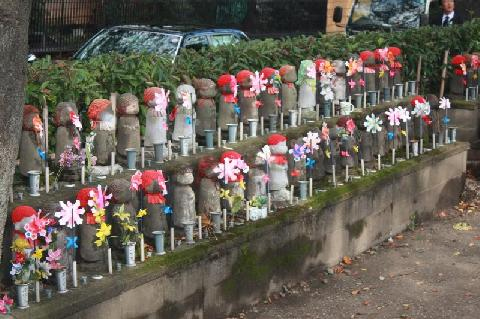
Japan’s famous trains are fast. The Shinkansen cuts through distance with elegance and authority. Urban commuter lines move millions with breathtaking precision. But beyond that speed is another Japan: the Japan of one-car local trains, unmanned platforms, rice fields, coastal curves, mountain shadows, and stations where the sound of the arriving train changes the whole afternoon.
Rural rail travel in Japan is not simply transportation. It is a way of seeing. The train becomes a moving frame, and the countryside appears in fragments: a farmhouse roof, a river bend, a schoolyard, a vegetable field, a vending machine glowing beside an empty platform, laundry moving in the wind, a small shrine at the edge of trees.
These are not the images that dominate travel posters. They are quieter than Kyoto, less famous than Fuji, and slower than Tokyo. But they often remain in the mind longer.
The value of slowness
In a country known for efficiency, rural railways offer a different kind of intelligence. They do not hurry the landscape. They let villages, fields, hills, and weather arrive in their own time. The train may stop at small stations where only one or two people board. It may wait for another train to pass. It may pause long enough for you to notice silence.
This slowness is not a defect. It is the experience. The rural train is not trying to compete with the bullet train. It belongs to a different emotional category. It is closer to walking, reading, or listening.
To ride such a train well, you must let go of the idea that travel is only about arrival. In rural Japan, the between-places are often the point.
The window as theater
A train window is one of Japan’s great screens. Through it, the country edits itself without narration. Mountains appear, vanish, and return. Rice fields reflect the sky. A river runs briefly beside the track, then slips away. A town gathers around a station, then thins into farms and cedar groves.
Unlike a car, a train fixes your gaze. You cannot steer toward a view. You receive what the line gives you. That surrender is part of the charm. The railway decides the sequence, and the traveler becomes a reader of passing scenes.
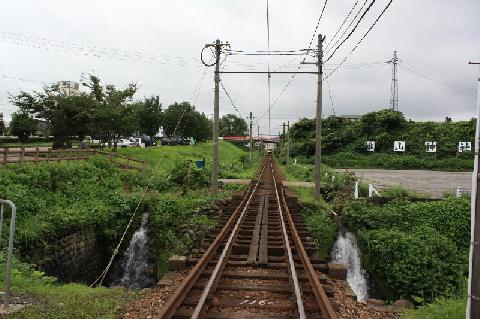
Rural railway lines reveal Japan not as a single postcard, but as a sequence of living details.
Small stations, large feelings
Rural stations in Japan can be modest to the point of poetry. A platform, a shelter, a timetable, a bench, perhaps a small waiting room. Sometimes no staff. Sometimes no ticket gate. Sometimes a view so quiet that the station seems less like infrastructure and more like a pause in the landscape.
These stations carry emotional weight because they are thresholds. Someone leaves from here. Someone returns. Students wait in uniforms. Elderly passengers know the schedule by memory. A traveler steps down and realizes that the destination is smaller, slower, and more personal than expected.
The beauty of these places is not luxury. It is proportion. The station belongs to the town, the town belongs to the valley, and the valley belongs to the season.
What to notice
Listen for the station chime, the crossing bell, the wind under the platform roof, and the difference between a train arriving and the countryside returning to quiet afterward.
What to bring
A charged phone, cash, patience, water, and enough schedule awareness. Rural trains may run far less often than city lines.
Railways shaped by seasons
Rural railways make Japan’s seasons visible with special force. Spring brings pale fields, blossoms, school beginnings, and clear light. Summer thickens the view with green. Autumn turns hillsides gold, orange, and deep red. Winter simplifies everything: snow, roofs, dark trees, warm train interiors, and stations that feel like lamps in the cold.
The same line can feel like four different journeys across the year. A river route in summer may be all shimmer and insects. In winter, it may become still, silver, and severe. A mountain line in autumn can feel theatrical. In the rainy season, it may become intimate and blue-green, with windows streaked by water.
This is why rural train travel rewards returning. You are not only riding a route. You are riding a season.
- Spring: blossoms, school commutes, fresh fields, soft light, and first journeys.
- Summer: saturated green, open windows in memory, rivers, insects, and heavy sky.
- Autumn: mountain color, harvest tones, clear air, and long shadows.
- Winter: snow country, warm cars, quiet platforms, and the drama of reduced color.
How to ride respectfully
Rural trains are often smaller than urban trains, which means your behavior is more visible. Loud conversation, oversized luggage, careless photography, or blocking doors can feel more intrusive in a quiet car. Courtesy matters everywhere in Japan, but on a local line it becomes especially personal.
If you are photographing, be mindful of commuters, students, and private homes near the tracks. Avoid pointing cameras directly at people without permission. Do not trespass onto tracks or private property for a better shot. The best rural railway photographs come from patience, not aggression.
Also remember that rural lines are lifelines. They may be romantic to visitors, but they are practical for local residents. Ride with gratitude.
Why rural rails still matter
Rural railways matter because they preserve a human scale of movement. They remind Japan that not every journey needs to be optimized, and they remind visitors that the country is not only its major cities. The local line carries memory: school years, market days, hospital visits, grandparents, festivals, returns home, and departures that once felt enormous.
Some rural lines face decline as populations shrink and car travel increases. That makes each ride more meaningful. To ride is not only to consume scenery. It is to participate, however briefly, in a public system that keeps smaller places connected.
Japan’s rural trains teach the traveler to read softly. The track ahead is not just a route. It is a sentence written through fields, mountains, stations, and time.
A quick rural rail checklist
- Check the timetable carefully. Missing one train can mean waiting an hour or more.
- Carry some cash. Smaller stations and buses may not always behave like big-city systems.
- Travel light. Local cars and platforms may be narrow or simple.
- Respect local passengers. This is their daily transportation, not only your scenery.
- Photograph gently. Avoid people’s faces, private property, and unsafe track areas.
- Let the ride be slow. The view is not a background. It is the experience.
When you step off at a small station, give yourself a moment before checking your phone. Listen. Look at the timetable, the fields, the road outside the station, the mountains beyond the roofs. Somewhere behind you, the train will pull away. For a few seconds, the whole place will belong to silence.
That silence is part of Japan, too.