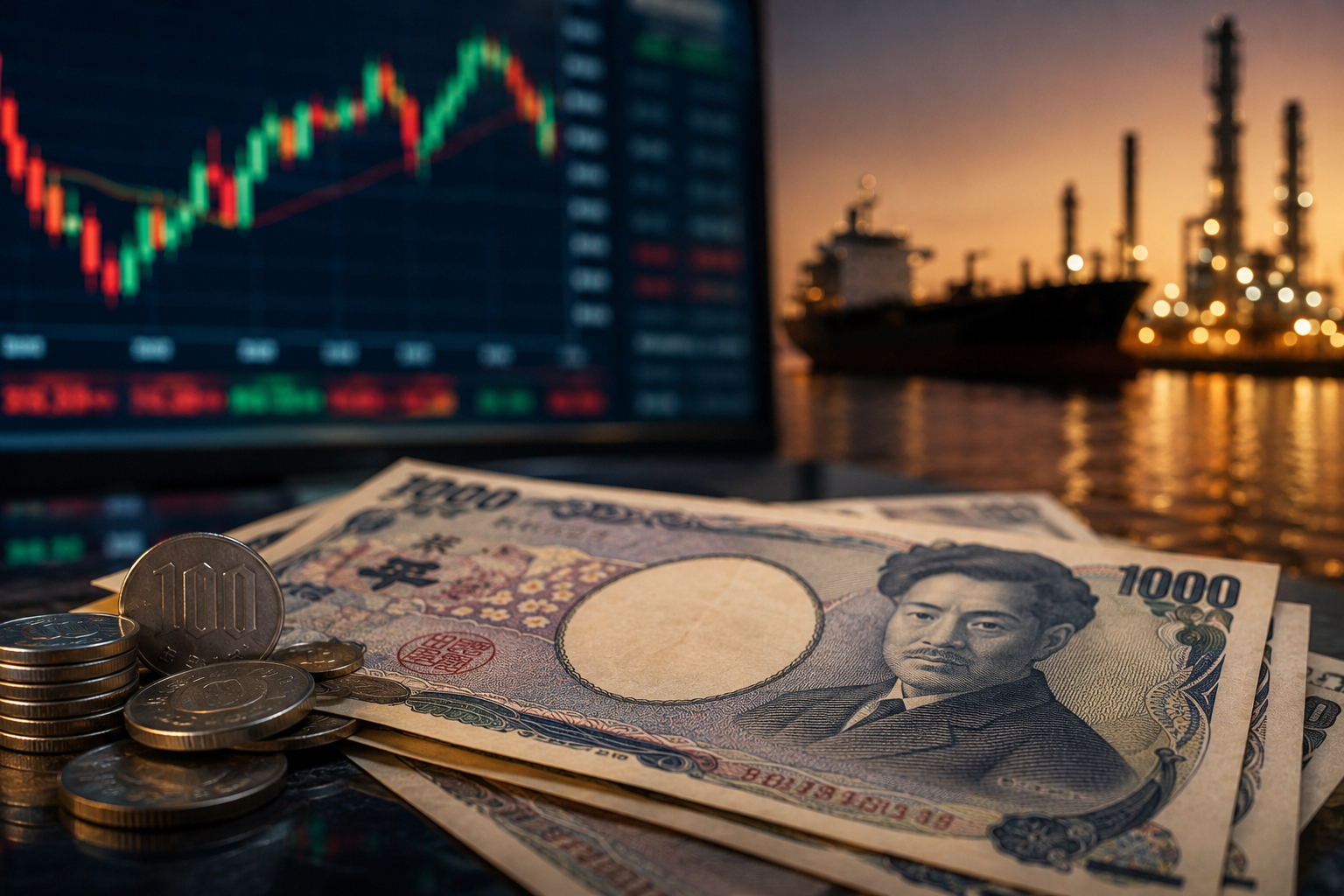
When the yen approaches 162 to the dollar, the story does not stay on the foreign-exchange page. It moves into gasoline, electricity bills, imported food, corporate purchasing, tourist spending, Bank of Japan policy, Ministry of Finance intervention warnings, and the government’s growth agenda. In late June 2026, Japan is standing on that narrow line.
Reuters reported that the yen softened to around 161.7 per dollar, close to the two-year low touched the previous week. It also noted that a move beyond 161.96 would take the currency to its weakest level since 1986. On a trading screen, that may look like another number. For Japan, it is much more: a combined pressure point for an import-dependent, aging, low-growth, high-debt economy.
A weak yen is somebody’s profit — and somebody’s bill
A weaker yen has obvious winners. Exporters earn more when overseas revenue is translated back into yen. Inbound tourism gets a boost because Japan looks cheaper to visitors with dollars, euros, or Singapore dollars. Equity markets often reward exporters and global companies when the currency weakens.
But the same weak yen becomes a bill for households and small businesses. Japan imports much of its energy, food, and industrial inputs. Even if the dollar price is unchanged, the yen cost rises when the currency falls. Electricity, gas, gasoline, plastics, fertilizer, logistics, restaurant ingredients, packaging, imported fruit, animal feed, building materials: the currency move enters almost every price chain.
Oil risk makes yen weakness dangerous
Yen weakness becomes especially dangerous when energy prices are rising at the same time. Reuters reported that Japan’s May crude import price hit a record high in yen terms, pushed up by Middle East tensions and supply disruption. Another Reuters report said Alberta and Japan were discussing increased Canadian crude imports as Japan seeks to reduce its heavy reliance on Middle Eastern oil. The structural reason is clear: roughly 95% of Japan’s crude imports come from the Middle East.
This is one of Japan’s oldest vulnerabilities. Since the oil shocks of the 1970s, Japan has tried to manage energy risk through conservation, nuclear power, LNG, coal, renewables, strategic reserves, and supply diversification. But after the 2011 Fukushima disaster, nuclear shutdowns and slow restarts left fossil-fuel dependence higher for longer. When the yen is strong, the burden is less visible. When the yen is weak and oil is expensive, the burden becomes immediate.
The Strait of Hormuz is far away — and very close
For a Japanese household, the Strait of Hormuz is geographically distant. In energy markets, it is close. Maritime security, LNG carriers, crude tankers, insurance costs, rerouting, reserve releases, and fuel-switching decisions all travel through the global price system. A few weeks or months later, they appear in electricity bills, gasoline prices, and corporate input costs.
In 2026, geopolitics is being amplified through exchange rates. Oil rises. The dollar stays strong. The yen weakens. Japan buys energy in dollars. That means the country faces both the dollar price increase and the yen translation hit — the most painful combination for an energy-importing nation.
The BOJ’s dilemma: defend the yen or protect demand?
The Bank of Japan is in a difficult place. It raised the policy rate to 1% in June, a 31-year high, yet the yen remains under pressure. Reuters reported that the yen has stayed near multi-decade lows despite the BOJ’s rate hike, keeping the cost of imported raw materials high.
Further rate hikes could support the currency. But higher rates would also affect mortgages, corporate borrowing, investment plans, and the government’s debt-service costs. The government is promoting long-term investment and growth toward 2040, while also suggesting that monetary policy should support private demand. The central bank’s independence and the government’s growth strategy are now meeting in the pressure zone between yen weakness and inflation.
The Ministry of Finance intervention card
When the yen weakens sharply, Japan’s official warnings grow louder. Reuters reported that Finance Minister Satsuki Katayama said the government was ready to act at any time on the yen. Markets parse such comments carefully. Is real intervention coming, or is it verbal warning? Would the United States cooperate? Can unilateral action change the trend, or only interrupt it?
Currency intervention can buy time. It can surprise markets and slow speculative one-way moves. But if the underlying forces remain — U.S.-Japan rate differentials, energy imports, fiscal anxiety, and growth doubts — intervention alone may not reverse the trend. Markets fear interventions that become temporary speed bumps rather than turning points.
The household yen: cheap country for visitors, expensive country for residents
A weak-yen Japan is attractive to foreign tourists. Sushi, ramen, hot springs, hotels, trains, electronics, cosmetics: everything looks like better value to a traveler carrying a stronger currency. But residents who earn yen and spend yen see a different country. Imported goods cost more, utilities rise, overseas travel becomes harder, and inflation feels less like a macroeconomic target than a daily irritation.
This dual reality defines Japan’s 2026 mood. Tourist districts are crowded. Some corporate earnings look better. But rural gasoline costs, urban power bills, school meals, food factories, delivery companies, fisheries, farm inputs, and restaurants are squeezed. The weak yen is a tailwind for some parts of the economy and a headwind for daily life.
What history teaches
The weak-yen periods of the 1980s belonged to a different Japan: younger, more export-driven, and still becoming a global manufacturing giant. The Japan of 2026 is older, more services-heavy, more dependent on overseas production networks, and still energy-poor. The export benefit of a weak yen no longer spreads through the entire economy as powerfully as it once did.
Since the 1990s, Japan spent decades fighting the opposite problem: deflation. Prices barely moved, wages stagnated, and low rates became the background of economic life. That history explains why reactions to inflation and yen weakness are divided. Some see long-awaited reflation. Others see a bad import-cost shock hurting households. The problem is that both views are partly right.
Three numbers companies should watch
| Number | Why it matters |
|---|---|
| Dollar-yen | Directly affects import costs, overseas earnings, tourism, and intervention risk. |
| Crude and LNG prices | Spread through power, gas, logistics, materials, and food prices. |
| U.S.-Japan rate spread | Shapes the structural incentive to sell yen and buy dollars. |
Importers must revisit hedging. Restaurants and retailers must decide how much cost to pass on. Exporters must decide whether yen-driven profits are returned to wages, domestic investment, and research. The weak yen is not only an accounting benefit. It is a test of corporate strategy and social responsibility.
The narrow road for politics
For the government, the yen is hard to manage. Ignore the weakness and households complain. Try to stop it aggressively and higher rates or intervention costs become the issue. Subsidize gasoline or electricity and the fiscal bill rises. Promise tax cuts and bond markets question discipline. Every option has a side effect.
That is why Japan’s 2026 economic policy cannot run on slogans. Growth, prices, currency stability, energy security, fiscal credibility, and household support must be handled together. The weak yen is the mirror that shows all of them at once.
Conclusion: ¥162 is not just a level — it is a warning light
A yen near 162 does not automatically mean crisis. Japan still has huge overseas assets, powerful companies, deep financial markets, major reserves, and world-class energy-efficiency technology. But when yen weakness, energy prices, and political pressure arrive together, the room for error shrinks.
The late-June yen level is not just currency news. It is a reminder that Japan is an import-dependent country, that households are sensitive to prices, that the BOJ must protect credibility while coexisting with politics, and that a growth strategy cannot succeed without energy security.
The weak yen is the world asking Japan a hard question. Will Japan return to being a country that earns through cheap currency? Or will it build stronger industries, a stronger energy base, stronger households, and restore confidence in its money? Near 162 yen to the dollar, the question is getting louder.
Sources and references
- Reuters: Yen around 161.7 per dollar; intervention messaging; 161.96 as a possible weakest level since 1986.
- Reuters: Japan’s May crude import price hit a record high in yen terms amid Middle East supply disruption.
- Reuters: Alberta and Japan discussed boosting Canadian crude imports to reduce Japan’s heavy Middle East dependence.
- Reuters: Some BOJ members called for faster hikes; weak yen kept raw-material import costs high.
- International Energy Agency: Japan energy mix and import-dependence context.