The number does not sound like the beginning of a dramatic revival. A ceiling of ¥250,000 will not fully repair an old building, establish a permanent medical facility, bring broad fields back into cultivation or provide a stable salary for festival workers. Yet between a village saying “we should try” and opening the door on the first trial lies a gap that money can bridge.
On August 21, Toyama Prefecture selected four groups in the second round of its Mountain and Intermediate Area Challenge Support Program. They are Jinen Community Lab in Yatsuo, Toyama City; the Wakaguri Community Promotion Association in Kurobe; the Sendanno Revitalization Council in Tonami; and the Etchū Gokayama Kokiriko Song Preservation Society in Nanto’s Taira area.
One was chosen under a new category for diverse people and the next generation, designed for projects led by younger people, women or newcomers. Three received “first-step” support. Both categories carry a ceiling of ¥250,000 per year for as long as three years.
The prefecture did not announce that every group would receive the full amount. It announced selected projects and the program ceiling, not each final award. A first round in June selected 12 other proposals, bringing the fiscal-year total to 16. This is not one large construction project. It is a portfolio of small, place-specific trials.
Four communities, four different missing links
“Population decline” can become too large a phrase to be useful. On the ground, the problem is specific: nobody knows how to contact the owner of an empty house; an older resident cannot reach a clinic; fields have no successor; costumes deteriorate while a festival attracts spectators. The four projects try to repair different broken links.
| Group and place | Core proposal | The cycle it hopes to create |
|---|---|---|
| Jinen Community Lab Yatsuo, Toyama City | DIY conversion of a vacant house into “En no Kōsaten,” or the Intersection of Connections; farming and nature workshops in Ōnagatani; international student volunteers. | Residents and newcomers meet → town and remote valley exchange people → outside participants return and assume roles. |
| Wakaguri Community Promotion Association Kurobe | Local discovery walks, guide training, a Wakaguri vacant-house bank and a market near the Shinkansen gateway. | Residents identify value → visitors stay longer → homes meet potential residents → activity generates a revenue base. |
| Sendanno Revitalization Council Tonami | A supported telemedicine site; mapping abandoned farmland; testing high-value crops; branding rice and lotus root; farm stays and agriculture-welfare cooperation. | Services sustain living → land returns to use → work and income grow → new farmers and repeat participants arrive. |
| Etchū Gokayama Kokiriko Song Preservation Society Nanto | Costume fitting, instrument playing and interpreter-guided festival experiences, with fees returned to costumes and landscape conservation. | Spectators participate → participation earns revenue → revenue maintains culture and place → new stewards develop. |
These are not finished success stories. They are hypotheses. A useful trial discovers who joins, what continues, where the operation fails and what a larger second investment would need to buy. A grant that cannot tolerate a failed experiment is not really funding experimentation.
Yatsuo: New residents move from guests to operators
Jinen Community Lab is the sole second-round winner in Toyama’s newly created “diverse people and next generation” category. The prefectural outline explicitly says new residents will occupy central roles. That is a significant change in the grammar of rural policy. They are not merely people to be welcomed at a ceremony. They will help control a budget, operate a place and weave relationships.
The physical anchor is a vacant house in Yatsuo’s Nishimachi district, to be repaired through DIY work and opened as En no Kōsaten—the Intersection of Connections. The name describes movement rather than architecture. Residents, newcomers and kankei jinkō—people who do not live there but maintain continuing ties—would meet and learn there.
The plan then reaches beyond central Yatsuo to Ōnagatani, a remote valley surrounded by mountains at Toyama City’s southern edge. It would use blueberry farms and the natural environment for agricultural experiences and workshops. International student volunteers and interns would add another layer, with the stated goal of building a base and human network over three years and spreading activity across Yatsuo.
This is not starting with an empty landscape. During the 2010s, projects around Yatsuo’s mountain districts already used blueberry-picking farms and the collection and sale of mountain vegetables and mushrooms to connect rural production with visitors. The new project’s contribution is to connect existing resources to new operators and an international network.
But a vacant house is not a free box. Ownership, inheritance, seismic safety, fire rules, insurance, plumbing, winter maintenance and utility costs persist after a cheerful DIY weekend. Participatory repair can build attachment, but qualified work must be separated from tasks volunteers can safely perform. The real test is not whether the house looks better once. It is whether someone opens it on ordinary days, accepts responsibility and pays the bills a year later.
Wakaguri: A Shinkansen station does not make people stay
Wakaguri contains Kurobe-Unazukionsen Station on the Hokuriku Shinkansen. Together with the nearby expressway interchange, it has regional access that many rural districts would envy. But trains stopping and homes remaining occupied are different outcomes.
The Wakaguri association plans a “Wakaguri Good Places Tour” to rediscover local resources, history and culture while training residents as guides. This is more than commissioning a tourism brochure. It requires residents to decide what they value enough to narrate. One example is the Shōkaku Garden, a municipal scenic property developed around the former estate of a prosperous Wakaguri landowner and a relocated residence of Toyama’s first governor.
A second pillar is to find and visualize empty homes, then build a “Wakaguri version” of a vacant-house bank. Japan’s many akiya banks reveal a persistent lesson: putting a property online is the easy step. Useful matching requires ownership consent, inheritance resolution, boundaries, possessions left inside, repair estimates, agricultural-land questions and an honest explanation of neighborhood life. A community-run bank can contribute the knowledge that a property listing does not contain.
A market near the station would present produce, specialties and local history. The prefecture’s outline aims beyond turning a passing traveler into a shopper. It wants longer stays and continuing relationships. Ridership or one-day attendance may therefore be less revealing than the number of visitors who return after six months, help a tour, inquire about a house or join a local activity.
Sendanno: Medicine, farmland and work in one plan
The Sendanno proposal is the broadest. It would hold demonstrations and establish an operating system for a place where residents who struggle to travel can receive telemedicine. At the same time, the council would map abandoned farmland, make a land-use plan and research high-value crops suited to local conditions. It also proposes branding Sendanno rice and lotus root, harvest events, barbecues, a collection service for a farm shop, farm stays and agriculture-welfare collaboration.
It can look like too many problems in one application. In a mountain community, however, sectors do not stay in their administrative boxes. If reaching a doctor becomes harder, aging residents become less able to remain. If residents leave, fields and waterways lose maintenance. Abandoned land worsens wildlife damage and the landscape. Without income, younger operators do not arrive. A farm shop without a collection service may have empty shelves because older growers cannot deliver produce.
That is precisely why ¥250,000 must not be read as the cost of “implementing” the whole list. It can pay for demonstrations, field mapping, crop trials, interviews and role design—the evidence needed to decide which larger investment should come next.
Telemedicine needs a medical provider, identity and privacy controls, reliable communications, a route to in-person care and emergency triage. Abandoned fields require confirmed ownership, water, soil, slope, machinery access, wildlife control and a buyer. A small trial is valuable when it exposes those requirements before the community commits more money.
A seed grant should not pretend to solve a large problem. It should let a community discover which problem can be solved, with whom, in what order and at what true cost.
Gokayama: From watching a festival to helping sustain it
The Etchū Gokayama Kokiriko Song Preservation Society calls its plan the “Everyone Enjoys DeDeReKo Den—Kokiriko Festival Plus-One Project.” It would add costume fitting, traditional instrument playing and interpreter-guided experiences. Supporters from outside, students and potential migrants could also help operate the festival. Experience fees would flow back into costume maintenance and landscape conservation.
The Kokiriko Festival is held every September 25 and 26 at Hakusan Shrine in Kaminashi. Dancers sound the sasara, lion dance and Gokayama songs are presented, and visitors can join a communal dance. Nanto’s cultural archive says written evidence places kokiriko performance in the Edo period, but the tradition had nearly faded from memory in the early Shōwa era. It was later revived, and the present festival began in 1974.
That history matters. Tradition is not a specimen that survived because nobody touched it. Kokiriko weakened, was consciously learned again and was rebuilt as a public practice. The proposed visitor experience is another act of adaptation, not necessarily a break from authenticity.
Gokayama is internationally known through its gassho-style villages and UNESCO World Heritage status. Yet a heritage label does not automatically produce singers, flute players, sasara dancers, costume repairers or people who prepare a shrine precinct. Visitor counts are not succession counts. A transparent fee that is reinvested in culture can turn tourism spending into a maintenance circuit.
Participation also needs boundaries. Trying on a costume does not make a visitor a preservation-society member. The community must decide what is performance, what is offering, where photography is appropriate and what knowledge requires longer apprenticeship. Interpretation should explain not only words, but why a movement and place matter.
Not scenery: Infrastructure made of water, soil and labor
Mountain and intermediate areas cover more than 70% of Toyama Prefecture. Their forests store water, reduce landslide risk, absorb carbon and sustain biodiversity. Terraced paddies and fields temporarily hold rain, slow soil loss and delay downstream flood peaks. Clearing a waterway or cutting vegetation along a farm road is not merely a private garden chore. It is small-scale watershed infrastructure.
That infrastructure is maintained by people, not by the abstract word “community.” Toyama’s second mountain-area strategy reports that the prefecture’s total population fell about 5% from 2010 to 2020, while the mountain and intermediate population fell roughly 13%. In 2020, 37.5% of residents in those areas were 65 or older. There were 72 older residents for every 100 working-age residents.
By 2050, the population of these areas is projected to be about 44% below its 2020 level, and 48.7% of residents would be 65 or older. The strategy also notes that shared work such as farmland and irrigation management drops sharply when a settlement falls to nine households or fewer, and Toyama has a greater share of settlements at that scale than Japan overall.
One person disappearing from a population table can mean losing the person who plays the festival flute, runs a snowplow, remembers where a water channel fails, knows the owner of a vacant house and completes the grant paperwork.
From building roads to building relationships
Japanese mountain policy long focused on compensating for disadvantage. The 1965 Mountain Village Development Act addressed gaps in transport, industry and living conditions. Legislation in the 1990s promoted agriculture and infrastructure in designated rural areas. In 2000, Japan launched direct payments to mountain and intermediate areas, supporting continued farming and collective maintenance of fields, irrigation and roads under difficult conditions.
Direct payments preserve the operating base. Challenge grants test new activity on top of it. They are not substitutes. Festival fees cannot carry the full cost of watershed management, and a payment based on farm area will not by itself create an interpreter program, a telemedicine support point or a new-resident network.
In 2019, the Toyama Prefectural Assembly enacted an ordinance for sustainable society in mountain and intermediate areas. Its preamble treated long-term depopulation and aging as unavoidable structural change, then assigned roles to the prefecture, municipalities, residents and businesses. Toyama formally adopted its second comprehensive strategy in March 2026, covering fiscal 2025 through 2029 under the aspiration “Sustainable Satoyama Made by Everyone—Smart Satoyama 2.0.”
1965 — The Mountain Village Development Act creates a national framework for geographic disadvantage.
1993 — A law promotes agriculture and infrastructure in designated farming and mountain areas.
2000 — Direct payments begin for farming and collective land management in disadvantaged rural areas.
2015 — The Hokuriku Shinkansen opens between Nagano and Kanazawa, making Kurobe-Unazukionsen a new gateway.
2019 — Toyama enacts its sustainable mountain-community ordinance.
2025 — The period covered by the second comprehensive strategy begins.
2026 — Toyama adopts the strategy, adds a category for younger people, women and newcomers, and selects 16 challenge projects in two rounds.
Why ¥250,000? Buying the right to test
Large subsidies typically demand detailed plans, estimates, matching funds and confident outcomes. That can work for mature organizations while excluding a small group taking its first step. A ¥250,000 program is suited to prototypes, demonstrations, interviews, outreach, modest equipment and expert advice—the first evidence needed for a more serious decision.
The three-year window also matters. A group can recruit in year one, revise roles in year two and build revenue or a permanent support arrangement in year three. A crop cannot establish quality and distribution in one harvest. An annual festival offers only three chances to test during three years. Trust with a vacant-house owner develops more slowly than a publicity campaign.
Japan’s national regional-revitalization office defines kankei jinkō, or “relationship population,” as people who maintain continuing and diverse involvement with a particular place—often described as more than tourists but not residents. The four grants offer entrances through workshops, markets, international students, festival operations and housing inquiries.
But relabeling every visitor as relationship population achieves nothing. The relationship requires return: working again next season, repeatedly purchasing products, taking responsibility for a task, helping communicate the community’s story or considering residence while respecting local decision-making.
Do not measure success by event attendance alone
Small community projects produce photogenic metrics: 20 people at a DIY day, 500 at a market, 100 costume experiences. Activity is not the same as sustainability. The important evidence appears after the event.
- Yatsuo: How many days did the hub open, who shared operations, what paid fixed costs and how many outside participants returned?
- Wakaguri: How many homes had verified owners, how many inquiries reached visits or contracts, and how many local guides remained active?
- Sendanno: Did residents continue using supported telemedicine safely, how much land returned to use, and did crops produce positive margins?
- Gokayama: How much experience revenue returned to culture and landscape, and did the project add performers, operators or capable interpreters?
- Every project: How much unpaid labor was required, was work concentrated on one organizer, and what revenue remained after subsidy?
Recording volunteer labor is particularly important. A project may spend only ¥250,000 in cash while residents contribute hundreds of evenings and weekends. Its real cost is much higher. If one passionate person holds every key and completes every report, the program ends when that person is exhausted. Sustainable activity divides work, plans succession and eventually pays roles that cannot remain hobbies.
The walls a small grant cannot cross
The program should not be romanticized. A ¥250,000 experiment cannot reverse a 13% population loss in a decade or a projected 44% decline by 2050. Roads, snow removal, communications, transport, medicine, care, schools, farm income and safe housing require larger policies and stable finance.
More projects also mean more applications, receipts, meetings and reports. Japan’s direct-payment program already faces the loss of people able to handle settlement agreements and paperwork. An administration that asks exhausted communities to innovate must simplify compliance and provide practical support, or it merely adds another job to the busiest resident.
“Self-sustaining” deserves skepticism too. Water storage, flood mitigation, cultural continuity and landscape conservation benefit people outside the village, but cannot always be fully sold. That is why public support exists. Continuation after a challenge grant may mean an intelligent combination of earned income, fees, donations, direct payments and municipal contracts—not zero public spending.
Deepening relationships when population cannot grow
In 2024, 902 people moved to Toyama from outside the prefecture through prefectural and municipal consultation channels, and household heads in their twenties through forties made up about 70%. Migration matters. Yet not every settlement can plan on net growth. Toyama’s own strategy pairs efforts to ease depopulation with adaptation to a smaller society.
The four grants are four responses. Yatsuo tries to cross the boundary between insider and outsider through shared operation. Wakaguri tries to turn a Shinkansen passerby into a walker, repeat visitor and possible resident. Sendanno refuses to treat medicine and agriculture as problems belonging to separate departments; they are conditions of staying. Gokayama tries to convert passive viewing into participation and payment that flows back to preservation.
When population falls, community capacity is not determined only by registered residents. It depends on who holds a key, guides a walk, connects a doctor, works a field, teaches a song—and comes back next year.
The real policy begins after the first ¥250,000
Seed grants make hopeful announcements. Their public value comes later, when Toyama reports what lasted, what failed and what another community can learn. If it shares not only award-winning success but also why homeowners did not participate, where medical operations became difficult, which crops could not earn a margin or whether tourism overburdened preservation volunteers, 16 trials become a body of prefecture-wide knowledge.
A successful trial also needs a route to different-scale finance. Safe building renovation, communications, mobility, farmland engineering, paid coordination and cultural repair cost more. Seed money and growth money are different tools. If a community proves demand with ¥250,000 and is then expected to continue forever on ¥250,000, policy punishes success.
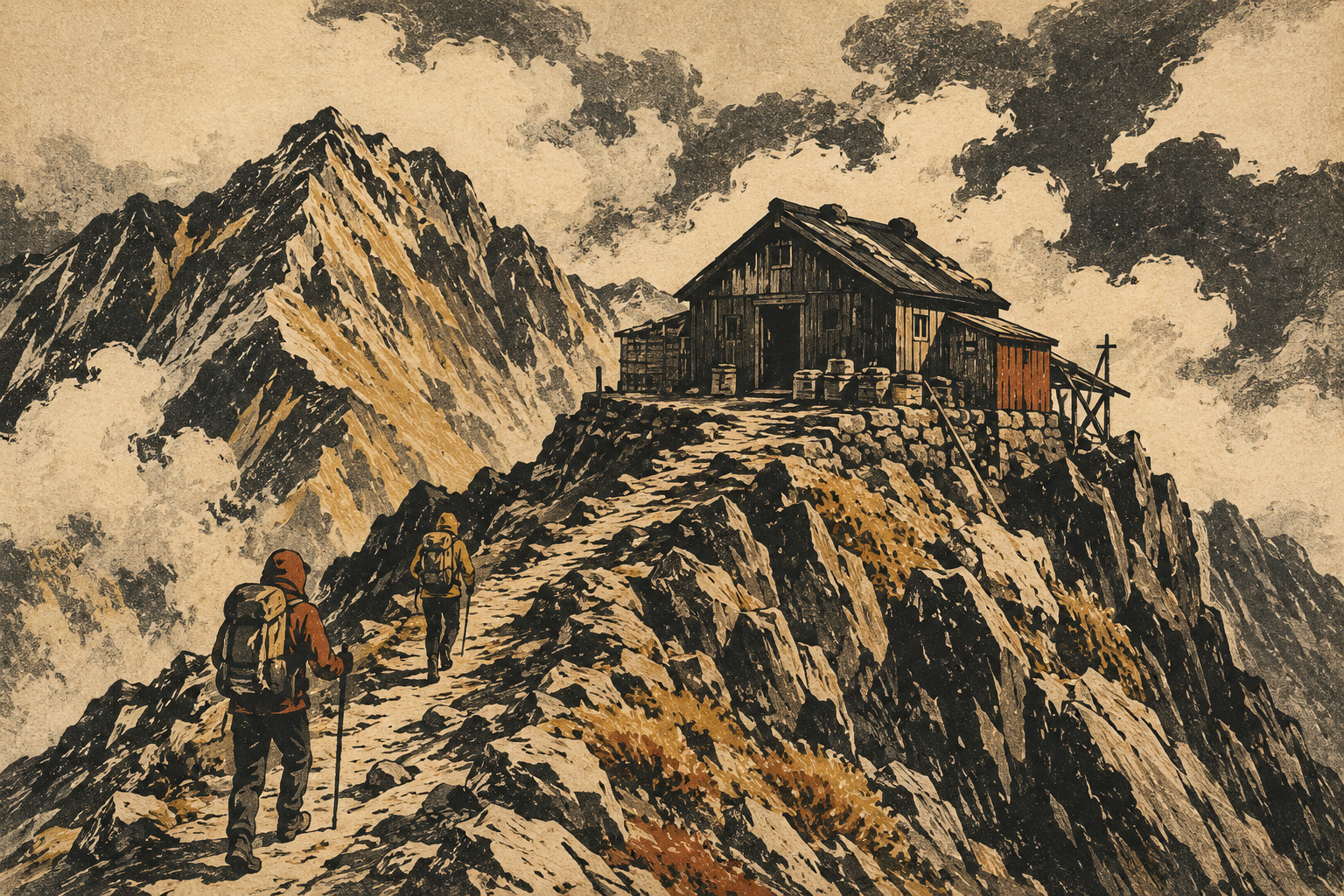
From a ridge in the Northern Alps, Toyama’s settlements look small. The work performed there is not: water, forests, fields, roads, houses, clinics and festivals support life far beyond the village. The grant is not the price of that work. It is permission to try a new way of organizing it.
Starting a large idea with a small sum is not automatically inspiring. What matters is watching carefully, learning from failure and building the next bridge when evidence justifies it. The future of a mountain community will not be decided by one selection notice, but by who gathers again after it.
- Toyama Prefecture — Second-round Mountain and Intermediate Area Challenge Support selections (August 21, 2026)
- Toyama Prefecture — Selected groups and project descriptions
- Toyama Prefecture — Twelve first-round selections for fiscal 2026
- Toyama Prefecture — Adoption of the second comprehensive mountain-area strategy
- Toyama Prefecture — Second strategy: population, land, public functions and projections
- Toyama Prefectural Assembly — Ordinance on sustainable society in mountain and intermediate areas
- Ministry of Agriculture, Forestry and Fisheries — Rural multifunctionality and direct payments
- Cabinet Secretariat and Cabinet Office — Creating and expanding “relationship populations”
- Nanto Cultural and Arts Archive — History of the Kokiriko Festival
- Gokayama NANTO Tourism Organization — Kokiriko Festival and participatory dance
- UNESCO World Heritage Centre — Historic Villages of Shirakawa-go and Gokayama
- Kurobe City — Planning context around Kurobe-Unazukionsen Station and Kurobe Interchange
Editor’s note: This article is based on prefectural, municipal, national and UNESCO materials available through August 21, 2026. Japan.co.jp did not independently interview the selected groups. Individual grant amounts were not listed; ¥250,000 is the annual program ceiling. Project descriptions are plans at selection, not completed results. The dollar conversion is approximate and uses the page’s displayed rate of ¥159.02 per U.S. dollar. The main image is a conceptual illustration of mountain Toyama, not documentary photography of a selected location, participant or hut.