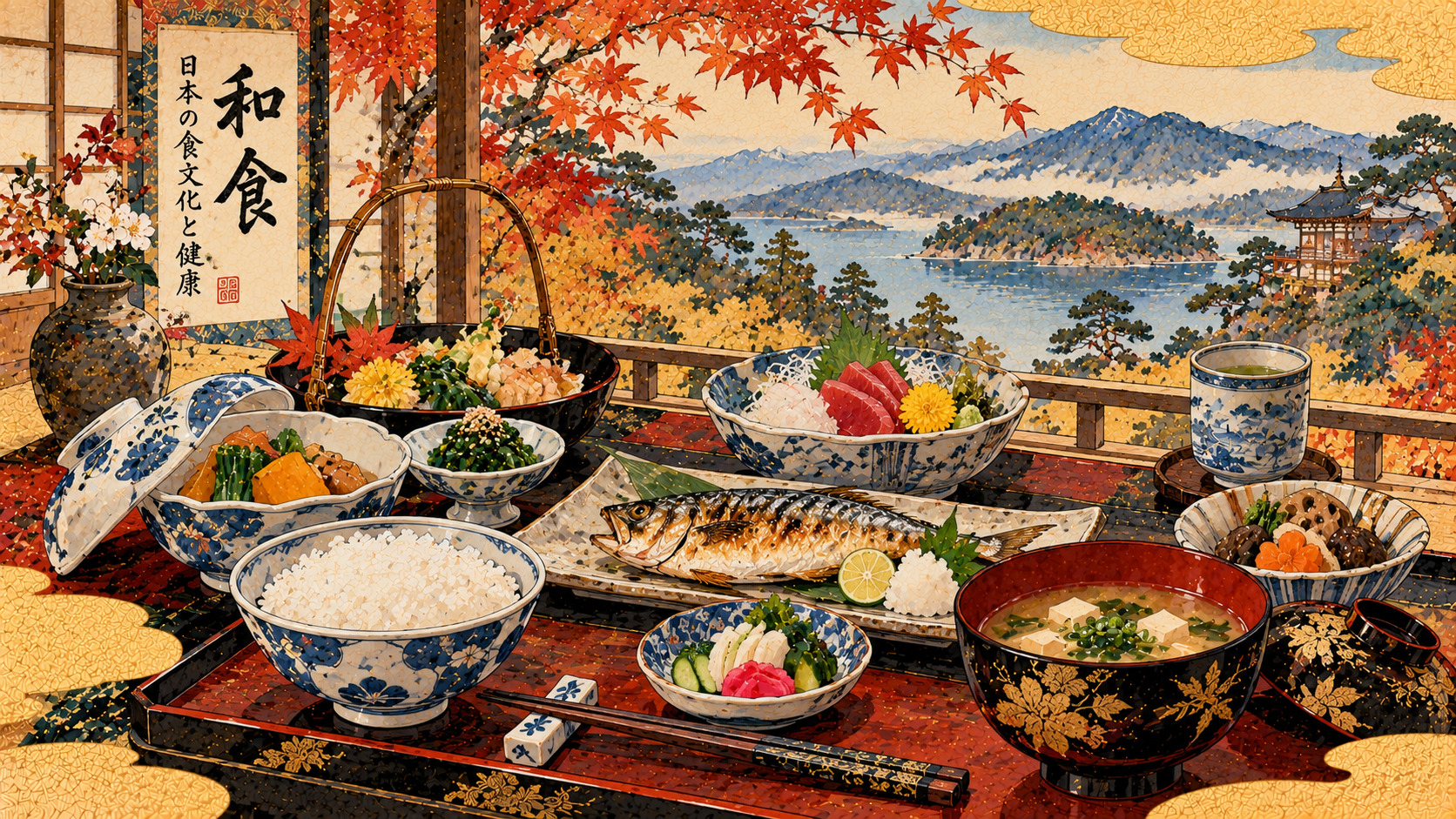
The promise—and the problem—on a Japanese dinner table
A bowl of rice, miso soup, grilled fish and vegetables can look like a simple prescription for healthy living. Yet that familiar arrangement carries a much larger history of farming, preservation, seasonal ritual and family practice. It also poses a question science cannot settle through nostalgia alone: which parts of a traditional diet help health, and which require modification? Japan’s agriculture ministry has convened a November symposium to explore exactly that tension, setting Japanese food traditions alongside international research rather than presenting washoku as a ready-made medical solution.
A new government forum, not a new clinical finding
The Ministry of Agriculture, Forestry and Fisheries announced the symposium on October 26, 2026. Formally titled “Symposium on Food Culture and Health: Viewing Washoku in the World,” it is scheduled for November 27, from 6:00 to 7:30 p.m. at TKP Garden City Premium Shinagawa Takanawa-guchi in Tokyo. The in-person meeting has a capacity of 100 and is free; applications close November 20 unless capacity is reached earlier. These are announced plans, not findings from a meeting that has already happened.
Why UNESCO recognition is so often misunderstood
In December 2013, UNESCO placed “Washoku, traditional dietary cultures of the Japanese, notably for the celebration of New Year” on its Representative List of the Intangible Cultural Heritage of Humanity. It recognized social practices: knowledge of ingredients, preparation, meals shared with others, and respect for natural resources. The inscription did not certify the nutritional content of every Japanese dish, award a health endorsement to sushi or ramen, or prove that a particular diet causes exceptional longevity. That distinction is central to responsible coverage of washoku.
A cuisine that cannot be reduced to a menu
The agriculture ministry describes four characteristics: diverse and fresh ingredients treated with care; meals that can support nutritional balance; expressions of nature and the seasons; and connections to annual observances and community life. The familiar ichiju-sansai model—one soup and three side dishes served with rice—is a useful framework, not a claim that every Japanese household eats that way. Okinawan food histories, northern preserved foods, urban noodle shops, New Year celebrations and everyday home cooking all complicate the notion of a single timeless Japanese diet.
The enduring science problem: salt
The advantages of vegetables, legumes, fish and varied ingredients can coexist with risks from high-sodium preparations. Miso, soy sauce, pickles, noodles and salted fish can contribute considerable sodium. A study using Japan’s National Health and Nutrition Survey examined 95,581 adults across 2007–2019 and found that seasoning sources including soy sauce and soybean paste continued to account for a large share of dietary salt. Some sources changed with age, making one-size-fits-all dietary advice difficult. Appreciating washoku therefore need not mean reproducing historical quantities of salt.
What population studies can—and cannot—say
Researchers have investigated associations between Japanese-style dietary patterns and all-cause or cause-specific mortality. A 2025 Japan Public Health Center-based cohort analysis included 93,049 adults and evaluated a modified Japanese Diet Index that accounted for changing food habits, including salty foods. Such work can establish patterns and statistical associations, not the certainty of randomized proof that a traditional meal prevents or cures disease. Health also depends on activity, smoking, healthcare, income and other exposures. Headlines declaring washoku a longevity secret risk obscuring those variables.
From preservation to globalization
For centuries, geography shaped Japan’s meals. Rice-growing regions differed from coastal fisheries and mountain communities; fermentation and salting protected food before refrigeration. Urban commerce encouraged specialized restaurants and prepared dishes. During modernization, meat, dairy products and imported culinary methods broadened the national table. Postwar school lunches, refrigerators, convenience stores and changing work schedules transformed eating further. The history explains why preservation techniques could be culturally valuable while producing dietary concerns that contemporary nutrition research seeks to address.
The speakers bring different kinds of evidence
The announced program features University of Tokyo emeritus professor Satoshi Sasaki on international research strategies for healthy diets, and Doshisha Women’s College of Liberal Arts professor Tomoko Imai on food education and practical learning. A panel is also scheduled to include Mai Matsumoto of the National Institutes of Biomedical Innovation, Health and Nutrition, traditional culinary teacher Naohisa Yanagihara, and regional-food researcher Yuriko Aoki. Their scheduled topics and affiliations are drawn from the ministry’s notice; none of the remarks at the future event should be presented as already delivered.
The next generation may define tradition differently
November 24 is observed in Japan as Washoku Day, providing a focus for classroom meals and public education. Yet passing on culinary knowledge is more than teaching children to reproduce one ceremonial dish. Knowing how to select seasonal ingredients, taste dashi, read nutrition labels, cook within a household budget and understand regional differences may matter just as much. The people who sustain these traditions—farmers, fishers, food manufacturers, school-catering teams and cooks—also face economic and demographic pressures.
An international opportunity without health mythology
Washoku is frequently represented abroad by restaurant favorites, while local dishes, preserved vegetables, fermented products and ritual meals attract less attention. This creates an opportunity for cultural journalism that explores a regional food’s origin, farming practices and social role. It also challenges policymakers and businesses to communicate traditional food honestly: cultural importance does not exempt a product from nutrition scrutiny, and a science-based adaptation need not erase heritage.
What to watch on November 27
The unanswered questions concern both evidence and policy. Will speakers distinguish broad dietary patterns from the properties of individual dishes? How will educators reconcile preservation of traditional recipes with sodium reduction and contemporary health concerns? Which practices can be meaningfully compared with other dietary cultures? The October 26 announcement establishes a forum for those questions, not their answers. Japan’s food heritage will be best served when cultural pride and nutritional rigor sit at the same table.
Sources and verification
Based on Japanese primary government releases, UNESCO heritage records and peer-reviewed research. No independent interviews were conducted.
- Ministry of Agriculture: October 26 symposium announcement
- MAFF food-culture portal
- MAFF: Washoku and its four defining attributes
- UNESCO: Washoku intangible heritage listing
- Japan MOFA: 2013 inscription decision
- MAFF: Food education white paper and washoku traditions
- Matsumoto et al.: Japanese salt-source trends (2023)
- Japanese Diet Index and cause-specific mortality cohort (2025)
- MAFF: Washoku Day, November 24