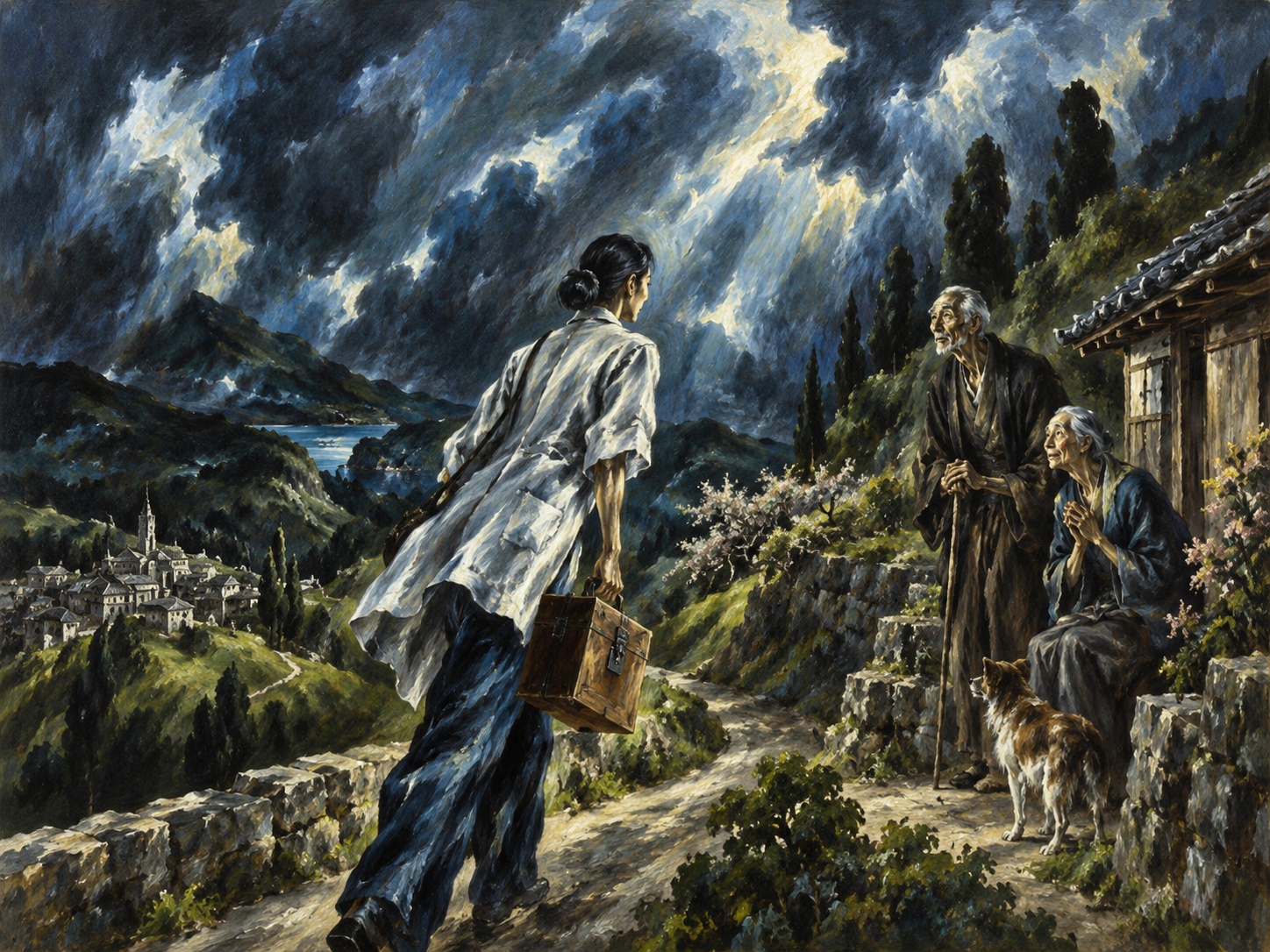
Seiyo City stretches from the Uwa Sea to the Shikoku Karst across 514.33 square kilometers, the second-largest municipal area in Ehime Prefecture. Its population stood at 32,233 at the end of August 2026. The city council says the aging rate had already reached 45.0% by the end of April.[3][4][5]
In a place that large, old and geographically dispersed, the difficult health-policy question is often not whether information exists. It is how to get information — and sometimes a human being — to the front door.
On September 14, Seiyo City and Fuji Yakuhin signed a comprehensive cooperation agreement. It is Fuji Yakuhin’s 56th municipal agreement built around its household placement-medicine business and its second in Ehime after Uwajima. The company says about 2,000 homes and businesses in Seiyo already use its medicine-box service; the group also operates two drugstore/pharmacy locations in the city and 20 across the prefecture.[1]
The agreement names five areas: self-medication, health-information outreach, monitoring of older residents, disaster preparedness, and other cooperation. But the announcement is a framework, not the launch of a finished citywide monitoring program. Fuji Yakuhin explicitly says concrete activities will be decided through future discussions with Seiyo. Visit frequency, referral rules, coverage targets, information-sharing procedures and municipal spending have not been published.[1]
The medicine-box visitor could also carry public-health information
Japan’s placement-medicine model leaves a stocked medicine box in a home or workplace. During a later visit, the salesperson checks what was used, collects payment for those items and replenishes the box. Fuji Yakuhin says its placement staff are, in principle, qualified registered sellers for over-the-counter medicines.[1][6]
Under the Seiyo agreement, those recurring visits may also be used to provide information about proper OTC use, lifestyle-related disease, heat illness and other seasonal health risks, along with encouragement to undergo health checkups.[1]
Self-medication should not be confused with avoiding medical care. Japan’s Ministry of Health, Labour and Welfare cites the WHO definition: taking responsibility for one’s own health and treating minor physical problems oneself. The ministry also emphasizes the conditions around that idea — health literacy, prevention and taking appropriate action according to symptoms and circumstances.[7]
A medicine-box salesperson is not being turned into a physician. The useful role is narrower: help people use OTC products appropriately and deliver information that may connect them to screening, consultation or medical care.
| Area | Direction announced Sept. 14 |
|---|---|
| Self-medication | Explore education on appropriate OTC use and prevention of lifestyle-related or seasonal illness |
| Health information | Explore distribution of health materials and encouragement to receive health checkups during regular visits |
| Monitoring older residents | Explore check-ins, consultation and information sharing with public or related agencies when meaningful changes are noticed |
| Disaster preparedness | Explore medicine-box placement at public facilities, use during disasters and OTC supply to evacuation shelters |
| Implementation | Specific activities remain subject to future consultation between Seiyo City and Fuji Yakuhin |
“Monitoring” is not a replacement for social workers or nurses
The most attention-grabbing part of the agreement is older-person monitoring. Fuji Yakuhin says the parties will consider using visits to older customers for active greetings, listening to concerns and sharing information with the city or relevant organizations when changes in health or living conditions are noticed.[1]
The company already uses similar language in other municipal agreements. In Kainan City, for example, it describes checking on older customers during ordinary visits and cooperating with public agencies when something unusual is noticed.[8]
But a placement-medicine salesperson is not a community comprehensive support center worker, home-care nurse or welfare commissioner. The commercial visit can create an extra point of human contact. It does not provide professional needs assessment, diagnosis or case management.
That distinction will matter in implementation. Residents need to know whether a concern will be passed on, under what conditions, with whose consent and to which organization. Otherwise “monitoring” can create false reassurance or, at the other extreme, feel like unwanted surveillance.
In Seiyo, the fact that somebody comes to the house has unusual value
Seiyo runs from a ria coastline to high mountain communities and is 75% forested. Its own regional-medical plan says settlements are scattered across a very large area, some residents have difficulty reaching care, medical resources are limited and relatively few institutions provide home medical or home dental services.[9][10]
The demographic pressure is equally stark. Seiyo had 47,043 people when the city was created through municipal merger in 2004. By August 2026 it had 32,233 — a decline of about 31%. The city council reported an aging rate of 45.0% in April 2026.[3][4]
In a low-density region, government cannot simply solve every access problem by opening more offices or sending specialists to every household more often. A commercial network that is already visiting households may provide a lower-cost additional channel for information and observation.
But the roughly 2,000 Fuji Yakuhin customers do not represent citywide coverage. The figure includes businesses as well as homes. People who do not use placement medicine, use another provider or do not want commercial home visits remain outside that route.
Any claim that the agreement creates a “community health network” therefore has to include the question of who is not reached.
Seiyo’s health plan already depends on many parts of the community
Seiyo adopted its Second Health Promotion Plan 2025, “Genki da! Seiyo,” in March 2016. The plan is a municipal health-promotion program under Japan’s Health Promotion Act and is designed to involve households, communities, schools, companies and public institutions. Its period was later extended through fiscal 2026, with the next plan scheduled from fiscal 2027.[11][12]
The city continues to promote health and cancer screening in 2026, stressing early detection of diabetes, hypertension and cancer.[13]
Public information can fail even when it is accurate and well-designed. A web page or newsletter does not reach every older resident, and a person who does not normally visit a clinic may ignore repeated screening notices.
A face-to-face reminder from somebody already entering the household for another reason may have value. The meaningful metric, however, is not the number of leaflets handed out. It is whether a person actually books a screening, asks for help or changes behavior.
A 300-year-old model: use first, pay later
Placement medicine is not a modern subscription service. Toyama Prefecture describes household medicine placement as a traditional industry with roughly three centuries of history.[14]
The commonly told origin story centers on Maeda Masatoshi, the second lord of Toyama Domain. Toyama’s 2026 pharmaceutical history material says Masatoshi is said to have received the Hangontan formula from Okayama physician Mandai Jokan in 1683. In 1690, according to tradition, he gave Hangontan to a feudal lord suffering sudden abdominal pain at Edo Castle, helping establish the reputation of Toyama medicine.[15]
Whatever weight one gives the famous story, the commercial innovation is well documented: senyo kori, literally “use first, profit later.” Medicine was left with a customer in advance; the traveling seller later returned and collected payment only for what had been consumed.[14][16]
In an era when medical institutions were sparse and keeping multiple medicines on hand required cash, the arrangement lowered the household barrier to having medicine available before illness occurred.
The seller’s return visit was essential. The system depended on commercial credit and repeated human trust, not a one-time retail transaction.
An Edo-period credit system becomes a modern “last mile”
Fuji Yakuhin began as a placement-medicine business in Toyama in 1930. It later expanded into drugstores and dispensing pharmacies, pharmaceutical manufacturing and prescription-drug sales. The company says it now maintains about 2.4 million placement-medicine boxes in homes and offices nationwide and operated 1,285 group stores as of March 2026.[1][17][18]
The company describes the placement network as a nationwide “last mile.” The phrase is normally used for parcel delivery or telecommunications. Here it means a salesperson physically reaches the home.
In an era of e-commerce and telemedicine, that human route can look inefficient. In a shrinking rural region, the inefficiency may be the feature. A visit made for commercial reasons also creates a conversation and a chance to deliver another message.
Replicating that contact entirely with public employees would be expensive.
Placement medicine is also a regulated pharmaceutical business
The romantic history can obscure a modern legal fact: placement medicine operates inside Japan’s Pharmaceutical and Medical Device Act.
Article 25 recognizes three types of pharmaceutical sales licenses, including placement sales. Article 30 requires a license in each prefecture where medicines are placed. The law also restricts placement to eligible OTC medicines, including conditions related to stability over time.[19]
Separate ministerial rules require a pharmacist to be working in the area while Category 1 OTC medicines are being placed, and a pharmacist or registered seller while Category 2 or Category 3 medicines are being handled.[20]
Traditional placement medicine is therefore not an unregulated historical custom. It is a specific form of modern pharmaceutical distribution.
In Seiyo, disaster medicine is not a theoretical issue
Seiyo suffered severe damage during the July 2018 western Japan floods, particularly in the Nomura area.
The city’s post-disaster review says medical and public-health operations experienced some immediate shortages of disinfectant, eye drops and mouthwash. From July 9 onward, assistance from Ehime Prefecture, Ehime University and other sources allowed necessary medical supplies to be secured.[21]
Seiyo’s disaster plan now calls for authorities to monitor evacuees’ health, including the status of medicines for chronic conditions and the sanitary environment of shelters. During a major disaster, the city plans medical aid stations operated with Seiyo Municipal Hospital, the local medical association, DMAT and other medical teams.[22][23]
The new Fuji Yakuhin framework adds another possible layer: support for placing OTC medicine at public facilities, use of placement medicine during disasters and provision of medicines when shelters are opened.[1]
Fuji Yakuhin has similar arrangements elsewhere and says it has long provided placement medicines free to contracted customers affected by disasters; some municipal agreements also allow emergency medicine supply to shelters at government request.[24]
That is not a substitute for disaster medicine, prescription continuity or pharmacist oversight. OTC supplies can handle a limited set of needs while formal medical systems deal with injuries, chronic disease and serious illness.
The comfort of medicine at home can also delay necessary care
The appeal of a stocked medicine box is obvious in a rural area. A minor cut, stomach problem, fever or seasonal symptom can be treated immediately even when a store is distant or it is late at night.
The same convenience carries a risk if it encourages people to wait too long before seeking care. Chest pain, stroke signs, severe breathing difficulty or persistent high fever are not self-medication problems.
That is why the most useful public-health role in the Seiyo agreement may be education about appropriate use rather than simply increasing use. A company that sells OTC medicine and a city that protects public health need a visible boundary between health guidance and sales promotion.
If salespeople share health concerns, privacy rules will determine whether the system earns trust
The monitoring idea becomes operationally difficult the moment a salesperson notices something important.
Suppose an older customer seems confused, has stopped eating properly or says that medications are being mixed up. When should that concern be shared? Does the customer consent? Is the correct destination a municipal office, comprehensive support center, family member, police or emergency service? What information is recorded and how long is it stored?
The September announcement does not publish these procedures.
Without clear rules, monitoring can become intrusive. With rules that are too vague or burdensome, field staff may avoid reporting at all.
Any real program will have to connect the placement network to Seiyo’s existing welfare, medical, police and emergency pathways rather than create a parallel informal system.
In shrinking communities, incidental contact becomes infrastructure
Rural Japan will increasingly need to think about visits differently. The question is not how to create a separate worker for every social problem, but how a single trip into a neighborhood can carry several useful functions.
Postal delivery, parcel delivery, newspapers, utility visits, mobile retail and placement medicine all bring private-sector workers into areas that public employees may visit less often.
With consent and clear boundaries, those contacts can carry heat warnings, screening reminders, fraud-prevention messages, disaster information or signals that somebody may need help.
But the model has a structural weakness: the contact exists because a commercial service remains economically viable. If the business withdraws, the social function disappears. Public authorities should treat it as a supplement, not a substitute for universal services.
The agreement should not be measured by medicine-box sales
Japan.co.jp’s analysis is that the wrong success metric would be new placement-medicine contracts.
- Screening connection: how many residents act on a screening reminder
- Support connection: how many genuine concerns are appropriately referred to comprehensive support or other services
- Health behavior: whether information changes OTC use, heat precautions or preventive behavior
- Disaster readiness: how quickly suitable OTC medicine can reach shelters or affected households
- Equity: whether residents outside Fuji Yakuhin’s customer network receive equivalent public information through other channels
Cost also matters. Adding leaflets or standardized messages to an existing commercial visit could be inexpensive. Training, protected data-sharing systems, referral follow-up and dedicated reporting could create meaningful new costs. The September agreement does not say who would pay for those functions.
A 300-year-old business acquires a different meaning in a super-aged city
The old logic of senyo kori addressed scarce medical access and scarce cash: put medicine in the home before it is needed and charge later only for what is used.
Modern Japan has universal health insurance, clinics, hospitals, pharmacies and drugstores. The social role of placement medicine is therefore not the same as it was in the Edo period.
What Seiyo increasingly lacks is something else: abundant human contact.
Fuji Yakuhin’s roughly 2,000 Seiyo customers do not constitute a medical network. But a person who is already visiting a home can hand over a screening notice, discuss heat precautions, remind a customer how to use an OTC medicine or simply notice that this visit feels different from the last one.
The September 14 agreement has not yet turned that possibility into a defined service.
Japan should not ask medicine salespeople to replace nurses, social workers or municipal welfare systems. But if public institutions cannot frequently reach every scattered household, there is value in treating existing trusted visits as an additional line connecting a resident to the wider community.
Toyama’s placement-medicine tradition began by putting medicine in the home before illness came. Three centuries later, Seiyo is asking whether information, prevention and a small measure of reassurance can be placed there too.
Sources & Reference Material
- Fuji Yakuhin, comprehensive cooperation agreement with Seiyo City, Sept. 14, 2026
- Seiyo City, Health Promotion Plan portal
- Seiyo City homepage, population as of end-August 2026
- Seiyo City Council, chair's message — population and 45.0% aging rate, May 19, 2026
- Seiyo City, municipal profile for administrative visits — area and geography
- Fuji Yakuhin, placement-medicine business
- Ministry of Health, Labour and Welfare, expert discussion on self-care and self-medication
- Fuji Yakuhin, comprehensive agreement with Kainan City — monitoring examples, July 2, 2026
- Seiyo City, basic city data
- Seiyo City, Regional Medical Care Strategy Plan
- Seiyo City, Second Health Promotion Plan 2025 “Genki da! Seiyo”
- Seiyo City, extension of the health-promotion and food-education plans
- Seiyo City, fiscal 2026 health and cancer screenings
- Toyama Prefecture, History of the Toyama Pharmaceutical Industry
- Toyama Prefecture, The Pharmaceutical Industry of Toyama, 2026 edition
- Toyama Prefecture historical material on senyo kori and medicine sellers
- Fuji Yakuhin, corporate history
- Fuji Yakuhin, company profile
- Ministry of Health, Labour and Welfare, Pharmaceuticals and Medical Devices Act — placement sales provisions
- Ministry of Health, Labour and Welfare, ministerial rules for pharmacy, store and placement-sales staffing
- Seiyo City, review of its response to the July 2018 western Japan floods
- Seiyo City, Regional Disaster Prevention Plan — earthquake disaster measures
- Seiyo City, medical aid stations during disasters
- Fuji Yakuhin, Fujimino City cooperation agreement — disaster use of placement medicines, Jan. 29, 2026
Sources checked through September 14, 2026. The Sept. 14 agreement is a framework under which specific activities in five areas will be discussed; it does not announce a citywide monitoring service, visit frequency, referral threshold, dedicated municipal budget or outcome targets. Fuji Yakuhin's roughly 2,000 Seiyo customers include homes and businesses and do not represent all households. Placement-medicine staff are not presented as substitutes for medical or welfare professionals. The 1690 Hangontan story is reported as the traditional origin narrative described by Toyama Prefecture, not as a newly verified historical event. Analysis is by Japan.co.jp.