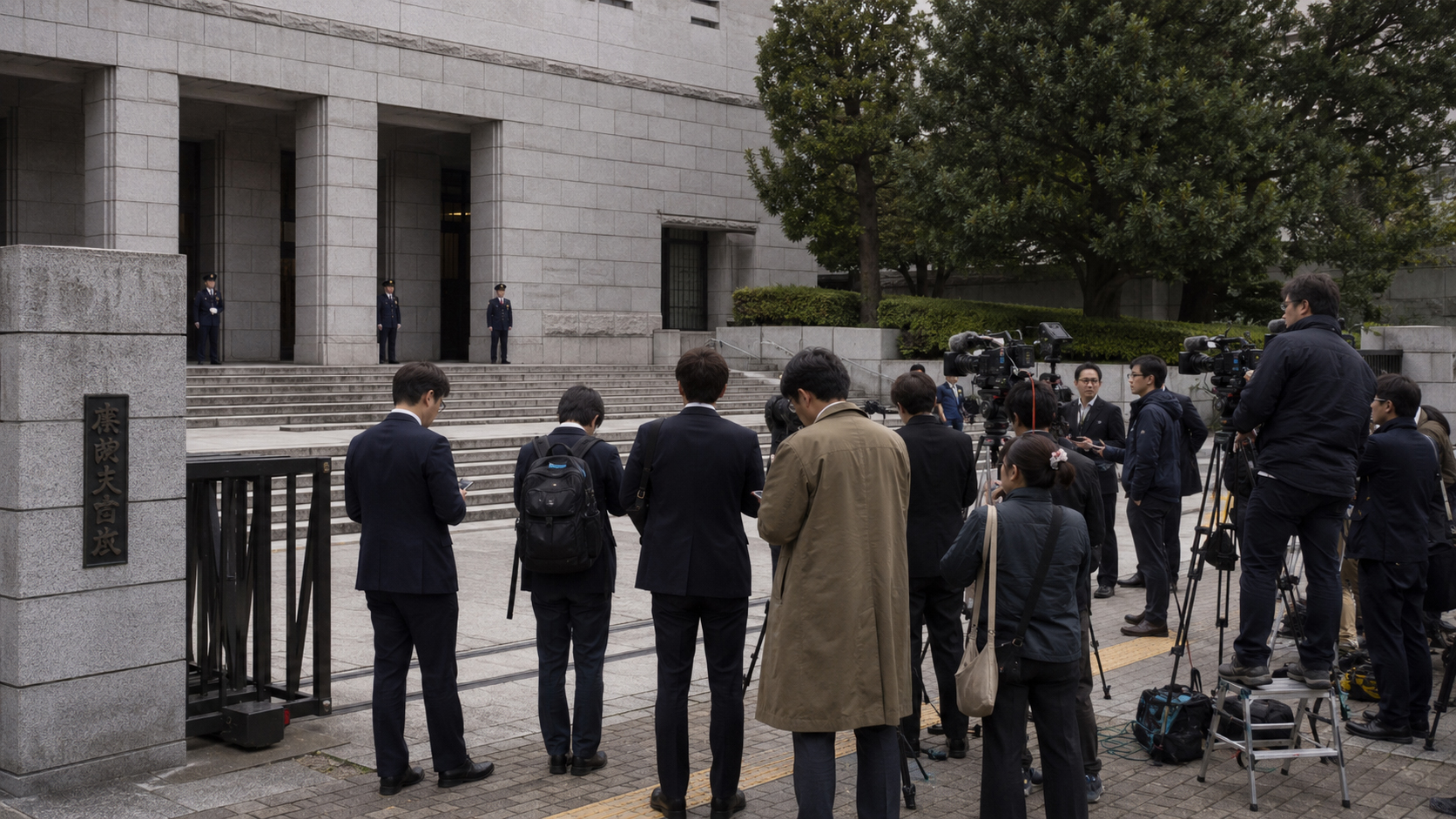
This is not simply the disappearance of one religious corporation
The Supreme Court’s decision is brief. Its shadow is not. The dissolution order against the former Unification Church has been finalized. The group loses its legal personality as a religious corporation, along with tax privileges and the institutional protections that come with that status. Liquidation follows. But individual faith is not banned. Believers are not forbidden from worshiping. The group may continue in some voluntary form. That distinction is where the difficulty begins.
It is tempting to tell this story in one of two easy ways: as a victory over a predatory cult, or as a dangerous assault on religious liberty. Both frames contain something real. Neither is enough. There are people who say their families were destroyed by donations and spiritual pressure. There are also serious constitutional concerns whenever the state strips a religious body of legal status. Victim relief and religious freedom both matter. A mature society cannot pretend one cancels the other.
For many Japanese people, this issue became visible only after the assassination of former Prime Minister Shinzo Abe in July 2022. But the problem itself was not new. Lawyers, former believers, journalists, and families had been raising alarms for decades. Donation abuse claims, political ties, and family damage had sat in the margins of public attention. Abe’s killing forced the margins into the center.
Abe’s assassination opened a sealed room
On July 8, 2022, Shinzo Abe was shot and killed while giving a campaign speech in Nara. In a country with strict gun laws and rare gun violence, the assassination shocked Japan. At first, attention focused on political violence, security failure, and the homemade weapon. Then the alleged motive changed the national conversation.
The suspect reportedly blamed the Unification Church for his family’s ruin after his mother made large donations to the group. He saw Abe as connected to it. Nothing about that motive justifies murder. Political violence must not be romanticized. But the assassination forced Japan to confront a question that had been evaded for too long: why had long-reported complaints about the church’s practices remained so politically invisible?
After the killing, reports revealed broad links between the church, its affiliates, and politicians, especially within the Liberal Democratic Party. Appearances at events, congratulatory messages, campaign support, and contacts with related organizations became public issues. Many politicians insisted their involvement had been shallow or ceremonial. But voters heard something else. They saw a structure in which politicians gained votes and volunteers, while the group gained social legitimacy and proximity to power.
What was the former Unification Church?
The Unification Church was founded in South Korea in 1954 by Sun Myung Moon. In Japan, it expanded from the 1960s and later became formally known as the Family Federation for World Peace and Unification. Internationally, it became famous for mass weddings, anti-communism, global organization, and a theology that attracted both devotion and controversy.
In Japan, the most damaging allegations centered on so-called spiritual sales and high-pressure donations. Critics said followers and targets were pushed through spiritual fear, ancestral anxiety, or family pressure into buying expensive goods or making large contributions. Lawyers representing former believers and affected families pursued complaints and lawsuits for many years.
The church has argued that donations were religious acts, that it had settled cases, and that the dissolution order violates religious freedom and human rights. That argument cannot simply be dismissed. In a democracy, state power over religious organizations must always be handled with caution.
But the courts did not formally judge the truth of doctrine. They judged whether the organization’s conduct, over time, violated law and seriously harmed public welfare. That legal distinction matters. The dissolution order is not supposed to be a verdict on belief. It is a verdict on the legal status of a corporation accused of repeated unlawful conduct.
Dissolving a religious corporation is not banning a faith
To understand the decision, it is necessary to understand Japan’s Religious Corporations Act. The law gives religious organizations legal personality so they can own worship facilities and other property, manage assets, hire staff, and conduct business connected to their religious purposes. A religious corporation is not the faith itself. It is the legal container around a religious organization.
A dissolution order removes that container. It does not prohibit people from believing, praying, gathering informally, or maintaining personal faith. But the practical effect is still severe. Losing legal personality affects property, employment, finances, tax treatment, institutional continuity, and social credibility. That is why dissolution is a grave measure.
Japan has used dissolution orders against religious corporations only rarely. Earlier cases, including Aum Shinrikyo after the 1995 sarin gas attack, involved criminal acts of extraordinary seriousness. The former Unification Church case is different. It centers on civil-law torts: donation abuse, unlawful solicitation, family harm, and decades of civil claims. That makes the precedent much more delicate.
| Issue | Why it matters now |
|---|---|
| Victim relief | Liquidation, asset preservation, compensation, and transparency become central after the order is finalized. |
| Religious freedom | Losing corporate status is not a ban on belief, but it seriously affects how a religious community can operate. |
| Political distance | The case exposed long-standing ties between politicians and church-linked organizations, especially in conservative politics. |
| Religious Corporations Act | The case establishes a major precedent for dissolution based on civil-law unlawful acts, not only criminal acts. |
| Social memory | Japan must remember not only Abe’s assassination, but the decades of alleged harm that came before public attention arrived. |
Why were the political ties so hard to see?
Religious organizations have long mattered in postwar Japanese politics. They can provide local networks, disciplined supporters, volunteers, meeting spaces, lists, and turnout. In an era of low voter participation, organized minorities can carry real electoral weight.
Religious groups also gain something from politics: access, legitimacy, visibility, protection, and the appearance of mainstream acceptance. A politician may think a greeting, message, or event appearance is merely ceremonial. A group can present it as validation. To a victim’s family, that public association may look like power shielding abuse.
The former Unification Church’s relationship with conservative politics had an ideological foundation in anti-communism. During the Cold War, anti-communism was a central axis of Japan’s conservative movement. The church and its affiliated organizations shared that language and built relationships with conservative politicians. Over time, ideological affinity, election help, and ceremonial contact became a long corridor of mutual convenience.
The problem was not necessarily that every politician shared the church’s doctrine. Many likely did not. The problem was that political contact could be used as a badge of legitimacy. A politician may describe a link as shallow. But the public effect may be deep.
The family wound
The former Unification Church issue cut deeply because it became visible as a family story. People spoke of households losing savings, marriages strained by donations, children suffering from parents’ religious commitments, and second-generation believers carrying burdens they never chose.
Religious freedom is essential. Adults must be free to believe unusual things, join unpopular groups, and donate to causes they value. But what happens when one person’s religious action devastates a household? How should society distinguish voluntary donation from psychological pressure? When does a family problem become public harm?
For many years, complaints about the church were too easily treated as private family issues, religious disagreements, or matters of personal responsibility. After Abe’s assassination, second-generation believers and affected families received more public attention. Japan began to understand that protecting religious freedom does not require ignoring families broken under religious pressure.
The danger of state judgment over religion
Even those who support the dissolution order should remain alert to the danger of state power over religion. Religions can be strange, demanding, unpopular, and difficult for outsiders to understand. A democracy must protect minority faiths, including those the majority dislikes.
That is why dissolution cannot be based on public anger alone. It cannot be based on disliked doctrine or political embarrassment. It must be based on concrete unlawful conduct, serious harm, judicial review, proportionality, and necessity.
The former Unification Church and some religious-freedom advocates argue that Japan has gone too far. They warn that the decision may open the door to state intervention against unpopular religious groups, especially when media and political pressure are intense. Those concerns deserve attention even from people who believe the church caused grave harm. Civil liberty is often tested in cases involving unpopular organizations.
At the same time, religious freedom cannot become a shield for systematic abuse. Corporate religious status carries legal benefits and social trust. If courts find that an organization repeatedly used unlawful conduct to harm people, the state cannot simply look away. The hard question is not whether religious freedom matters. It does. The hard question is where legal protection ends when social harm becomes persistent and organized.
How this differs from Aum — and what it shares
Any Japanese discussion of dissolving a religious corporation eventually reaches Aum Shinrikyo. The 1995 Tokyo subway sarin attack left a deep national wound and forced Japan to confront the possibility that a religious organization could become a direct public danger.
But the former Unification Church case is different. It does not rest on mass murder or terrorism. It rests on donations, solicitation, spiritual sales, family damage, and civil unlawful acts. That makes the legal line harder to draw. It is relatively easier for society to agree that a group linked to mass murder should lose corporate status. It is more complex to decide when decades of civil harm justify the same institutional result.
The cases do share one lesson: society often waits too long. Problems involving religious groups are easy to avoid. Victims speak, but officials hesitate. Media interest fades. Politicians calculate. Only after a major shock does the full scale become visible. Aum forced one reckoning. Abe’s assassination forced another. The question is why Japan needed catastrophe to listen.
The liquidation process is now the real test
After the legal order comes liquidation. What happens to assets? How are victims compensated? Can assets be preserved? How transparent will the process be? How will courts balance victim claims, current believers’ interests, and the practical realities of winding down a religious corporation?
For victims, the dissolution order may feel like symbolic justice. But actual recovery is another matter. Lost money, damaged family relationships, years of stress, and emotional harm are not restored simply because a corporation disappears. The liquidation process must be fair, transparent, and focused on meaningful victim relief.
At the same time, current believers are real people. They should not automatically be treated as perpetrators. Some may themselves be vulnerable, dependent, or harmed. A society that seeks justice for victims must also avoid discrimination against believers as individuals.
Politics cannot end this with “we cut ties”
After Abe’s assassination, many politicians promised to cut ties with the former Unification Church. The LDP investigated connections and tried to draw a line. But politics cannot end this by saying, “We will not meet them again.”
Politicians must ask harder questions. Who supports campaigns? What are the backgrounds of affiliated organizations? How are congratulatory messages used? What happens when a group with alleged victims uses political contact as a shield? How should parties disclose organizational support?
This is not only about one church. Labor unions, industry groups, religious organizations, local groups, political associations, and nonprofits all participate in democratic politics. Organized citizens have a right to political activity. The issue is transparency. When organization, money, and influence move in the dark, democracy becomes vulnerable.
The Supreme Court closed a chapter. Society cannot close the book
The Supreme Court has closed the major judicial chapter. But Japan’s work remains: victim relief, liquidation oversight, religious-corporation reform, political transparency, support for second-generation believers, protection of religious freedom, responsible media coverage, and prevention of discrimination.
This case reflects too much to be reduced to one headline. Postwar conservative anti-communism. Religious mobilization. Electoral dependence. Donation abuse. Family silence. Second-generation suffering. Administrative slowness. Media delay. Judicial finality. Each piece is part of the story.
That is why “the Supreme Court ended it” is too simple. The Court ended the religious corporation’s legal defense. It did not end the social questions.
Abe’s assassination was an unforgivable act of violence. It also illuminated harm that had been too long ignored. Japan must walk a difficult line: never romanticizing murder, never forgetting the victims who were heard only after it happened.
The former Unification Church’s corporate status is gone. The political shadow, the family pain, and the tension between liberty and protection remain. A mature democracy will not treat this as a victory parade. It will treat it as an obligation to reform quietly, carefully, and honestly.
- Japan’s Supreme Court finalized the dissolution order on June 23, 2026.
- The Tokyo District Court issued the order in March 2025, and the Tokyo High Court upheld it in March 2026.
- MEXT filed for dissolution in October 2023 after investigations following Shinzo Abe’s 2022 assassination.
- The major precedent is that the order was finalized based on unlawful acts under the Civil Code, not direct criminal acts.
- The order removes legal corporate status, but it does not ban personal belief or worship.
Sources and references
This article was based on public information from The Japan Times, Nippon.com/Jiji Press, Associated Press, Reuters, Le Monde, the Japan Federation of Bar Associations, the Religious Corporations Act, East Asia Forum, Asia-Pacific Journal, and Bitter Winter. Critical religious-freedom perspectives were included to reflect the full legal and human-rights debate.
- Japan Times: Japan top court upholds order to dissolve Unification Church
- Nippon.com / Jiji Press: Japan Top Court Finalizes Dissolution Order for Unification Church
- Associated Press: Court in Japan orders the dissolution of the Unification Church
- Reuters: Head of Japan's Unification Church vows to fight loss of legal protections
- Reuters: Japan to ask court to strip Unification Church of religious status
- Le Monde: Moon sect in Japan loses its religious legal status
- Japan Federation of Bar Associations: Comment in Response to the Finalized Dissolution Order
- Japanese Law Translation: Religious Corporations Act
- East Asia Forum: The Unification Church dissolution and Japan’s evolving religious governance
- Asia-Pacific Journal: Bad Karma? Abe's Assassination and the Moonies
- Bitter Winter: Japan’s Supreme Court Confirms the Dissolution of the Unification Church