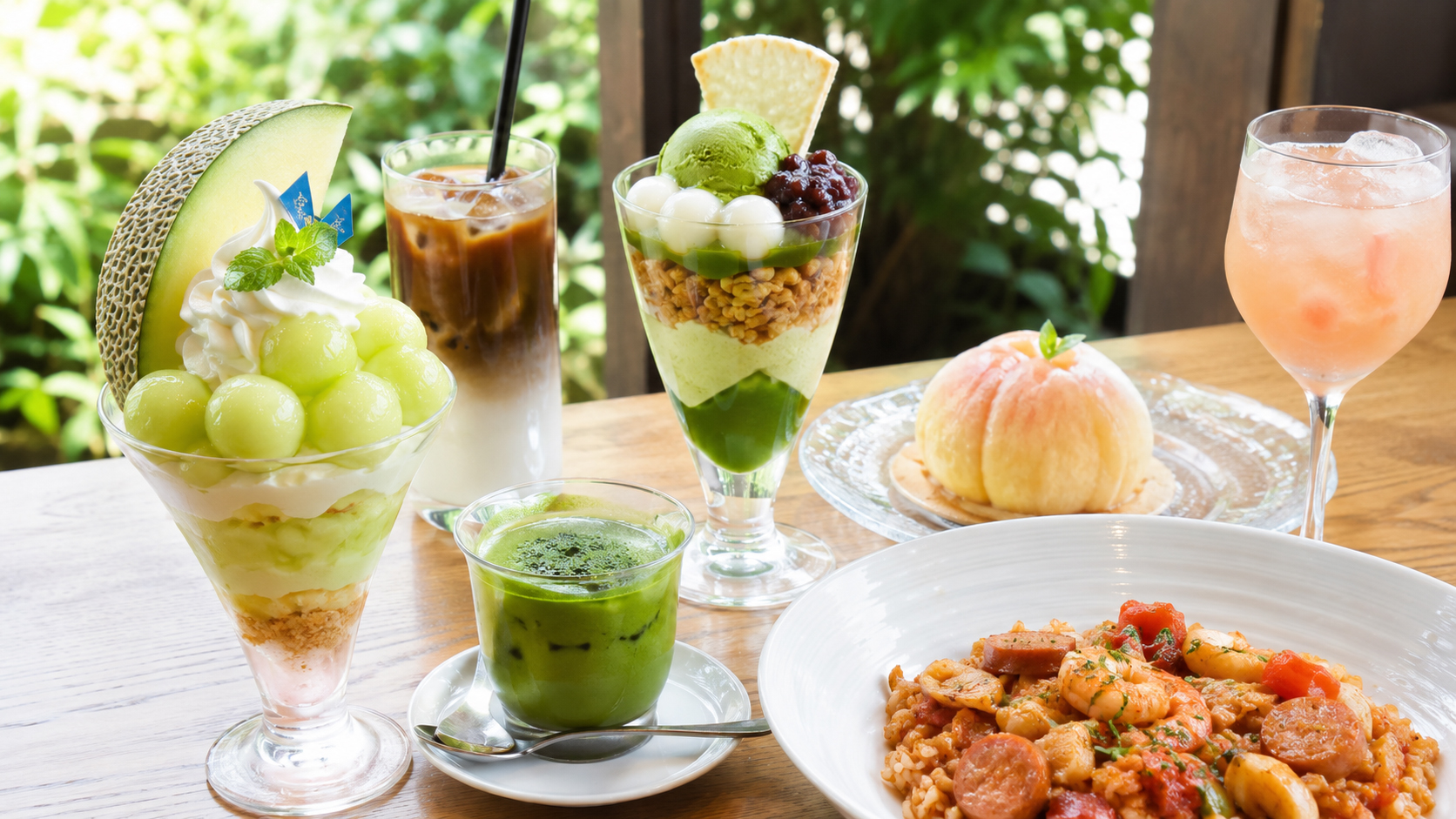
In Japan, summer begins on the menu board
Before the rainy season has fully left, Japan’s cafes are already in summer. The sky may still be gray, but peach appears in the pastry case. Lemon floats through drink photos. Menus begin saying melon, matcha, chocolate mint, mango, and spice. In Japan, the season often arrives in restaurant pop before it arrives in the weather.
Summer cafe menus look like light news. They are actually deeply Japanese. The season is sliced into short periods, made limited, color-coded, photographed, and turned into a reason to step into air-conditioning. You do not merely eat melon. You join melon season. You do not merely drink peach. You notice that peach is only here for a short time. Matcha, once solemn and traditional, now becomes a green stage for summer fruit.
On June 25, 2026, Excelsior Caffé rolls out summer items including spicy chicken jambalaya. Doutor Coffee also launches a set of summer menu items on the same day. Takakuramachi Coffee begins its melon fair using Nagaiki melon. ATELIER MATCHA builds spring-summer items around Uji matcha and fruits such as melon, lychee, coconut, and mango. Hotels and cafes are filling their afternoon teas and parfaits with peach, melon, mango, and matcha.
Melon: luxury becomes summer green
In Japan, melon is a slightly special fruit. It is something you can buy in a supermarket, but it is also a gift fruit. It can arrive in a box. It appears in get-well visits, summer gifts, hotel desserts, parfaits, cakes, and cream sodas. Melon carries not only sweetness, but a small feeling of elevation.
Takakuramachi Coffee’s melon fair uses that strength directly. Nagaiki melon from Chiba appears as cut melon and as part of the cafe-time experience. Melon is sometimes strongest when it is not overworked. A ripe fragrance, chilled flesh, pale green, and juicy sweetness are already enough.
For cafes, melon is both convenient and difficult. It creates luxury. It photographs well. It is seasonal. But sourcing, ripeness, quality, and price are not simple. That is why short melon fairs make sense. When a cafe notes that timing may change depending on supply and quality, that is not a weakness. That is fruit being fruit.
Matcha: no longer just winter wagashi, but summer fruit’s partner
Matcha is one of the strongest colors in Japanese cafes. A single green cup can carry tea ceremony memory, Uji branding, Kyoto atmosphere, bitterness, sweetness, and richness. But modern matcha is not only quiet and traditional. It moves freely with strawberry, mango, melon, coconut, lychee, chocolate, milk, and gelato.
ATELIER MATCHA’s spring-summer theme shows the direction: Uji matcha with melon, lychee, coconut, and mango. Traditional tea green meets tropical and summer fruit color. Matcha is intense enough to hold fruit fragrance. Its bitterness tightens sweetness. Its color is instantly legible on camera.
Matcha used to be strongly associated with tea rooms and wagashi. Now it is global cafe material. Abroad, MATCHA can be treated almost like a wellness ingredient. In Japan, it is being reworked through fruit, Western sweets, and modern drinks. Matcha feels old and new at the same time. That is its power.
Peach: the fruit that sells summer’s shortness
Peach plays a different role in Japanese summer cafes. Melon suggests luxury. Peach suggests transience. It bruises easily. Its fragrance escapes. It ripens and collapses. That makes it perfect for “now only.”
In 2026, peach appears across hotel and cafe summer menus: peach parfait afternoon teas in Kyoto, peach mille crepes, peach sodas, peach parfaits, shortcakes, tarts, and creamy drinks. Peach works beautifully in photos: pale pink, white, transparent jelly, yogurt, lemon, raspberry, and soft light.
The interesting thing about peach is that it is not only sweet. It is aromatic. Half the pleasure arrives before the bite. Cafes extend that fragrance through cream, soda, tea, yogurt, jelly, and parfait layers. A cafe does not merely serve a peach. It stretches the idea of peach through the entire plate or glass.
Chocolate mint and lemon: the cool colors of Japanese summer
Summer menus depend not only on actual temperature, but on visual temperature. Chocolate mint looks cool before it tastes cool. Lemon looks refreshing before it is sour. In chain-cafe photography, color does much of the work.
Chocolate mint has loyal fans in Japan, though it still divides people. Some say it tastes like toothpaste. Others say that is exactly the point. As a summer visual, it is extremely strong: blue-green cream, dark chocolate, ice, glass, and immediate chill.
Lemon works the same way. Setouchi lemon, lemon squash, lemonade, lemon tea, lemon cake — Japanese summer drinks return to citrus again and again. Lemon lightens sweetness and gives heat a momentary reset. It is the season’s refresh button.
Jambalaya: cafes are no longer only sweet places
The most interesting item in the 2026 summer menu wave may be Excelsior Caffé’s spicy chicken jambalaya. In a story full of melon, peach, matcha, and chocolate mint, spice suddenly enters. That is very modern cafe culture.
Japanese cafes were long associated with coffee and sweets. Of course, the old kissaten had food: toast, sandwiches, curry, spaghetti Napolitan, pudding, pancakes, and cream soda. But chain-cafe lunches often leaned toward light sandwiches or pasta. Recently, the “cafe meal” has become more important. People want to eat properly between meetings. They want something more satisfying than a drink and pastry. In summer, they may want spice to wake the appetite.
Jambalaya fits hot weather. Rice, chicken, spice, vegetables, aroma. A dish with Louisiana roots becomes an “Excelsior meal” in a Japanese cafe chain. This is one of Japan’s quiet talents: translating foreign dishes into everyday formats that fit lunch breaks, tray service, and chain operations.
From kissaten to cafe chains: Japan’s culture of the break
To understand Japanese summer cafe menus, it helps to remember the kissaten. The Showa-era coffee shop was a place for coffee, newspapers, business meetings, student conversations, quiet loneliness, and small luxuries. It had cream soda, spaghetti Napolitan, toast, pudding, parfaits, hotcakes, and thick coffee cups.
From the Heisei era onward, chains such as Doutor, Starbucks, Tully’s, Excelsior, Veloce, Komeda, and Saint Marc spread through stations, office districts, shopping centers, hospitals, and universities. The cafe became one of the city’s small shelters.
In the Reiwa era, cafes have multiplied their roles: breakfast, remote work, oshi activity, seasonal drinks, social posting, lunch, waiting, cooling down, rain shelter, travel break. One shop may support several kinds of life in one day.
That is why summer menus matter. They give people a reason to step inside when outside feels hostile. A cold drink, a lunch plate, a photo, a small dessert, and 20 minutes of air-conditioning can help urban life continue.
| Summer flavor | What it does in a cafe |
|---|---|
| Melon | Brings luxury, coolness, gift-fruit culture, and short-season freshness. |
| Matcha | Adds depth, bitterness, deep green color, and contrast with fruit. |
| Peach | Sells fragrance, softness, pale color, and the feeling that summer is brief. |
| Chocolate mint | Creates instant visual chill and built-in conversation because people love or argue about it. |
| Jambalaya | Answers the hot-weather need for spice, appetite, and a real cafe meal. |
Limited-time menus power Japanese dining
Japanese foodservice loves the limited-time offer: seasonal, store-limited, quantity-limited, period-limited. Scarcity creates action. Go now or miss it. Drink it this week or wait until next year. See it on social media and make weekend plans.
Summer is especially powerful for limited menus because everyone shares the physical problem of heat. People want something cold. Something sweet. Something sour. Sometimes something spicy. Cafes turn that fluctuation into shelves of products. Cool sweetness and heat-fighting spice can sit in the same seasonal campaign.
Limited menus are small seasonal news. Sakura flavors mean spring. Sweet potato, chestnut, and pumpkin mean autumn. Dark chocolate and rich creams mean winter. Melon, peach, lemon, and chocolate mint mean summer.
Fruit carries regional stories
Fruit is powerful in cafe menus because it can carry place. Nagaiki melon, Yamanashi peach, Okayama white peach, Uji matcha, Setouchi lemon, Miyazaki mango — a regional name adds landscape to the menu.
Japanese fruit has become highly regionalized and brand-conscious. Variety, sugar level, origin, harvest timing, and gift culture all matter. When a cafe chain uses origin language, the menu gains trust and story. The customer is not only drinking a sweet beverage. They are drinking a little piece of somewhere.
This can matter for regional economies. Large chains can draw attention to producing areas. Of course, menus do not automatically solve farmer income or distribution problems. But placing a regional name on a menu board is one doorway from local agriculture to urban consumption.
Cafe meals have become lunch allies
Lunch in Japanese office districts is both abundant and difficult. It is hot outside. Lines are long. Eating alone may be preferred. Time is short. Convenience-store lunch is efficient but can feel joyless. This is where cafe meals work.
A spicy chicken jambalaya at Excelsior Caffé fits that need. It is more than coffee, more substantial than a pastry, and seasonal through spice. It lets an office worker change mood without turning lunch into a full restaurant event.
As cafe meals strengthen, the cafe’s daily rhythm changes. Morning coffee, lunch plate, afternoon cold drink, evening sweet. The same shop plays different roles across the day. Summer menu rollouts are also attempts to catch those time slots.
Why sweetness and spice belong to the same summer
Melon, peach, matcha, chocolate mint, lemon, and jambalaya may look unrelated. They are all answers to heat. In hot weather, people want cold, sweet, sour, fragrant, and sometimes spicy. They may want to cool down or sweat appetite back into existence.
Japanese summer food has always understood this: hiyashi chuka, kakigori, somen, unagi, curry, cold matcha, lemon squash, spicy noodles. Cold and hot are not opposites in summer. They are both responses.
That is why sweet fruit and spicy rice can share the same cafe season. Melon in the morning. Jambalaya at lunch. Peach drink in the afternoon. Matcha dessert in the evening. The summer cafe follows the body’s temperature through the day.
A small menu shows a large consumer culture
Summer cafe menus are light. But inside that lightness, Japanese consumer culture is easy to see: careful seasonal division, limited-time urgency, regional branding, photogenic design, sweetness balanced with freshness, traditional ingredients moved into Western formats, and foreign dishes translated into cafe meals.
This is sophisticated editing. A chain does not simply add new products. It reads weather, season, color, social media, lunch demand, office workers, families, suburban stores, urban stores, price, kitchen operations, sourcing, and waste risk. Every summer, cafe chains conduct a small national editorial meeting through their menus.
The result is that we look at a menu board and think: summer is here. That is quite an achievement.
Summer is also something eaten in small portions
Japanese summer is long and hot. Big trips and fireworks matter, but people also need small ways to cool down. Eat melon at a station cafe. Have spicy jambalaya at lunch. Drink lemon after work. Eat peach parfait on the weekend. Share a matcha dessert with a friend.
These are small as news. They are large as daily life. A little reward goes into a tired body. The season is confirmed through taste. A photo is taken and sent. Summer is exhausting, but melon is delicious. The heat is heavy, but peach is fragrant. The afternoon is slow, but spicy jambalaya helps.
Japanese cafe chains know this little recovery well. That is why their menu boards brighten every summer.
In 2026, melon, matcha, peach, lemon, chocolate mint, and spice are all on the table. Not only cold. Not only sweet. Japanese cafes are quite serious about making heat a little more enjoyable.
- Excelsior Caffé launches summer items including spicy chicken jambalaya on June 25, 2026.
- Doutor Coffee also rolls out summer menu items on June 25.
- Takakuramachi Coffee begins a melon fair featuring Chiba’s Nagaiki melon.
- ATELIER MATCHA’s spring-summer menus pair Uji matcha with melon, lychee, coconut, and mango.
- The 2026 summer cafe pattern combines cold sweets, seasonal fruit, matcha, citrus, chocolate mint, and more substantial spicy cafe meals.
Sources and references
This article was based on public information from PR TIMES, Doutor Coffee, Excelsior Caffé, Takakuramachi Coffee, ATELIER MATCHA, hotel and cafe 2026 summer menu releases, and public information on Japan’s cafe and seasonal menu culture.
- PR TIMES: Excelsior Caffé summer items including spicy chicken jambalaya
- PR TIMES: Doutor Coffee launches summer menu items on June 25
- PR TIMES: Takakuramachi Coffee Melon Fair
- PR TIMES: ATELIER MATCHA Uji matcha and summer fruit menus
- PR TIMES: THE THOUSAND KYOTO peach parfait afternoon tea
- PR TIMES: Sheraton Miyako Hotel Tokyo melon and matcha afternoon tea
- JETRO: Japanese food trends