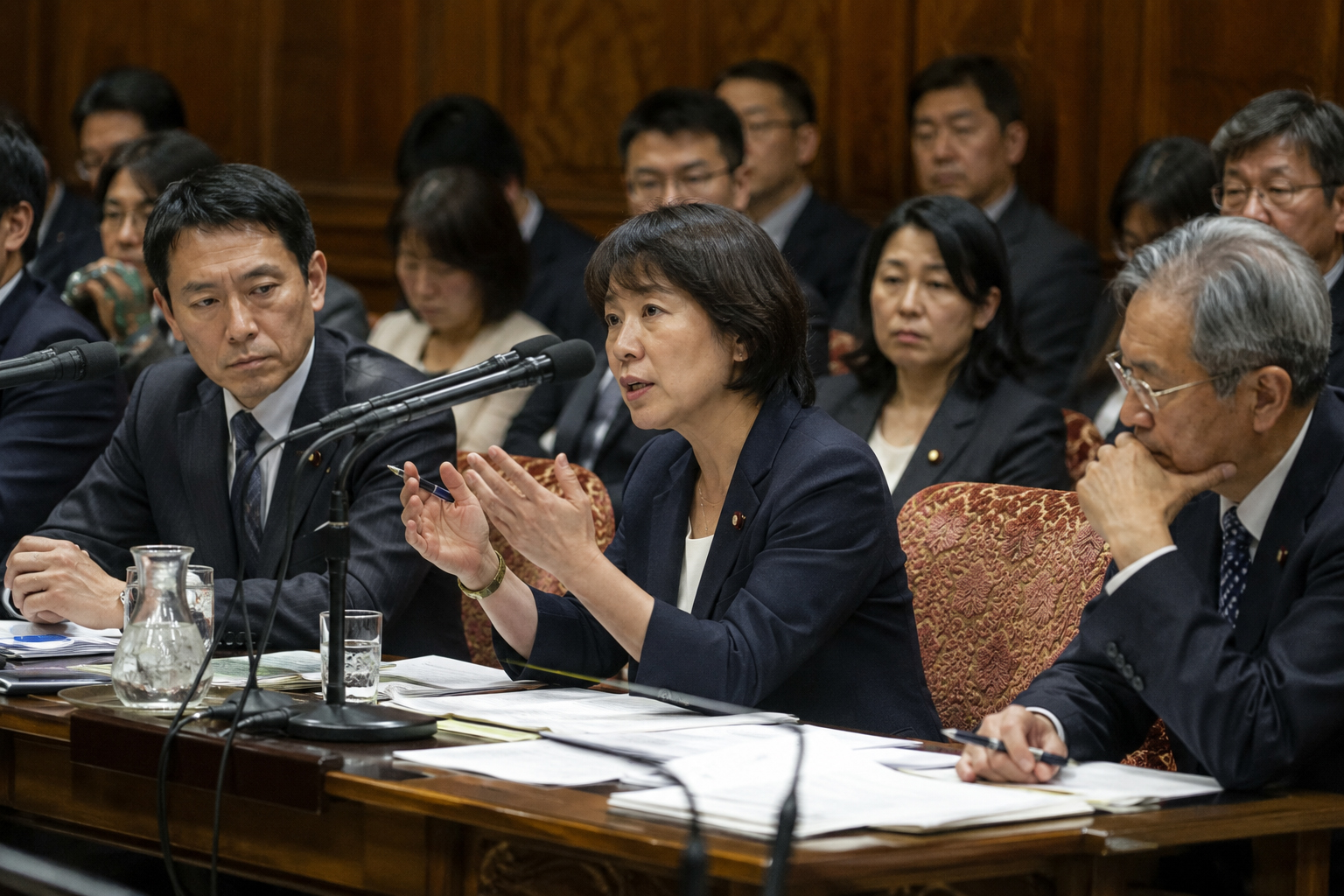
Japan’s retrial reform is moving. But expert witnesses invited by opposition parties say the government bill still leaves the most important door only partly open: evidence disclosure. If a person claiming innocence needs new evidence to reopen a finalized conviction, what happens when that evidence is sitting in the prosecutor’s files?
According to Japan Times and Jiji/Nippon.com reports, legal experts called for stronger amendments to the government’s retrial reform bill, especially to require court-ordered evidence disclosure that would allow petitioners to support retrial petitions and obtain new evidence. The criticism is not that reform is unnecessary. It is that reform may be too narrow if it does not solve the evidence problem.
Why retrials are different
Criminal trials must end. Without finality, victims, defendants, courts and society would remain in permanent uncertainty. Legal systems need closure. But closure becomes dangerous when the conviction is wrong. An innocent person can remain in prison, or even on death row, while the real facts sit buried in a case file.
A retrial is the legal system’s last emergency exit. It is supposed to open when finality and truth collide. In Japan, that exit has long been narrow, heavy and slow. Petitioners can seek retrial, but the process often takes years. Even when a court orders a retrial, prosecutors’ objections can cause further delay. And if evidence disclosure is limited, the defense may not even know what material exists.
What the government bill improves
The government bill contains real progress. It aims to restrict, in principle, prosecutors’ appeals against court decisions to open retrials. That matters because prosecutorial appeals have long been criticized as a major cause of delay in wrongful-conviction relief. If a court finds enough doubt to reopen a case, the petitioner should not face years of additional procedural fighting before the retrial itself begins.
The bill also moved toward reporting and review mechanisms, including attention to how prosecutors’ appeals are used and how the revised law operates over time. Those are not small changes. They create visibility in a system that has often felt opaque.
But the experts’ objection goes to the stage before a retrial begins. If the defense must show new evidence to win a retrial, but the state controls much of the evidence, then disclosure rules determine whether the right to seek retrial is meaningful or merely formal.
The Hakamada shadow
No Japanese retrial debate can avoid the case of Iwao Hakamada. Arrested in 1966, sentenced to death in 1968, and held for decades under the threat of execution, Hakamada maintained his innocence through one of the longest legal ordeals in modern criminal justice.
In 2024, the Shizuoka District Court acquitted him in a retrial. International reports described the court’s findings as deeply critical of the original investigation, including problems with confession and evidence. Prosecutors ultimately did not appeal the acquittal. By then, however, Hakamada was elderly, in poor health, and had lost decades of his life.
The lesson is not simply that one case took too long. It is that delay itself can become punishment. If evidence had been disclosed earlier, if scientific review had proceeded earlier, if appeals had not prolonged uncertainty, how different would one human life have been?
Evidence disclosure: the hidden battlefield
Evidence disclosure is often technical, but in retrial cases it can be decisive. A petitioner must show something strong enough to disturb a finalized conviction. But the material capable of doing that may be in the possession of prosecutors or police. If the defense cannot know it exists, it cannot use it. If the court lacks clear power to order disclosure, reform depends on goodwill.
That is why experts are asking for stronger language. A retrial system cannot ask petitioners to produce new evidence while leaving the switch for the dark room in the hands of the state.
Finality versus innocence
Prosecutors and courts have reasons to value finality. Reopening finalized judgments too easily could unsettle victims, witnesses and the justice system. Evidence may be old. Memories fade. Privacy and investigative methods can be affected by broad disclosure.
But the state’s duty changes when innocence is credibly at stake. Criminal punishment is the strongest ordinary power the state exercises against an individual. In a country that retains the death penalty, the duty to correct wrongful convictions must be especially strong.
Japan’s broader criminal justice debate
Japan’s criminal justice system has often been praised for low crime and administrative efficiency. It has also been criticized for high conviction rates, reliance on confessions, long pre-indictment detention, limited lawyer presence during interrogations, and a culture sometimes described internationally as “hostage justice.”
Retrial reform does not solve all of those problems. But it is where the system proves whether it can correct itself. A justice system that rarely admits error may look orderly. A justice system that can correct error is stronger.
What to watch in the bill
| Issue | Why it matters |
|---|---|
| Evidence disclosure | Can petitioners access material that may prove innocence? |
| Prosecutor appeals | Will retrial-opening decisions still be delayed for years? |
| Court authority | Can judges order disclosure, rather than rely on voluntary cooperation? |
| Public data | Will rejected petitions, prosecutor objections and reasons be visible? |
| Five-year review | Will lawmakers revisit the system if it fails to help real petitioners? |
Do not let reform become cosmetic
Retrial reform is not a mass-election issue. It does not have the drama of currency policy, security strategy or sports. But it measures the character of the state. When the government is wrong, can it admit error? When an innocent person is trapped by a finalized conviction, can the legal system move quickly enough to matter?
The expert witnesses are not trying to stop reform. They are trying to make it real. A system that limits prosecutor appeals but leaves evidence disclosure weak may reduce some delay while preserving the deeper barrier. Relief would still depend on persistence, luck and extraordinary legal effort.
Japan.co.jp view
Japan’s criminal justice culture prizes order, trust and procedural discipline. Those values have strengths. But order cannot become a wall around error. Trust cannot replace verification. And procedure cannot be allowed to consume a human life.
Retrial law is where the state confronts its own fallibility. The government bill is a step forward, but if the evidence gate remains too narrow, the reform will not meet the moment created by Hakamada and other wrongful-conviction cases.
The question is not whether Japan should value final judgments. It should. The question is whether Japan values truth enough to reopen a judgment when the state may have been wrong.
Sources and references
- The Japan Times: Expert witnesses invited by opposition parties challenged the government retrial reform bill.
- Nippon.com / Jiji Press: Expert witness Kie Takahira called for clearer court-ordered evidence disclosure in retrial petitions.
- Nippon.com / Jiji Press: Opposition parties sought wider evidence disclosure in the retrial bill.
- The Japan Times: Prime Minister Takaichi stressed the significance of retrial system reform.
- Associated Press: Prosecutors did not appeal Iwao Hakamada’s retrial acquittal after decades under sentence of death.
- Asia-Pacific Journal: David T. Johnson’s analysis of the Hakamada acquittal and criminal justice reform in Japan.