The new product is often not the idol. It is the fan’s own way of being seen.
A marketplace for the things around the idol
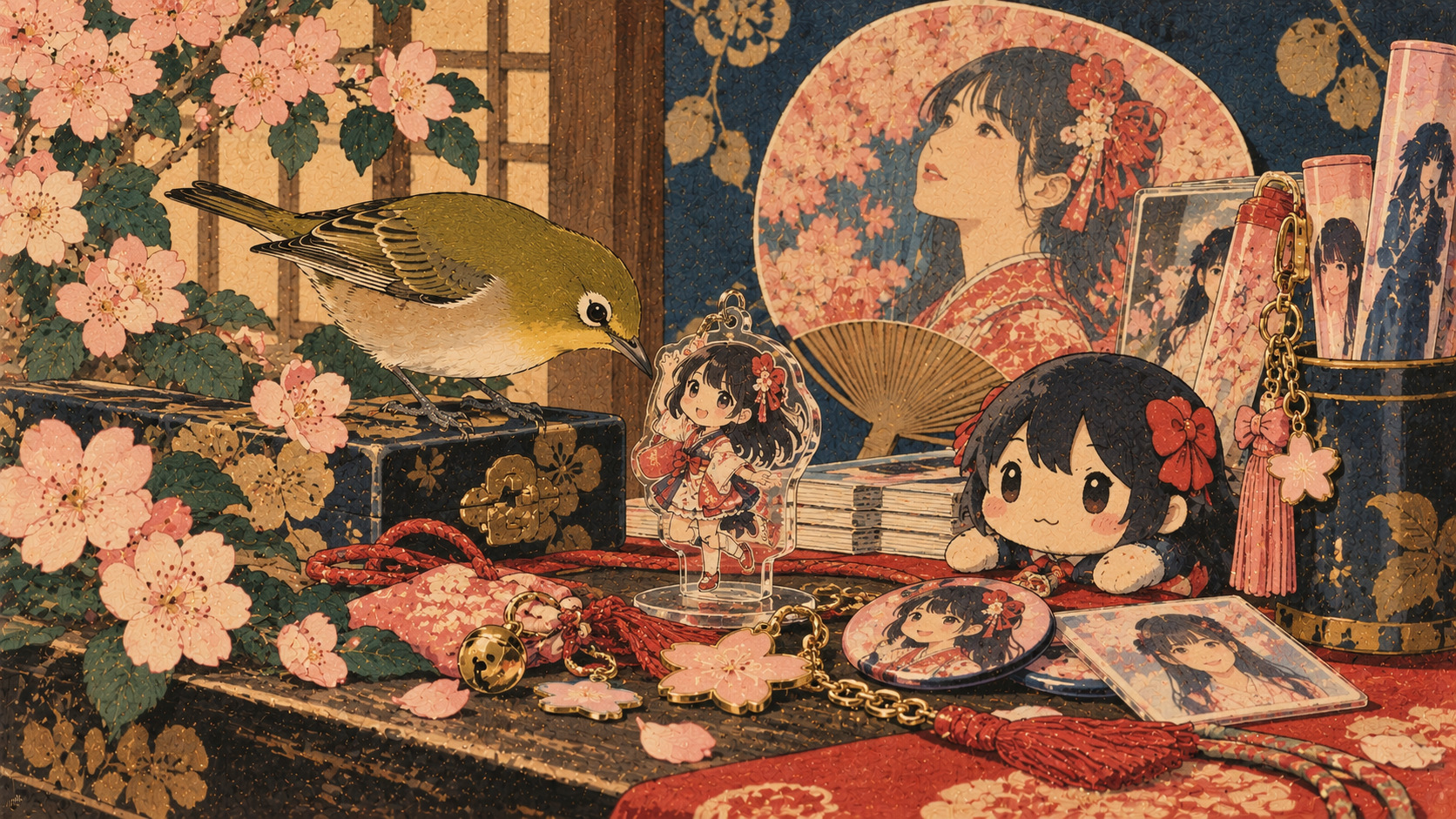
The object at the center of this story may not feature a pop star, character or band at all. It might be a sleeve for a trading card, a tiny jacket for a plush toy or a rosette in the color associated with a favorite performer. Such accessories are how many fans make devotion visible without relying on a single official product.
At Yurakucho Marui in central Tokyo, the pop-up “#Temoto no Oshi-katsu Matsuri 26’ Autumn” runs October 17–25 on the eighth floor in Marui no Anime SPACE 6. Marui Group says the full event features 55 handmade brands and more than 3,500 items. Those are organizer figures, not independent counts of stock or sales.
A different business model for fandom
In the familiar model of entertainment merchandising, a rights holder licenses an image and sells officially branded goods. The handmade accessories here often occupy a different position. They are personalizable objects designed to frame, carry or dress collectibles that fans already own. Their attraction is less about obtaining another identical image and more about constructing a distinctive personal presentation.
The advertised range includes plush-toy outfits, photo-card and trading-card holders, nail tips, decorative rosettes and jewelry. Colors and materials can communicate affiliation in ways that may be legible to other fans while remaining unobtrusive to strangers. That subtle social language helps explain the appeal, though the event announcement offers no customer interviews with which to prove individual motivations.
Why a physical shop still matters
Online marketplaces made small-scale Japanese craft businesses easier to discover. But they cannot fully convey the weight of a clasp, the texture of fabric or how one pink differs from another. A physical retail setting allows shoppers to test combinations and encounter makers they never thought to search for.
The brands rotate midway through the event: October 17–20 was the first session, with the second running October 21–25. Marui’s own listing says each session has 35 participating brands, while 55 is the figure for the whole program. Hours are 11 a.m.–7 p.m. Timed entry was used until 3 p.m. on the first day of each session, subject to further crowd controls. No verified attendance or sales figures have been supplied.
How oshi-katsu became an economic language
Oshi is commonly used for someone or something a person enthusiastically supports. Oshi-katsu refers to activities around that support, from attending concerts to displaying collectibles and sharing artwork. The contemporary expression is rooted in a much older ecosystem of fan clubs, idol culture, manga communities, doujin production and participatory entertainment. Calling the entire phenomenon a new invention would erase that history.
Research helps establish its breadth without collapsing every fan into a single category. In a July 2025 survey of 10,000 Japan residents aged 15–69, Yano Research Institute found that 64.2% of respondents in its defined “otaku” group had an oshi, compared with 21.5% in the non-otaku group. These are conditional survey percentages, not a claim that 64.2% of Japan’s population practices oshi-katsu. A separate Yano industry study said 15 of 17 major otaku-related markets expanded in fiscal 2024.
The independent maker behind the accessory
The event also belongs to the world of small creative businesses. A producer might design, sew, assemble, photograph, package and sell the same product, bearing the risks of materials and inventory. Getting stocked at a major urban department store offers visibility and the chance for feedback, but revenue is not profit; commissions, production time and unsold goods matter. The organizers have not published maker-level earnings.
Intellectual property is another line that matters. A general-purpose decorative case or an accessory in a favorite color is not automatically equivalent to an unlicensed reproduction of a protected character or logo. But individual products must be assessed on their actual designs and permissions. This report has not audited the rights status of merchandise displayed at the event.
Attention is not the same as spending
For retailers, fandom creates a tempting customer category. For fans, the relationship is often more complicated. Time spent reading, making art, organizing communities or simply following a performer can be as meaningful as purchases. Measuring affection by shopping receipts alone misses much of the activity—and risks putting pressure on people to spend beyond their means.
The lasting significance of this small Tokyo fair is not that it proves a particular size for the fan economy. It is the way it places independent makers between mass entertainment and individual imagination. Thousands of objects are possible because fans do not all want to express admiration in exactly the same way.
Visitor information and reporting method
The pop-up is scheduled at Yurakucho Marui, eighth-floor Marui no Anime SPACE 6, October 17–25, 2026, from 11 a.m. to 7 p.m. Visitors should check the official listing for changes. This report is based on published organizer materials and independent research; it does not claim an on-site visit or original interviews with customers and makers.
Sources and methodology
Brand and item counts are organizer claims; attendance and sales are unverified.