A free day raises a larger question
On November 3, Japan’s Culture Day holiday, visitors will be able to enter Upopoy—the National Ainu Museum and Park in Shiraoi, Hokkaido—without paying the usual admission charge. The National Ainu Museum is included. The Ainu cultural foundation announced the program on October 2, and Japan’s Agency for Cultural Affairs highlighted it on October 9.[1][2]
The invitation is about more than saving the price of a ticket. Upopoy is a place where visitors are asked to encounter Ainu history, language and creative expression as parts of a living culture—not as curiosities left behind by a vanished people.
What is free, and what still costs money
The November 3 program runs from 9 a.m. to 5 p.m. Admission to Upopoy and viewing of the National Ainu Museum are free. Parking and some hands-on experiences still cost extra. Normal admission listed by the venue is ¥1,200 for adults and ¥600 for high-school students, while junior-high-school children and younger visitors enter free.[1][5][6]
Two museum discussions center on the special exhibition Kosonte and Ruunpe, concerning Ainu garments and textiles. The 10:30–11 a.m. session has a capacity of 20; a children’s gallery conversation at 2–2:30 p.m. has 15 places. Registration is on the day, first come first served, and children of elementary-school age or younger must be accompanied by an adult.[2]
How a lakeside museum became a national project
Upopoy opened on July 12, 2020 beside Lake Poroto in Shiraoi. Its main components include the National Ainu Museum, a national park, cultural-performance and craft spaces, and places presenting traditional village life. The Ainu name Upopoy evokes people singing together.[3][7]
The museum opened amid the coronavirus pandemic, but the project grew out of much longer debate over national responsibilities to protect and promote Ainu culture. Buildings and exhibitions cannot replace cultural transmission within communities; they can, however, provide resources, platforms and public visibility.
A museum that speaks from Ainu perspectives
The museum’s permanent gallery organizes six themes through a first-person framework, commonly rendered as “Our Language,” “Our World,” “Our Lives,” “Our History,” “Our Work,” and “Our Exchanges.” Its purpose is not merely to display costumes or tools, but to connect objects to the people, environments and relationships that give them meaning.[4]
That perspective matters especially for international visitors accustomed to exhibitions about Indigenous peoples being narrated entirely by outsiders. The museum’s opening exhibition emphasized people carrying traditions forward and artists creating new work, as well as the historical objects themselves.[7]
The history that cannot be omitted
A serious account of Ainu cultural preservation must confront the history of Japan’s modern expansion into Hokkaido. State policies disrupted patterns of land use, education, language and livelihood, while discrimination restricted choices and opportunities. The Hokkaido Former Aborigines Protection Act of 1899, whose historical title itself reflects discriminatory thinking, was repealed by the Ainu Cultural Promotion Act in 1997.[8]
A later law in 2019 explicitly recognized the Ainu as an Indigenous people in Japan. These developments marked changes in official policy, not the end of disputes over rights, representation and cultural continuity. A museum visitor should be able to see that difficult context rather than encounter only an agreeable presentation of dance and crafts.[11]
The stories stitched into clothing
The November exhibition program turns attention to garments and textile traditions. Making clothing involves knowledge of fibers, materials, patterns, cutting, sewing and the social lives of the makers. A guided discussion can give visitors something a photograph alone rarely provides: an understanding of the labor and transmission behind each object.[2]
There is also an ethical distinction between appreciating Ainu artistry and treating designs as decoration detached from their makers and meanings. Respecting attribution and cultural context is part of learning from the exhibition.
From a holiday visit to enduring curiosity
Upopoy offers performance, craft and educational programs alongside its permanent galleries. Its library and theater allow visitors to continue learning beyond a single exhibition. Availability and any additional charges vary by program, so the official daily schedule remains the authoritative guide.[3][9][10]
A free holiday may attract first-time visitors who later read Ainu authors, follow contemporary artists or return for further discussion. Yet it would be premature to claim that November 3 has already increased participation or changed attitudes. Those outcomes will have to be assessed after the event.
What Culture Day can—and cannot—achieve
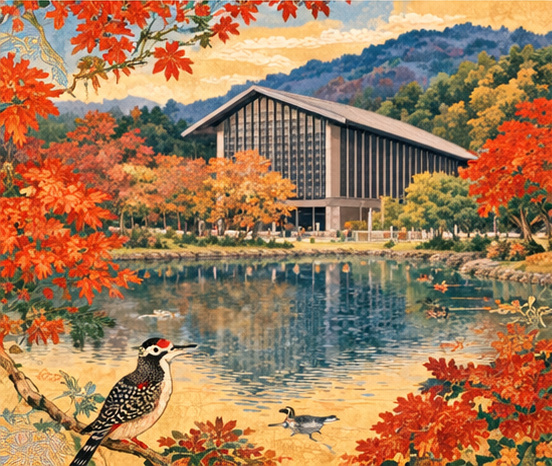
The image of a national museum overlooking Lake Poroto is striking. The more important question is who gets to speak inside it, whose work is recognized and whether cultural knowledge can be passed forward on terms meaningful to Ainu communities.
An admission-free day offers an opening, not a solution. Its lasting importance depends on whether visitors leave with a deeper sense that Ainu culture belongs to the present and future as much as to the past.
Sources and reporting notes
- 公益財団法人アイヌ民族文化財団「11/3 ウポポイ無料開放DAY」2026年10月2日
- 文化庁「文化の日は国立アイヌ民族博物館が無料開放」2026年10月9日
- ウポポイ公式サイト
- 国立アイヌ民族博物館「基本展示室」
- ウポポイ「開園時間」
- ウポポイ「入場料」
- 国立アイヌ民族博物館「開館記念特別展」
- 衆議院「平成9年法律第52号」
- 国立アイヌ民族博物館紹介
- ウポポイ「プログラム」
- Japan House of Representatives — Ainu Policy Promotion Act (2019)
Sources checked October 10, 2026. The November 3 activities are announced plans, not completed events.