A familiar bite faces an unfamiliar future
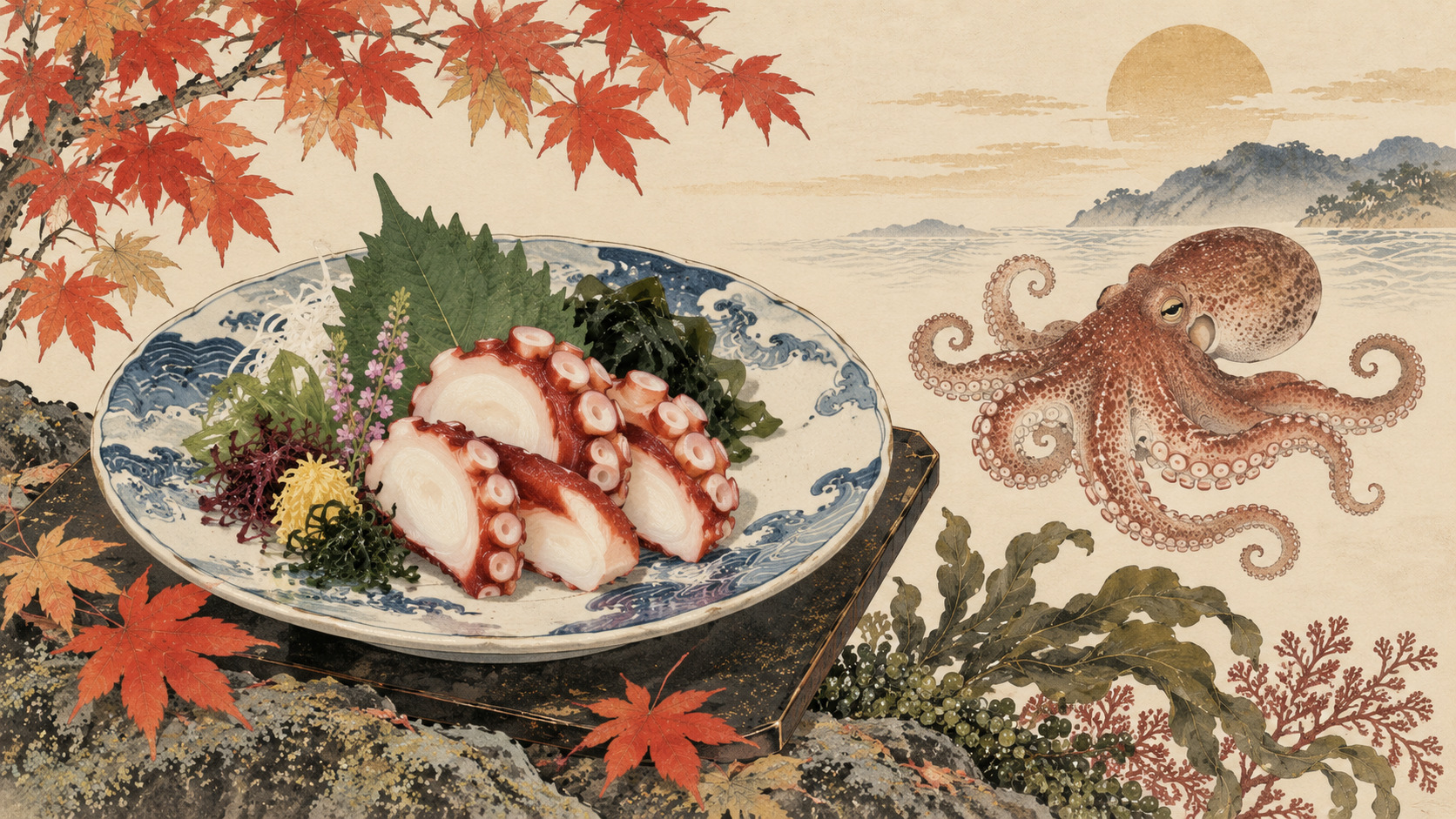
In Akashi, west of Kobe, octopus is more than an ingredient. It is embedded in the identity of a coastal city whose fast tides, fishing grounds and kitchens have helped make the animal a local specialty. The springy bite of octopus gives takoyaki its center and lends distinctive texture to dishes served in homes and restaurants. But the supply behind that culinary expectation is under pressure.
Kanetetsu Delica Foods, a century-old food processor based in Kobe, is betting that part of the answer can be manufactured without an octopus at all. Its Hobo Tako—literally “Almost Octopus”—is a plant-based ingredient intended to mimic the appearance and chew of the real animal. Announced in August 2026 for business customers, the product became part of a wider October discussion about seafood substitutes as fishing shortages and international demand strain supply.
What the company has actually introduced
The specific product is a 1-kilogram frozen food-service pack marketed in Japan as Gyōmuyō Hobo Tako Cut Type. Kanetetsu says it uses fibers, starches and other ingredients, formed through processing and steaming, to create an elastic texture. It contains no octopus, seafood extract or animal-derived ingredients, according to the company. It was displayed at the Japan International Seafood Show in Tokyo from August 19 to 21.
The company identifies takoyaki, fried rice and deep-fried preparations among the intended uses. It lists a frozen shelf life of 18 months and an open price rather than a fixed suggested retail price. That makes its early commercial target clear: restaurants, prepared-food manufacturers and industrial kitchens. A nationwide supermarket launch or a verified retail price should not be inferred from the announcement.
Why Akashi matters
Akashi City's own description of its fisheries emphasizes a varied seabed of rock and sand and strong currents that sustain numerous marine species. The celebrated Akashi octopus is associated with thick, relatively short arms and an appealing texture. Local fishing and the culinary tourism built around the catch have economic and cultural dimensions that a factory-made product cannot simply duplicate.
In its launch statement, Kanetetsu said octopus catches in major Japanese producing areas had fallen to around one-fifth of their level a decade earlier, and wholesale prices were around ¥3,000 per kilogram. Those are company-supplied market characterizations, not an independently harmonized national series. Precise changes depend on the geography, species and statistical period used. Treating the figures as an audited national decline would overstate the evidence.
A supply problem extending far beyond Japan
The pressures reach across oceans. In a May 2026 market analysis, the UN Food and Agriculture Organization's GLOBEFISH service reported that Japan imported 36,627 tonnes of octopus in 2025, 8.3 percent less than a year earlier. Supply was constrained in traditional sources including Morocco and Mauritania, while China and Vietnam remained important exporters to Japan. The country's appetite for octopus is tied to the performance of a global supply chain.
A restaurant buying octopus is exposed not only to the catch but to competing importers, currency changes, freight, cold storage and processing costs. A consistent manufactured substitute could make menu planning easier. Whether Kanetetsu can actually deliver a lower cost per serving is not established by its published materials: the price, yields and independent cooking trials required for such a comparison have not been disclosed.
A century of making familiar foods differently
The experiment makes sense in the history of its maker. Founder Murakami began a fish-paste food business in Nishinomiya in 1926. Kanetetsu subsequently became a recognizable name in Japanese processed seafood, with its Tecchan mascot appearing in 1951. This year marks the company's centenary.
In 2014 it launched Hobo Kani, a product designed to resemble crab, and built a family of “almost” products around the craft of imitating prized textures and appearances. The company says cumulative sales of the series passed 100 million packs by February 2025. Hobo Tako is a notable extension of that idea because, unlike conventional surimi imitation seafood, the company says this particular version does not depend on animal ingredients.
The engineering challenge is texture
Many substitutes can reproduce a shape or color. Reproducing what happens between the teeth is more demanding. Octopus develops resistance during the initial bite, yields unevenly, and changes with boiling, grilling or frying. The producer says its formulation retains a characteristic resilience after cooking—an important claim for a piece of takoyaki, where the filling must remain recognizable inside a hot batter.
But manufacturer descriptions cannot stand in for independent sensory tests. There is no verified blind comparison here, no published measurement of chewing force, and no disclosed cost-per-serving study. It is more accurate to call this a promising commercial attempt to reproduce octopus texture than to declare the imitation indistinguishable from the original.
Plant-based does not mean allergen-free
The distinction between an ingredient's formulation and its manufacturing environment matters. Kanetetsu says the product has no animal-derived ingredients and no seafood extracts. It also states that the production facilities handle products containing egg, milk, shrimp, crab and wheat. Consumers with allergies, and the food businesses serving them, should not interpret a plant-based claim as a blanket assurance against cross-contact.
Likewise, clear menu labeling is essential. The word “octopus” carries an ordinary meaning; a product that imitates the animal should be described as such. The wider plant-based category includes products with very different recipes and allergen profiles, and even seafood substitutes with some animal-derived seasoning. Shoppers need an ingredient statement, not a category slogan.
What happens to the fishing communities?
There is an economic tension beneath the novelty. If substitutes absorb demand for inexpensive fillings, they might help restaurants keep familiar dishes on menus. They might also affect sales patterns for fishing businesses, depending on adoption and pricing. None of these outcomes is yet demonstrated by a published impact assessment. Industrial food stability and the health of marine ecosystems are separate questions.
A more plausible future may involve differentiated choices. A restaurant celebrating Akashi's catch could continue to serve real octopus, sourced and identified honestly. A factory producing large volumes of prepared meals might choose a substitute for supply predictability. Each choice would reflect different priorities of price, tradition, texture and availability.
The test will happen in kitchens
Japan's food companies are experimenting with other seafood stand-ins, from bonito-flake alternatives in Hiroshima to a mentaiko-style product being developed in Fukuoka. They should not be treated as a uniform category: ingredients and intended customers differ. Their common motivation is to preserve options when the traditional raw material becomes costly or difficult to secure.
Hobo Tako is not proof that Japan has solved an octopus shortage. It is evidence of a more interesting industrial adjustment: a company established to turn fish into familiar foods is now asking which parts of a seafood eating experience can be recreated without fish or octopus at all. As the company enters its second century, the decisive questions are unromantic but necessary: Does it taste good, does it work in real kitchens, is it reliably available, and are buyers told exactly what they are getting?
Sources and documentation
- Primary source: カネテツデリカフーズ(2026年8月17日)
- Primary source: カネテツデリカフーズ・沿革
- Primary source: カネテツデリカフーズ・会社概要
- Primary source: FAO GLOBEFISH(2026年5月27日)
- Primary source: 明石市・明石で獲れる魚介類
- Primary source: 時事通信配信・The Japan Times(2026年10月13日)
- Primary source: 水産庁・令和7年度水産白書
Source review cutoff: October 13, 2026. No independent taste trial was conducted.