East Japan Railway Moves Magnetic Tickets Toward QR Codes
Paper tickets are changing from something you insert into the gate to something the gate reads. It is a small change in motion, but a large change in the everyday mechanics of Japanese rail travel.
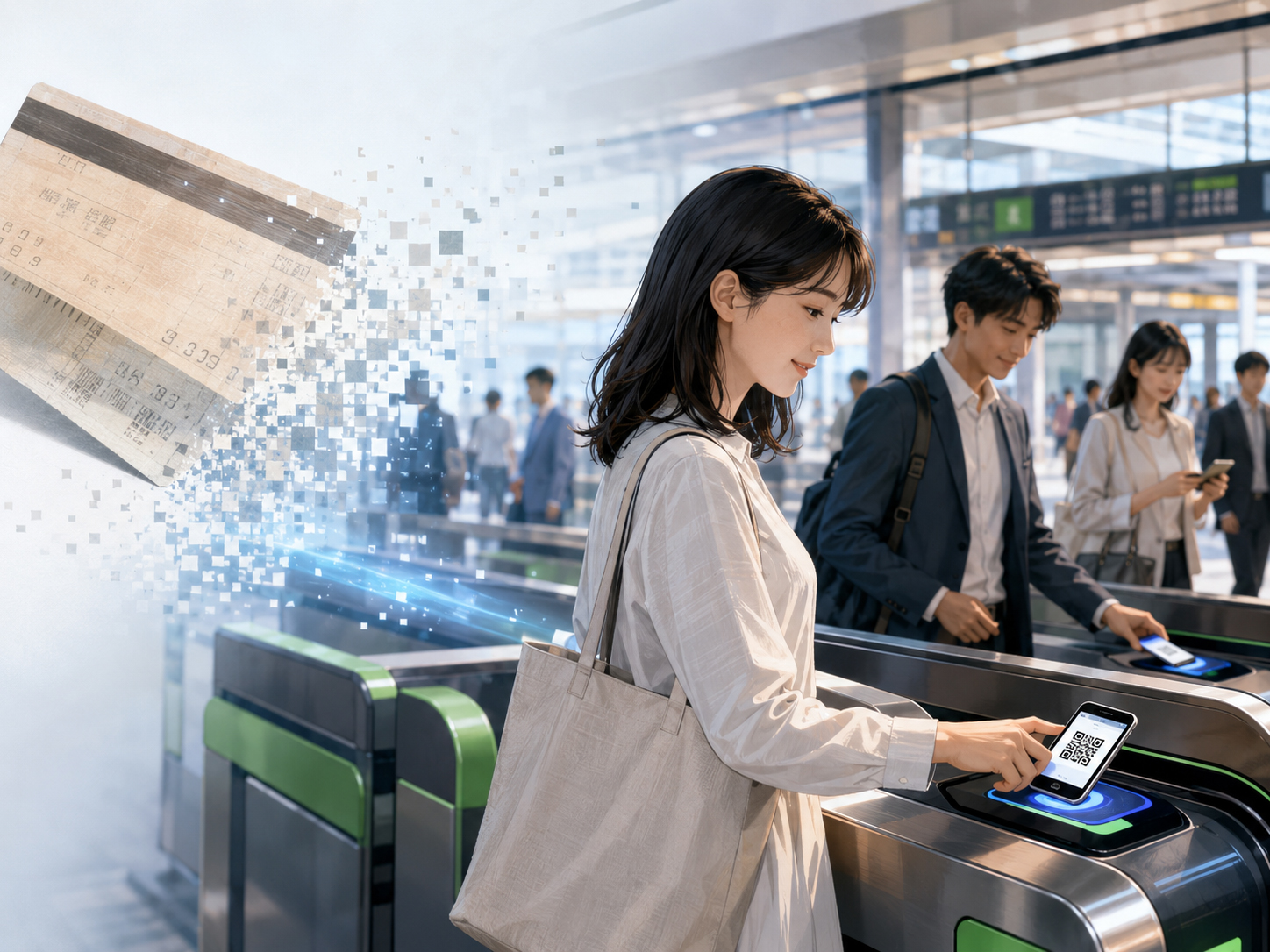
East Japan Railway is planning to shift short-distance conventional-line magnetic tickets toward QR-code tickets, according to Japanese wire-service reporting. The change is expected to begin in spring 2027 and will alter how paper tickets interact with station gates.
Traditional magnetic tickets are inserted into the automatic gate, carried through the machine, and returned on the other side. QR-code tickets do not need that same internal journey. The passenger presents the code; the gate reads it.
Why magnetic tickets are fading
Magnetic tickets have a magnetic layer on the back. That layer makes them harder to recycle and adds complexity to ticket handling. QR-code tickets can reduce reliance on that magnetic material and may make some station equipment simpler to maintain.
For railway companies, the issue is not only environmental. Machines that physically move paper have wear, jams, cleaning needs, and maintenance costs. If more tickets are scanned rather than transported through the gate, station equipment can evolve.
What passengers may notice
Many daily riders already use Suica, mobile IC cards, or other contactless systems, so the change may feel modest. But for occasional riders, tourists, children, and travelers using paper tickets, the gate experience will be different.
Good design will matter. Passengers will need to know where to hold the ticket, which side faces the reader, and how the system handles transfers, exits, and fare adjustments. Japan’s railways are excellent at operations, but even small interface changes require clear signs.
A railway modernization story
This is not a flashy technology story. There is no bullet train debut or luxury train launch. But Japanese rail travel depends on thousands of small systems working smoothly every day. Gates, tickets, signs, station staff, payment cards, apps, and paper all form the invisible choreography of travel.
QR tickets are part of that choreography becoming more digital. The goal is not to make rail travel feel futuristic for its own sake, but to remove friction and reduce waste.
Japan.co.jp view
The magnetic ticket has its own nostalgia. The feel of inserting a ticket into the gate and hearing the machine return it is part of travel memory for generations. QR codes will be less mechanical, perhaps less romantic, but probably more practical.
Japan’s station gates are a daily interface between people and infrastructure. When that interface changes, even slightly, the whole country’s movement changes with it.