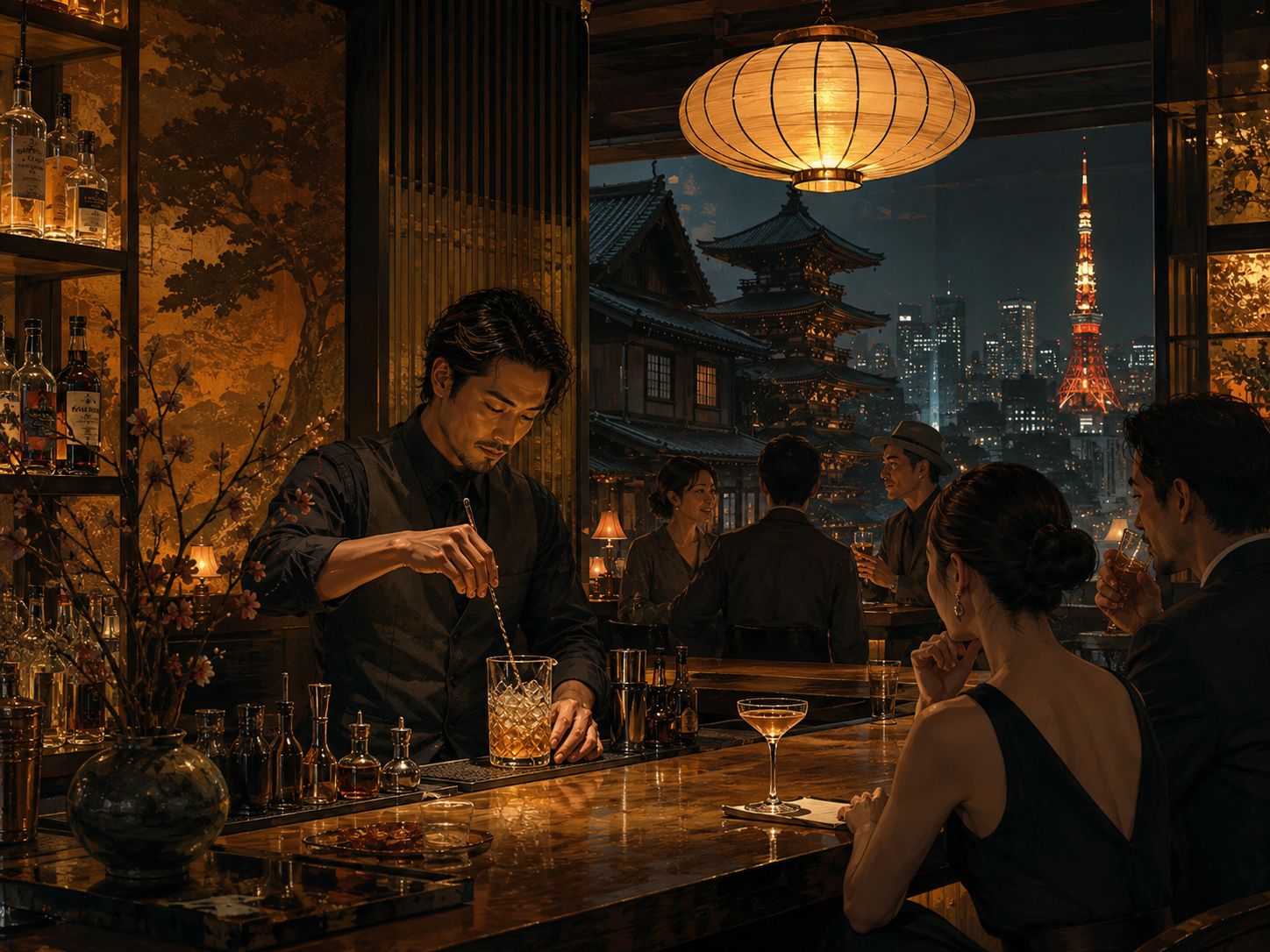
A small bar from Ebisu has moved west. Bar Trench Kyoto is not merely a branch opening. It is a test of translation: absinthe, herbal liqueurs, bitters and Tokyo-style reinterpretations of classic cocktails are being carried into a city of machiya, temples, hotel bars, alleys and slower nighttime rituals. A cocktail is never only what sits in the glass. It is also the speed of the city, the door, the lighting, the conversation and the way a guest enters the room.
Bar Trench opened in 2010 as Bar Tram’s second location, tucked into an Ebisu back alley. Its scale was modest, but its reputation grew far beyond the room. It became a regular presence on international bar lists and a destination for traveling bartenders. The house language: absinthe, herbal liqueurs, bitters and cocktails with stories behind them. Co-owner and bartender Rogerio Igarashi Vaz — Brazilian-born, partly shaped by Canada and Japan — became one of the faces of Tokyo’s international cocktail scene.
Why Kyoto matters
Kyoto has always had bars, but for visitors it has often been read as a daytime city: temples, gardens, rivers, cafés, kaiseki, ryokan and the long walk between sights. At night, however, a different Kyoto appears around Kiyamachi, Pontocho, Gion, Kawaramachi and Higashiyama. Old whisky bars, hotel bars, speakeasies, gin rooms and rooftop terraces now coexist with the city’s older drinking culture.
That is why Bar Trench Kyoto matters. The project is not simply Tokyo style transplanted to Kansai. It asks whether Tokyo’s technical, herbal, back-alley cocktail language can slow down enough to fit Kyoto’s atmosphere. Guests arrive carrying the residue of shrines, rain, stone lanes, lanterns and hotel corridors. A good Kyoto bar must absorb that pace rather than fight it.
A short history of Japanese cocktail craft
Japanese cocktail culture grew out of postwar Western spirits, hotel bars, Ginza counters and a serious idea of bartending as craft. The details became famous: hand-cut ice, glass temperature, the hard shake, exact hospitality, and the bartender’s skill at reading a guest rather than simply presenting a menu. By the 1990s and 2000s, Ginza bars such as Bar High Five and Star Bar helped make Tokyo a city that international bartenders studied.
In the 2010s the scene diversified. Bar BenFiddich brought herbs, absinthe and farm-like sensory work into Shinjuku. The SG Club reframed global cocktail history through Shibuya. Bar Trench made absinthe and bitters feel intimate, literary and contemporary. Kyoto’s newer cocktail energy is not an imitation of that Tokyo boom. It is a second movement: craft placed inside a city where history and hospitality are already theatrical.


Real bars and pubs to know
The following real bars and pubs are useful anchors for readers planning a Kyoto/Tokyo cocktail route. Details change; check direct websites or reservation pages before visiting.
From sightseeing to nighttime culture
Japan travel is often organized around daylight: stations, temples, museums, markets, shopping streets and meals. Bars change that rhythm. A serious cocktail bar asks visitors to sit still, listen, speak softly, watch a bartender’s hands and accept the city on a slower frequency. For inbound travelers, that may be one of the most intimate forms of cultural tourism.
Kyoto’s bar scene is especially powerful because it does not need to shout. A narrow staircase, a yellow door, a fireplace, a rooftop view, a herb-scented counter or a quiet bartender can be enough. The best bars do not perform “Japan” in clichés. They create a situation in which place, season, technique and hospitality become visible.
The westward movement
Tokyo’s cocktail culture moving west does not mean Kyoto is becoming Tokyo. It means Japanese bar culture is developing regional grammar. Tokyo remains dense, fast and experimental. Kyoto is slower, spatial, historical and atmospheric. Bar Trench Kyoto gives that difference a recognizable address. It suggests that Japan’s nighttime culture is no longer a side note to travel, but one of the ways travelers learn how cities think after dark.
Sources and references
Bar details prioritize official sites, reservation pages and venue-published information as checked at publication.
- The Japan Times: Bar Trench Kyoto opening and Tokyo cocktail culture
- Small Axe / Bar TRENCH official page
- TableCheck: Bar TRENCH Kyoto address and phone
- Bar K6 official website
- Bar Rocking Chair official English page
- K36 The Bar & Rooftop official hotel page
- Bar BenFiddich official website
- The SG Club official page
- 50 Best Discovery: Bar Trench profile