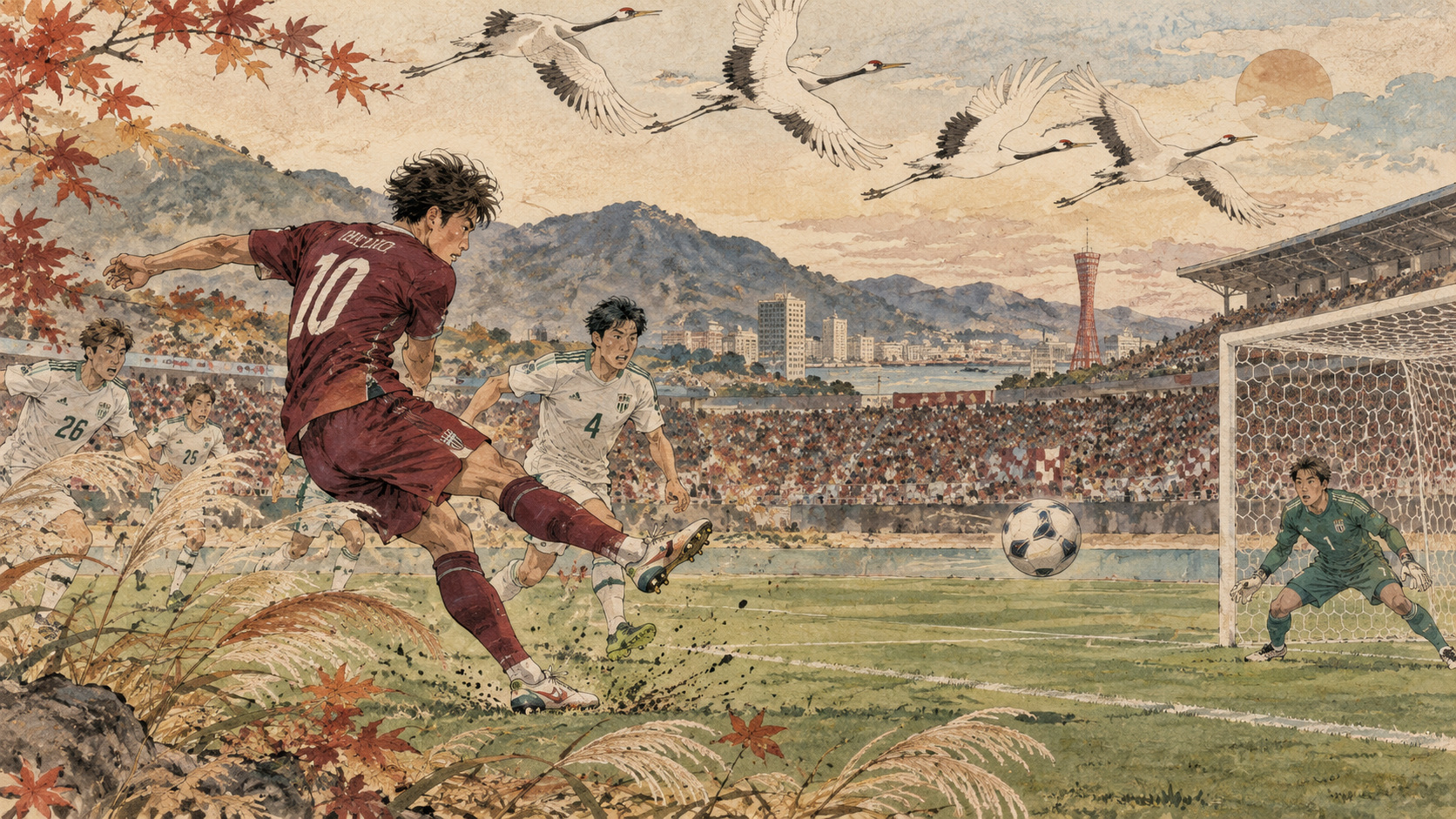
A win shaped by two moments—and a difficult hour between them
For Vissel Kobe, the scoreline was clean: two goals scored, none conceded, six points from two AFC Champions League Elite matches. The performance behind the numbers was less comfortable. Kobe beat South Korea's Jeonbuk Hyundai Motors 2–0 at Misaki Park Stadium on October 14, 2026, opening the scoring through Yuya Osako and adding a second through Yuya Kuwasaki. Between those moments Jeonbuk began to impose itself, forcing Kobe to defend its lead rather than merely celebrate an attacking showcase. That resistance is part of why the result matters.
Osako turns a set piece into a statement
Katsuya Nagato delivered the corner that enabled veteran forward Yuya Osako to open the scoring early in the first half. The goal illustrated a familiar truth about continental competition: when evenly matched opponents leave little space, one rehearsed set piece can rearrange the whole contest. Osako's experience matters in these moments. The club's Japanese match record lists the goal in the 12th minute, while the AFC's English report uses the 11th; those sources refer to the same early breakthrough, not separate events.
Jeonbuk almost changes the story
Jeonbuk is no minor visitor. After conceding, the Korean champions grew more dangerous, with Italo influential and opportunities involving Bruno Mota and Lee Seung-woo. Choi Woo-jin struck the crossbar. Kobe could not assume that possession of a lead meant control of the match. Match statistics published in Japan showed Kobe with 47 percent possession and ten shots against Jeonbuk's 53 percent and nine shots. Kobe's goalkeeper Shuichi Gonda and his defensive colleagues were involved in protecting a narrow advantage; the shutout should not be mistaken for an evening free of danger.
The second goal was a tactical answer
Kuwasaki scored midway through the second half after Kobe broke forward, with Yoshinori Muto helping launch the counterattack. It was a different kind of success from the first goal. Instead of winning the first contact at a corner, Kobe moved into space while Jeonbuk was committing players forward. Two goals created in different ways—one from a dead ball and one in transition—offered a glimpse of the range a serious Asian contender needs. Neither incident alone proves Kobe superior throughout the match. Together, they decided the contest.
Jeonbuk brings two Asian crowns and a long memory
Jeonbuk's credentials stretch well beyond its current K League title. The club won Asia's flagship competition in 2006 and again in 2016, when it defeated Al Ain 3–2 on aggregate. Its two championships help explain the scale of Kobe's assignment. Jeonbuk had also beaten fellow Japanese side Kashiwa Reysol in its first league-stage game this season, making the Kobe defeat its first setback of this campaign. Judging cross-border competition requires context: one result is a measure of a night, not a conclusive verdict on the strength of an entire national league.
From recovery-era beginnings to Japan’s title race
Vissel Kobe's story is entwined with the city itself. The club emerged in 1995, the year of the devastating Great Hanshin earthquake, and steadily grew into a top-flight institution. Its first J1 championship in 2023 marked a major arrival. The next frontier is different. Winning domestically requires sustained superiority against familiar opponents; winning across Asia requires adaptation to unfamiliar tactical approaches, international travel and competing calendars. The club's evolution offers a case study in how Japanese football organizations turn local identity, investment and coaching into ambitions beyond Japan.
Understanding the Elite competition
The AFC Champions League Elite sits at the summit of Asian club football. In its 2026–27 format, the top eight clubs in each regional league stage advance to the round of 16. According to the AFC's competition regulations, those ties are played home and away within each region, with later finals held as a centralized event. Kobe's two victories represent a promising start and six valuable points, but there is no qualification clinched at this early stage. It would be premature to turn the performance into a prediction of a trophy.
A useful test of Japanese football, not a national referendum
Regional rivalry lends the occasion emotion: Japanese and Korean clubs know a fixture between them attracts scrutiny beyond club supporters. Yet the more informative lesson is sporting, not nationalist. Kobe found two precise ways to score, absorbed pressure and kept its goal intact. Jeonbuk created genuine chances and may still recover during the league stage. The difference on October 14 came in execution, not in any permanent hierarchy between J.League and K League football.
The harder task begins after the whistle
If Kobe wants to make this a defining campaign, it must reproduce those qualities when the opponent scores first, when set pieces do not work and when the schedule becomes congested. This victory is a useful early indicator of depth and resilience, but it is only matchday two. For spectators in Kobe and for international followers of Japan's clubs, that is the story worth following: not just a deserved 2–0, but whether a club built through decades of change can convert sound performances into lasting continental success.
Sources and reference material
- Vissel Kobe official match record
- Japan Football Association match record
- AFC official match report
- AFC competition regulations
- AFC Jeonbuk 2016 championship history
- Reuters October 14 match report
- Sports Navi match statistics
Match facts checked against October 14 official records; minute markings differ slightly across records.