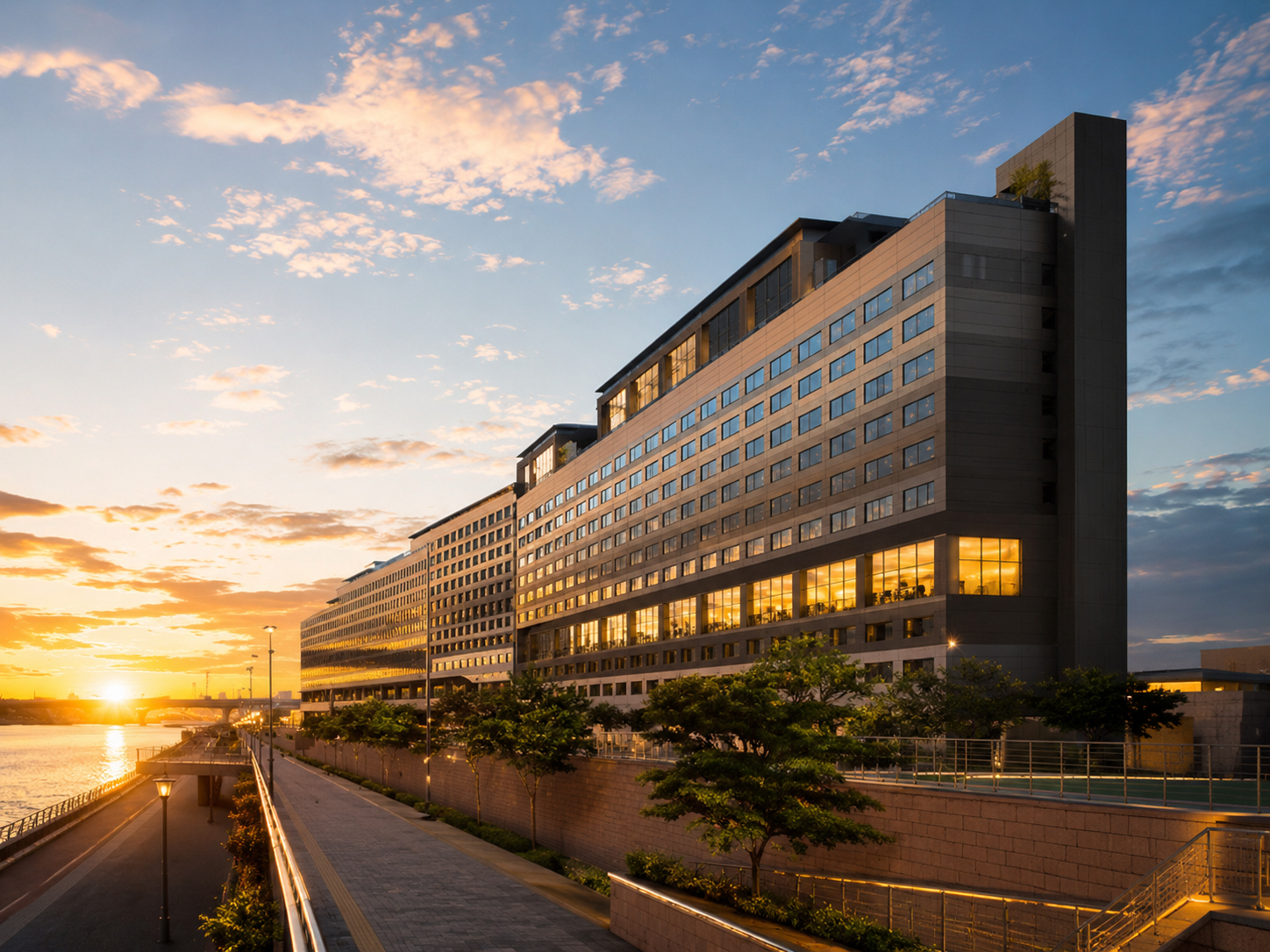
For years, the phrase “airport hotel” carried a faint tone of compromise. It meant a practical bed before a dawn departure, a place to collapse after a red-eye, a room chosen because time had run out. Hotel Villa Fontaine Grand Haneda Airport, directly connected to Tokyo Haneda Airport Terminal 3, is changing that story. In the 2026 Skytrax World Airport Awards, the hotel was ranked seventh in the world in the “World’s Best Airport Hotels 2026” category and third in Asia in the “Best Airport Hotels in Asia 2026” category.
The real story is bigger than a ranking
The award news is straightforward. Sumitomo Fudosan Villa Fontaine announced on March 24, 2026, that Hotel Villa Fontaine Grand Haneda Airport had been honored by Skytrax, placing seventh globally among airport hotels and third in Asia. The hotel is the core lodging property inside Haneda Airport Garden, a mixed-use complex directly connected to Haneda Airport Terminal 3. Together with the adjacent Villa Fontaine Premier Haneda Airport, the complex has 1,691 rooms.
But the deeper story is not merely that a Tokyo hotel won an award. The deeper story is that Haneda has become a place where travelers may actually want to stay. Instead of landing in Japan and immediately rushing onto a train, a traveler can pause, bathe, sleep, eat, shop, reset, and begin Tokyo the next morning with a human rhythm. The airport is shifting from a transit machine into part of the journey itself.
The power of being directly connected to Terminal 3
The hotel’s most important luxury is not marble, scale, or skyline views. It is direct connection. Terminal 3 is Haneda’s international gateway, and a hotel connected to it solves one of travel’s most stubborn problems: the final few minutes after arrival. When a long-haul passenger lands tired, jet-lagged, carrying luggage, and unsure whether to fight the city at midnight, a directly connected hotel becomes more than convenience. It becomes relief.
Haneda’s proximity to central Tokyo already gives it a natural advantage over more distant airports. But even a close airport can be stressful when flights arrive late, trains are crowded, children are exhausted, or the next morning’s departure is early. A good airport hotel compresses uncertainty. It gives the traveler a place to stop before the city begins.
Why scale matters
The 1,691-room scale of the Grand and Premier properties matters because airport demand is rarely simple. Some guests are tourists arriving from overseas. Some are Japanese travelers connecting from regional flights to international departures. Some are business travelers who need one predictable night between meetings. Others are families, elderly travelers, event visitors, airline crews, or passengers caught by weather delays.
In that sense, Villa Fontaine Grand Haneda Airport is less a conventional hotel than a piece of airport infrastructure. It absorbs fatigue. It converts awkward layovers into sleep. It turns pre-flight anxiety into a controlled morning. It gives Tokyo’s gateway more capacity not just to move people, but to hold them comfortably when movement pauses.
What Skytrax is really measuring
Skytrax’s World Airport Awards are a global benchmark in aviation hospitality, and the airport hotel category is a particularly demanding one. In 2026, Crowne Plaza Changi Airport again led the global ranking, underscoring Asia’s strength in the airport-hotel experience. Villa Fontaine Grand Haneda’s placement at No. 7 worldwide and No. 3 in Asia puts Tokyo into that conversation.
Airport hotels are judged differently from city hotels. A city hotel can charm slowly. An airport hotel must work immediately. Arrival routes must be obvious. Check-in must be efficient. Rooms must be quiet. Beds must be dependable. Food must fit strange hours. Staff must understand tired travelers. The hotel must make one promise above all: you will not miss your flight.
The onsen changes everything
One of the features that makes this hotel feel distinctly Japanese is Izumi Tenku no Yu Haneda Airport, the natural hot spring facility connected with the hotel complex. Official information lists it as a 24-hour facility, with bathing areas closed during cleaning from 10:00 to 12:30. It includes large baths, saunas, bedrock bathing, relaxation areas, body care, and dining.
That onsen element changes the emotional role of the airport hotel. A bed allows a traveler to sleep. A hot spring lets the traveler return to the body. After a long-haul flight, soaking in hot water, warming cold feet, and letting the nervous system settle is not a gimmick. It is one of the most Japanese possible answers to modern travel exhaustion.
Haneda’s long arc: from 1931 to the global gateway
Haneda’s story began in 1931 as Tokyo Haneda Airfield. Over the decades, it reflected Japan’s own transformation: prewar aviation, postwar occupation, the rise of commercial air travel, the 1964 Tokyo Olympics, the era when Haneda served as Tokyo’s primary international airport, and then the 1978 opening of Narita, which shifted most international traffic away from Haneda.
For years, Haneda was understood mainly as Tokyo’s domestic airport. Narita was the airport for the world; Haneda was the airport for Japan. That division shaped generations of travel habits. But the old separation has been breaking down. Haneda’s international capacity grew, Terminal 3 became the city’s close-in international front door, and Tokyo again had a global airport within easy reach of its urban core.
Villa Fontaine Grand Haneda Airport belongs to that larger comeback. It is not simply a hotel at an airport. It is lodging infrastructure for a revived international Haneda, a symbol of Tokyo’s desire to make arrival smoother, more elegant, and more complete.
Haneda Airport Garden as a small city
Haneda Airport Garden combines hotel rooms, retail, dining, a bus terminal, and hot spring facilities directly beside the airport. It is not just an amenity cluster. It is a small airport city. Passengers, hotel guests, shoppers, diners, spa visitors, and bus travelers all cross paths there.
Japanese airports have long been admired for cleanliness, punctuality, and operational precision. Those qualities remain essential. But a mature tourism gateway needs more than efficiency. It needs welcome. It needs a sense that the trip has begun the moment the traveler arrives. Haneda Airport Garden is one answer to that challenge: it extends Japanese hospitality into the hours before and after the flight.
An airport hotel is also resilience infrastructure
In Japan, airport hotels have another role: resilience. Typhoons, earthquakes, snow, rail interruptions, and large-scale flight delays can strand travelers quickly. When transportation systems pause, the ability to house people safely near the airport becomes part of the social infrastructure.
A large hotel complex cannot solve every disruption. But it gives the airport margin. Rooms, dining, bathing, bus connections, and sheltered pedestrian access all matter when a normal travel day turns complicated. A good airport hotel is not only about comfort during smooth travel. It is about reducing stress when travel stops being smooth.
A new first impression of Japan
For many travelers, Haneda is Japan’s first impression. Immigration, baggage claim, signage, washrooms, rail connections, staff, food, and cleanliness all teach visitors something before they ever step into Tokyo. Now the first impression can also include a hotel room, an onsen, a restaurant, and a calmer morning after arrival.
That is why Villa Fontaine Grand Haneda Airport’s Skytrax recognition matters. It is a hotel award, but it is also an airport award, a tourism award, and a city-planning award. It suggests that Tokyo’s gateway is becoming more than efficient. It is becoming more humane.
| Feature | Why it matters |
|---|---|
| Direct Terminal 3 connection | Reduces the hardest part of late arrivals and early departures. |
| 1,691-room complex | Allows Haneda to absorb many kinds of travel demand. |
| Natural hot spring | Turns an airport stay into a distinctly Japanese recovery ritual. |
| Skytrax No. 7 worldwide | Places Haneda’s lodging experience on the global airport-hotel map. |
| Haneda Airport Garden | Blends hotel, shopping, dining, bus access, and spa facilities into an airport-city model. |
The quiet genius of a good airport hotel
Travel is not made only of beautiful landmarks. It is also made of delays, fatigue, luggage, rain, children, jet lag, emails, missed meals, and early alarms. A good airport hotel reduces the number of ways a trip can go wrong. You sleep. You bathe. You eat. You find the terminal. You make the flight.
Villa Fontaine Grand Haneda Airport’s world ranking is therefore more than a badge. It is evidence that Tokyo’s front door is becoming easier to use. Haneda is still an airport of runways, gates, monorails, and immigration counters. But now it is also a place where the traveler can stop, breathe, and begin Japan gently.
Sources and references
This article draws on public information from Sumitomo Fudosan Villa Fontaine, Skytrax World Airport Awards, Hotel Villa Fontaine official materials, Haneda Airport history pages, and Haneda Airport Garden documents. Hotel facilities, onsen hours, rates, and operating details may change; travelers should confirm current information with official sources before visiting.
- Hotel Villa Fontaine: Skytrax World Airport Awards 2026 announcement.
- Skytrax World Airport Awards: World’s Best Airport Hotels 2026 ranking.
- Hotel Villa Fontaine Grand Haneda Airport: Official hotel information.
- Hotel Villa Fontaine: Izumi Tenku no Yu Haneda Airport official onsen information.
- Haneda Airport: History of Haneda Airport.
- Sumitomo Realty & Development: Haneda Airport Garden mixed-use complex announcement.