- Sixty hours is not a price tag
- The designer who learned to explain products before making them
- One pair of hands, several business models
- What sashiko once did, and what it can do now
- The argument against preserving a shape after its purpose has vanished
- The Enshū textile connection: 1928 to the present
- The offcuts are kept—but how much waste is avoided?
- Why the most expensive work may be the least scalable
- Six images, one production philosophy
- Can fewer garments produce a viable livelihood?
Sixty hours is not a price tag
The most consequential number in Tomoya Matsuda’s clothing business is not a retail price. It is the time a single hand-worked garment can absorb: 60 hours. That is a week and a half of conventional full-time work devoted to one object before the financial realities of materials, rent, administration, photography, packaging and the next collection have been settled.
In written answers supplied directly to JAPAN.co.jp on October 23, the Tokyo designer-maker behind TMMY does not offer a story of miraculous efficiency. He acknowledges that such work is difficult to sustain and says the elaborate sashiko collection must be supported by the wider business and other ventures. His aim is not to discount the hours until they disappear into a mass-market price, but to find buyers who understand why those hours matter.
That answer is unusually revealing. It shifts the conversation away from the familiar slogan of “slow fashion” and toward a more demanding question: how can a garment last long enough, command a defensible price and support its maker without depending on an endless supply of underpaid hand labor?
The designer who learned to explain products before making them
Matsuda’s official biography gives his Japanese name as 松田朋也. He studied commerce at Keio University and apparel at Bunka Fashion College, and later worked in public relations and communications at a creative agency. His label, TMMY, began operating in earnest in 2025. He says he personally takes responsibility for design, patternmaking, sewing, sashiko and dyeing.
The detour through communications was deliberate. He told JAPAN.co.jp that he had wanted to make things for a living but first sought experience communicating products to the world. Working with design teams introduced him to brands attentive to regional Japanese producers, craftspeople and environmental issues. Those encounters helped him decide what he wanted to make and how.
It also gave him an advantage a small workshop cannot easily purchase: a developed vocabulary for explaining value. A great deal of independent design depends on being able to show what is otherwise invisible in a finished product—the choices discarded, the people behind the fabric and the labor accumulated before a jacket reaches a customer.
One pair of hands, several business models
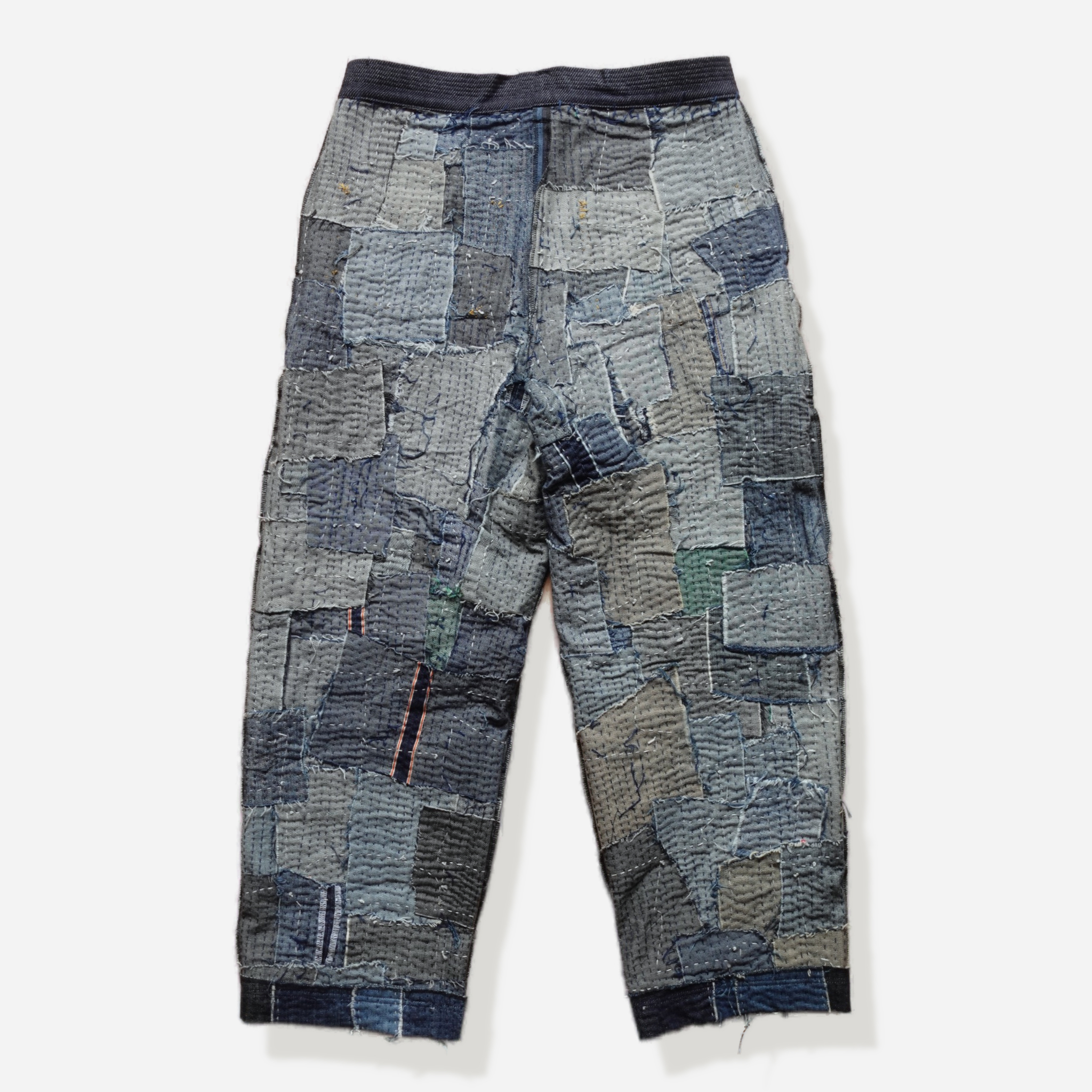
TMMY’s online catalogue makes the commercial structure tangible. It lists everyday shirts and T-shirts alongside specialized sashiko items; a sashiko cotton shirt is listed at ¥44,000 and a sashiko wool jacket at ¥297,000, while several sashiko denim pieces are offered through individual quotation rather than a fixed publicly displayed price. These are listed product prices, not sales figures or evidence of profitability.
The range matters more than any one expensive object. Lower-priced items can give new customers an entry point, while exceptionally labor-intensive pieces make a different proposition: time, scarcity and direct contact with the maker. Matsuda’s interview suggests he sees such categories as complementary rather than expecting all output to share one hourly production cost.
For perspective only, a garment requiring 60 hours would carry ¥120,000 of labor at an illustrative ¥2,000 per hour before materials and overhead. That calculation is not Matsuda’s wage, cost sheet or pricing formula; it simply shows why intensive handwork cannot be judged against the shelf price of an industrially produced shirt.
What sashiko once did, and what it can do now
Sashiko is frequently reduced in international fashion coverage to a distinctive pattern of white stitches against indigo cloth. Its history is more demanding. In northern Japan, cotton was difficult to grow and historically scarce; stitching improved the reinforcement and warmth of hemp garments. Tsugaru kogin-zashi and Nambu hishi-zashi became regional practices with different counted-thread structures and elaborate geometric vocabularies.
In March 2026, Japan selected the Tsugaru and Nambu sashiko techniques for official documentation as folk cultural heritage requiring preservation measures. The historical work of women who sustained households through needlework is therefore not merely an ornamental backstory. It gives contemporary designers an ethical question: what, exactly, is being preserved when a practical repair practice becomes a fashionable surface?
Matsuda’s work draws upon the broad tradition of stitching and fabric stewardship, but it should not be described as a faithful continuation of a specific regional kogin or hishi-zashi technique without documentary evidence. His own interest is in adapting tradition to modern silhouettes rather than fixing a historic form in place.
The argument against preserving a shape after its purpose has vanished
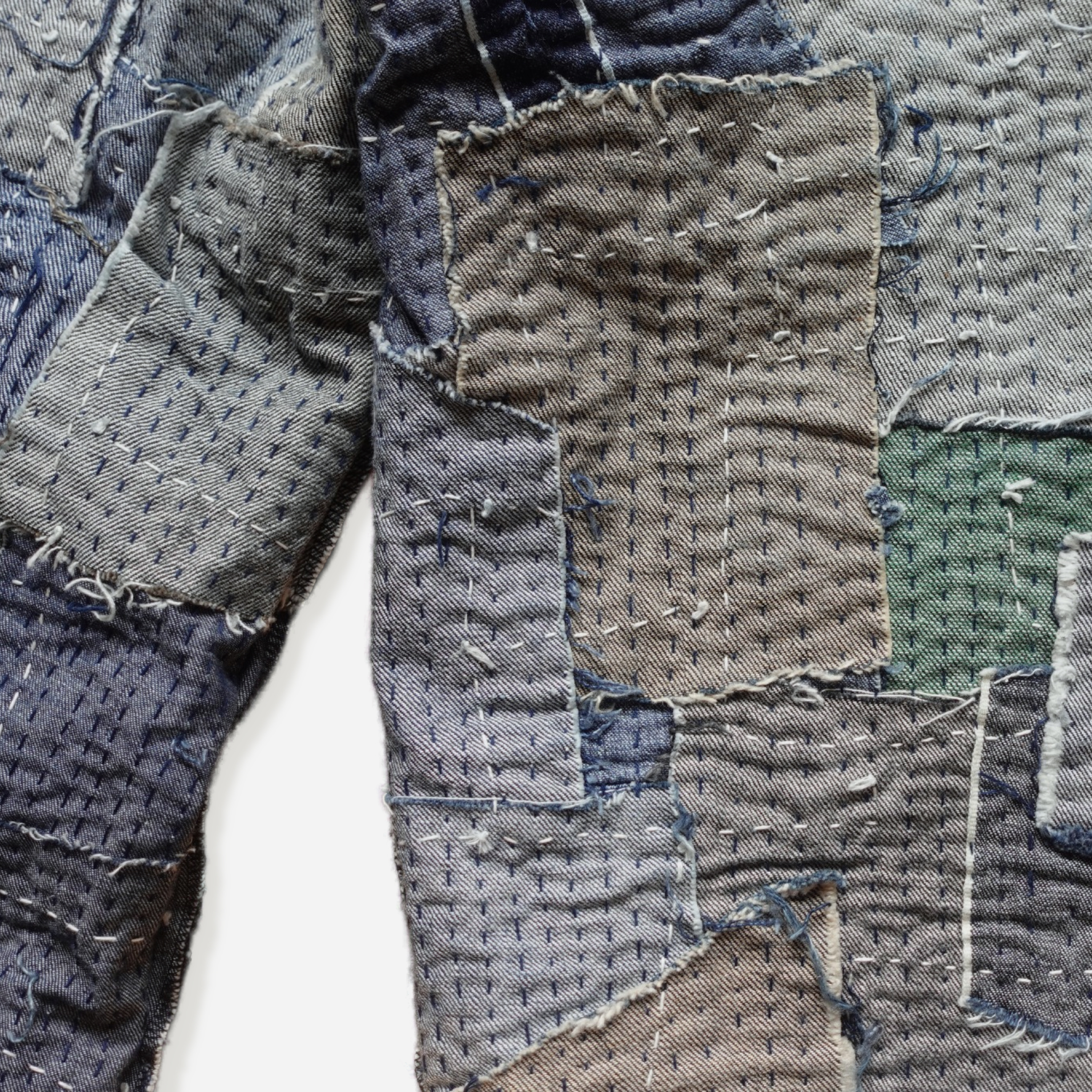
Matsuda’s most provocative interview answer concerns tradition. He argues that the form surviving today is not automatically the best form to preserve. Cultures emerged under particular circumstances and have changed repeatedly; when old techniques cease to fit contemporary life, he wants to investigate their underlying purpose and whether that purpose still warrants protection.
This is not a rejection of history. It is a challenge to the idea that historical fidelity is the only measure of respect. He says it is more important to understand why a practice began and why it was transmitted than to reproduce every visible characteristic unchanged.
For TMMY, sashiko’s purpose extends beyond its distinctive geometry. It gives the maker a reason to keep tiny remnants and gives the wearer a possible emotional relationship to the person who assembled them. Both claims should be tested through actual use over time: sentimental attachment is a proposed pathway toward longer garment life, not a measured result already demonstrated by the brand.
The Enshū textile connection: 1928 to the present
One of Matsuda’s named sources of fabric is Furuhashi Weaving in Hamamatsu, Shizuoka Prefecture. Its Japanese name is 古橋織布有限会社. The company says it was established in 1928 and works with traditional shuttle looms, producing original textiles from natural materials, especially cotton. A Ministry of Economy, Trade and Industry profile also identifies Furuhashi among notable textile manufacturers.
Matsuda told JAPAN.co.jp that around 20 vintage looms remain in use and that some were made between 1965 and 1974. These particular machine counts and manufacturing years are attributed to his account rather than independently established by the cited mill pages. He describes encountering the mill’s fabric as a decisive moment in his appreciation of Japanese textile regions.
The broader point is economic. A small designer can become a customer and interpreter of specialized regional production, while the mill offers textures that cannot be replicated merely by selecting a generic fabric description in a catalogue. Neither side becomes competitive on volume alone. Their value depends in part on know-how, consistency and the ability to tell a convincing story about materials without confusing heritage with automatic superiority.
The offcuts are kept—but how much waste is avoided?
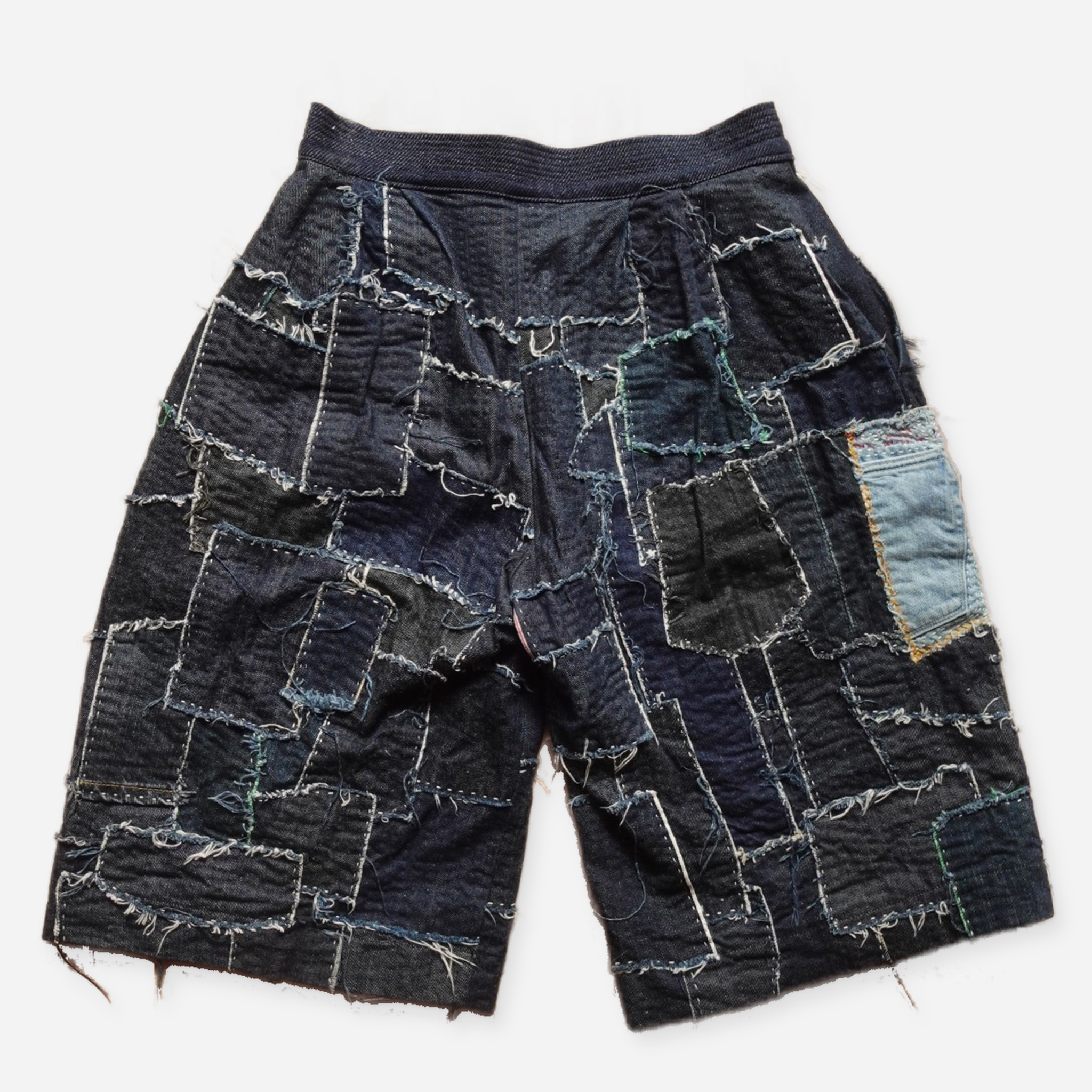
Matsuda says he keeps every offcut generated by his own garment production. His workflow alternates between making garments from new fabric and using the remnants from those garments; when insufficient material is available, he sometimes obtains leftover fabric from textile factories before it would otherwise be discarded.
He also gives a clear limit: TMMY does not currently weigh or measure the recovered material. There is no verified recovery rate, annual volume or life-cycle assessment in the interview. It would therefore be misleading to describe the practice as a quantified reduction of emissions or waste, even if its material-reuse logic is compelling.
This distinction matters against Japan’s wider clothing-disposal problem. Government material-flow estimates for 2024 describe substantial quantities of garments discarded after use. Those national estimates concern the entire clothing market, whereas TMMY is describing offcuts from its own production and occasional industrial remnants—different material streams that should not be combined into a single claimed saving.
Why the most expensive work may be the least scalable
There is a structural contradiction at the center of artisanal fashion. The details that make an object difficult to imitate—an individual’s judgment, hands, repetitive stitching and willingness to spend time—also constrain how many examples can be produced. Scaling up can require delegation, process simplification or higher prices, each of which may change what customers believe they are buying.
Matsuda does not claim to have solved that equation. He says that the 60-hour work must coexist with other collections and undertakings, and that heavy promotion or bargain pricing would not express the collection’s worth. He wants patient communication and buyers who appreciate individual pieces.
Important commercial information remains undisclosed: costs, units sold, margins, repeat-purchase rates and the share of income coming from each product category. The article can analyze the choices facing a maker without pretending the business has already proved a scalable financial model.
Six images, one production philosophy
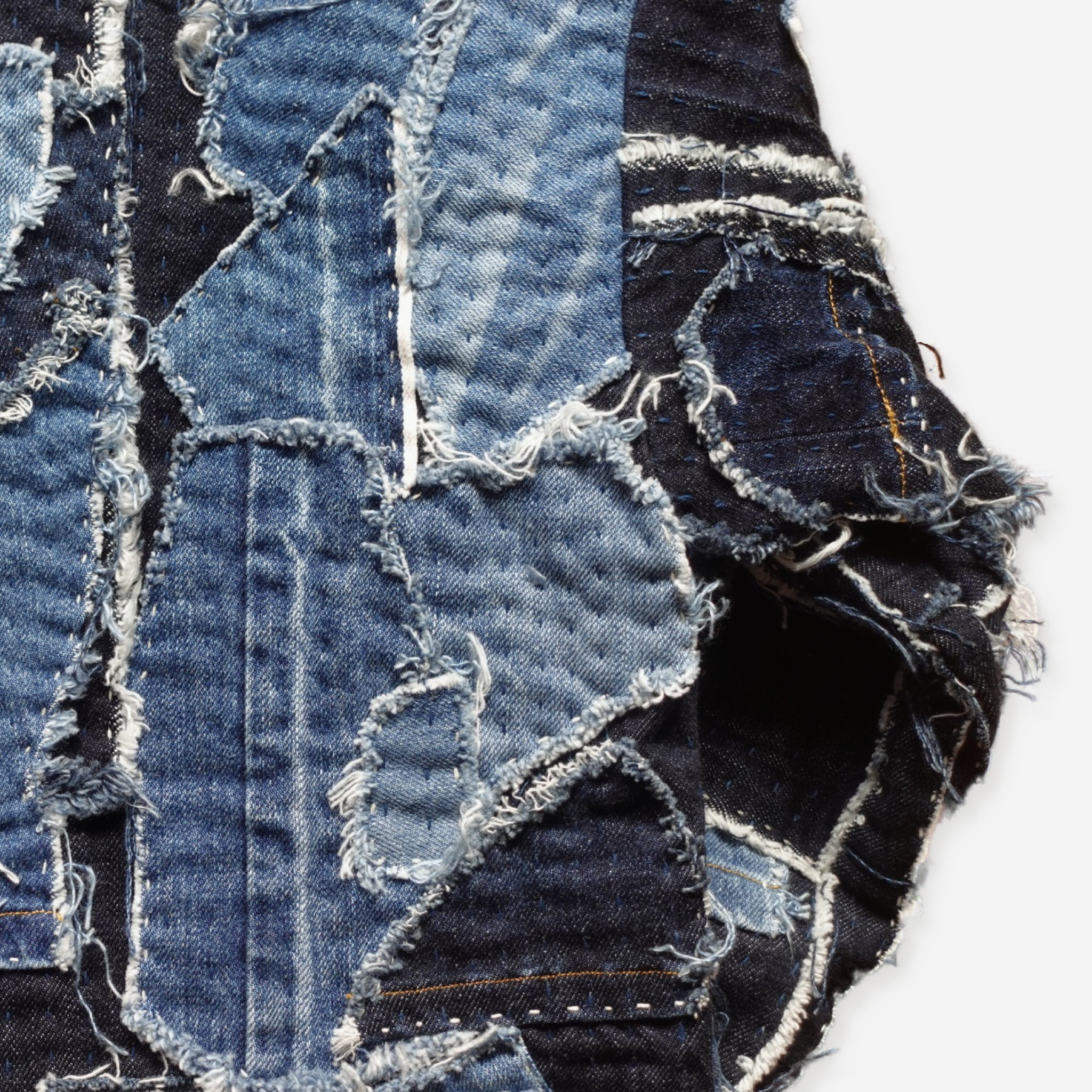
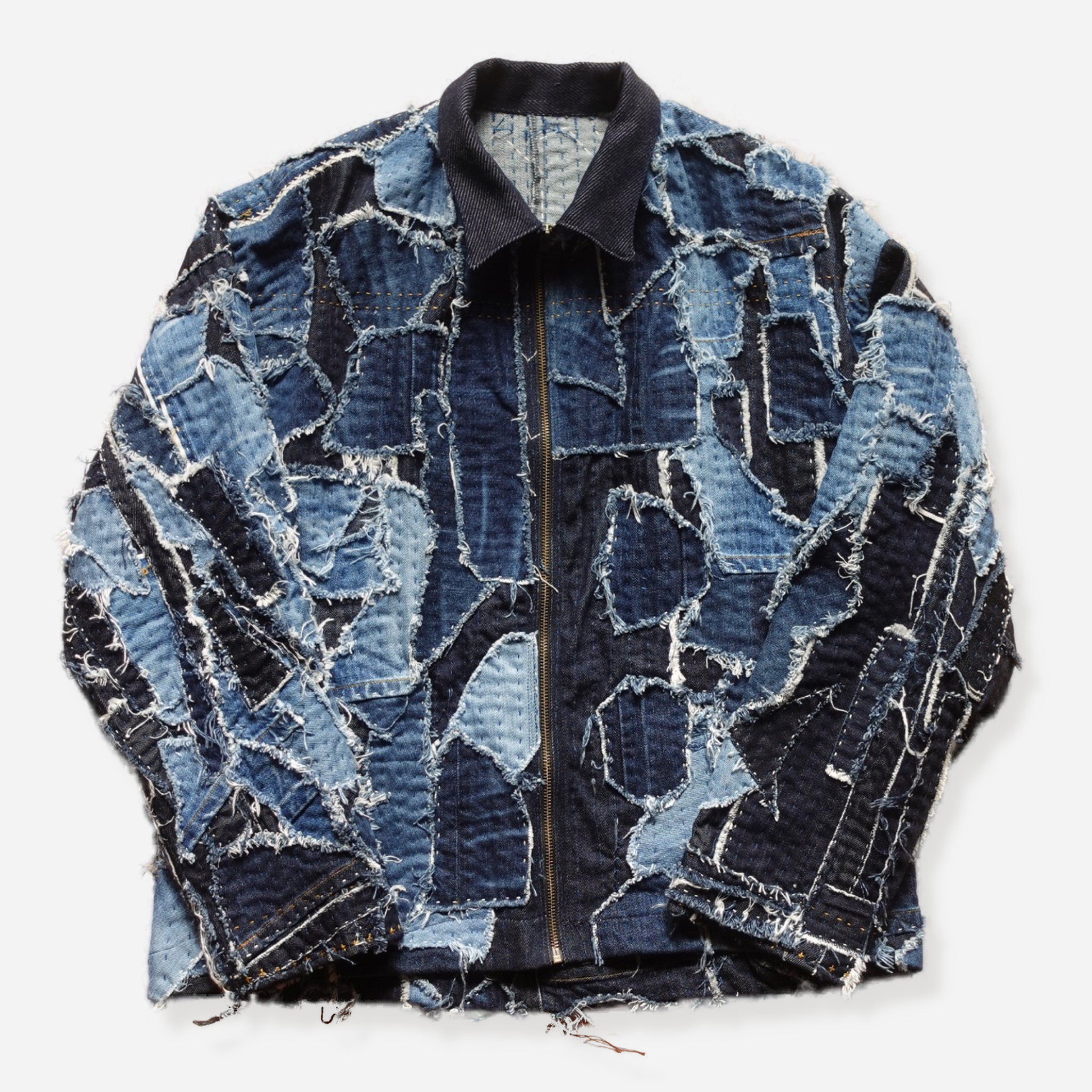
The six photographs supplied for this feature are presented together and throughout the article as a visual record associated with TMMY. They should be read alongside the interview: materials, finished forms and evidence of the work required to move from fabric to clothing. No image is treated as a photographed record of a specific 60-hour item unless separately confirmed.
Matsuda has agreed in writing to publication of the photographs with appropriate credit. All images shown in this feature are drawn from the original TMMY photo collection, including the opening photograph. Specific products and production stages have not been independently identified from the photographs.
The photographs bring readers closer to the work described in Matsuda’s written interview. They are credited to TMMY; captions avoid assigning unverified product identities or technical processes to individual frames.
Can fewer garments produce a viable livelihood?
The question behind TMMY is larger than a single Tokyo label. When clothes are cheaper than the labor required to make them carefully, consumers often see only the price. A small designer can try to reverse that calculation by making the labor visible and inviting buyers to choose fewer items for longer use.
Yet longevity cannot be asserted from craftsmanship alone. Durability, fit, repairability, daily use, changing tastes and what happens when a garment no longer fits all affect whether its life is genuinely extended. The strongest test of TMMY’s philosophy will be what customers do with the pieces years after purchase.
Matsuda’s position has the virtue of acknowledging the commercial difficulty. He is not asking fashion to abandon the market. He is asking whether the market can make room for time—enough time to stitch a garment carefully, explain its materials and keep it in use long after the next collection arrives.
TMMY in six photographs
The six images supplied for this interview are reproduced together. Specific garment names, work hours and locations are not inferred from the photographs.

Sources and reporting method
This feature is grounded in Matsuda’s October 23 written answers, supplemented by TMMY, Furuhashi Weaving and Japanese government primary sources. No unreleased commercial or environmental metrics were estimated.
- JAPAN.co.jp direct interview with Tomoya Matsuda, written answers dated October 23, 2026 (source correspondence supplied to the newsroom)
- TMMY official About page: Japanese name, biography and design philosophy
- TMMY official product catalogue and publicly listed prices
- Furuhashi Weaving official website: Enshū textile mill founded in 1928
- METI: 100 leading textile-industry companies, Furuhashi Weaving profile
- Agency for Cultural Affairs: Tsugaru and Nambu sashiko folk-craft record selection, March 2026
- Aomori Prefecture official explanation of sashiko garments and their social history
- METI: Japanese textile resource-circulation policy briefing, 2025
- METI / Ministry of Environment: 2024 clothing material-flow estimates