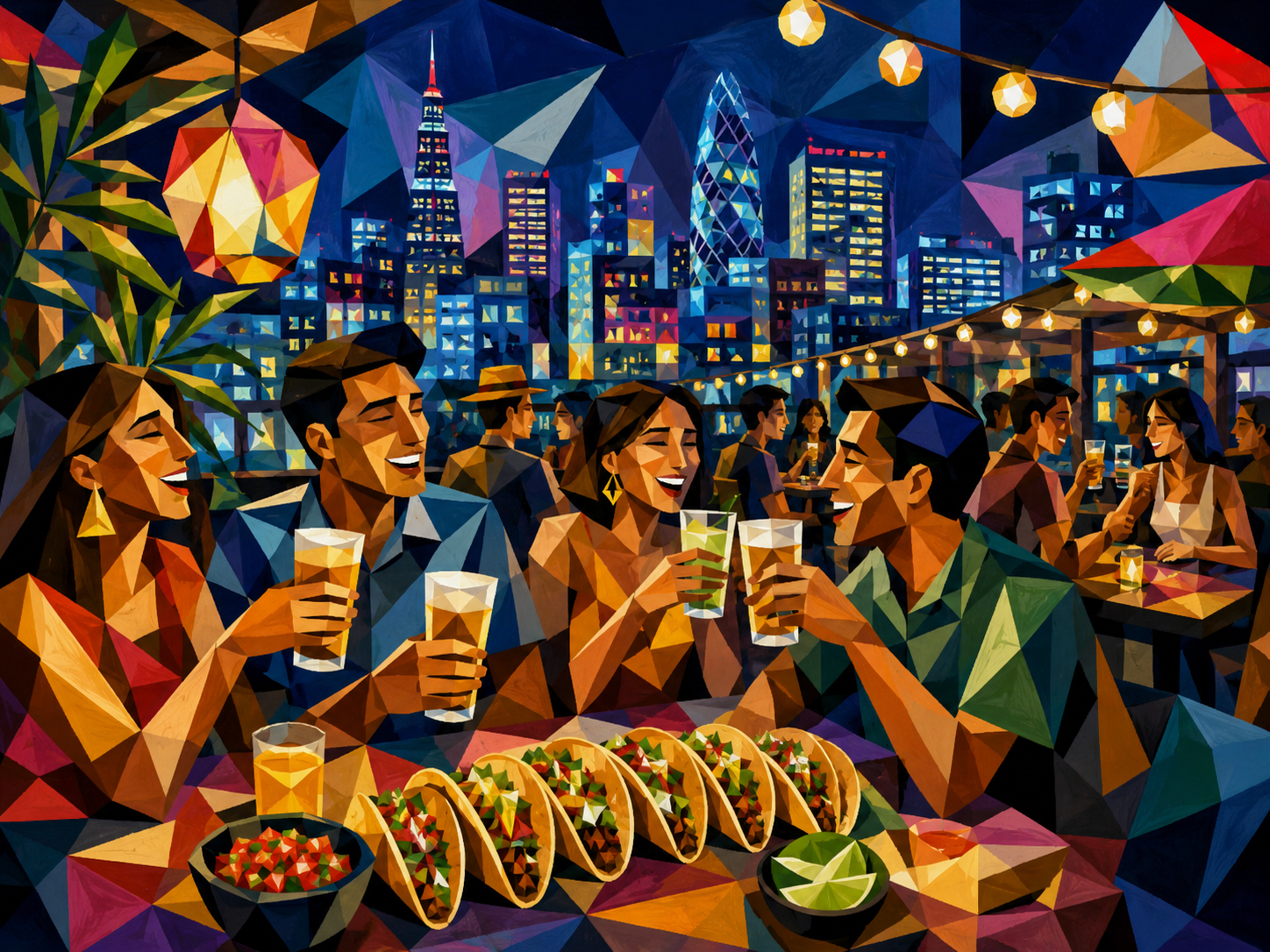
In the middle of Shinjuku, summer briefly changes nationality. You leave the ticket gates, rise above the station, step onto a terrace and find a familiar Tokyo ritual wearing Mexican colors: beer, city lights, conversation, heat, and food that is easy to share. GARDEN HOUSE SHINJUKU’s “2026 Mexican BEER GARDEN” is built around all-you-can-eat six-variety tacos. On the surface, it is a restaurant promotion. Look closer, and it becomes a story about Tokyo’s beer-garden history, department-store rooftops, Japan–Mexico ties, the weak-yen summer, and the way Japanese dining turns the world into seasonal experience.
According to the announcement, the plan offers all-you-can-eat tacos with two drink-course choices: a two-hour all-you-can-drink plan at ¥6,000 including tax, and a three-hour all-you-can-drink plan at ¥7,900 including tax. The venue is GARDEN HOUSE SHINJUKU on the fourth floor of NEWoMan Shinjuku. The restaurant’s listed hours are 11:00 a.m. to 9:00 p.m. Monday through Saturday and 11:00 a.m. to 8:30 p.m. on Sundays and holidays. Beyond tacos, the menu includes arugula salad, house-made burrata with pineapple, chilled corn soup, fried chicken, crispy fries, grilled pork shoulder with green salsa, and a drink list that leans into beer, tequila cocktails, natural wine and sangria.
The drink list matters. Sapporo Black Label and Corona beer sit alongside tequila tonic, tequila mojito, Mexican Coke, Paloma and El Diablo. This is not only a beer garden in the old sense of beer and grilled meat. It is a curated Tokyo summer scene: station-adjacent, social, colorful, easy to photograph and easy to understand.
The numbers behind the Shinjuku Mexican beer garden
Why beer gardens became a Tokyo summer ritual
Japan’s beer-garden culture belongs to the modern history of beer itself. In the Meiji era, beer was foreign, urban and aspirational. Western-style dining rooms appeared in port cities and commercial centers, and the idea of drinking outdoors slowly became part of modern leisure. After World War II, department-store rooftops and hotel terraces became the great stages of the Japanese beer garden. Before air conditioning became ordinary, evening air and a cold beer were not only fun; they were practical relief.
In postwar Tokyo, rooftops were magic places. Department stores put children’s rides, small shrines, pet corners, goldfish scooping, cafeterias and event spaces above the shopping floors. At night, many of those spaces became adult summer rooms. Office workers, families, friends and tourists looked down over the city while drinking under strings of light. The beer garden was never just a restaurant. It was a temporary festival built on top of the city.
The Tokyo Convention & Visitors Bureau still describes beer gardens as ranging from rowdy and casual to elegant and refined, with many venues offering all-you-can-eat and drink packages limited to around two hours. It points travelers toward department-store rooftops in Shinjuku, Ginza, Shibuya and Ikebukuro and toward more polished hotel and garden terraces. Meiji Jingu Gaien’s Forest Beer Garden, which debuted in 1984, describes itself as a beloved Tokyo summer tradition entering its 41st season in 2026. The Shinjuku Mexican Beer Garden is not a sudden novelty. It is the newest costume worn by a long-running Tokyo format.
Why Mexican works in Tokyo
The taco is one of the world’s strongest restaurant formats. It is handheld, modular, casual and endlessly adaptable. It can carry pork, beef, chicken, fish, vegetables, cheese, salsa, avocado, herbs, citrus and heat. For Japanese restaurants, that flexibility is powerful. A taco can absorb local ingredients, seasonal vegetables, Japanese fried chicken, seafood or grilled pork without losing its basic identity.
Mexican food in Japan long lived partly as specialist cuisine. In recent years, however, tacos, burritos, nachos, tequila and craft-beer pairings have pushed it toward casual group dining. Tokyo now supports both serious Mexican restaurants and lighter social formats. GARDEN HOUSE’s beer-garden plan belongs to that second lane. By making tacos all-you-can-eat, it turns Mexican food into conversation food: try one, compare one, go back for another.
The longer Japan–Mexico story
This small Shinjuku dining story also sits on a surprisingly deep bilateral history. Japan’s Ministry of Foreign Affairs traces Japan–Mexico contacts to 1609, when Rodrigo de Vivero, governor-general of the Philippines, was shipwrecked off Onjuku and met Tokugawa Ieyasu. In 1610, the shogunate provided a ship for the party’s voyage to Acapulco. In 1614, the Hasekura Tsunenaga mission passed through Mexico on its way to Rome.
The key modern milestone came in 1888, when Japan and Mexico concluded the Treaty of Amity, Commerce and Navigation. MOFA describes it as Japan’s first “equal” treaty with a Western country. In 1897, 35 members of the Enomoto Colonization Party settled in Chiapas, marking the first organized Japanese emigration to Latin America. The relationship later included cultural agreements, economic partnership, technical cooperation and a large Japanese business presence in Mexico.
None of this means a Shinjuku taco is a diplomatic document. But food often travels faster and more softly than diplomacy. The fact that Mexican flavors can appear naturally on a Tokyo summer terrace is one small, happy result of a long Pacific relationship.
What makes GARDEN HOUSE different
GARDEN HOUSE began in Kamakura in 2012. The brand presents itself around three ideas: “Season-inspired,” “Fine-crafts” and “Eat Local.” That matters because the Shinjuku plan is not simply importing a foreign menu. It is editing Mexican cues through Japanese seasonality, Tokyo terrace culture and group dining. Chilled corn soup, burrata and pineapple, pork shoulder with green salsa, tacos and tequila cocktails become a hybrid summer language.
Shinjuku also changes the meaning of the menu. The district is one of the world’s busiest transit and shopping zones, drawing office workers, shoppers, theatergoers, students, domestic travelers and international visitors. Food in Shinjuku must be legible. If it is too obscure, it will not travel. If it is too ordinary, it will not be remembered. All-you-can-eat tacos occupy the sweet spot: familiar enough, festive enough, shareable enough.
The weak-yen summer
The 2026 summer currency backdrop matters. At ¥162-plus to the dollar, overseas travel is painful for many Japanese consumers, while Tokyo dining can look comparatively accessible to visitors. A ¥6,000 station-area beer-garden plan can read two ways: for a local, a planned summer night out; for a tourist, a relatively easy way to buy a Tokyo evening.
Beer gardens are good tourism infrastructure. They are reservable, time-limited, central, social, and atmospheric. Tokyo in summer is hot and humid. But a terrace, a cold drink, tacos and skyline lights can turn that humidity into memory.
The Japanese genius of all-you-can-eat
All-you-can-eat dining is one of Japan’s great hospitality mechanisms. Yakiniku, shabu-shabu, hotel buffets, izakaya parties, sweets buffets and beer gardens all use fixed-price abundance to reduce friction. Groups do not need to negotiate every order. Everyone knows the bill structure. The table becomes relaxed.
That structure works especially well with tacos. Six varieties are not only six foods; they are six conversation starters. Which one is spicy? Which one pairs with beer? Which one deserves a second round? A restaurant is not only selling ingredients. It is designing a table’s social rhythm.
Japan.co.jp view
The charm of this story is that it is not a giant opening or a national policy. It is a small example of how Tokyo edits everyday pleasure. A Kamakura-born restaurant brand, Shinjuku station culture, Mexican food, beer, tequila, natural wine, the weak yen, inbound tourism and after-work summer life all fit into one terrace scene.
Japan’s strength has long been its ability to take outside forms and remake them according to season and place. Curry, ramen, bread, coffee, Christmas, Valentine’s Day and countless desserts followed that path. Tacos may now be doing the same, one Shinjuku terrace at a time.
So this is more than a menu item. It is a small city-culture story about how Tokyo absorbs the world, softens it, packages it and turns it into a summer night out.
Reader guide
| Item | How to read it |
|---|---|
| What happened | GARDEN HOUSE SHINJUKU announced a 2026 Mexican Beer Garden built around all-you-can-eat six-variety tacos. |
| Where | Fourth floor of NEWoMan Shinjuku, making it easy for commuters, shoppers and travelers. |
| Price | ¥6,000 with a two-hour drink plan; ¥7,900 with a three-hour drink plan, tax included. |
| Historical frame | Tokyo beer gardens grew from modern beer culture, department-store rooftops, hotel terraces and summer urban leisure. |
| Japan.co.jp view | The story shows how Tokyo turns global food into seasonal city experience. |
Sources and references
This article draws on the GREENING / GARDEN HOUSE SHINJUKU PR TIMES announcement, the Tokyo Convention & Visitors Bureau beer-garden guide, Forest Beer Garden’s official information, Japan’s Ministry of Foreign Affairs basic data on Japan–Mexico relations, and Japan.co.jp editorial research on food, city culture and seasonal dining. Prices, hours and menu details may change.
- PR TIMES / GREENING: GARDEN HOUSE SHINJUKU “2026 Mexican BEER GARDEN” announcement.
- GO TOKYO: Tokyo beer-garden guide and seasonal context.
- Forest Beer Garden: Meiji Jingu Gaien beer-garden information and urban BBQ history.
- MOFA: Japan–Mexico relations basic data.