- The one remaining otter
- What the aquarium has confirmed
- Kira’s life, from Shirahama to Toba
- Mei and the limits of a headline
- Japan’s sea-otter boom began with four arrivals
- How 122 became one
- Why rebuilding a captive population is not simple
- An animal built for cold water
- A popular animal with an ecological role
- A livestream created a new kind of audience
- A place for remembrance in Toba
- What a single otter asks of a country
The one remaining otter
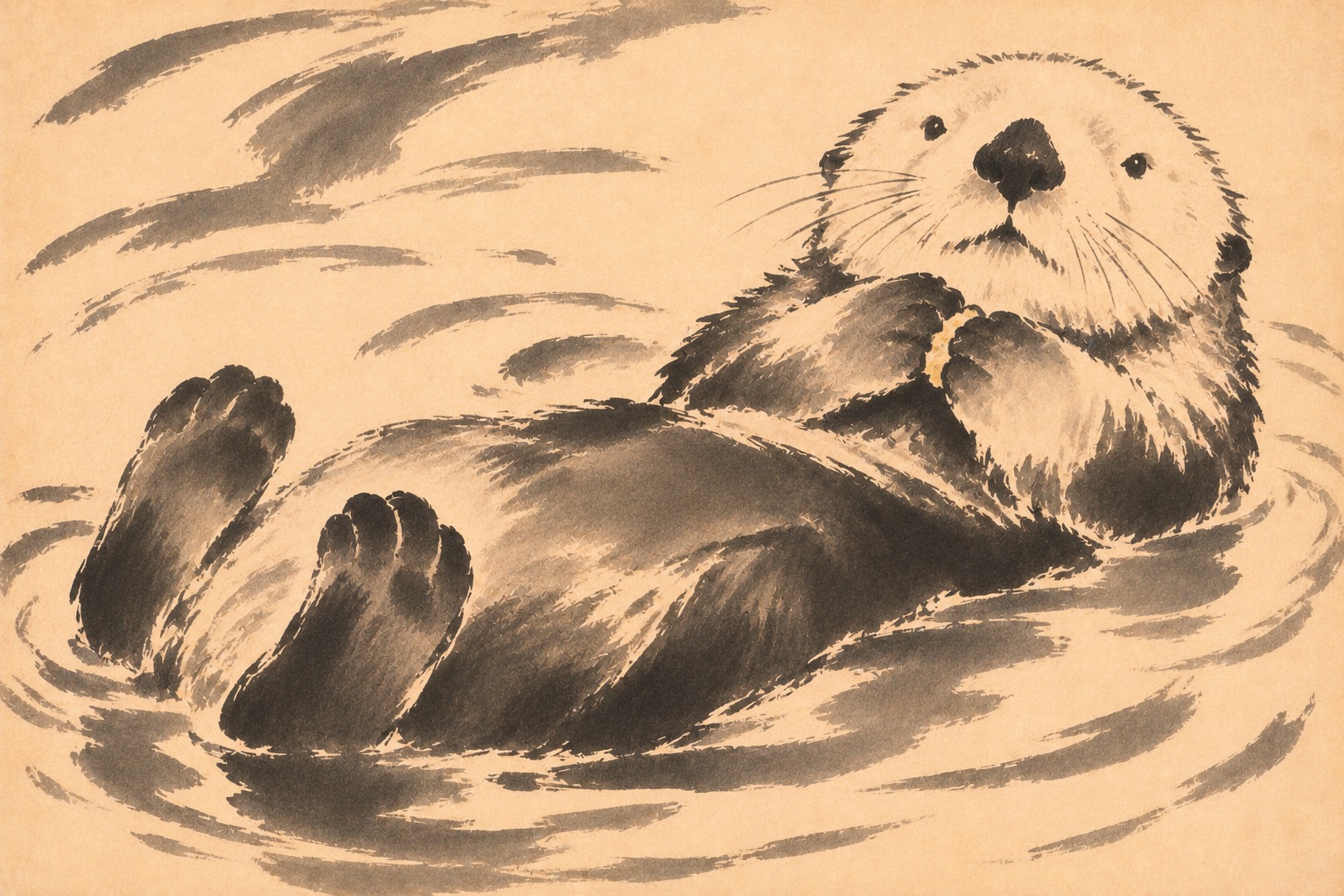
For four decades, the sight of sea otters floating on their backs was an unlikely fixture of Japanese family outings. At Toba Aquarium in Mie Prefecture, the relationship became especially intimate: individual animals had names, favorite foods and recognizable habits, and audiences could watch even from home. That world changed on November 5, 2026, when Kira, an 18-year-old female, died at 10:40 a.m. The aquarium’s announcement confirmed that Mei, a 22-year-old female, is now Japan’s only remaining sea otter in human care. It is a loss that belongs first to the animal’s caregivers and the people who came to know her. But it is also a turning point in a much longer cultural history: Japan once had more than one hundred sea otters at aquariums around the country. The difference between those eras is not simply a count. It reflects changing expectations of captive care, the difficulty of breeding a small population and the limits of acquiring more animals.
What the aquarium has confirmed
The chronology of Kira’s final days is unusually detailed because Toba Aquarium published updates before and after her death. In August, staff began observing problems with her movement, especially her legs and lower body. By November 1 the aquarium reported a marked loss of weight and continued veterinary care. Public viewing was suspended from November 4 to prioritize treatment. Around 7 a.m. on November 5, Kira experienced convulsions. Staff moved her to a treatment room and provided warming, oxygen and medication. She died more than three hours later. According to the aquarium, her keepers and Mei were nearby at the end. Veterinary staff suspected cardiorespiratory arrest associated with respiratory failure, but the aquarium explicitly said that additional pathological examination was planned. It would be premature to assert a definitive underlying cause. Old age is relevant, not a substitute for a diagnosis.
Kira’s life, from Shirahama to Toba
Kira was born at Adventure World in Shirahama, Wakayama Prefecture, on April 21, 2008, to parents named Kan and Flora. She moved to Toba on March 17, 2021, as the receiving aquarium sought to support group housing for animal-welfare reasons. That decision brought together two females with markedly different personalities. The aquarium’s profiles describe Kira’s brownish coat, yellowish fur around her nose, notably long whiskers and a fondness for squid and shellfish. Her signature trained behaviors included a rapid wave and a fast clap. Staff described her as deliberate, particular and sometimes endearingly awkward. Such details matter: they convey the work of observing one animal consistently over years. They also complicate an overly tidy conservation story. Kira was not a faceless representative of a population; she was a particular sea otter, born in one institution, moved to another, cared for through adulthood and old age.
Mei and the limits of a headline
Mei was born at Toba Aquarium on May 9, 2004. The aquarium records that her mother, Potato, cared for her, and that Mei was Toba’s first sea-otter pup in twenty years. Now 22, Mei has become the sole captive survivor of a once substantial Japanese population. Toba describes her as energetic and inquisitive, with a liking for spiny lobster and large crabs. But calling her “the last sea otter in Japan” without qualification risks misunderstanding: the claim concerns animals housed at Japanese facilities, not every wild otter that might occur in waters around Japan. Nor does it mean she is currently available for public viewing. The aquarium suspended both viewing and its livestream while it monitors her, and its November 6 notice did not give a reopening date. The responsible update is simple: one animal remains in care, and her welfare governs what happens next.
Japan’s sea-otter boom began with four arrivals
Toba Aquarium’s own timeline begins on October 3, 1983, when four sea otters arrived from Alaska. The animals went on public display on October 16 and were later named Emi, Mokomoko, Pukku and Kotaro. On February 23, 1984, the aquarium celebrated what it records as the first sea-otter pup born in a Japanese aquarium. The name Chacha was selected from 34,041 submissions. That extraordinary public response hints at the force of the sea-otter boom of the 1980s. The animals were visually arresting and easy to recognize: whiskered faces, dexterous paws and an upright posture in the water that seemed almost human. Their popularity fed a nationwide period of expansion. Yet that initial phase depended on a very different international and institutional context from today. The cultural familiarity survived long after the supply of new animals began to diminish.
How 122 became one
According to Toba’s historical records, Japan’s captive sea-otter population peaked in 1994 at 122 animals across 28 institutions. More than three decades later, the picture is radically different. On January 4, 2025, a male named Riro died at Marine World Uminonakamichi in Fukuoka. That institution said the death ended its own sea-otter exhibition, which had begun in 1989. The remaining Japanese captive population was then Mei and Kira at Toba. Kira’s death reduces it to one. Those figures should be understood precisely: they count captive sea otters, not the wild North Pacific population, and they do not alone explain the reason for the decline. Ageing, difficulty assembling breeding pairs, international movement restrictions and changing welfare priorities all form part of the picture. An era that once celebrated the number of animals on display now has to confront the question of what it means to care well for those who remain.
Why rebuilding a captive population is not simple
It might seem obvious that Japan could import more sea otters, but the reality is far more complicated. Wildlife trade is regulated and potential source countries make their own conservation and animal-welfare decisions. The precise legal position depends on the animals’ origin, subspecies, applicable national laws and permits; saying all transfers everywhere are categorically prohibited would overstate the point. Reproduction is another obstacle. As the national population aged and contracted, the options for managed breeding narrowed. Both remaining sea otters after Riro’s death were female, and the records reviewed for this report offer no substantiated near-term plan to rebuild the population. Nor would the mere presence of additional animals automatically make a breeding program sound. Welfare, genetic suitability, veterinary expertise, the availability of compatible mates and long-term institutional commitments all matter. The disappearance of sea otters from displays therefore cannot be explained by any single ban or decision.
An animal built for cold water
Sea otters have an extraordinary biological problem to solve. They live in cold coastal waters without the thick insulating blubber used by many other marine mammals. Instead, an exceptionally dense coat traps air against the skin. Toba’s educational material describes approximately 100,000 hairs per square centimeter. Grooming that looks cute to a visitor is a central part of keeping that insulation functional. Otters also require a demanding diet to sustain their metabolic needs, feeding on shellfish, crabs, squid and other marine invertebrates. In aquariums, daily observation, nutrition, water quality, veterinary attention and suitable stimulation are not optional luxuries. They are the infrastructure of care. The expertise of keepers who recognize subtle changes in activity, movement or appetite can matter as much as the technology surrounding a pool. Kira’s final weeks underline how complex geriatric care becomes for an individual animal.
A popular animal with an ecological role
In the wild, sea otters are not simply charismatic mammals. They are widely described by conservation scientists as a keystone species because their predation can shape entire coastal ecosystems. Where sea otters consume sea urchins, they can reduce grazing pressure on kelp forests, helping sustain habitats for fish and other marine life. U.S. wildlife agencies describe these cascading effects in the North Pacific. Sea-otter history also includes intensive hunting for fur, followed by protection and uneven recovery across regions. Yet conservation must not be reduced to a picture-perfect ecological slogan: local food webs differ, other predators influence urchins and the presence of otters does not guarantee the recovery of every kelp bed. The status of wild populations is a different issue from the future of Japanese aquarium displays. The bridge between them is education—understanding the animal can lead to deeper questions about the ocean it inhabits.
A livestream created a new kind of audience
On April 14, 2024, Toba Aquarium launched a twenty-four-hour livestream from its sea-otter pool. Viewers could see meal times, grooming and slow stretches of ordinary movement, even when they lived far from Mie. It made Mei and Kira familiar as individuals in a way a fleeting aquarium visit could not. The technology also changed what audiences expected: an animal that appears every day on a screen may feel continually accessible. But a health emergency draws the boundary between a public spectacle and living-animal care. Toba suspended viewing and streaming to focus on treatment and monitoring. That was not a failure of access; it was a necessary expression of the institution’s responsibility. The same digital intimacy that helped create affection must now leave room for privacy and recovery, especially for Mei.
A place for remembrance in Toba
The aquarium announced on November 6 that visitors would be able to leave messages for Kira on a board in the corridor outside the Polar Seas exhibit from November 7 through December 20, subject to supplies. The board measures 1.8 meters high and two meters wide; guests can write on specially prepared stickers. The institution asked visitors not to send flowers, offerings or gifts to keepers. This arrangement provides a public place to grieve while respecting staff operations and animal care. It does not mean Mei’s exhibit is open. The aquarium has said it will announce any resumption of viewing through its official website and social channels. That is worth checking before traveling specifically to see her. A remembrance visit and an opportunity to observe a living animal are not the same thing.
What a single otter asks of a country
It is tempting to describe Mei as the closing image of a story whose ending is already known. That would be unfair to a living animal and premature journalism. Nothing in Toba’s announcements establishes when viewing will resume, how her health will develop or whether the broader institutional circumstances might change. Kira’s detailed pathological findings also remain pending. What can be said is that Japanese aquariums have traveled from the excitement of four arriving animals in 1983 to a national population of one in 2026. Over that history, sea otters became part of a shared cultural memory. The most meaningful response now is not to turn Mei’s life into a countdown. It is to protect her welfare, honor the experience of the people who care for her and let that affection prompt a more informed interest in sea-otter biology, conservation and the ocean.
Sources and reporting method
Primary aquarium announcements and historical records establish the local timeline; wildlife agency and specialist materials provide biological and conservation context. Check Toba’s site for changing exhibit arrangements.
- 鳥羽水族館:キラ死亡のお知らせ / Toba Aquarium death announcement
- 鳥羽水族館:メッセージボードとメイの展示 / Memorial arrangements
- 鳥羽水族館:キラの状態 / November 1 condition report
- 鳥羽水族館:展示・ライブ配信中止 / Exhibition suspension
- 鳥羽水族館:ラッコ飼育史 / Sea otter history
- 鳥羽水族館:メイとキラのプロフィール / Profiles
- 鳥羽水族館:ラッコの生態 / Ecology
- マリンワールド海の中道:リロ死亡 / Riro announcement
- 鳥羽水族館:ライブカメラ開始 / Livestream launch
- 米国魚類野生生物局:ラッコの生態系での役割 / USFWS
- ワシントン州魚類野生生物局:ラッコ / Washington wildlife agency
- IUCNカワウソ専門家グループ:ラッコ / IUCN Otter Specialist Group
- 日本の野生生物レッドリスト / Japanese Ministry of Environment