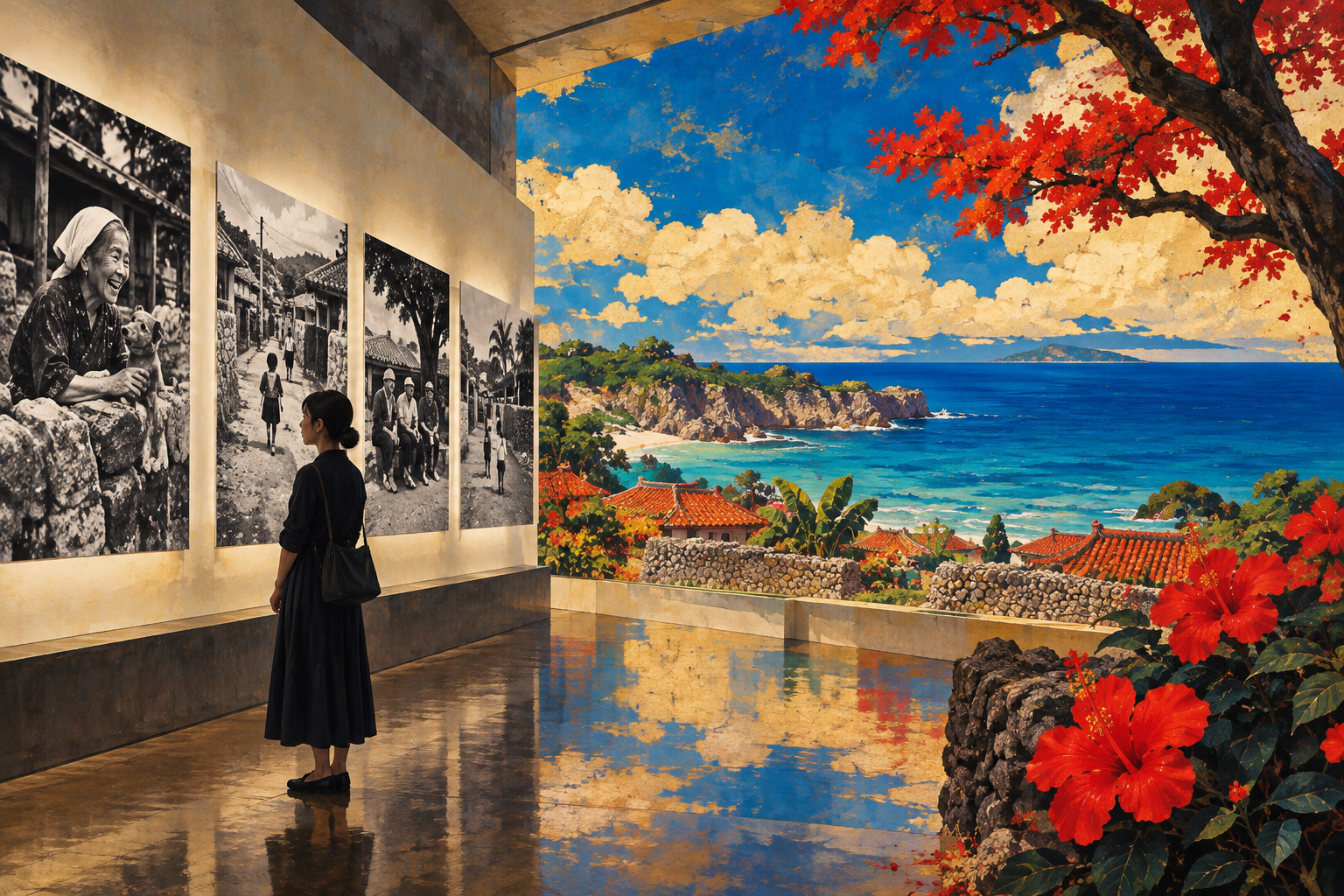
An exhibition at Kawasaki City Hall brings together Taro Okamoto’s photographs of Okinawa and his writing about its culture. Running through November 8, “岡本太郎と沖縄 in Museum⁺205” offers a chance to consider both the people and places recorded and the perspective of the artist behind the camera.[2]
Reading images alongside words
According to the organizing museum, Okamoto first visited Okinawa in 1959, during U.S. administration. The display pairs photographs with passages from his book 忘れられた日本─沖縄文化論. Listed images include Naha from 1959 and Izaiho on Kudaka Island from 1966.[1]
The pairing invites two related questions: what does an image record, and what meaning does its author give it? Dates matter too. Photographs from different visits should not be collapsed into the impression of a single journey.
An artist’s interpretation, not a complete account
The museum describes Okamoto as finding origins of Japanese culture in Okinawa’s environment and everyday life.[1] That framing explains his interests. It should not become an unquestioned definition of Okinawan identity.
In Japan.co.jp’s assessment, the exhibition is most usefully approached by holding documentary value and artistic selection together. Where a photographer points the camera—and the words placed beside an image—can reveal intense curiosity without representing the full experience of the people photographed.
Following Okamoto’s fascination need not mean treating Okinawa as a timeless store of tradition. The images can instead prompt further reading of local histories and accounts by Okinawan people, including experiences outside the frame.
Taking the inquiry beyond the gallery
Chuokoron-Shinsha’s 2024 illustrated paperback edition of 沖縄文化論 忘れられた日本 contains 76 photographs by Okamoto. The publisher identifies the book with his 1959 and 1966 stays.[3] That figure describes the book, not the number of exhibits in Kawasaki.
Returning to a longer text after viewing selected passages provides a way to test an initial impression. It also encourages attention to when a photograph was taken and how its accompanying interpretation was developed.
Visiting the City Hall display
The exhibition marks 30 years of friendship-city ties between Kawasaki and Naha. It is an off-site project by the Taro Okamoto Museum of Art, Kawasaki, whose main exhibition rooms are closed for renovation.[2]
| Dates | September 18–November 8, 2026 |
|---|---|
| Venue | Museum⁺205, second floor of Kawasaki City Hall’s restored building |
| Hours / admission | 9 a.m.–5 p.m.; free |
| Closed | Mondays except September 21 and October 12; also September 24, October 14 and November 4 |
| Access | About 600m from JR Kawasaki Station or 400m from Keikyu Kawasaki Station’s central exit. Elevator D serves the second floor. |
Check the city’s official listing below for updates before visiting.[2]
