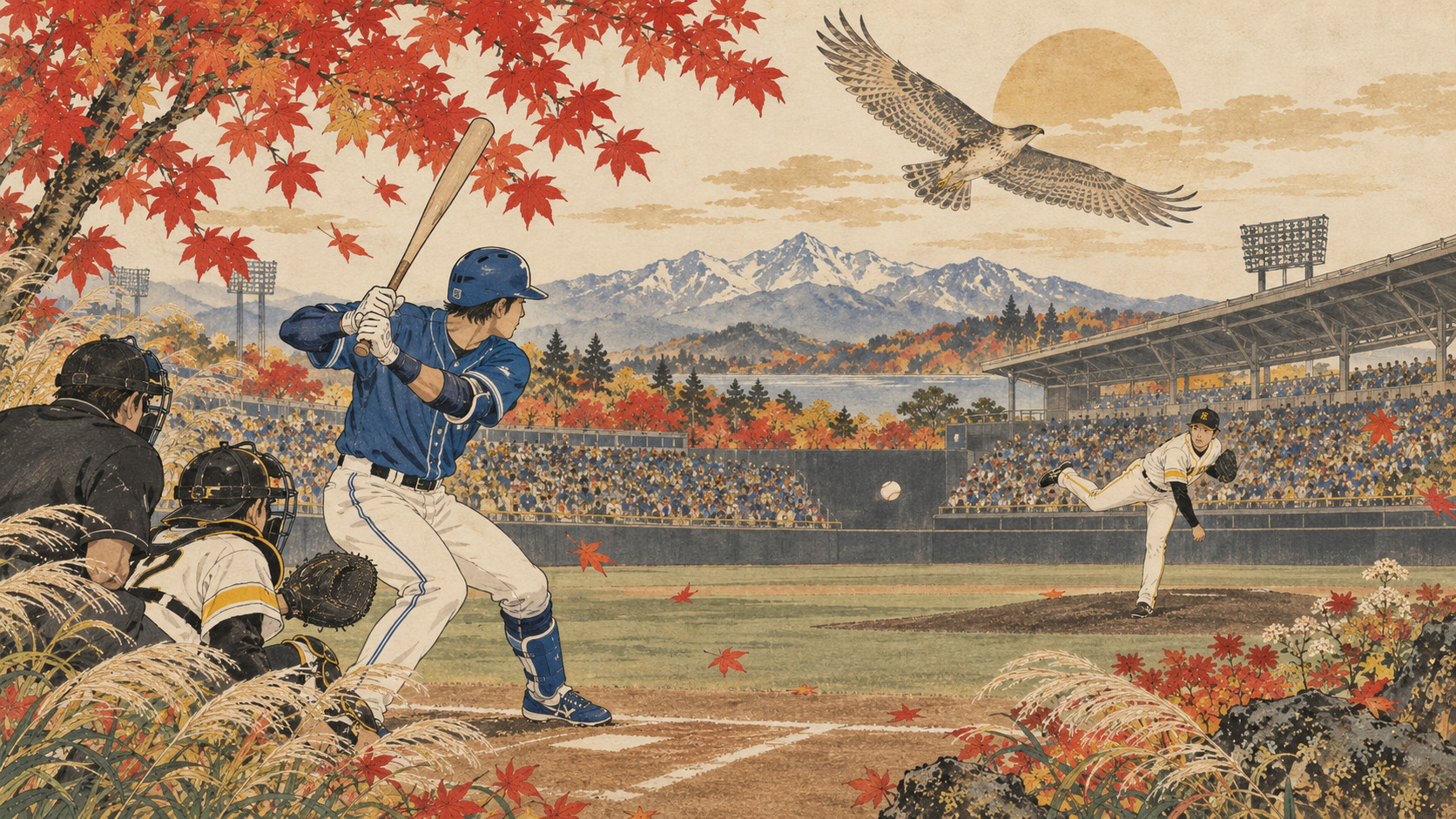
A comeback that only opened a harder door
Hokkaido Nippon-Ham lost the opening game of its Pacific League Climax Series First Stage to Seibu on October 10, 3–2. One more loss would have ended its season. Instead the Fighters survived 1–0 on October 11 and won the decider 4–1 on October 12, advancing to the Final Stage for a third consecutive year. Their reward is a trip to Fukuoka and a meeting with the team that won 91 regular-season games. The comeback was real; the mathematics of the next assignment are daunting.
How the Fighters escaped Seibu
A one-run victory on October 11 turned an elimination game into a winner-take-all finale. Kota Tatsu was credited with the win. On October 12, Hiromi Ito allowed one run across five innings; Yuki Nomura provided an early run-scoring hit, while Chusei Mannami homered. Official NPB records show Hokkaido scoring four runs on eight hits to Seibu’s one on five. The sequence shows what October baseball can reward: concentrated pitching, opportunistic offense and the ability to recover rapidly from a defeat.
Third place was not a weak season
Nippon-Ham finished 78–62–3, a .557 winning percentage. Seibu, at 79–60–4, took second. SoftBank won the Pacific League at 91–49–3 and .650. These were not evenly matched teams across the full 143-game schedule: the gap between first and third was 13 games. Yet the playoff system deliberately gives a third-place club a path to the Japan Series. That design creates suspense, but also a legitimate argument about protecting the achievement of a league champion.
The two-win obstacle is a new rule, not a metaphor
On August 24 NPB announced revised rules for the 2026 Climax Series. Ordinarily the league winner begins the Final Stage with one credited victory in a best-of-six structure. But when the regular-season margin between the champion and challenger is 10 games or more—or the challenger finishes below .500—the champion is awarded two victories before play starts. That changes the Final Stage to a maximum of seven games, with five total victories needed to advance. SoftBank qualifies through its 13-game lead. Nippon-Ham must win five games on the field; SoftBank needs only three actual wins. Draws and incomplete schedules are governed by additional tiebreaking protections for the higher seed.
What the season series says—and does not say
SoftBank dominated the regular-season head-to-head matchup, winning 18, losing five and drawing twice. In Fukuoka, reports from the league’s official media channel give the Hawks an 11–1 home record against the Fighters. Such numbers favor the champion and make a five-win road assignment formidable. They are not a guarantee about a particular postseason game. Rotation choices, bullpen workload, injuries, defensive execution and the volatility of small samples can all change the immediate outlook. A serious preview must acknowledge both the size of SoftBank’s advantage and the limits of extrapolating a season into a week.
The opening pitching matchup
Game 1 was scheduled for 6 p.m. Japan time on Wednesday, October 14, at MIZUHO PayPay Dome Fukuoka. The announced starters were SoftBank left-hander Liván Moinelo and Fighters left-hander Sachiya Yamasaki. Pacific League Insight listed Moinelo at 6–1 with a 0.76 ERA in seven appearances and Yamasaki at 5–1 with a 2.67 ERA in 17 appearances. The different workloads demand care in comparison. These are announced starters and pregame records, not a report of what subsequently happened on October 14.
Two franchises remade by geography
The Hawks’ story runs from Osaka, where the Nankai franchise played, to its move to Fukuoka in 1989. The Fighters spent decades in Tokyo before moving to Hokkaido in 2004. Their latest chapter is ES CON FIELD HOKKAIDO in Kitahiroshima, opened in 2023 and integrated into a broader ballpark district. The clubs’ geographic transformations matter because they changed regional fandom, commercial partnerships and the meaning of a home game. A meeting in Fukuoka is therefore more than an encounter between two corporate-named baseball teams: it is a showcase of two distinctly regional institutions.
The Shinjo factor and the memory of recent Octobers
Manager Tsuyoshi Shinjo has become associated with ambitious rebuilding and the theatrical pressure of postseason baseball. His team also came back from an opening First Stage defeat in 2024. The Fighters and Hawks have met in the Final Stage in each of the past two seasons, and their 2025 matchup extended to Game 6. That history adds texture but should not be mistaken for a predictive model. The 2026 rules start this series under different conditions, and the teams’ current rosters and form deserve more weight than narrative symmetry.
A larger argument about Japan’s postseason
Japanese professional baseball has used the two-league structure since 1950, but the method of determining its Japan Series participants has evolved repeatedly. Both leagues adopted the Climax Series format in 2007. Its appeal lies in preserving meaning for several teams deep into the autumn; its persistent controversy is that a club finishing third can eliminate a club that clearly outperformed it over the season. The 2026 two-win provision is a conscious adjustment toward protecting league champions. It may change how fans and executives assess competitive fairness, scheduling and the value of regular-season results.
What must be updated for an October 15 edition
At the reporting cutoff, NPB still listed the October 14 opener as not yet played. This article therefore does not invent a result, a decisive hit or a manager’s postgame quote. The First Stage comeback, the standings, the head-to-head record and the two-win advantage are verified. Before publication on October 15, the opening-game score, confirmed pitchers and any official injury announcements must be checked against NPB’s game record. The compelling question remains whether Hokkaido can convert a narrow escape into an unprecedented climb through a much steeper set of rules.
Sources and reporting notes
- NPB: 2026 Climax Series regulations
- NPB: 2026 Pacific League standings
- NPB: Fighters postseason results
- NPB: October 12 box score
- Pacific League Insight: October 12 recap
- Pacific League Insight: Game 1 preview
- SoftBank Hawks: October 14 event details
- NPB: October 14 game record (final prepublication check)
Verified October 13, 2026. The October 14 opener had not occurred; its result needs checking before October 15 publication.