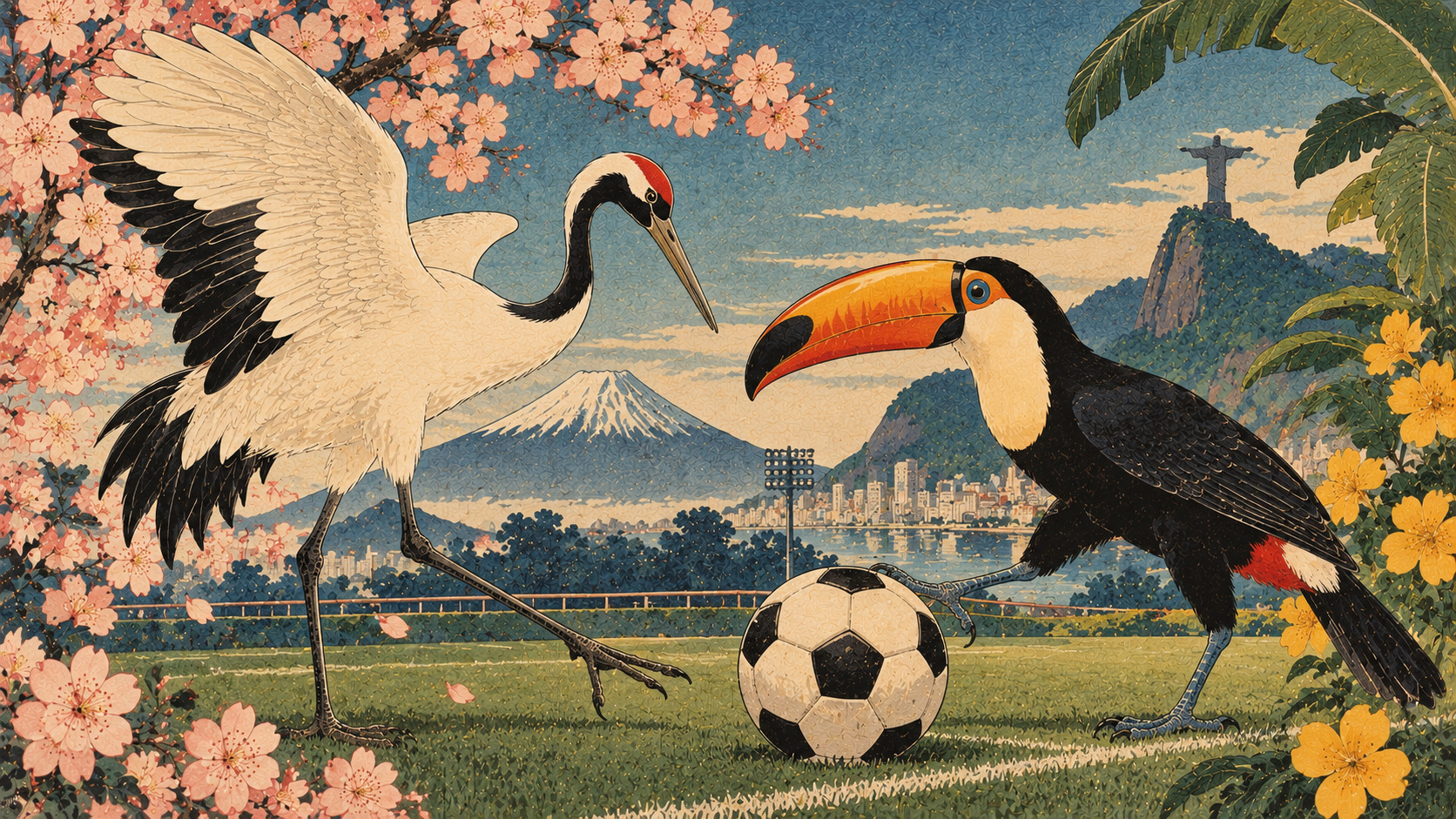
The opponent won both meetings in Brazil last year. What has Japan learned since?
Two matches, one unusually revealing opponent
Brazil is returning to Japan for two women's international friendlies—on November 29 in Hiroshima and December 5 in Okayama. For Nadeshiko Japan, these are more than attractive fixtures before home supporters. They offer a chance to measure an Asian champion against a South American side that beat it twice in 2025. The Japan Football Association confirmed the host cities in March and announced Brazil as the opponent on September 17. As of October 22, these are upcoming games, not newly arranged contests or completed results. The news value lies in what their history and Japan's latest performances tell us to watch.
The fixtures—and how to follow them
The first match is scheduled for Sunday, November 29 at 1:55 p.m. Japan time at Edion Peace Wing Hiroshima. JFA lists a live broadcast on Nippon TV's national network with a TVer livestream. The second is scheduled for Saturday, December 5 at 3 p.m. at JFE Hare no Kuni Stadium in Okayama, with a free ABEMA livestream announced. Both form the MIZUHO BLUE CHALLENGE NADESHIKO 2026 青さで、挑め。 series. Start times, ticket arrangements and broadcasts should be rechecked with JFA before travel or viewing.
A rivalry balanced on paper, not in recent form
JFA's pre-match historical record stands at seven Japan wins, three draws and seven Brazil wins, with penalty shoot-out decisions treated as draws. But the most recent meetings point in another direction. In São Paulo on May 30, 2025, Brazil won 3–1; on June 2 it won 2–1. Seike Kiko scored Japan's goal in both matches. A head-to-head record that looks evenly matched can conceal fresh vulnerabilities. How Japan copes with Brazil's speed through transitions, and whether it can convert controlled possession into safer opportunities, will be more illuminating than the historical ledger alone.
What the 2024 Olympics proved—and did not prove
Japan did beat Brazil 2–1 in the group stage of the Paris Olympics in July 2024. The win remains evidence that Japan can manage the same opponent under competitive pressure. Yet the subsequent defeats demonstrate why such encounters cannot be reduced to a fixed hierarchy. Team selection, form, pressing choices and game state all matter. The two fixtures in Japan should be treated as opportunities to compare real processes, not as a referendum on a nation's footballing identity.
Asian champions facing global standards
Japan reclaimed the AFC Women's Asian Cup in March 2026, defeating Australia 1–0 in the final for its third title. That is an important achievement, but regional success does not automatically translate into dominance against elite opponents from other confederations. In October Japan lost 2–1 to Germany in Bremen: Momoko Tanikawa scored after 15 minutes, but Germany replied in the 28th and 73rd minutes, according to JFA's official match record. The sequence suggests specific questions about defending a lead, managing periods without the ball and responding when the opponent changes intensity.
Three tactical tests worth following
The first is progression under pressure. Can Japan connect its defenders and midfielders without conceding turnovers in damaging areas? The second is defensive recovery after possession is lost: which player slows Brazil's first forward pass, and how quickly do others close central space? The third is chance quality rather than raw shot totals. Do promising attacks end with shots from advantageous positions, or does the final action arrive under pressure? These are editorial questions drawn from match analysis, not claims about instructions issued by Japan's coaching staff. Any post-match verdict should be supported by film and official statistics.
The shadow—and inspiration—of 2011
Nadeshiko Japan's World Cup victory in Germany in 2011 altered the country's football story. Led by a generation including Homare Sawa, Japan beat the United States on penalties in the final after twice coming from behind. It reached another final in 2015. The triumph came in the year of the Great East Japan Earthquake, giving it a significance far beyond sport. But today's players compete in a different environment: more international club transfers, deeper investment in women's competitions and opponents with increasingly sophisticated training programs. History should inspire analysis, not stand in for it.
Why Hiroshima and Okayama matter
International matches in two cities beyond Tokyo can put elite women's football in front of spectators who might not otherwise see the national team. Hiroshima's purpose-built football venue and the stadium in Okayama offer different settings for families, local clubs and aspiring players. Yet a successful event should not be measured only by a full stand or a broadcast audience. Sustainable gains would require evidence of continued participation, stronger local programs and reliable opportunities for girls to play. Those longer-term outcomes cannot be inferred before kickoff.
A sporting bridge between Japan and Brazil
The encounters also sit within a deep Japan–Brazil relationship shaped by migration, family ties, commerce and culture. Football gives that relationship a highly visible shared language. But it would be presumptuous to declare how Japanese-Brazilian communities feel without speaking with them. Their perspectives, and the experience of local supporters, would be worthwhile additions to a follow-up reported from the venues.
What is still unknown
The dates, opponents, venues and announced broadcasts are supported by official JFA sources. Future squad decisions, final starting elevens, injuries and match outcomes remain unknown as of the publication date. Likewise, FIFA rankings cited in event materials are snapshots from a dated release, not evergreen measures of strength. A careful preview must separate those facts from tactical possibilities and resist inventing quotes or assuming that a particular player will feature.
Two tests with something real at stake
Brazil exposed flaws in Japan's game during the 2025 trip. Japan's Asian title in 2026 showed what the team can accomplish. Between those truths lies the most interesting story of the November–December meetings: whether Nadeshiko Japan can turn the lessons of defeat into a more resilient, adaptable performance. The meaningful answer will emerge on the pitch—not from a headline written before the whistle.
Sources and reporting notes
An advance feature based on JFA public documents; no original interviews or firsthand attendance are claimed. Venues were announced in March and Brazil as opponent in September.