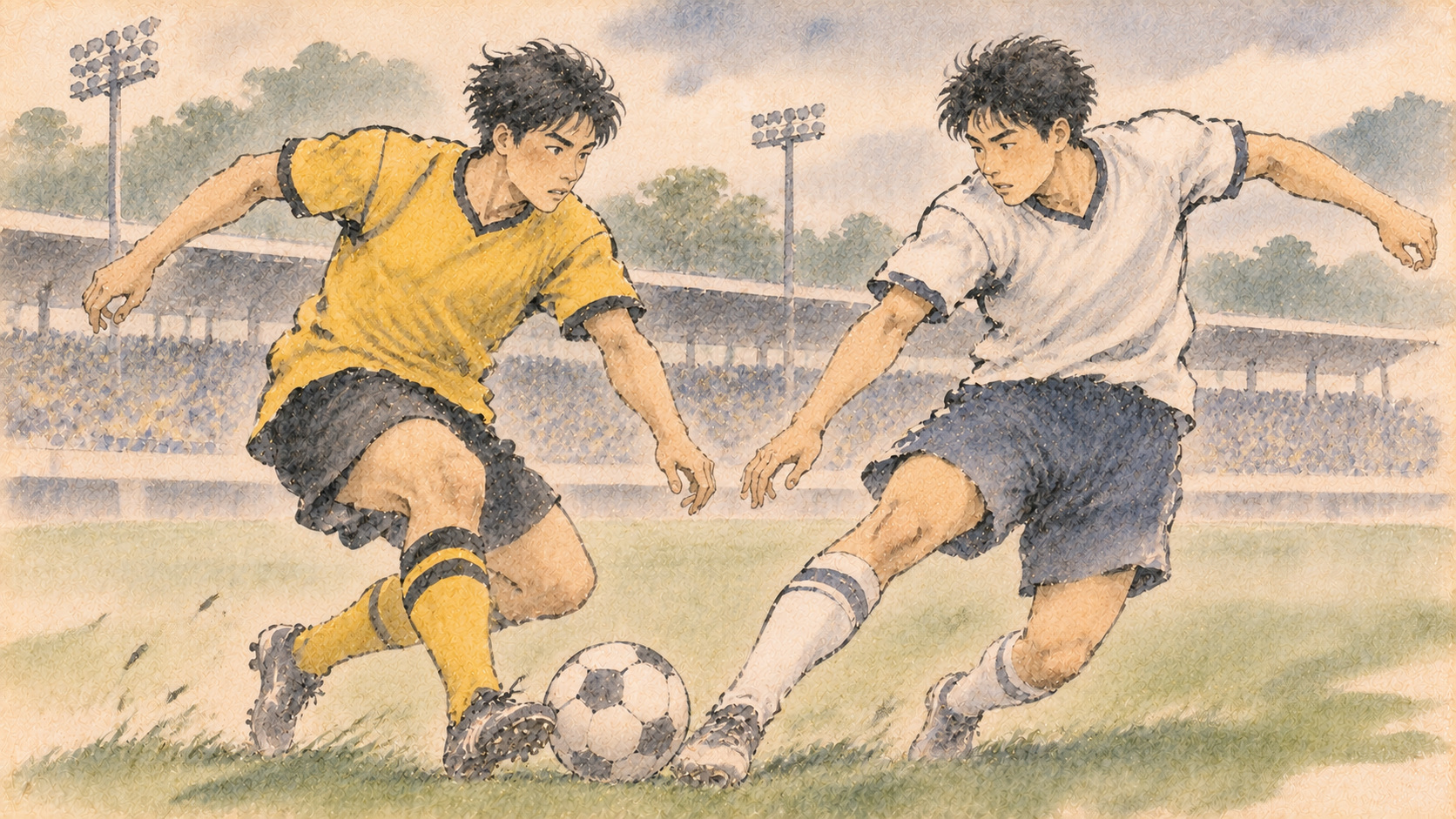
- A derby separated by geography—and by the table
- Why seventeen years matters
- What Kashiwa have become
- JEF’s survival fight begins with fewer concessions
- The first tactical question: where to press
- The second tactical question: whose first goal?
- A 4–2 meeting that should not be overread
- The stakes beyond the ninety minutes
- An honest boundary for November 21 reporting
A derby separated by geography—and by the table
In a league built on local identities, Kashiwa Reysol and JEF United Ichihara Chiba provide a particularly revealing contrast. Their homes are in the same prefecture, but they arrive at the November 20 fixture from opposite ends of the table. Kashiwa are second, with ten wins, one draw and three defeats through fourteen matches. JEF, on three wins, four draws and seven defeats, are seventeenth.
The contest at Sankyo Frontier Kashiwa Stadium is scheduled to begin at 7 p.m. Japan time. The J.League calls it the first regular J1 Chiba derby in seventeen years. That qualification matters: the clubs also met during the special transitional competition earlier in 2026. It is the regular top-flight setting, with conventional league stakes, that has returned.
Why seventeen years matters
JEF are one of the J.League’s founding clubs, but their place among the elite was interrupted after relegation in 2009. Season after season, promotion remained elusive. In December 2025, they finally won the J1 promotion playoff final, beating Tokushima Vortis 1–0 with a second-half goal by Carlinhos Junior. The J.League described the achievement as a return after seventeen years.
That long absence gives this fixture unusual force. Kashiwa represent a northwestern Chiba community with a different footballing trajectory; JEF are rooted in Ichihara and Chiba city. The derby is thus neither a purely civic feud nor a convenient label applied to two nearby teams. It is a reunion of clubs whose supporters have experienced very different decades.
What Kashiwa have become
Kashiwa’s recent form makes their position credible rather than accidental. The official league preview on November 19 described a three-game winning sequence in J1. The club also took consecutive victories over Kawasaki Frontale in the League Cup quarter-final, winning a dramatic second leg 5–4 on November 15 after falling behind.
Their attacking resources are not restricted to one striker. The league’s official preview identified Tojiro Kubo as a player to watch, while Football LAB highlighted Yusuke Segawa’s scoring production. These are pre-match observations, not confirmed team selections. The central question is whether Kashiwa can sustain their composure and execution against a visitor with an urgent reason to defend every point.
JEF’s survival fight begins with fewer concessions
JEF’s recent improvement is measurable. They defeated Mito HollyHock 1–0 in their previous league match, after also beating Fukuoka, recording their first consecutive league wins of this campaign. Consecutive clean sheets are particularly meaningful for a side struggling to remain above the danger line.
Manager Yoshiyuki Kobayashi’s official pre-match comments describe the quality of Kashiwa’s individual technique and the difficulty of recovering possession against them. His appraisal points to a challenge common to underdogs everywhere: an organized collective defence can still be dismantled if too many isolated players must defeat their markers alone. It also leaves room for JEF to contest the match through patience, pressure and transitions.
The first tactical question: where to press
When Kashiwa circulate the ball through their back line, JEF face a choice about distance and risk. Press high and they could deny the hosts the time to organize. Misjudge that pressure and Kashiwa can escape into space behind the first line. Retreat deep, meanwhile, and Kashiwa may enjoy sustained possession around the penalty area.
The most consequential decisions may concern the moment of transition rather than the absolute height of JEF’s defensive block. The first pass after a turnover, protection of the central corridor, and timing of support runs can determine whether a promising recovery becomes a shot or simply returns the ball to Kashiwa. These are analytical questions, not assertions about tactics either coach has definitively selected.
The second tactical question: whose first goal?
The opening goal could change the character of the match. If Kashiwa score first, JEF may have to take greater risks to find an equalizer. If JEF strike first, the home side may commit more players forward and leave counterattacking possibilities. Yet treating this as a prediction would be a mistake: both teams have shown they can cope with difficult phases of play.
League standings describe accumulated results, not the precise balance of a given ninety minutes. Kashiwa’s recent goal output and JEF’s tighter defending create the tension. The eventual result must be explained using actual chances, goals and decisions, not shoehorned into a theory written before kickoff.
A 4–2 meeting that should not be overread
On May 23 the two clubs met in the special J1 100-Year Vision League, with Kashiwa winning 4–2. Official match data show both sides attempted fourteen shots, but Kashiwa put eight on target to JEF’s four. Kashiwa’s scorers were Yuki Kakita, Yoshio Koizumi, Mao Hosoya and Taiyo Koga; JEF’s were Ryota Kuboniwa and Issei Takahashi.
That game offers a reference point, not a template. Personnel, form, competitions and stakes shift. Kashiwa were more clinical then; JEF still created opportunities. Whether any of those patterns persist in November is an empirical question, not something the May score can settle.
The stakes beyond the ninety minutes
Kashiwa are trying to keep pressure on the leaders. Three points at home would strengthen their championship challenge, although no result can be assumed. JEF need results of a different kind: accumulation, resilience, and the belief that their return to the top level can be made permanent.
There is a social dimension to such matches. A prefecture-wide rivalry connects supporters who grew up with different colours, different stadium journeys and different memories of Japanese professional football. The return of a regular J1 meeting lets those stories collide on equal competitive terms even when the table suggests an imbalance.
An honest boundary for November 21 reporting
As of the source cutoff for this article, the November 20 encounter had not been played and the official match centre carried no score. The clubs’ ranking, form and managerial comments cited here are therefore explicitly pre-match information. They should not be reused as if they were retrospective match statistics.
Before the article goes live as November 21 reporting, the newsroom should check the league’s match centre for the final score, scorers, cards, starting lineups and attendance, verify the table after the round, and replace the preview language with an evidenced account of what happened. Until then, this is a researched preview—not a result story.
Sources and verification limits
Sources checked November 19, 2026 JST. No result or observed play from the scheduled November 20 fixture is asserted. Update required before publication as post-match reporting.
- J.League official match centre / Jリーグ公式試合情報
- J.League matchday preview, 19 Nov / Jリーグ第15節プレビュー
- JEF United fixture and stadium guidance / ジェフ公式案内
- JEF United manager preview / 小林慶行監督プレビュー
- J.League, Chiba promotion in December 2025 / 2025年J1昇格
- 2025 J1 promotion playoff final / 昇格プレーオフ決勝
- May 23, 2026: Kashiwa 4–2 Chiba / 5月の対戦
- Football LAB: Kashiwa form / 柏の直近プレビュー
- Football LAB: Chiba form / 千葉の直近プレビュー
- Official Kashiwa fixtures / 柏公式試合日程