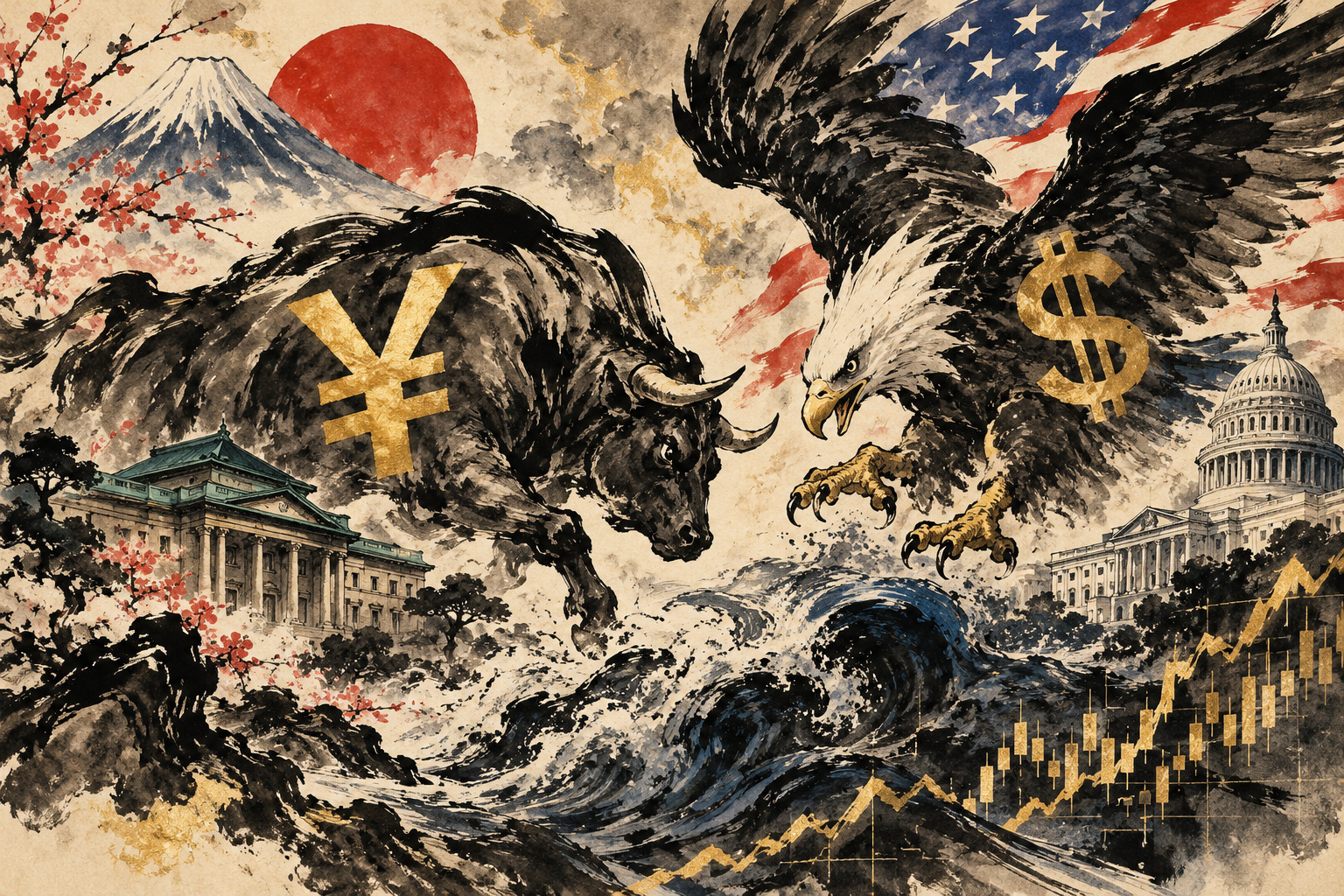
The question is not simply where the yen trades. It is whether monetary policy can match an economy emerging from decades of deflation.
Washington has a message for a different Japan
A remark in Bangkok could mark a turn in how the United States talks about Japanese monetary policy. On October 16, 2026, U.S. Treasury Under Secretary for International Affairs Erin Browne told reporters that Japan no longer lived in the deflationary environment that had shaped policy for more than a decade. The yen and the path of monetary policy, she argued, should reflect that transformation. Reuters reported her comments at the annual meetings of the International Monetary Fund and World Bank. They were not a bilateral decision to set a particular exchange rate or to mandate a Bank of Japan rate hike.
Treasury Deputy Secretary Francis Brooke and Browne also met Japan’s top currency diplomat, Atsushi Mimura, according to the report. Their consultations came before the October 20–21 APEC finance ministers’ meeting in Hong Kong. The setting matters: Washington is worried not just about the competitiveness of exports but about disruptions from violent currency swings in an interconnected financial system.
How Japan became the great low-rate economy
After the collapse of Japan’s late-1980s asset bubble, a banking crisis, weak demand and repeated episodes of falling prices turned monetary easing from an emergency measure into the country’s default policy environment. The Bank of Japan adopted zero rates in 1999, quantitative easing in 2001, quantitative and qualitative easing in 2013, and negative rates and yield-curve control in 2016. The aim was to restore durable inflation and activity rather than merely to make the yen cheaper.
Years of weak nominal growth shaped behavior. Households became cautious; businesses learned to compete without raising prices; investors searched abroad for yields unavailable at home. This history is the key to Browne’s intervention. She is contending that a set of economic conditions that justified exceptionally loose policy is no longer the right starting point. That judgment can be debated without claiming the old policies were pointless.
The Bank of Japan has already moved
On September 18, 2026, the BOJ raised its short-term policy-rate target to around 1.25%, according to its monetary-policy documents. It is a profound change from the negative-rate years, yet not automatically restrictive: borrowing costs after inflation can remain low. Governor Kazuo Ueda has emphasized stabilizing underlying inflation near the BOJ’s 2% goal, and the next monetary-policy meeting is scheduled for October 29–30.
Two questions must be kept distinct. Is inflation high today because imported fuel costs more, or has a sustainable wage-and-price cycle developed? And would faster tightening help anchor expectations or unnecessarily damage domestic demand? Consumer-price releases alone cannot answer either question. Wage settlements, service prices, expectations and the growth outlook all matter.
The diplomatic rulebook did not start in Bangkok
In September 2025, the Japanese and U.S. finance ministries issued a joint statement reaffirming that exchange rates should be determined by markets, that excessive volatility and disorderly movements can harm stability, and that domestic monetary and fiscal instruments should serve domestic objectives rather than target currencies for competitive advantage. The ministries also committed to greater transparency about foreign-exchange operations.
This creates a useful distinction between exchange-rate diplomacy and numerical targets. The statement did not specify a yen-dollar parity, and the October 2026 comments do not themselves revise it. Strong public views about where policy should head coexist with commitments not to manipulate exchange rates for an unfair trade advantage.
The July 2026 intervention makes the story more consequential
Japan’s Finance Ministry has already documented a striking test of the bilateral understanding. In a statement dated August 3, Finance Minister Satsuki Katayama said Japan had undertaken coordinated yen-buying intervention with the U.S. Treasury on July 31, U.S. Eastern time. The ministry described it as a response to excessive or disorderly yen moves under the 2025 framework.
Intervention and monetary policy are separate instruments. Japan’s Finance Ministry is responsible for currency operations; the BOJ implements Japan’s monetary policy and can execute intervention operations as an agent. The existence of coordinated intervention does not prove that Washington is controlling BOJ rate decisions, or that another intervention has been agreed. Those distinctions are crucial to any accurate account of bilateral financial pressure.
Who wins and loses when the yen moves
A weaker yen is often described as a boon for Japan’s exporters. For companies earning dollars, foreign profits can translate into more yen. But the same exchange rate raises the local-currency cost of oil, gas, food and imported industrial inputs. A small manufacturer reliant on imported materials can face the opposite result from a global brand with dollar revenue. Tourism and overseas travel are likewise affected in different directions.
Higher Japanese interest rates are no less uneven. Some savers benefit from improved deposit yields while floating-rate borrowers or businesses refinancing debt may pay more. Public-debt servicing costs respond gradually depending on maturities. A national claim that Japan has “normalized” says little by itself about whether households’ purchasing power has recovered.
Why Wall Street watches the yen
The yen is not merely the currency of the world’s fourth-largest economy. It has been a major funding currency in carry trades: investors borrow relatively cheaply in yen and acquire assets offering higher yields elsewhere. Abrupt changes in exchange rates or financing costs can force investors to reverse those positions quickly. Stocks, bonds, credit spreads and currencies can then move together in destabilizing ways.
Browne’s warning about disorderly movements and the risk of rising financing costs points to this broader plumbing. American investors and businesses can be affected even when they do not sell a single product in Japan. Currency stability therefore has a financial-market dimension beyond the trade politics that dominate public debate.
A monetary disagreement without a simple villain
Washington may want Japanese policy to acknowledge higher inflation; Tokyo must decide how to do so without crushing domestic demand. The IMF, in comments reported October 17, supported continued normalization but said faster tightening could be necessary if inflation beats forecasts. Japan’s finance minister has meanwhile urged vigilance over exchange-rate volatility. These are related but not identical priorities.
The BOJ’s operational independence remains an essential part of the analysis. Treasury officials can express opinions, finance ministries can coordinate intervention, and elected governments can debate economic policy. None of that is the same as the U.S. Treasury casting a vote at a BOJ monetary-policy meeting.
A post-deflation economy is not automatically a prosperous one
Ending a period of falling or stagnant prices is an economic transition, not a prize in itself. Households can be worse off if essentials become more expensive faster than wages. Firms can show stronger nominal revenue without an equal improvement in productivity. Japan’s aging population and energy-import dependence make the distribution of these gains and costs especially important.
A more encouraging scenario would combine sustainable wage increases, profitable private investment, and measured price growth. The evidence required is concrete: real pay, productivity, household spending, business investment and a durable inflation trend—not a declaration from an overseas official.
The tests that come next
The next checkpoints are the APEC finance meetings on October 20–21, the BOJ meeting on October 29–30, and subsequent Japanese and U.S. inflation and labor-market releases. Readers should watch for official decisions, not speculative currency targets. It will also matter whether either finance ministry publishes new details about coordinated market operations.
For much of a generation, Japan was the benchmark for low inflation and minimal interest rates. In 2026, the debate is whether its monetary institutions, firms and households can adjust to a world where that old benchmark no longer holds. That is the real story behind a sentence delivered thousands of miles from Tokyo.
Sources and documentation
Treasury comments are attributed to Reuters reporting; Japanese monetary and intervention records are supported by original BOJ and Finance Ministry documents.
- Reuters: U.S. Treasury remarks and bilateral talks, Oct. 16, 2026
- Reuters: BOJ governor Ueda on inflation, Oct. 16, 2026
- Reuters: Japanese finance minister at G20, Oct. 15, 2026
- 日本銀行:金融市場調節方針に関する公表文(2026年)
- 日本銀行:金融政策に関する決定事項等(2026年)
- 日本銀行:金融市場調節方針・政策金利(2026年10月時点)
- 財務省:日米財務大臣共同声明(2025年9月11日)
- 財務省:日米財務大臣会談(2025年10月15日)
- 財務省:片山財務大臣談話・協調円買い介入(2026年8月3日)
- IMF: BOJ policy risks, Reuters, Oct. 17, 2026