- Small sculptures, a surprisingly large public conversation
- What makes a small sculpture different?
- Thirteen Vietnamese artists and five Japanese artists
- An exhibition in a building that survived into another century
- Japan and Vietnam have been in conversation for centuries
- Why Kanagawa is an important host
- Stone, wood and the danger of easy cultural labels
- The institutions behind the encounter
- Planning a visit: check the last-day closing time
- What remains after four days
Small sculptures, a surprisingly large public conversation
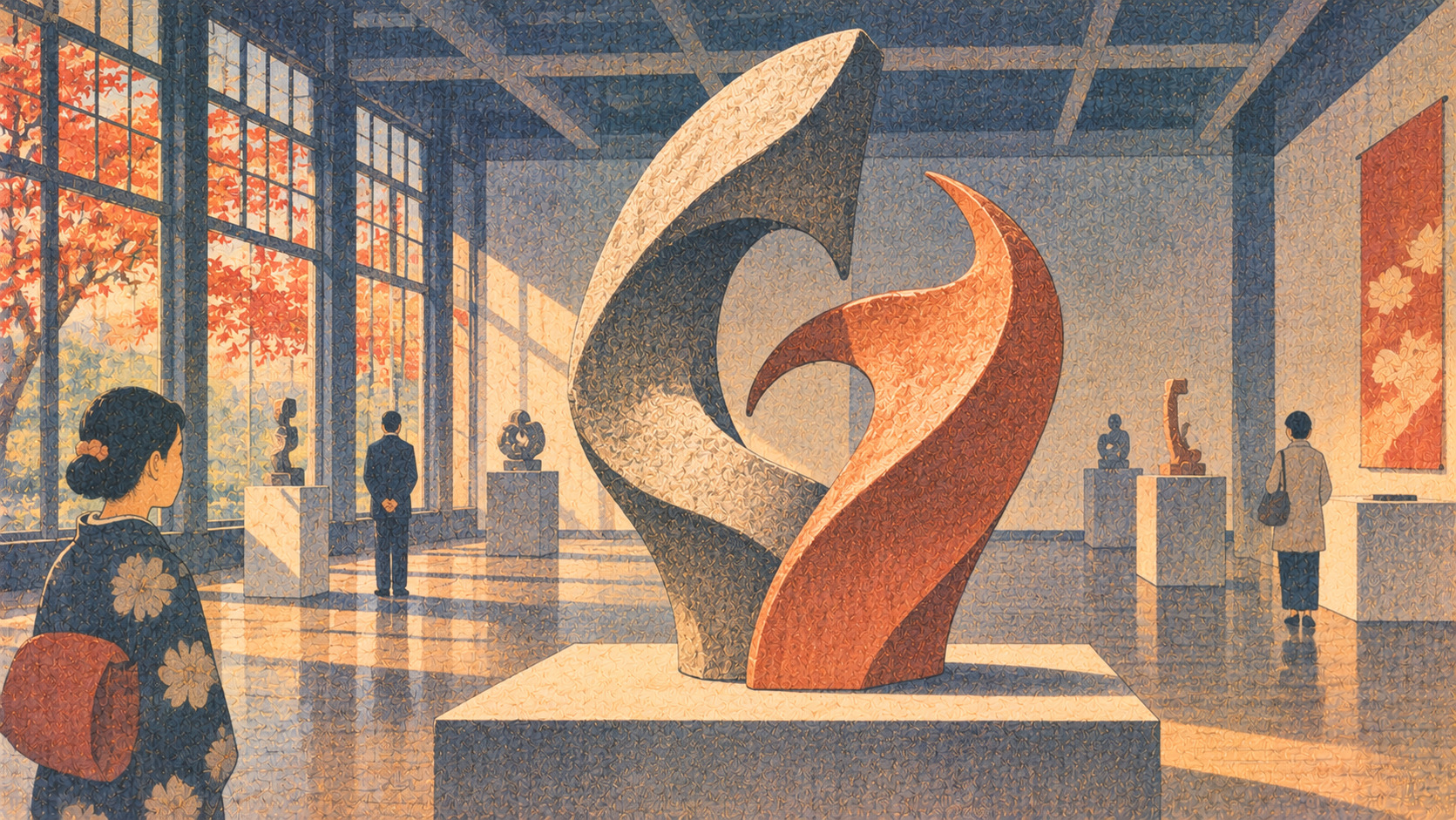
A sculpture does not need to tower over a plaza to alter the way someone sees another culture. In Yokohama, a four-day exhibition titled Katarai—roughly, 'conversation'—brings together more than 30 small sculptures by artists from Vietnam and Japan. It is staged not in a conventional museum but inside the Kanagawa Prefectural Government's historic headquarters, a building ordinarily associated with administrative authority.
The exhibition is scheduled for November 8–11, 2026. The prefecture and Vietnamese embassy confirm its location, theme and organizing institutions. Yokohama's tourism organization identifies 13 Vietnamese sculptors and five Japanese sculptors. This feature is based on published documentation, not firsthand inspection of the artworks; the distinction matters when an exhibition's promotional language is more readily available than its complete catalogue.
What makes a small sculpture different?
A monument is encountered from a distance, often with its meaning announced by a pedestal or public square. Small sculpture asks for a different kind of attention. A viewer can notice the turn of a line, the density of stone, the warmth of wood or the way metal catches an unexpected strip of light. The organizers say the selection includes stone, wood, metals and ceramics.
Those materials alone do not tell us what individual artists intended. The accessible official notices do not identify each sculpture by artist, title, date and material. It would be misleading to describe an imaginary centerpiece or assign a political message to a work we have not seen. The stronger reporting question is how artists working in two distinct cultural settings use limited physical scale to articulate larger experiences.
Thirteen Vietnamese artists and five Japanese artists
The reported distribution—13 Vietnamese sculptors and five Japanese participants—makes this an especially useful introduction to contemporary Vietnamese sculpture for Japan-based audiences. The figures come from a Yokohama tourism listing; the prefecture and embassy independently confirm the broader total of more than 30 works.
A head count should not be mistaken for a judgement about artistic prominence. Nor does it tell us how many works each person has contributed or how the exhibition was curated. Those answers require a verified checklist or direct discussion with the curators. What can safely be said is that the show gives Vietnamese sculptors a substantial presence in a Japanese public venue.
Sources: 神奈川県|ベトナム・日本小型彫刻展「語らい」 · 横浜市観光情報|語らい展紹介
An exhibition in a building that survived into another century
The Kanagawa Prefectural Government Main Building was completed in October 1928, during the rebuilding of Yokohama after the Great Kantō Earthquake. Its distinctive 'King's Tower' has long been part of the port city's silhouette. The building was designated a nationally important cultural property in December 2019, and the exhibition occupies its third-floor grand conference hall, once used as a legislative chamber.
That is more than a picturesque backdrop. A civic building can bring artwork to people who do not ordinarily seek out specialist galleries. The prefecture also arranged public tours of its historic headquarters on November 8, overlapping with the exhibition. Architecture, public memory and contemporary sculpture therefore share a setting—though the exhibition's creative content should not be reduced to the building's grandeur.
Japan and Vietnam have been in conversation for centuries
The history of cultural contact long predates the current partnership. Japan's Ministry of Foreign Affairs recalls the movements of people between the regions as early as the eighth century and the Japanese merchant community in Hội An during the sixteenth and seventeenth centuries. Commercial routes carried objects, practices and ideas alongside goods.
Formal diplomatic relations were established on September 21, 1973. In 2023, the two governments commemorated fifty years of relations and upgraded their relationship to a Comprehensive Strategic Partnership. These diplomatic milestones explain why a public exhibition attracts official support. They cannot, by themselves, prove that viewers understand another country's contemporary art; that work begins with the artist and the object.
Sources: 外務省|外交青書2024:日越交流史 · 外務省|外交青書2026:日越関係
Why Kanagawa is an important host
Kanagawa's relationship with Vietnam has developed through more than embassy ceremonies. The prefecture launched Vietnam Festa in Kanagawa in 2015, followed in 2018 by Kanagawa Festival in Vietnam. Officials describe these initiatives as ways to strengthen exchange across culture, education, tourism and business.
This history gives the sculpture show a local audience beyond art specialists. Vietnamese students, workers, families and entrepreneurs are part of contemporary Kanagawa. Yet their individual experiences should not be treated as interchangeable with the intentions of artists selected for an international exhibition. A respectful cultural feature must preserve that distinction.
Sources: 神奈川県|ベトナムとの交流 · 神奈川県|ベトナムフェスタと相互交流
Stone, wood and the danger of easy cultural labels
Sculpture can feel universal because people everywhere recognize gravity, texture, mass and the space left open by a carved form. But the meaning of a material is never simply universal. Training, religion, landscape, memory, industrial history and personal experience all influence how artists work. Similar surfaces may conceal profoundly different intentions.
That is why 'Japanese restraint' and 'Vietnamese expressiveness' would be poor shortcuts for describing this exhibition. Neither nation has a single artistic voice. Contemporary sculpture may be figurative or abstract, intimate or confrontational. Without a verified catalogue or inspection, it is better to give readers a framework for looking than to manufacture comparisons that the individual works might contradict.
The institutions behind the encounter
The Embassy of the Socialist Republic of Vietnam in Japan and the Vietnam Fine Arts Museum are listed as organizers, with Kanagawa Prefecture as co-organizer. The combination of diplomatic and museum expertise creates a route for introducing artists to a different audience and potentially developing future institutional cooperation.
Institutional sponsorship is not a substitute for an independent account of the art. The published information does not establish the selection procedure, loans, insurance arrangements or eventual plans for a catalogue and travelling exhibition. Those are not reasons to dismiss the event; they are useful questions for a follow-up with curators and organizers.
Planning a visit: check the last-day closing time
The exhibition is free at the third-floor grand conference hall of Kanagawa Prefectural Government Main Building, 1 Nihon-odori, Naka-ku, Yokohama, close to Nihon-odori Station. The prefecture lists opening hours of 10 a.m.–5 p.m. November 8, 11 a.m.–5 p.m. November 9, 10 a.m.–2 p.m. November 10, and 10 a.m.–noon November 11. It recommends public transportation; there is no visitor parking at the building.
There is an important discrepancy. The Vietnamese embassy's announcement gives a general 10 a.m.–5 p.m. schedule except for November 9, which conflicts with Kanagawa's more specific schedule for November 10 and 11. This report follows the venue authority's dated, day-by-day guidance. Anyone planning a final-day visit should check the prefecture's official page directly before travelling.
Sources: 神奈川県|ベトナム・日本小型彫刻展「語らい」 · 駐日ベトナム社会主義共和国大使館|展覧会案内
What remains after four days
A successful international exhibition is not measured only by visitor numbers, which have not been confirmed here. Its longer-term value may lie in a conversation between an artist and a viewer, an invitation to collaborate, a better catalogue or a curiosity about contemporary work beyond familiar national stereotypes.
Katarai invites people to look closely at small objects instead of making sweeping pronouncements about two countries. The scale is modest, but the proposition is ambitious: that individual choices of form, material and space can create a meeting across languages. Whether that promise lasts beyond November 11 will depend on what visitors, artists and institutions choose to do with the encounter.
Sources and verification
Primary Japanese institutional sources were prioritized. A complete named sculpture catalogue, final attendance, onsite observations and artist interviews have not been independently verified.