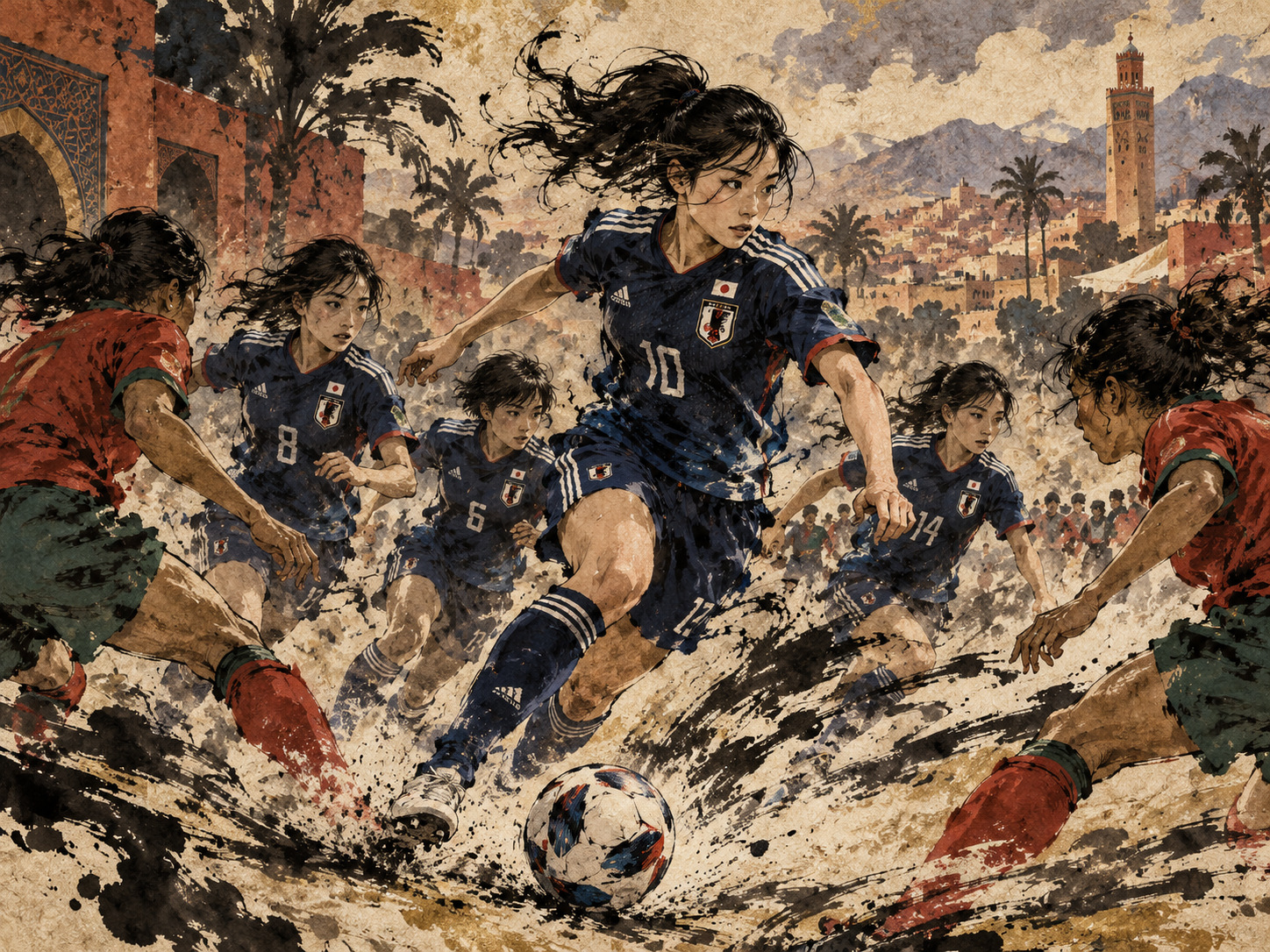
A youth World Cup does not predict destiny. It reveals what development systems have built—and where they still have work to do.
The next generation arrives in Rabat
A youth World Cup is a snapshot, not a prophecy. The players arriving in Morocco have trained in very different settings—schools, youth academies, professional clubs’ development sides—and their performances will be scrutinized by supporters who hope to see the future of Japan’s women’s national team. But the 2026 FIFA U-17 Women’s World Cup also poses a larger question: what does a successful football development system look like when more nations can compete, more often?
The schedule, and a necessary reporting boundary
Japan was drawn with Zambia, France and Venezuela. The Japan Football Association scheduled its opener against Zambia for October 18 at 3 p.m. in Rabat, which falls on October 19 in Japan. The France game follows on October 21 local time (October 22 JST) and Venezuela on October 24 (October 25 JST). This feature is based on documents available through October 17. It deliberately does not report an opening-match score, starting lineup or later injury status that had not yet been established at that cutoff. Official match records must be checked before the October 20 edition goes live.
Who is in the squad?
Head coach Sadayoshi Shirai leads a 21-player roster announced by the JFA. Its goalkeepers include Riruha Wakatsuki, Mikan Yamanaka and Kou Kadowaki; among the outfield players are Anri Ito, Sana Morota, Yuka Kishida, Fuki Ito, Mei Hanashiro and Rara Higuchi. It is tempting to look for a ready-made future superstar, but that obscures what a youth roster represents: different physical trajectories, playing experience and educational settings, with development still underway.
A late change is part of the story
The JFA said on October 6 that defender Misato Maeda withdrew because of injury and Himari Nishi entered the squad. That update matters. Pre-tournament squad releases are historical documents, not substitutes for current team sheets. Playing eligibility, match fitness and selection on the day cannot safely be inferred from inclusion in a September announcement. A rigorous report should identify young athletes accurately rather than manufacture dramatic biographies around them.
The Asian final that complicates expectations
In May, Japan advanced to the final of the AFC U17 Women’s Asian Cup in China but lost 5–1 to DPR Korea. The result was a sobering reminder that excellent domestic youth structures coexist with formidable competition across Asia. The score does not establish how these teenagers will develop; it does, however, challenge any assumption that Japan’s past trophies automatically make it the favorite in a later competition.
Testing themselves against the United States
Japan also hosted the American U-17 team for friendlies at JFA Yume Field in Chiba in July, winning 5–3 and 2–1, according to the association’s results. Such matches expose players to unfamiliar pressures but are poor standalone predictors: substitutions, availability and preparation priorities differ from tournament play. The Japanese delegation subsequently trained in Spain before moving to Morocco. Those experiences matter in assessing the pathway, even when the final score grabs the headline.
From Costa Rica in 2014 to Morocco in 2026
Japan’s most celebrated U-17 milestone came in Costa Rica in 2014. The team won the World Cup, beating Spain 2–0 in the final. The JFA’s archive records players including Yui Hasegawa and Hina Sugita during that victorious campaign. Looking back illustrates how global youth competition can contribute to a player’s story. It does not establish a direct causal line from a youth title to senior-team success; coaches, club opportunities, health and many later choices intervene.
A pathway made from many institutions
The 2026 squad illustrates the interconnected nature of Japanese player development. JFA Academy Fukushima supplies several members, while Nippon TV Tokyo Verdy Menina, INAC Kobe Leoncina and other academy or school environments contribute others. Coaching consistency, match minutes, travel resources and the ability to combine school and sport may influence prospects as much as one week in Rabat. The pipeline is a network, not a single institution that can claim sole credit.
A different kind of World Cup
FIFA expanded the women’s U-17 competition from 16 teams to 24 and made it annual beginning in 2025, with Morocco scheduled to stage editions through 2029. More places and more frequent tournaments create new opportunities for national programs, but they also raise questions about player welfare and equitable access to travel, elite coaching and competitive matches. FIFA’s retrospective records DPR Korea as the 2025 champion, emphasizing the level of the opposition across the expanded field.
Three opponents, three chances to learn
Zambia, France and Venezuela should be treated as sporting opponents in their own right, not shorthand for stereotyped national styles. Match-day evidence—how teams press, build attacks, defend the box and respond after conceding—will reveal far more than forecasts. Japan’s immediate measure of success is performance within a difficult group; the broader measure is how athletes and coaches use the lessons afterward.
The promise and the responsibility
Following a teenager’s performance can be exhilarating. It also brings responsibilities for journalists, clubs and fans. Players deserve accurate names, context for mistakes and room to grow. An under-17 tournament should not be reported as a transfer market for children or as destiny for a senior squad. For Japan, Morocco offers an international examination of its development work—and an opportunity to learn what needs improvement long after the final whistle.
Reporting and corrections
We welcome corrections, original documents and informed perspectives on Japan’s youth football system. Tournament results must be checked against JFA and FIFA match reports before publication. Contact: Contact Japan.co.jp