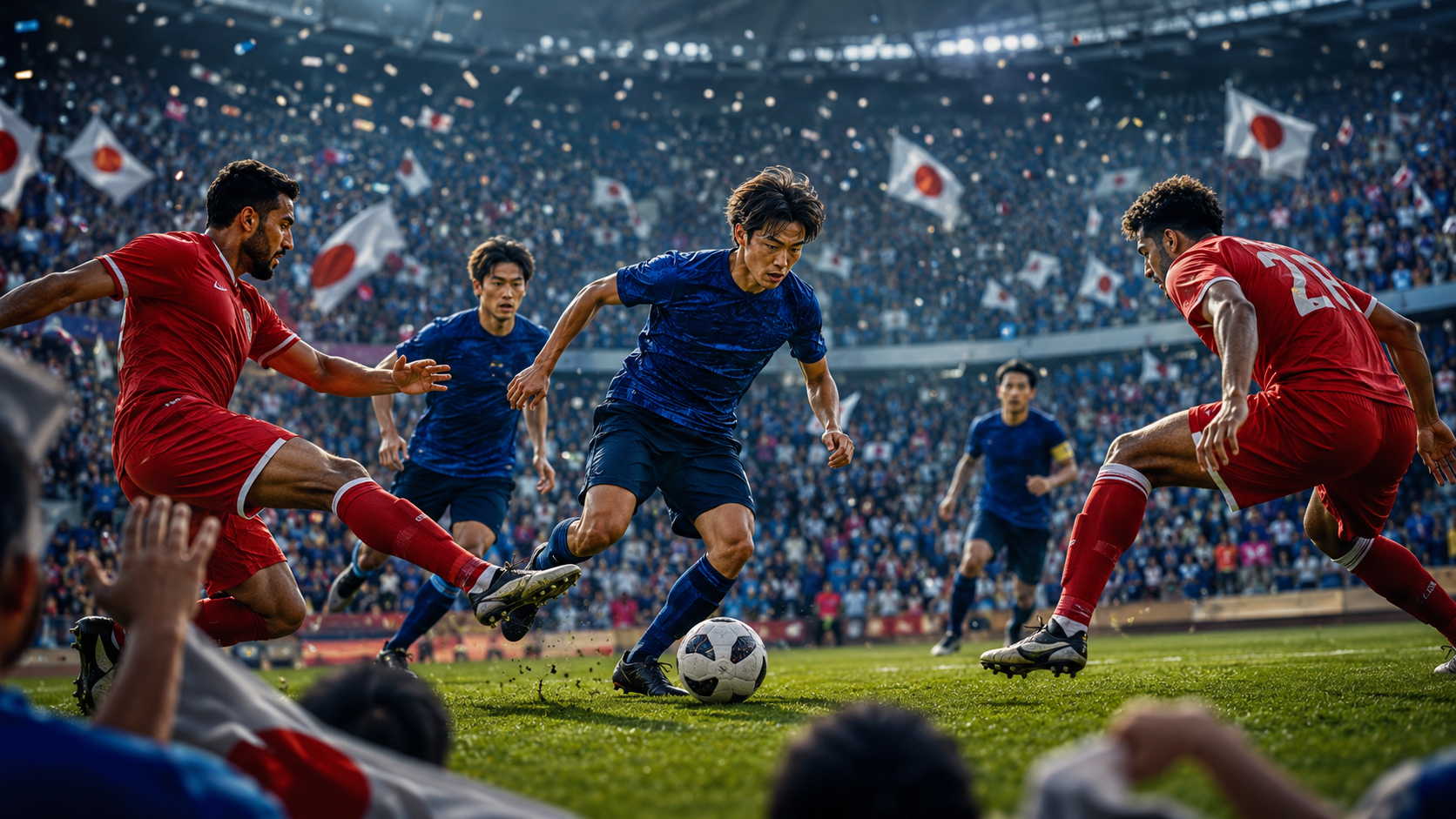
The 1,000th World Cup match belongs to Japan and Tunisia
Every so often, a number walks onto a football pitch wearing boots. The first World Cup goal. The 100th final. The billionth argument about a referee. On June 21, the number is 1,000 — and the teams carrying it are Japan and Tunisia. Not Brazil. Not Argentina. Not Germany. Samurai Blue and the Eagles of Carthage will step into a historical frame usually reserved for giants and monuments.
The frame is lovely. The reality is not. Japan do not need a commemorative plaque; they need three points. Their opening 2-2 draw with the Netherlands was useful, dramatic and encouraging, but World Cups do not award bonus points for looking like a team that should have won. The table is cold. It counts only what you actually take.
Tunisia arrive from the opposite emotional direction. A 5-1 defeat to Sweden was followed by a coaching change, with Hervé Renard asked to restore order and belief quickly. That makes Tunisia dangerous in a very specific way. A wounded side is not always a broken side. Sometimes it is a side running directly toward the first chance to prove it still has a spine.
Japan’s long climb: from 1998 newcomers to serious World Cup citizens
Japan’s World Cup story began in 1998 in France. The J.League was still young, the national team was ambitious but inexperienced, and the idea of Japan as a reliable tournament force still sounded optimistic. The first campaign ended with three defeats, but it opened a door that has never really closed.
By 2002, co-hosting with South Korea, Japan had become a country that did not merely watch the World Cup; it staged it, filled it and emotionally occupied it. One of the key memories from that tournament is Japan’s 2-0 win over Tunisia in Osaka, a result that helped send the national team into the knockout round for the first time. That match sits quietly behind this one. It is not a prediction, but it is a reminder: Japan and Tunisia already share a page in World Cup history.
Since then, Japan have repeatedly reached the round of 16 — in 2002, 2010, 2018 and 2022 — but the quarter-final has remained the locked door. The country now produces players for Europe’s toughest leagues, and opponents no longer treat Japan as a curiosity. They scout Japan. They worry about Japan. They plan for Japan. In football, being studied is a compliment wrapped in a problem.
Tunisia’s history: the African first that still matters
Tunisia are not merely Group F’s wounded underdog. They carry one of African football’s great World Cup firsts. In 1978, Tunisia beat Mexico 3-1 in Argentina, becoming the first African nation to win a match at a men’s World Cup finals. That victory mattered beyond the scoreline. It announced that African teams were not tourists at the tournament. They could win, unsettle, and change expectations.
The nickname, the Eagles of Carthage, also carries weight. Carthage was not a minor footnote of Mediterranean history; it was a power that once stood opposite Rome. This does not mean a corner kick in Monterrey should be treated like the Punic Wars. But the World Cup has always been comfortable with grand metaphors. It is the one place where ancient history, modern television graphics and a striker’s first touch can all end up in the same paragraph.
The Sweden defeat was a humiliation. The change to Renard was an emergency response. Yet Renard has African tournament pedigree, and his immediate task is psychological as much as tactical: restore belief, simplify the message, and make Tunisia feel hard to beat again. Japan should expect resistance, not surrender.
Monterrey: the invisible opponent is the heat
The match is in Monterrey, Mexico, a city where summer can make the air feel like another defender. Heat alters football. It slows pressing, punishes loose possession, shortens tempers and turns every unnecessary sprint into a withdrawal from the bank of the second half.
For Japan, that matters. Samurai Blue are at their best when movement, timing and technical rhythm work together. But heat can break rhythm. Push too hard early and the final 20 minutes become a negotiation with your own legs. Play too slowly and a wounded Tunisia side has time to build a wall. The match may not be won by the team that runs most, but by the team that runs correctly.
This is where Japan’s maturity will show. Can they circulate the ball without becoming passive? Can they press without burning out? Can they use substitutions as strategy rather than rescue? The best tournament teams understand that managing heat is not cowardice. It is tournament intelligence.
What Japan must prove: not beauty, but edge
The draw against the Netherlands proved Japan can stand on the same pitch as a European heavyweight without shrinking. That is no small thing. But the Tunisia match asks a different question: can Japan win the match they are expected to win?
This is the awkward graduation exam for ambitious teams. It is easier, emotionally, to be brilliant against a giant than ruthless against a wounded opponent. The latter requires patience, discipline and a small amount of nastiness. If Tunisia sit deep, Japan must not panic. If Tunisia counter, Japan must not get stretched. If the referee lets the match become physical, Japan must not spend the evening composing complaints with their eyebrows.
A win would place Japan in a powerful position before the Sweden match. A draw would leave everything tense. A defeat would turn the 1,000th World Cup match into a very elegant frame around a very painful memory.
The fan-cleanup story: Japan’s other national team
There is another Japanese World Cup team that never appears on the team sheet. It wears replica shirts, carries flags and, after the match, often carries rubbish bags. Japanese fans cleaning stadium sections after games have become one of the tournament’s recurring global images.
The custom did not appear from nowhere. It reflects school cleaning routines, local festival habits, public-space etiquette and a broad cultural dislike of leaving trouble behind for someone else. The funny part is that many Japanese fans do not seem to be performing a grand moral act. They are simply finishing the evening properly. Normal behavior, exported to the World Cup, sometimes looks revolutionary.
Of course, rubbish bags do not score goals. Politeness does not win headers. But the World Cup is also a theater of national impressions. If Japan win on the field and leave the stands clean, the 1,000th match will feel almost too perfectly Japanese: efficient, emotional, disciplined, and just a little embarrassing in how wholesome it looks.
What to watch
| Point | Why it matters |
|---|---|
| Japan’s first 20 minutes | Tunisia must not be allowed to regain confidence cheaply. |
| Heat management | The match may tilt late if one side spends too much energy early. |
| Set pieces | In tense tournament matches, dead balls often do what possession cannot. |
| The Renard effect | A new coach can simplify tactics and lift belief, at least temporarily. |
| Japan’s finishing | Good football is nice. Goals are nicer. Japan need the second part. |
A historic stage, but a practical demand
The 1,000th World Cup match will be remembered in statistics books no matter what happens. But Japan’s players do not need to decorate history. They need to advance through it. The quarter-final wall, the old habit of being praised for effort, the lingering pain of matches that got away — all of that sits behind this game.
Tunisia bring their own history: the 1978 African first, the Carthage identity, and the pride of a team humiliated once but not willing to be humiliated twice. Japan bring a generation that expects more than respect. They expect progress.
At full time, the milestone will still say 1,000. The number Japan care about will be smaller and sharper: three, one, or zero.
For Samurai Blue, the challenge is simple enough to sound harsh. Do not just appear in history. Win inside it.
- FIFA says Japan vs Tunisia is the 1,000th match in World Cup finals history.
- Japan need to convert the promise of a 2-2 draw with the Netherlands into a win.
- Tunisia are trying to recover from a 5-1 loss to Sweden and a sudden coaching change.
- Monterrey heat makes tempo, substitutions and patience central to the match.
- Japanese fan cleanup culture adds a second, off-field layer to the story.
Sources and references
This article uses Reuters, FIFA, Guinness World Records and FIFA team-profile material for match context, Group F background, Tunisia's coaching change, World Cup history and the 1,000-match milestone. Match details may change; check official match information before watching.
- Reuters: Japan v Tunisia marks 1000th World Cup match
- Reuters: Japan seek winning edge against Tunisia
- Reuters: Tunisia replace coach with Renard
- FIFA Match Centre: Tunisia v Japan
- FIFA: Japan team profile and history
- FIFA: Tunisia team profile and history
- Guinness World Records: first African World Cup victory