A cavity, a child, and an unlikely international prize
Imagine a tiny resident living inside a child’s mouth, rearranging teeth as furniture and insisting that the child is its mother. It sounds like an improbable premise for an internationally acclaimed animation. Yet Candy Caries, directed by Japanese stop-motion filmmaker Tomoki Misato, won the Animation for Young Audiences 7+ award at the Ottawa International Animation Festival on September 26, 2026. The festival’s own winners list confirms the result.
The achievement deserves attention because the series has no need to imitate the look of mainstream commercial anime. Its characters are built from materials that catch the light, carry thickness and produce the slight physical irregularities that come with frame-by-frame work. In a screen culture associated increasingly with frictionless digital images, a handmade imaginary cavity has found an audience abroad.
What exactly did the film win?
Ottawa’s fiftieth festival ran September 23–27 and presented awards at its September 26 ceremony. Candy Caries won the competition for animation aimed at audiences aged seven and older. It did not win the festival’s overall feature or short-animation grand prize, which went to other productions. The distinction matters: precision about honors is a basic courtesy to the film and its competitors.
The festival reports 3,026 submissions from 107 countries across its wider programs, not 3,026 competitors in the children’s category. Ottawa’s awards process includes a jury of local children for its youth competitions. For a series whose narrative turns on a child’s relationship with a mischievous parasite, that is a particularly relevant audience.
A story that turns dental anxiety into anarchic comedy
Ame is a sweet-loving child who shares her body, unwillingly, with Caries, a cavity determined to live comfortably. Caries calls Ame “Mom,” repurposes teeth as household furnishings, and disrupts Ame’s routines. Their argument becomes a grotesquely affectionate domestic comedy. The creators describe it as an unusual parent-child relationship; it is not presented by the studio as a clinical dental-care documentary.
The television version began on April 15, 2026, within the TBS program Yoru no Brunch, and was distributed online. Reports describe 24 television installments. The Ottawa entry, however, should not automatically be described as an evaluation of every episode of the television run; the competition documentation names the film and its category, not a full-season audit.
The secret is neither traditional claymation nor standard computer animation
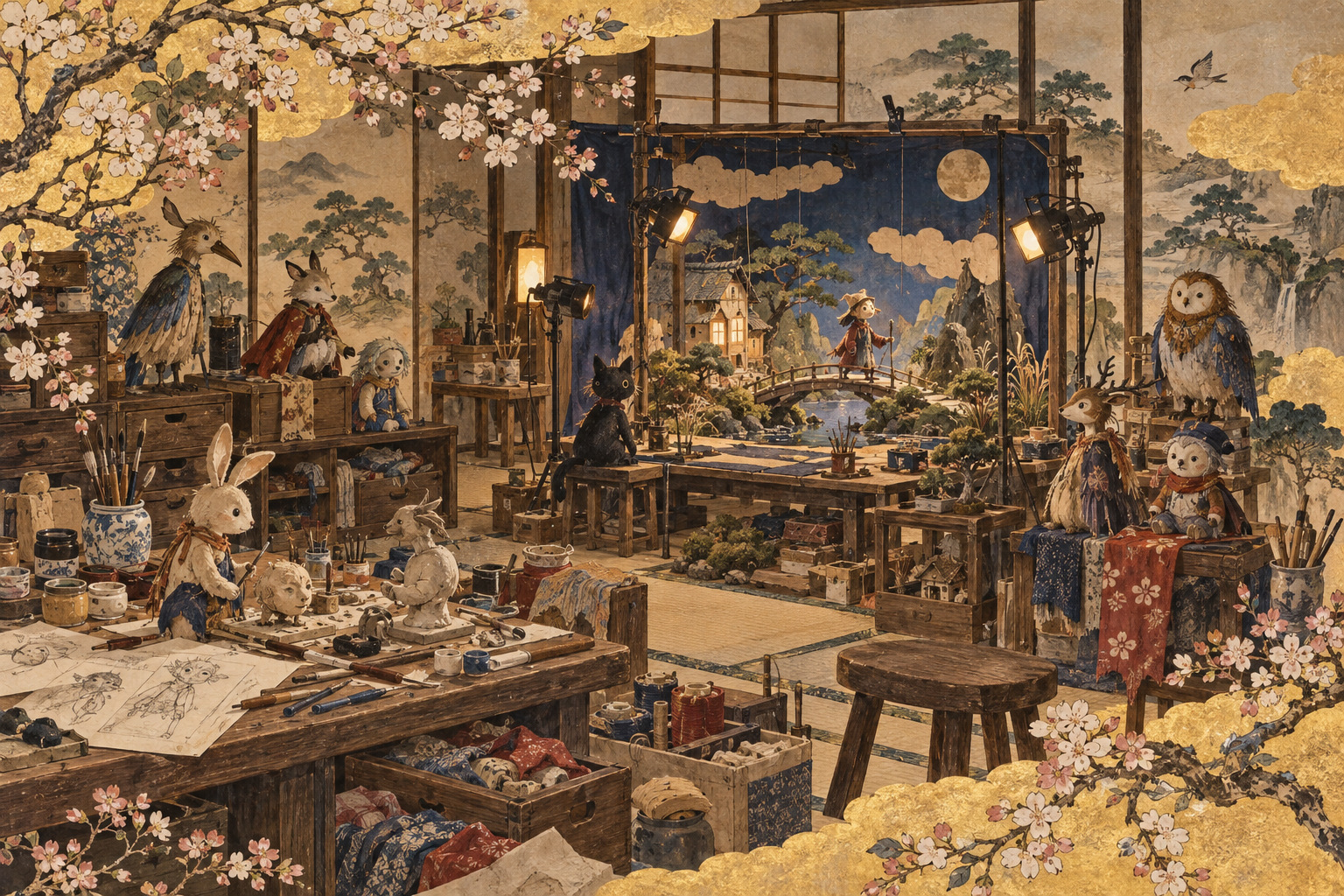
The most revealing production detail comes from Misato himself. For the 2026 series, he described trying plastic sheets and acrylic, aiming for images that are flat like illustrations yet physically raised and thick. The festival categorized the entry under cut-outs and puppets. The resulting vocabulary is better understood as a hybrid of fabricated surfaces and stop-motion than as ordinary molded-clay animation.
That technique creates both charm and discipline. A puppet’s position must be adjusted between exposures; reflective edges and translucent layers complicate lighting; small irregularities remain visible in motion. Those are general properties of physical animation, not independently measured production statistics for Candy Caries. The specific appeal, as viewers can judge for themselves, lies in turning recognizable materials into emotionally legible characters.
Misato’s path through darker fables and miniature vehicles
Born in Tokyo, Misato came to wider attention with his Tokyo University of the Arts graduate film My Little Goat in 2018. The work traveled internationally. He then directed the first season of PUI PUI Molcar, the 2021 television hit whose guinea-pig-shaped cars made tactile animation accessible to a broad family audience. Ottawa’s official biography records this progression.
Across those projects, Misato has embraced the narrative power of objects that look innocent while behaving unpredictably. Candy Caries is not simply another animal vehicle franchise. Its cast is built around the discomfort and comedy of bodily intrusion, leaving room for both childish absurdity and an adult recognition of how exhausting care and cohabitation can be.
Why the studio matters
Candy Caries was produced at TORUKU from WIT STUDIO, a stop-motion unit established within the company that also makes major Japanese animated productions. A related Candy Caries promotional animation was already released in 2021. The 2026 program therefore reflects an idea developed over several years rather than an overnight breakthrough.
The credits resist a lone-genius account: original work by Misato and WIT STUDIO, deputy director Kenshiro Morii, screenplay by Chiaki Nishiaka, music by Keigo Hoashi, and animation producer Kenta Yamada are among the named contributors. Film festivals celebrate the director, but the patient fabrication, shooting, editing and sound work is collective.
Japan has a longer physical-animation tradition
Japan’s global animation reputation is frequently associated with drawn characters, elaborate action sequences and adaptations of manga. Yet object animation, puppetry, experimental shorts and commercial stop-motion have long existed beside those formats. Moving a miniature by hand and photographing each increment is not an obsolete alternative to digital production; it is a distinctive artistic and industrial tool.
Misato’s work offers a useful lesson about categories. There is no single Japanese visual signature that defines the country’s animation. A creator can build international recognition from materials ordinarily found in craft shops, provided the underlying world and storytelling are convincing.
What a child-jury decision does—and does not—prove
An award selected through a young-audience competition indicates success with the festival’s jury. The film’s official announcement included comments from Misato and producer Yamada, both pleased that the unconventional materials and storytelling received recognition. Yamada specifically welcomed the children’s jury’s choice.
But there is no verified basis here to claim the award immediately doubled streaming views, brought a new foreign distributor or generated a particular amount of licensing revenue. Festival visibility is a gateway to audiences and negotiations; commercial impact needs independently checked contracts and business data.
Not the only Japanese animation recognized in Ottawa
The same 2026 festival recognized We Are Aliens, directed by Kohei Kadowaki, with the animated-feature grand prize, and Eri, directed by Honami Yano, in the animated-short category. Those films differ significantly in form and subject from Candy Caries. The pattern demonstrates a variety of Japanese-associated creative approaches reaching the international festival circuit.
For international buyers, curators and publishers, the lesson is not that one style has conquered the market. It is that the pathways to recognition are plural. A visually unmistakable short work or series can attract attention without relying on a preexisting blockbuster franchise.
The business question behind an artistic success
Stop-motion requires physical design, construction, staging, photography and often painstaking revisions. These demands can produce a strong recognizable aesthetic, but the award announcement provides no production budget, profit margin, labor-hour measure or international-sales forecast. Broad claims that handmade animation is cheaper, more sustainable or automatically more profitable than digital animation would therefore be unsupported.
The more productive commercial questions concern specialist training, workflow scalability, subtitling and dubbing, merchandise rights, and how a small studio participates in revenue from overseas distribution. A prize can make those conversations easier to start; it does not answer them.
Small movements, larger horizons
Candy Caries makes a persuasive case for the freedom to be visually strange. Its invented domestic argument between a child and a cavity gives emotional shape to an idea that could easily have been dismissed as too eccentric. The material treatment makes it immediately identifiable as the work of physical hands rather than generic screen imagery.
Whether that translates into a new series, a larger studio or a durable overseas audience remains to be reported. For now the verifiable achievement is sufficient: a Tokyo-born director and Japanese production team took a tactile, mischievous invention to an international festival, where it won a competition judged with young viewers in mind.
Sources and documents
- Ottawa International Animation Festival — 2026 official award winners
- Ottawa International Animation Festival — Young Audiences 7+ program
- 『キャンディーカリエス』公式:2026年9月28日受賞発表・監督コメント
- WIT STUDIO:キャンディーカリエス(2026年TV版、制作スタッフ)
- WIT STUDIO:2026年版発表と制作素材についての監督説明
- WIT STUDIO:テレビ放送と出演者・スタッフ
- WIT STUDIO:2021年版Candy Cariesプロモーション映像
- UNIJAPAN:2026年オタワ国際アニメーション映画祭受賞一覧
- Ottawa International Animation Festival — 2026 selected films
- TBS NEWS DIG:見里朝希監督の受賞報道(2026年9月28日)
Research cutoff: October 12, 2026 JST. No independently verified post-award revenue or licensing figures are available in the cited material.