The most consequential part of the glasses may be invisible
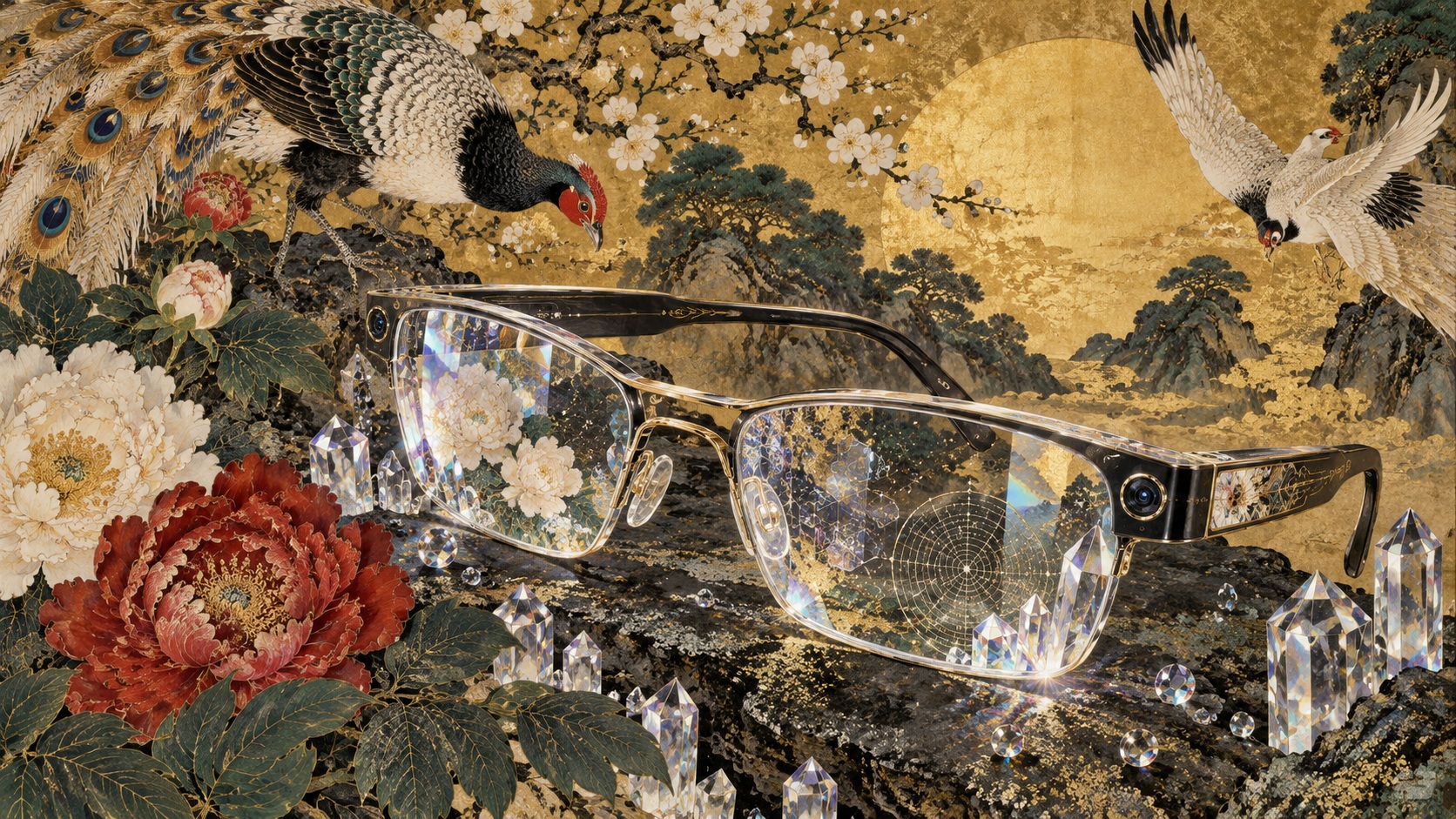
Smart glasses have a public-relations problem as well as an engineering problem. The hardware must put useful information before the eye without making the wearer look like a science-fiction character, obscuring the world or producing an obvious glow for other people to see. Japanese electronics supplier TDK believes a remarkably thin optical component can help.
On October 6, the company received the Minister of Economy, Trade and Industry Award in the CEATEC 2026 competition for a meta-optic mirror intended for smart-glasses displays. Four days earlier, TDK had disclosed a prototype demonstration involving direct retinal projection. It is a substantial technical announcement, not a declaration that a consumer product is ready for sale.
That gap between a component breakthrough and a dependable, affordable product is what makes the development worth following.
A 150-nanometer mirror, with important qualifications
The mirror uses patterned nanoscale reflective structures to steer light. It is a flat optical element just 150 nanometers thick—0.00015 millimeters—and TDK says it can be embedded directly into an eyeglass lens. The company reports approximately 80 percent transmission of visible light, allowing an appearance closer to ordinary spectacles.
The central engineering advance is not simply that a small object is thin. It is that a precisely fabricated flat surface is designed to perform an optical function previously assigned to a bulkier curved component. The CEATEC judges singled out the combination of compact optics, transparency and suppression of the rainbow-like patterns sometimes visible on display lenses.
Yet a transmission figure cannot by itself tell us how the finished glasses perform outdoors, how wide the effective field of view is, how much power the system uses or what mass production would cost. Those are questions for the next stage of evaluation.
Why project onto the retina?
Many augmented-reality glasses use waveguides: light is transmitted through optical structures in the lens and then directed toward the eye. This is an established approach, but engineering a high-quality, unobtrusive image while controlling unwanted reflections can be difficult and expensive.
Direct retinal projection, or DRP, instead directs carefully controlled laser light toward the retina to form a perceived image. TDK says earlier implementations generally depended on a relatively large curved mirror placed in front of the lens. Its nanoscale reflective structure is designed to take over that steering function while fitting into a natural-looking lens.
DRP is an optical display approach, not a claim that the eyewear corrects eye disease or restores sight. Any eventual consumer device must also satisfy appropriate optical and laser-safety requirements. The information released so far does not establish a mass-market safety approval.
The 90-year history behind an unfamiliar optical device
TDK was founded in December 1935 as Tokyo Denki Kagaku Kogyo, established to commercialize ferrite—a magnetic material associated with research by Yōgorō Katō and Takeshi Takei at Tokyo Institute of Technology. Founder Kenzō Saitō saw a business opportunity in transforming materials research into repeatable industrial production.
That pattern persisted through different electronics eras. Ferrite cores improved radios and communications equipment. Magnetic recording, cassette tapes, multilayer inductors and thin-film magnetic heads later extended the company’s influence far beyond the products carrying its brand. The recurring business is precision: materials, deposition and manufacturing processes that device makers can integrate into their own products.
The meta-optic mirror fits that history. TDK argues that semiconductor-like wafer fabrication could produce the optical structures more economically than complicated assembly of conventional optical elements. But a manufacturable concept is not yet a demonstrated commercial yield, price or delivery timetable.
A partnership and a remaining color challenge
TDK says it has entered a business cooperation agreement with QD Laser, a Japanese company with intellectual property and technology related to retinal projection. The parties intend to combine QD Laser capabilities with TDK optical components and visible-light laser controls to develop next-generation RGB light modules and optical engines.
The demonstrated configuration is monochrome. TDK says it intends to demonstrate full color and pursue mass production over the next few years. Those remain targets. There is no announced volume manufacturing agreement with a glasses brand in the cited materials, and the partnership does not establish booked consumer-device sales.
Moving from monochrome to convincing everyday color requires coordinated control of red, green and blue light, stable performance as the wearer moves, acceptable brightness and energy use, and quality consistent across manufactured parts. The company is scheduled to exhibit a prototype at CEATEC from October 13, booth 5H261; actual opening-day performance is not asserted in this advance feature.
A display component does not solve the privacy debate
The appeal of glasses that place information directly in one’s view is obvious: navigation without looking down, instructions during repairs, assistance translating signs or conversation. But making wearable computers more inconspicuous raises questions about consent and surveillance. Reuters reported on October 6 that a number of governments and institutions were considering or adopting restrictions on camera-equipped smart glasses.
TDK’s announcement concerns the display optical system, not a new camera. Reducing the outward visibility of the projected image is not equivalent to preventing covert filming, guaranteeing confidentiality, or resolving the ethical questions around wearable recording. Whether a product is socially acceptable will depend on the full device and the rules governing its use.
Engineering success therefore has multiple layers. The component must work. A manufacturer must integrate it. Users must want to wear the result. People around the users must have reason to trust it.
The measurements that will determine whether it matters
TDK has provided a compelling starting point: a demonstrated monochrome retinal display, a 150-nanometer optical structure, a stated 80 percent visible-light transmission figure, a partnership and an award from a major Japanese technology exhibition. Those are distinct, verifiable milestones. They are not market-share figures.
The questions now concern brightness, color reproduction, field of view, usable eye position, optical efficiency, weight, battery life, environmental durability, eye safety, production yield, licensing, design wins and a saleable price. How does the approach perform against advancing waveguide technology under comparable conditions? What do independent testers observe? How many units could be produced to specification?
The component may be nearly invisible, but the economic test will be unmistakable. For Japan, a country with deep strengths in specialized materials and components, the prize is not simply another award-winning prototype. It is a place inside a product people choose to use every day.
Sources and documentation
- TDK(2026年10月2日)網膜直接描画ディスプレイ実証
- TDK(2026年10月6日)経済産業大臣賞
- CEATEC AWARD 2026 公式受賞一覧(日本語)
- TDK 技術解説:メタオプティクスミラー
- TDKの歴史(公式)
- TDK 投資家向けFAQ:創業とフェライト
- CEATEC 2026 受賞発表(英語)
- Reuters(2026年10月6日)スマートグラスとプライバシー
Reporting verified through October 10, 2026, based on announcements made before CEATEC opened. This article does not claim to report observations from October 13 demonstrations.