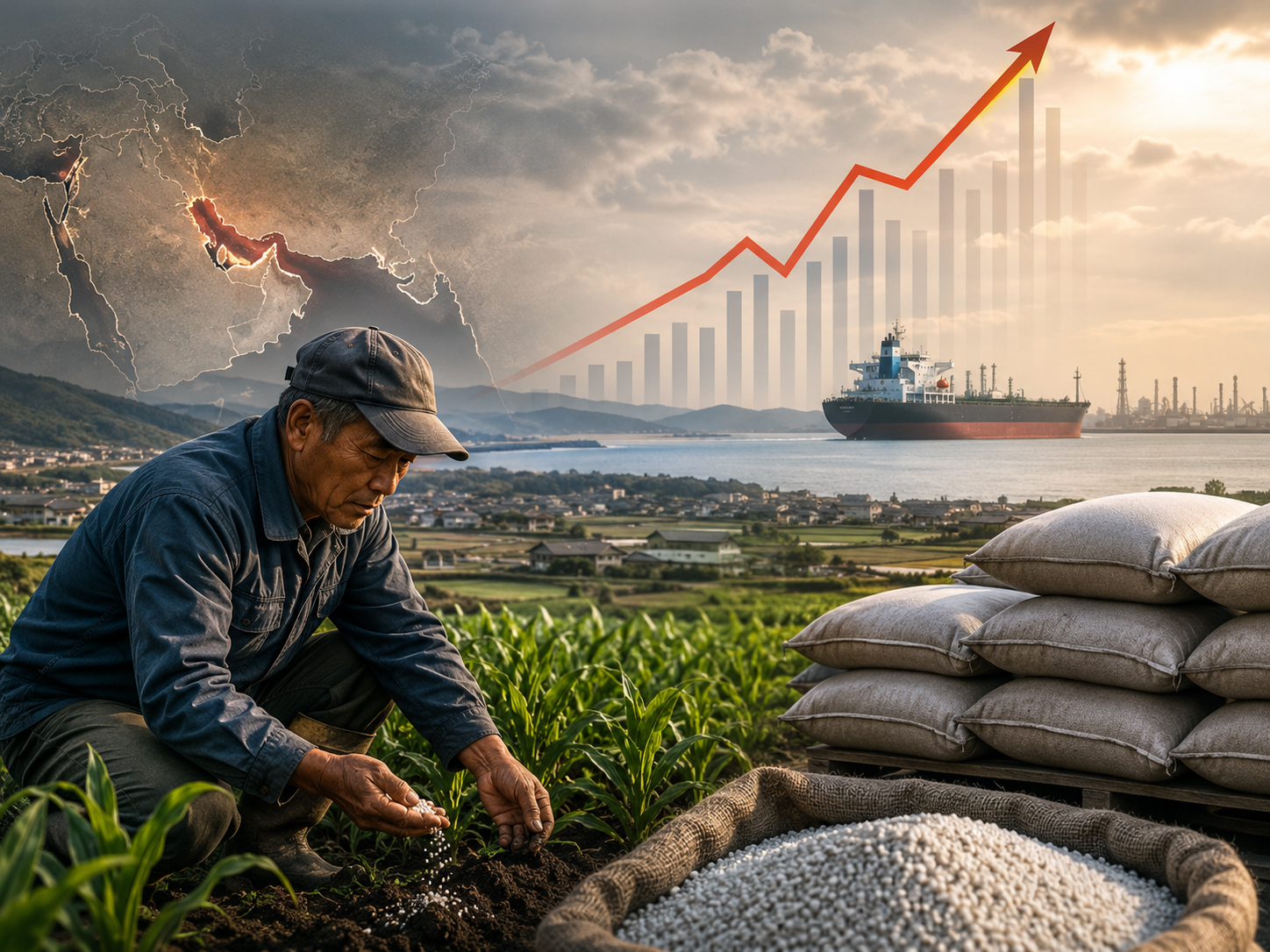
The Hormuz crisis does not end with images of oil tankers. When the strait becomes unstable, the shock travels beyond crude oil and LNG into urea, ammonia, phosphate, potash, shipping insurance, freight costs, currency markets and electricity prices. Fertilizer used in Japanese fields sits on top of global energy and shipping systems. A conflict near the Gulf can eventually reach rice paddies, vegetable farms, orchards and supermarket price tags.
Japanese media reported in June that rising fertilizer costs linked to the Hormuz crisis were beginning to pressure farmers. The structural reason is simple: Japan depends on imported raw materials, and fertilizer production is energy-intensive. Nitrogen fertilizer is made from ammonia, and ammonia is normally produced using natural gas or coal. When fuel and shipping costs rise, fertilizer is one of the first agricultural inputs to feel the strain.
Fertilizer is energy converted into food
Fertilizer is not just another farm input. It is energy converted into food. Nitrogen fertilizer became possible on an industrial scale through the Haber-Bosch process, which turns atmospheric nitrogen into ammonia. The process helped feed the modern world, but it also requires large amounts of energy. Ammonia plants are deeply exposed to natural-gas and coal prices.
Phosphate fertilizer depends on phosphate rock. Potash fertilizer depends on mined potassium salts. Both are tied to limited producing regions, international prices, ships and exchange rates. Japan imports much of what it needs. Even when crops are grown inside Japan, the nutrients behind them often pass through overseas mines, gas fields, chemical plants, ports, tankers, trading houses and agricultural purchasing systems. Food self-sufficiency cannot be discussed honestly without fertilizer security.
Postwar farming and the age of chemical fertilizer
Postwar Japanese agriculture moved from food shortage to productivity. Chemical fertilizer, pesticides, mechanization, irrigation and seed improvement helped stabilize rice and vegetable supply. As rural labor declined during the high-growth era, farmers needed to maintain output with fewer hands. Fertilizer became a foundation of modern Japanese farming.
But that convenience came with dependence. Japan has limited domestic resources for phosphate and potash, and nitrogen fertilizer is heavily influenced by energy prices. Japan’s aging and often small-scale farming structure makes the problem sharper: when input costs rise, farmers cannot always pass the increase on to consumers. The margin is absorbed first on the farm.
How Hormuz reaches the field
A Hormuz crisis first affects crude and LNG. Then the impact spreads to electricity, fuel, transport, chemical feedstocks and shipping. Urea and ammonia are sensitive to natural-gas prices. Higher war-risk insurance increases import costs. Uncertainty in the strait can force ships to wait, reroute or pay premiums. Even if every fertilizer input used in Japan does not come directly from the Middle East, global prices move together.
Reuters reported that Japanese-linked vessels were affected in the 2026 crisis and that shippers were waiting for more clarity on reopening and mine clearance. A peace announcement does not instantly restore logistics. What farmers ultimately see is not a diplomatic memorandum, but the next purchasing price, freight charge, power bill and planting budget.


The memory of Ukraine
This is not the first fertilizer-price shock. After Russia’s 2022 invasion of Ukraine, natural-gas prices surged and potash supply linked to Russia and Belarus became unstable. Grain, fertilizer and energy prices rose together. Japan debated measures to help farmers cope with higher fertilizer bills. The Hormuz crisis revived that memory.
Japanese agriculture now operates in an era when international conflict can quickly become an input-cost shock. Food security used to be discussed mainly through rice reserves and farmland preservation. Now it must include fertilizer, animal feed, fuel, logistics, semiconductors and machinery parts. Farming is soil and water — but also supply chain.
How rice, vegetables and fruit feel the shock
Higher fertilizer costs affect crops in different ways. In rice farming, base fertilizer and additional top-dressing costs matter for small farmers already coping with aging and labor shortages. Vegetables and fruit often require more detailed nutrient management to preserve quality and yield. Greenhouse growers can be hit by fuel, electricity and fertilizer at the same time.
Consumers may see the impact with a delay. Farmers may reduce planting, cut back on lower-margin crops, adjust quality management or leave certain production lines altogether. None of this happens overnight, but a prolonged input-cost squeeze eventually reaches both food prices and the resilience of local farming communities. Fertilizer is mostly invisible to consumers, but it sits under the price of food.
- JA, trading-house and manufacturer fertilizer price announcements
- Global urea, ammonia, phosphate and potash prices
- Shipping insurance and Hormuz safety conditions
- Farmer cost pass-through and subsidy measures
- Expansion of compost, sewage-sludge phosphorus and circular fertilizer systems
The circular-fertilizer homework
Japan cannot fully avoid imported fertilizer. But it can reduce exposure. Livestock manure compost, food waste, phosphorus recovery from sewage sludge, local circular-fertilizer systems, precision application, soil diagnostics and reduced-input farming all become part of security. This is environmental policy, farm policy and economic security at the same time.
The obstacles are real: quality stability, smell, transport costs, ease of use and mismatches between regions with too much organic waste and regions that need fertilizer. Farmers need products that are predictable, affordable and usable. A period of high imported fertilizer prices is also a chance to fix the weaknesses of circular alternatives.
Food security starts before planting
The Hormuz crisis shows that Japanese food security starts before seeds enter the soil. Fuel, fertilizer, ships, insurance, exchange rates, ports and electricity all shape the farmer’s risk before the crop is grown. If Japan wants to protect food supply, it must think beyond rice reserves. It must address fertilizer preparedness, input diversification, domestic recycling, farmer pricing power and consumer understanding.
The Strait of Hormuz is far from Japan’s fields. But its waves can still reach them. Rising fertilizer prices are a quiet warning that global politics now enters rural Japan through the bag of nutrients at the edge of a field.
Sources and references
This Japan.co.jp report is based on Japan Times, Reuters, IEA, Japan’s Agency for Natural Resources and Energy, and agriculture-policy sources.
- Japan Times: Fertilizer prices and the Iran/Hormuz war shock
- Reuters: Japanese shippers await details on Hormuz reopening and mine clearance
- Reuters: Japan’s Middle East energy dependency and mitigation options
- IEA: Strait of Hormuz overview
- Agency for Natural Resources and Energy: Energy White Paper 2025 summary
- MAFF: agriculture policy and sustainable input-use background