For most of a humid afternoon in Houston, Japan made the old football map look negotiable. Brazil had the shirts, the history, the five stars, and the gravitational pull of a country that has turned the World Cup into part of its national mythology. Japan had the structure, the speed, the nerve, and for 27 minutes after Kaishu Sano’s first-half goal, the lead.
Then came the old truth of knockout football: great teams do not always need to be fluent to be fatal. Casemiro headed Brazil level in the 56th minute. Japan held on, reorganized, and tried to carry the game toward extra time. In the 95th minute, Gabriel Martinelli appeared at the far side of the box and finished the dream. Brazil 2, Japan 1. The Samurai Blue were out.
It was a loss, but not a small one. It belonged to the family of Japanese World Cup heartbreaks that feel less like collapse than measurement. Against Belgium in 2018, Croatia in 2022, and now Brazil in 2026, Japan has not been embarrassed by the knockout stage. It has been shown exactly where the next door is — and how hard it is to open.
Japan’s first half was not afraid
Brazil had possession early, but Japan had calm. Hajime Moriyasu’s side defended in tight lines, closed central lanes, and denied Vinícius Júnior the kind of channel he needs to turn a game into a sprint. Takehiro Tomiyasu and Ritsu Doan were crucial on Japan’s right, helping smother Brazil’s most dangerous corridor.
The breakthrough arrived in the 29th minute. Sano read a loose Brazil pass, stole the ball, surged forward, slipped beyond Casemiro’s reach and fired low into the corner. It was not a lucky punch. It was the result of pressure, timing and belief. Japan did not merely wait for Brazil to make a mistake. Japan helped create the mistake.
That is the distance Japanese football has traveled. In 1998, Japan was learning the speed of the World Cup. In 2002, it rode the emotion of co-hosting into the knockout stage. In 2010, it leaned on order and sacrifice. In 2018, it frightened Belgium. In 2022, it beat Germany and Spain. By 2026, Japan was no longer asking whether it belonged. Against Brazil, it played as if belonging was settled.
Ancelotti’s adjustment and Brazil’s weight
Brazil changed after halftime. Carlo Ancelotti altered the shape, introduced Endrick, and asked Brazil to load the box with more direct pressure. The first half had made Brazil look old in places and slow in transition. The second half made Brazil look heavy in the old sense: powerful, patient, and increasingly difficult to move.
The equalizer came in the 56th minute. Gabriel Magalhães lifted the ball toward Casemiro, who met it with a strong header beyond Zion Suzuki. It was not the Brazil of carnival combinations. It was the Brazil of force, timing and elite bodies in dangerous spaces.
Japan did not fall apart. Suzuki made saves. Vinícius struck the post after a dangerous move. Moriyasu changed his wingbacks to slow Brazil’s momentum. But the game had moved into a different rhythm. Japan’s first-half threat faded. Brazil’s territory grew. The match began to feel less like a Japanese upset waiting to happen and more like a Brazilian escape gathering pressure.
The cruelty of minute 95
In the 95th minute, the decisive mistake came. Japan lost the ball near its own box. Bruno Guimarães waited with the poise that separates elite midfielders from merely good ones, shifted the ball left, and Martinelli finished. A whole campaign ended in a few seconds of fatigue, pressure and punishment.
That is why the goal hurt so deeply. It was not a rout. It was not a lesson from a distant football planet. It was one of those small hinge moments that turn national summers. Japan had already lived versions of this pain: Belgium’s last counterattack in 2018, Croatia’s penalty shootout in 2022. Now Brazil in 2026. The pattern is not that Japan cannot play with the best. The pattern is that Japan still has not learned how to kill the final minutes against the best.
Brazil is not just another opponent
The opponent mattered. Brazil is the only nation to have played in every men’s World Cup and the most decorated team in the tournament’s history. But Brazil is also woven through the story of modern Japanese football. This was not simply a match between distant cultures. It was a match between a football teacher and a student who has become dangerous.
Zico’s arrival at Kashima Antlers in 1991 is one of the symbolic moments in Japan’s football modernization. Before the J.League’s launch, Brazilian technique, professionalism and imagination helped Japan believe that a professional domestic game could be built. Zico later coached Japan and led the national team at the 2006 World Cup, where Japan lost 4-1 to Brazil after Keiji Tamada had briefly given Japan the lead.
Twenty years later, Japan again scored first against Brazil. This time the story was different. Japan did not disappear after the first punch. It competed into stoppage time against one of world football’s permanent powers. The result was still defeat, but the content of the defeat had changed.
The invisible bridge between Japan and Brazil
Brazil is home to the largest Japanese-descended community outside Japan. Since the arrival of the Kasato Maru in Santos in 1908, Japanese migration has shaped parts of Brazilian agriculture, commerce, culture, education and everyday life. São Paulo’s Liberdade district is the most visible symbol, but the connection is broader and older than any single neighborhood.
Football has carried that bridge in both directions. Zico became a Japanese football icon. Brazilian-born players such as Alessandro Santos and Marcus Tulio Tanaka wore Japan’s shirt. Japanese fans learned Brazilian vocabulary; Brazilian families with Japanese roots watched both histories collide on the same pitch. A Brazil-Japan match is therefore more than a scoreboard. It is a reunion, a rivalry and a family argument all at once.
The Round of 16 wall keeps changing shape
Japan has still never won a World Cup knockout match. That remains the blunt fact. The list is now longer: Turkey in 2002, Paraguay in 2010, Belgium in 2018, Croatia in 2022, Brazil in 2026. Different opponents, different continents, different methods of pain. Same unopened door.
But the wall is no longer abstract. It used to represent distance from the world’s best. Now it represents specific football problems: how to manage a lead; how to find an outlet when pressed; how to respond when an elite opponent changes shape; how to keep enough attacking threat after substitutions; how to turn emotional courage into scoreboard control.
That may sound harsh after such a brave performance. But it is also a compliment. Japan is no longer being judged by participation, effort or novelty. Japan is being judged by winning details.
Moriyasu’s Japan and the next demand
Hajime Moriyasu has carried this national team through a long cycle of belief, criticism and evolution. His Japan is disciplined but not passive, technical but not naive, respectful but not deferential. The 2022 wins over Germany and Spain changed the global perception of Japanese football. The 2026 match against Brazil should deepen it.
The next step, however, is not to shock the world. Japan has already done that. The next step is to control the world after shocking it. The issue is no longer whether Japan can produce a lead against a giant. The issue is whether Japan can turn that lead into history.
Japan.co.jp’s view
It is tempting to call this another honorable defeat. That would be too easy and too kind. The more useful reading is sharper: Japan was good enough to scare Brazil and not yet complete enough to eliminate Brazil. Both things are true. The heartbreak is real because the progress is real.
Japanese sports culture has long valued noble effort. This team now deserves a more demanding language. It must be judged not only by how bravely it runs, but by how ruthlessly it closes. The final ten minutes must become a territory Japan owns, not merely survives. The best teams do not only play well; they decide when the story ends.
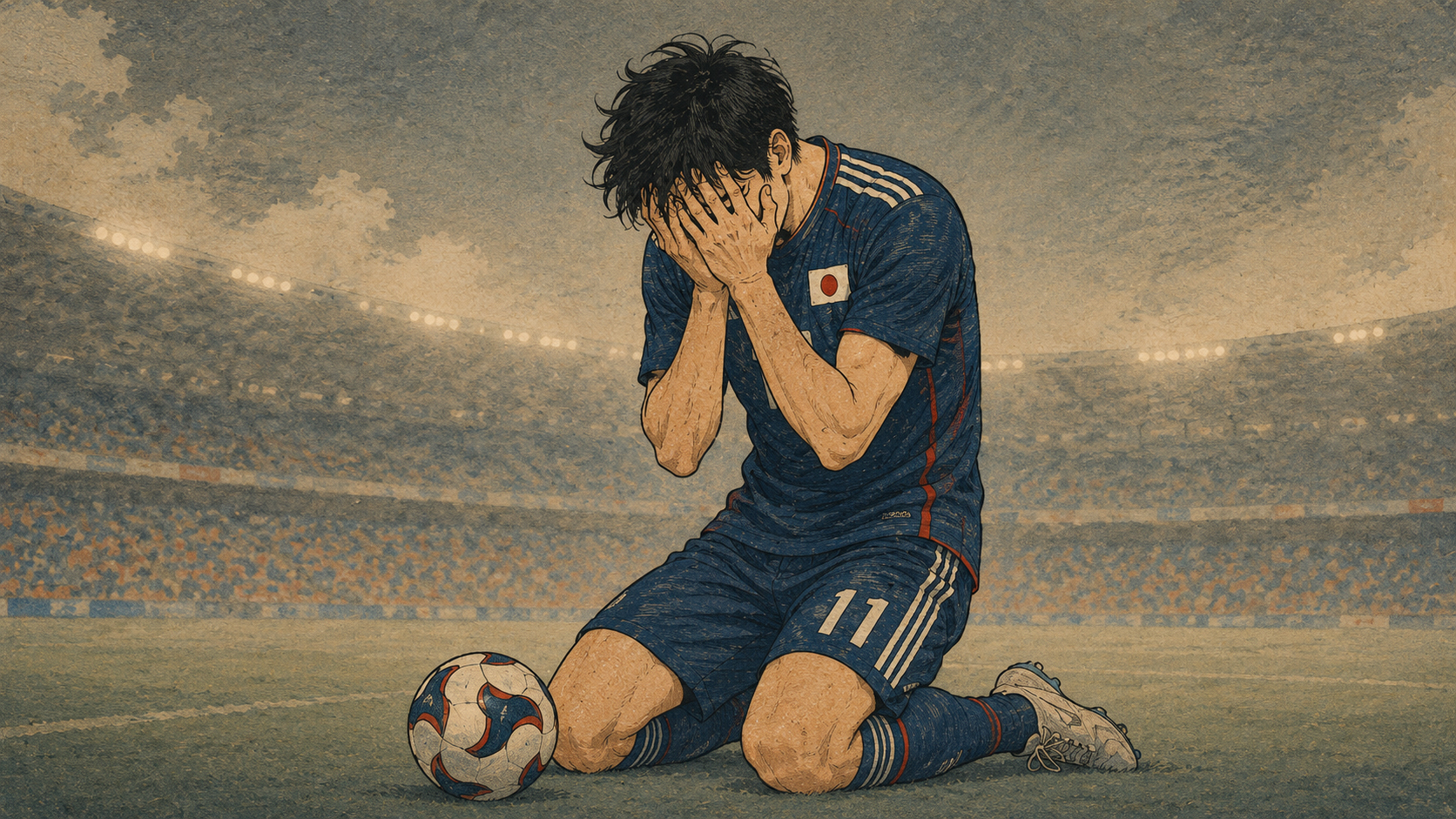
Still, this night should be remembered. Sano’s goal. Suzuki’s saves. Tomiyasu and Doan’s resistance. A blue shirt folding into the grass after the whistle. It was a sad image, but not a weak one. Japan left the World Cup with another scar. The scar points toward the next door.
| Item | Details |
|---|---|
| Match | 2026 FIFA World Cup Round of 32 / Brazil 2-1 Japan |
| Venue | Houston |
| Japan goal | Kaishu Sano, 29th minute |
| Brazil goals | Casemiro, 56th minute / Gabriel Martinelli, 95th minute |
| Historical meaning | Japan again missed its first World Cup knockout win, but pushed Brazil to stoppage time. |
Sources and references
This article draws on FIFA, AP, The Guardian, ESPN, and public historical records on Japan-Brazil football relations. Match data and tournament schedules may be updated by official competition and broadcast sources.
- FIFA: Brazil 2-1 Japan match report and highlights.
- AP News: Gabriel Martinelli scores late in injury time to help Brazil beat Japan 2-1.
- The Guardian: Brazil into last 16 as Martinelli strikes in stoppage time.
- ESPN: Japan 1-4 Brazil, 2006 FIFA World Cup.
- ESPN: Brazil 3-0 Japan, 2013 FIFA Confederations Cup.