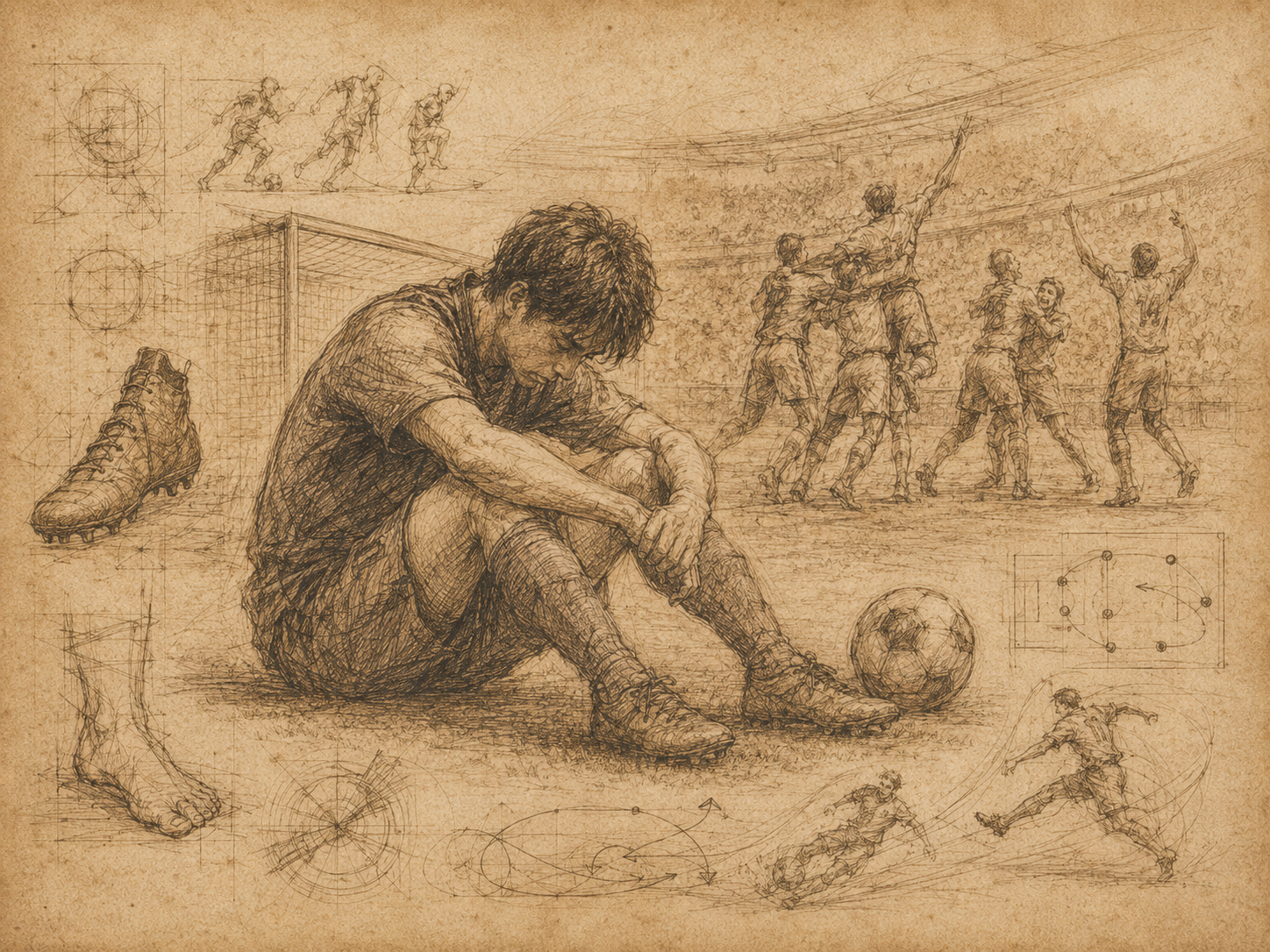
There are two kinds of defeat. One ends a story. The other begins the next one. On June 29, 2026 in Houston, Japan lost 2-1 to Brazil and left the World Cup. But the match was not just an exit. It was a measurement: of how far Samurai Blue have come, how close they now are to the elite, and how cruel the final few steps remain.
For 45 minutes, Japan made the five-time world champions uncomfortable. Their defensive distances were tight. Their pressing was brave. Their counters carried danger. When Kaishu Sano scored, Japan led 1-0 at halftime and the long national dream — a first World Cup knockout win — briefly looked less like a wish and more like a schedule.
Then Brazil did what Brazil does. Carlo Ancelotti adjusted at halftime, asking for more width and more crosses into the box. Casemiro equalised. In the 95th minute, Gabriel Martinelli arrived at the far post and turned the match into a Brazilian escape. Brazil 2, Japan 1. A short scoreline, but a long lesson.
The Houston night in numbers
After the match, Hajime Moriyasu said the gap was closing. It was not an empty consolation line. Japan’s 2022 victories over Germany and Spain had already changed the world’s view of the team. In 2026, against Brazil, Japan did something even more revealing: they did not merely survive. They forced Brazil to solve a problem.
Reuters reported that Ancelotti recognised Japan’s organisation, physicality and threat on the counter. Brazil’s answer came not from magic alone, but from a tactical shift. That is the most important part of this defeat. Japan gave Brazil a question. Brazil answered it. The next stage for Japan is learning how to answer back.
A story that began in 1998
Japan first appeared at the World Cup in France in 1998. They lost all three group matches. Masashi Nakayama scored Japan’s first World Cup goal against Jamaica, but at that point merely reaching the tournament was the breakthrough.
Four years later, as co-host in 2002, Japan reached the knockout stage for the first time. The blue shirts filled the streets. Junichi Inamoto, Hidetoshi Nakata, Tsuneyasu Miyamoto and a generation of pioneers turned football into a national summer language. In 2010, Japan pushed Paraguay to penalties. In 2018, they led Belgium 2-0 before losing to one of the most devastating counters in World Cup memory. In 2022, they beat Germany and Spain before falling to Croatia on penalties.
Japan’s World Cup history has therefore also been a history of “almost.” Almost the quarter-finals. Almost the historic knockout win. Almost the step that would change the ceiling of the national team. The Brazil match in 2026 belongs to that same emotional archive — but with one difference. It felt less like a miracle that disappeared and more like a level Japan is now genuinely approaching.
Why Japan troubled Brazil in the first half
Japan’s first half was not built on courage alone. It was built on structure: compact lines, coordinated pressing, quick defensive reactions, intelligent spacing, and immediate forward movement after regaining possession. Brazil had the ball, but not comfort. Japan made the match narrow, quick and nervous.
The strength of Samurai Blue is no longer just work rate. It is shared timing. More Japanese players now live in Europe’s tactical and physical environment. They understand how quickly elite opponents punish late pressure or bad body shape. Against Brazil, that experience showed. Japan did not defend as underdogs hiding near their own goal. They defended as a team with a plan.
But the same half also revealed the next assignment. When an elite opponent adjusts, can Japan adjust again? When leading, can Japan control the ball for longer stretches? Can they slow a match without becoming passive? Can they threaten again after the first surprise has been solved? At World Cup knockout level, defending well is not enough. A team must keep asking the opponent new questions.
What Brazil’s adjustment taught Japan
Ancelotti’s Brazil did not panic. In the second half, they widened the game, crossed more often, and pulled Japan’s defensive block into uncomfortable decisions. Casemiro’s equaliser was a symbol of experience. Martinelli’s stoppage-time winner was a symbol of elite pressure: the ability to keep pushing when everyone else is already thinking about extra time.
Japan’s lesson is not only about the final five minutes. It is about the way top nations read a match while it is happening. They change shape. They use the bench. They attack a different zone. They make fatigue part of the tactic. Brazil won without needing Neymar. That depth is still part of the gap.
Yet there is hope in that same fact. Brazil had to adjust because Japan had made the first plan difficult. The gap is no longer a cliff. It is a staircase. But the last steps are the steepest.
Samurai Blue’s strengths — and the missing piece
Japan’s strengths were clear: organisation, concentration, transition speed, tactical discipline, a growing pool of versatile players, and a mentality that no longer shrinks from famous shirts. Japan are no longer beaten before kickoff by names like Brazil.
The weaknesses were also clear: turning a lead into a second goal, keeping possession under late pressure, managing momentum, delaying the opponent’s surge, and controlling the emotional temperature of the final minutes. These are the details that decide quarter-final teams.
Moriyasu also noted that players replacing injured teammates gained valuable experience. That matters. World Cups are not won by 11 players. They are survived by squads: through heat, travel, injuries, suspensions, fatigue and opponent-specific tactical demands. For Japan to reach the next level, its stars must shine — but its squad depth and domestic development pipeline must be even stronger.
Why Brazil-Japan is a special fixture
Brazil against Japan is never only football. Brazil is home to the world’s largest Japanese-descended community. Roughly 2 million people of Japanese descent live there, many in and around São Paulo, where families first settled after early twentieth-century migration connected Japan and Brazil through farms, cities, shops, food, language and memory.
Reuters captured that emotional complexity on match day: Japan shirts over Brazil colours, Brazilian face paint beside Japanese identity, grandparents’ homeland facing the country of daily life. At one São Paulo restaurant, the room reportedly fell silent when Japan scored first. That silence says as much as any chant.
So this defeat belongs not only to fans in Tokyo, Osaka or Saitama. It also belongs to Liberdade, São Paulo and the long history of Japanese migration across the Pacific. Japan-Brazil was a World Cup match placed on top of a century of movement, belonging and divided affection.
Was 2026 a failure for Japan?
The honest answer is complicated. If the target was the quarter-finals, Japan fell short. If the target was a first knockout win, Japan fell short again. The disappointment is real.
But “failure” is too small a word for what happened in Houston. Japan led Brazil at halftime. Japan disrupted Brazil’s rhythm. Japan forced tactical change from one of the world’s most decorated managers. This was not a lucky punch. It was the result of years of accumulation.
Football maturity can be measured in how the defeats change. Once, Japan lost because the world was simply too strong. Then they lost after heroic resistance. Now they lose after creating a plausible path to victory and being punished in the finest details. That is painful. It is also progress.
Toward 2030: what comes next
The next step is not “believe more.” Japan already believes. The next step is design: more ways to control a lead, more goals from set pieces, more late-game composure, more bench impact, more possession under pressure, more ability to alter the match after the opponent adjusts.
Development matters too. Japan needs young players exposed earlier to international intensity, more attacking individuality, more tactical flexibility, and a stronger bridge between the J.League, academies, universities, European clubs and the national team. The country’s football culture has become impressively systematic. The next evolution may require more controlled chaos: players who can break a match open when the system has been solved.
There is also the question of popularity. Before the tournament, Japan were powerful but not always emotionally central at home. Matches like Brazil-Japan change that. A painful defeat can still recruit the next generation. Somewhere, a child watched Japan lead Brazil and learned that the impossible no longer looks impossible.
Japan.co.jp’s view
Brazil 2-1 Japan showed Japan’s limit. It also showed Japan’s future. If you watched only the first half, Japan looked capable of fighting anyone. If you watched the second half and the 95th minute, the summit still looked far away. Both are true.
This loss should not be turned into a comfortable fairy tale. “They fought bravely” is not enough. But neither should it be dismissed as another failure at the same wall. The wall has moved. Japan are no longer outside the conversation. They are inside it, arguing with the giants, asking tactical questions, losing by a blade.
Football is cruel. A 95th-minute touch can end four years of work. But football is generous too. It leaves a map inside the heartbreak. In Houston, Samurai Blue lost. The story did not end there.
Reader guide
| Question | Answer |
|---|---|
| What happened? | Brazil beat Japan 2-1 in the World Cup Round of 32 on June 29, 2026. |
| How did the match turn? | Japan led 1-0 at halftime through Kaishu Sano before Casemiro equalised and Gabriel Martinelli scored in the 95th minute. |
| What did it mean? | Japan missed a first World Cup knockout win but showed they can trouble elite teams tactically. |
| Historical context | Japan have qualified for every World Cup since 1998, but their best finish remains the Round of 16. |
| Japan.co.jp view | This was not simply a brave defeat. It showed that the gap to the elite has changed from a distant dream into the final, most difficult steps. |
Sources and references
This article draws on FIFA’s official match account, Reuters reporting on Japan’s performance and Brazil’s comeback, Hajime Moriyasu’s postmatch comments, Carlo Ancelotti’s tactical explanation, FIFA’s Japan team history, and Reuters reporting on the Japanese-Brazilian community watching the match.
- FIFA: Brazil 2-1 Japan match report and highlights.
- Reuters: Martinelli rescue as Brazil edge Japan 2-1 in the last 32.
- Reuters: Moriyasu says the Brazil match shows Japan is closing the gap.
- Reuters: Ancelotti explains Brazil’s halftime tactical change and comeback.
- Reuters: Japanese-Brazilian community divided by Brazil-Japan World Cup clash.
- FIFA: Japan team profile and World Cup history.