Japan’s beach is free, but not lawless
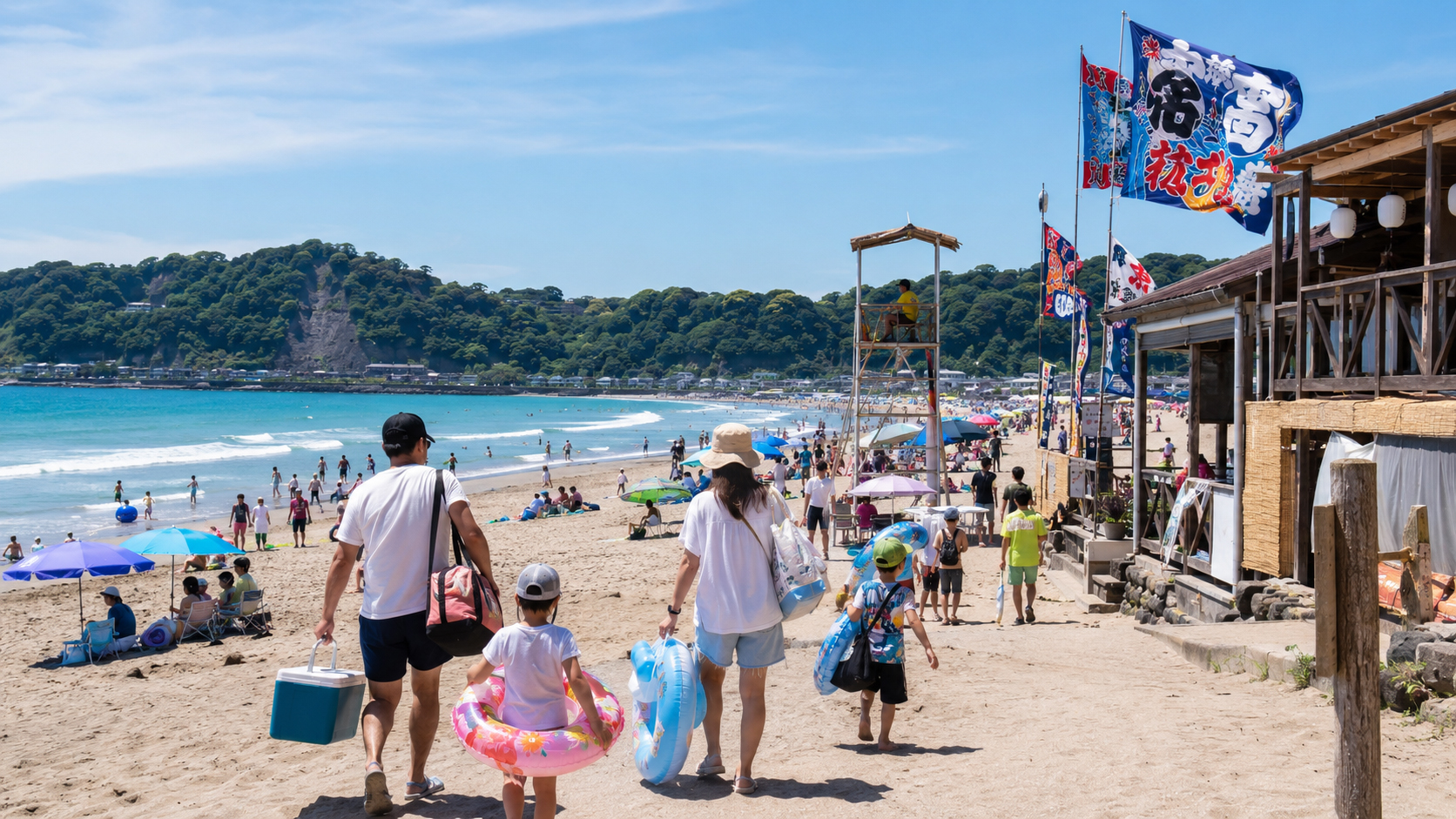
A Japanese summer beach looks simple at first. Blue water. Bright umbrellas. Children charging into waves with the enthusiasm of tiny pirates. A beach house selling noodles, shaved ice and cold drinks. Then you notice the signs: swimming area, no loud music, take your trash home, cover tattoos, no fireworks, no open flames, no alcohol in certain areas.
Welcome to the Japanese seaside, where summer freedom comes with a polite instruction manual. This is not because Japan wants to ruin your holiday. It is because a popular beach in July is basically a temporary city made of sand. Families, surfers, lifeguards, local residents, police patrols, tourists and beach-house workers all share the same narrow strip of coast.
This guide is not a scolding. Nobody needs a lecture while holding a melting popsicle. It is a cheerful field manual for enjoying the beach without becoming the person everyone remembers for the wrong reason.
Why so many rules?
Modern Japanese beach culture grew with seaside resorts, rail travel, postwar leisure, family tourism and the great urban desire to escape heat without moving permanently to a refrigerator. Places such as Kamakura, Zushi, Hayama, Enoshima, Izu, Wakayama and Okinawa became seasonal rituals. Tokyo and Yokohama workers could finish a week of meetings and, by train, arrive at sand and salt air.
Popularity brought problems. Trash, loud music, drinking trouble, night fireworks, smoking, unauthorized barbecues, traffic, swimming accidents and local complaints all pushed municipalities to write clearer rules. Some beaches are relaxed. Others are strict. Zushi, for example, became known for tougher controls on loud music, alcohol, tattoos and barbecues after earlier summers gained a rowdy reputation. The goal was not to delete fun. It was to keep the beach usable for families, residents and visitors.
That is the key: Japanese beach etiquette is not one national rulebook. It is local. Read the signs. Ask the beach house. Follow the lifeguards. When in doubt, choose the option that makes you less noticeable from 40 meters away.
Trash: the simplest rule, the biggest difference
Do not assume there will be trash cans. If there are bins, expect sorting: cans, bottles, PET bottles, burnable garbage and non-burnable garbage. The moment you arrive at the beach, you may become a small recycling department.
Bring two bags. One for wet clothes or towels, one for garbage. Food wrappers, drink bottles, ice cream cups, chopsticks, tissues, sunscreen packaging and the strange little condiment packet that survives every picnic must leave with you. Do not bury trash in the sand. Sand is not a magical landfill with ocean views.
Wind matters. A light plastic bag can leave your towel and become marine litter before you can say “wait, that was my melon pan wrapper.” Tie bags shut. Weight them down. Before leaving, look around your towel zone. If the sand is cleaner than when you arrived, you have achieved beach enlightenment.
Noise: do not make the waves compete with your playlist
The beach already has sound: waves, wind, lifeguard whistles, children, gulls, conversations and the crackle of summer food being cooked somewhere nearby. When a Bluetooth speaker arrives at full power, peace negotiations begin.
Many Japanese beaches discourage or ban loud music, especially where past noise problems affected residents. Earphones are safe. A small speaker at very low volume may be tolerated in some places, but the basic test is simple: can the family next to you still talk without learning your music taste?
Your summer anthem may be excellent. The stranger beside you may also be excellent, and may have come to the beach precisely to recover from three months of office email. Let the ocean be the DJ.
Tattoos: bring a rash guard and relax
Japan’s attitude toward tattoos varies widely. Younger people, surfers and many travelers may be relaxed about them. Some public facilities, pools, hot springs and family-oriented beaches may still ask visitors to cover visible tattoos. The reason is cultural and historical, and the practical answer is simple: bring a rash guard, light shirt, surf shorts or tattoo cover.
Covering a tattoo is not a moral confession. It is travel adaptation. You bring the right power adapter for Japan; bring the right beach adapter too. Rules differ by beach, so check local signs. If you are unsure, cover up first and enjoy your swim instead of turning your afternoon into a committee meeting.
Okinawa resort beaches, Shonan surf zones and small family beaches may all feel different. Read the room. Or, in this case, read the sand.
Alcohol: check the local rule before opening the can
Japan does not generally ban outdoor drinking everywhere, but beaches set their own rules. Some allow alcohol in beach houses but restrict drinking on the sand. Some are stricter. Zushi is often cited as a place where beach regulations became much tighter around alcohol, loud music and tattoos.
Even when drinking is allowed, swimming while drunk is a very bad idea. The ocean is not impressed by confidence. Heat, dehydration, waves, cramps and poor judgment are a terrible cocktail. Water is the real summer hero. Alcohol is a guest star that sometimes ruins the finale.
A beer at a beach house with yakisoba and sea breeze can be wonderful. Shouting at strangers, sleeping in the sand, or sitting on someone else’s towel is less wonderful and may qualify as performance art nobody requested.

Fireworks: romantic, but not automatically legal
Handheld fireworks are one of Japan’s classic summer images. A bucket of water, a quiet group of friends, the tiny sparkle of a senko hanabi, and someone saying “ah, it dropped” as if a tiny planet has died. Beautiful. But fireworks on beaches are often restricted or banned because of fire risk, noise, litter and nearby residents.
Before lighting anything, check the local rule. Are fireworks allowed? At what time? Where? Do you have water? Can you carry away every used stick and wrapper? Never leave fireworks in the sand. The next morning, barefoot children and beach cleaners will meet your laziness.
Large fireworks or noisy fireworks are especially risky. They may feel romantic to you; to residents, they can sound like midnight artillery with a convenience-store receipt.
Beach houses: Japan’s temporary summer kingdoms
One of Japan’s great beach inventions is the umi no ie, or beach house. It is not just a shack. It can be changing room, locker, shower, restaurant, bar, shade tent, lifeguard-adjacent meeting place, inflatable repair station, noodle shop and emotional headquarters.
Using a beach house makes the day easier. You can change, shower, eat, store things and recover from the discovery that sand enters bags through spiritual means. Prices and systems vary, so ask at the entrance. Some areas require fees for showers or lockers. Some are more restaurant-like. Some are party-like. Some are family-focused.
The etiquette is basic: follow house rules, do not monopolize space, do not bring outside food if prohibited, do not drip water where people are eating, and be kind to staff. Beach-house workers spend all day in heat, salt air and customer questions. They deserve respect and possibly a national medal.
The 10-second towel check
- Are you inside the swimming area?
- Are you blocking a walkway, lifeguard view, or emergency path?
- Is your music quiet enough that nearby people can ignore it?
- Are there signs about tattoos, smoking, alcohol or fireworks?
- Do you already have a trash bag ready?
- Will your umbrella survive wind, or become a fabric missile?
- Do you know where to rinse your feet before taking half the beach onto the train?
Where to stay and eat while studying beach manners in the wild
The best way to understand beach etiquette is to watch a beach through the day: quiet morning, packed noon, sleepy sunset and the great evening cleanup. These Shonan-area places are useful bases for Kamakura, Zushi, Hayama and Enoshima. Details can change, so confirm hours and booking information before going.
Address: 1-8-1 Komachi, Kamakura, Kanagawa 248-0006 / Phone: +81-467-60-1111
Website: https://kamakura.hotel-metropolitan.com/
Near Kamakura Station, practical for temple walks, beach walks and returning with less sand in your soul.
Address: 1-2-18 Shichirigahama-Higashi, Kamakura, Kanagawa / Phone: +81-467-32-1111
Website: https://www.princehotels.com/kamakura/
Ocean views near Shichirigahama. Good for watching the sea while pretending you did not overpack three towels.
Address: 5-23-16 Kotsubo, Zushi, Kanagawa 249-0008, inside Riviera Zushi Marina / Phone: +81-467-23-0077
Website: https://en.riviera.co.jp/area/zushi/hotel/malibuhotel/
An 11-suite marina hotel where the palm trees look too elegant to tolerate loud beach behavior.
Address: 922-2 Horiuchi, Hayama, Miura District, Kanagawa / Phone: +81-46-877-5730
Website: https://www.scapes.jp/
A small design hotel by Morito Coast. The correct soundtrack here is probably wind, waves and your own improved manners.
Address: WEEKEND HOUSE ALLEY 2F, 1-1-1 Shichirigahama, Kamakura, Kanagawa / Phone: +81-467-39-2244
Website: https://www.billsjapan.com/en/locations/shichirigahama
Ocean-view breakfast and pancakes. Waiting politely in line is also beach etiquette training.
Address: 5-822-2 Shinjuku, Zushi, Kanagawa / Phone: +81-46-870-3307
Website: https://surfers.jp/
A surf-minded food, music and seaside culture spot where love of the ocean is the main rule.
Address: 24-2 Horiuchi, Hayama, Miura District, Kanagawa / Phone: +81-46-875-6683
Website: https://lamaree.chaya.co.jp/
A seaside restaurant in Hayama. Sunset here may cause sudden thoughts such as “I should become a better person.”
Address: 2-1-9 Enoshima, Fujisawa, Kanagawa / Phone: +81-466-29-9090
Website: https://tobiccho.com/
Popular shirasu seafood bowls near Enoshima. Queue, eat, be happy, do not feed the gulls your dignity.
The conclusion: good beach guests leave next year’s beach behind
Japan’s beach etiquette can look detailed, but most of it is common sense with a local accent. Take your trash home. Keep music low. Do not light fireworks where they are banned. Do not drink and swim. Follow signs about tattoos, smoking and alcohol. Use beach houses respectfully. Listen to lifeguards.
Before placing your towel, take ten seconds to look around. After packing up, take ten seconds to look down. If the sand is clean, the people around you are still smiling, and the lifeguard has not memorized your face, congratulations: you have successfully visited a Japanese beach.
The sea belongs to no one. That is exactly why everyone has to help protect it. Japan’s beaches are made of blue water, white clouds, summer noodles, little signs and shared patience. The signs are not enemies. They are small agreements that let the summer continue.
- Beach rules vary by municipality and even by beach.
- Carry out trash when bins are not available.
- Cover tattoos where requested and check local signs.
- Alcohol, fireworks, smoking and loud music may be restricted.
- Beach houses are helpful, but each has its own system and rules.
- The best beach guest has fun and leaves almost no evidence.
Sources and references
This feature was prepared from public tourism information, beach guidance, official hotel/restaurant pages and local travel resources for Kamakura, Zushi, Hayama and Enoshima.