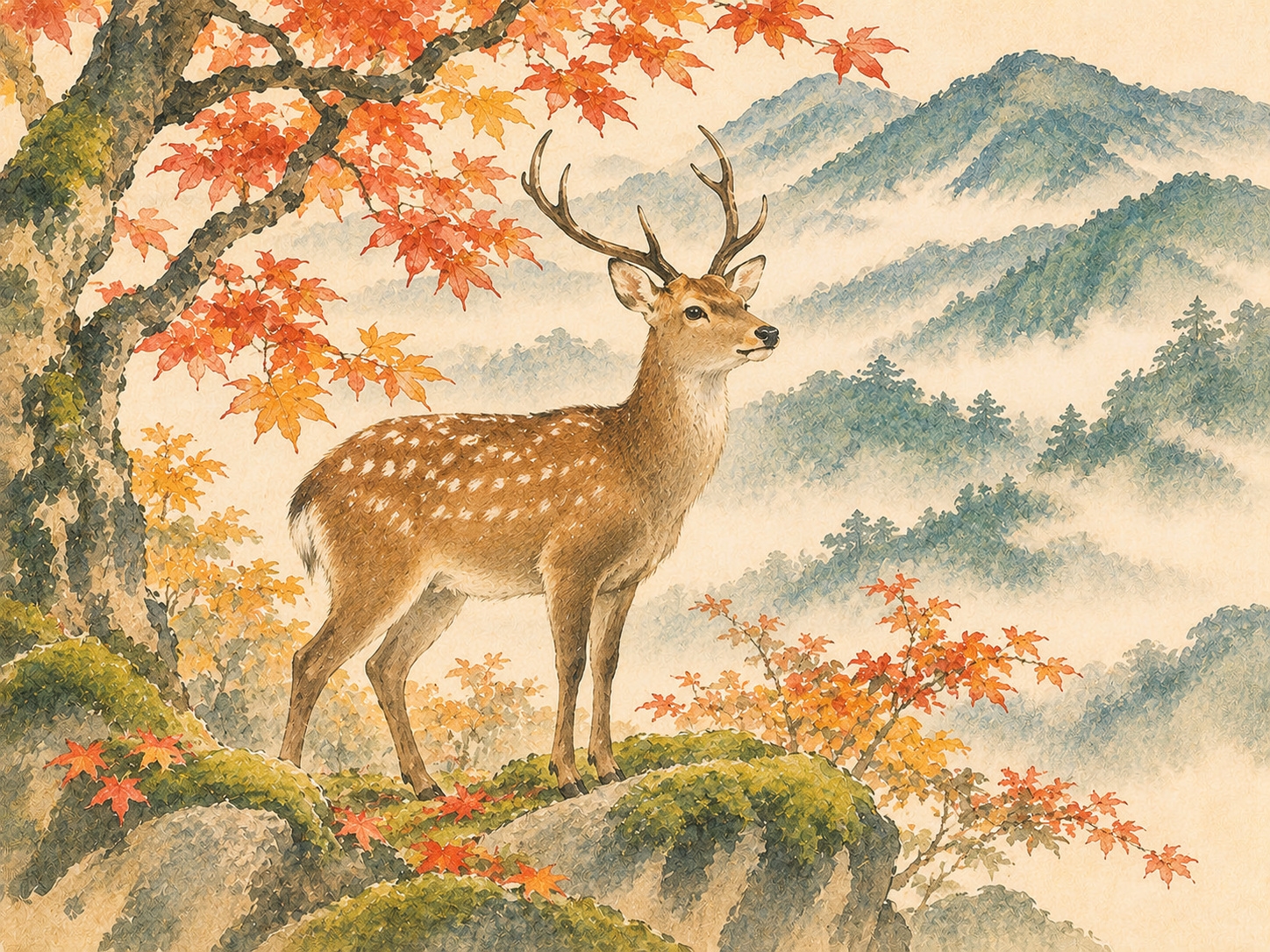
- An autumn date with consequences beyond the hunt
- The economic scale of wildlife damage
- What the capture statistics actually measure
- A regulated activity, not an open invitation to shoot
- Why wildlife control is not synonymous with hunting season
- A century and a half of shifting Japanese wildlife law
- The people doing the work
- Two less visible hazards: disease and meat shipments
- Sharing the forest safely
- A better way to judge success
An autumn date with consequences beyond the hunt
November 15 marks a change in the calendar across Gunma’s mountains. The 2026–27 hunting season begins that Sunday, following a prefectural notice issued November 12. The general season runs through February 15, 2027; for Japanese deer and wild boar, the period extends to February 28. It is a schedule set by regulation, but its implications reach orchards, forests, hiking routes and rural households.
Gunma says it will coordinate patrols with municipalities, hunting associations, police and wildlife-management personnel to discourage accidents and violations. Hikers and other visitors are asked to wear conspicuous clothing, make their presence known and stay away from marked traps. The announcement is preventive advice, not a report that a new hunting accident has occurred.
The economic scale of wildlife damage
The strongest reason to treat the season as a public-policy story rather than a sporting calendar item is the cost of living alongside wild animals. Gunma’s provisional figures for fiscal 2025 put agricultural and forestry losses from wildlife at ¥471.557 million, down to 87 percent of the previous year’s level. Agricultural losses accounted for ¥298.983 million, and forestry for ¥172.574 million.
Crop damage alone included ¥120.902 million attributed to deer, ¥51.671 million to bears and ¥42.642 million to wild boar. Gunma says deer and bear damage to highland vegetables in Tsumagoi represented roughly 40 percent of prefecture-wide crop losses. These figures are not a complete accounting of the work required to maintain fences, patrol fields or sustain confidence in farming.
What the capture statistics actually measure
The prefecture reported 22,465 captures across five major mammal species in fiscal 2025: 14,737 deer, 6,309 wild boar, 692 Japanese macaques, 727 Asian black bears and no Japanese serow. It would be misleading to present that figure as the outcome of the new November hunting season. The fiscal-year data cover broader wildlife-control activities, not simply recreational or licensed seasonal hunting.
Deer captures were 96 percent of the preceding year’s level; wild boar reached 109 percent and bears 168 percent. Officials attribute part of the rise in bear captures to efforts responding to appearances and risks near settlements. Neither an increase in captures nor a fall in reported crop losses, by itself, proves a corresponding change in total animal populations.
A regulated activity, not an open invitation to shoot
Japan’s Ministry of the Environment defines hunting as taking designated game species using legally permitted methods. Participants need a relevant hunting license and hunter registration in the prefecture where they intend to hunt. Rules differentiate net hunting, trapping and two classes of firearms licenses. Species, season, method and location all matter.
Gunma prohibits hunting in wildlife protection areas, public roads, urban parks, temple grounds and cemeteries, among other places. Some game birds are subject to daily limits. The hunting season never suspends these restrictions; hunters must consult current prefectural rules and maps before entering the field.
Why wildlife control is not synonymous with hunting season
An essential distinction is often lost in popular discussions. Seasonal hunting and government-authorized capture to prevent damage or manage populations are different legal arrangements. The latter may operate under specific permits outside the ordinary season. Comparing them without separating their purposes distorts debates over effectiveness and responsibility.
Gunma describes its approach through three linked ideas: capture, protect and understand. Fencing and other defenses protect fields; data on animal movements help communities respond; carefully managed capture is another tool. No single method removes the need to maintain farmland and understand forest habitats.
A century and a half of shifting Japanese wildlife law
Japan’s modern hunting regulation can be traced to an 1873 hunting ordinance. Restrictions gradually incorporated species protection and the creation of protected areas. A 1999 amendment established a framework for targeted wildlife protection and management plans. That evolution reflected changing concerns: not only preventing overhunting, but also addressing animals whose expanding populations affected farms and ecosystems.
The 2014 amendment, fully implemented in 2015, gave greater prominence to active wildlife management, including deer. The transition from a protection-centered framework toward conservation plus population management did not abolish the duty to protect wildlife. Instead, officials must reconcile ecological conditions, agricultural losses and public safety within a regulated system.
The people doing the work
Gunma reported 3,094 hunting registrations as of October 31, 2026: 2,515 by residents of the prefecture and 579 by people from elsewhere. Its announcement also lists 3,187 for fiscal 2025. Since the current figure is an October 31 snapshot while the preceding-year figure is a reference total, they should not be treated as a definitive like-for-like annual decline.
Who will conduct wildlife management in the coming years is a consequential question. But the registration totals do not disclose age distribution, active days in the field, hours of safety training or retention. Those are the measures needed to evaluate recruitment and professional capacity rather than merely counting registrations.
Two less visible hazards: disease and meat shipments
Officials say classical swine fever virus has been identified in wild boar in Gunma. Hunters are urged to disinfect footwear, clothing, equipment and vehicles as part of disease-control procedures. Classical swine fever affects pigs and wild boar; it should not be confused with an influenza-like illness in people. The concern is preventing contamination from moving between places and animals.
Gunma also maintains restrictions on shipments of some wild-game meat following radioactive-contamination concerns associated with the Fukushima Daiichi nuclear accident. As of the prefecture’s October 2026 listing, boar, bear and copper pheasant meat were subject to prefecture-wide shipment restrictions; deer meat was generally restricted, with a defined exception for meat managed and tested under prefectural rules. Legal capture does not automatically mean unrestricted commercial sale.
Sharing the forest safely
Fallen leaves improve visibility in some wooded places, but they do not eliminate the risks of overlapping use of the countryside. The prefecture advises mountain visitors to wear clothing that stands out, speak with companions or use bells and other audible signals, exercise particular care on weekends and holidays, and avoid places where traps are signposted.
Before heading out, visitors should check current notices from relevant trail managers and municipalities. Hunters carry the greater responsibility for identifying people and respecting prohibited areas and legal safety rules. The public should not assume every trail is open to hunting or that every sound in the forest indicates a hunter.
A better way to judge success
The end of a hunting season will not supply a single number that captures Gunma’s progress. Crop losses may change with weather, planting patterns and animal movements. Capture totals may change with effort and regulations. Forest damage, human safety and biodiversity must be examined on their own terms.
The November 15 opening is therefore a useful moment for a larger question: how can a prefecture keep its rural economy viable while treating wildlife as part of a living landscape? Gunma’s official figures establish the stakes. The next chapter will require place-specific reporting from farmers, hunters, conservation specialists and people who share the mountains.
Primary sources and reporting limitations
Loss and capture figures refer to fiscal 2025 and are provisional; they do not report outcomes of the season beginning November 15, 2026. Hunting and authorized wildlife control are legally distinct.
- 群馬県:令和8年度の狩猟が解禁されます / Gunma 2026 season notice
- 群馬県:令和7年度野生鳥獣の農林業被害・捕獲状況 / 2025 losses and captures
- 群馬県:野生鳥獣による農作物被害(令和7年度) / Crop damage by species
- 群馬県:狩猟のルール / Gunma hunting rules
- 群馬県:他都道府県在住者の狩猟者登録 / Registration and CSF precautions
- 群馬県:野生鳥獣肉の出荷制限・自粛 / Wild game shipment controls
- 環境省:狩猟制度の概要 / Ministry of Environment hunting system
- 環境省:狩猟と許可捕獲の違い / Hunting versus permitted capture
- 環境省:鳥獣保護管理法の改正と管理 / Wildlife law reform