- The supermarket is a tougher classroom
- Six ideas, six different paths to market
- Why konjac is so much more than a novelty ingredient
- An old wheat culture enters a new retail vocabulary
- A history longer than this November’s announcement
- What Japan’s business curriculum actually asks students to learn
- The presentation is not the finish line
- Who gets value: students, retailers and farmers
- Local food inspiration is not a certificate of local sourcing
- The next lesson will come from the shelf
The supermarket is a tougher classroom
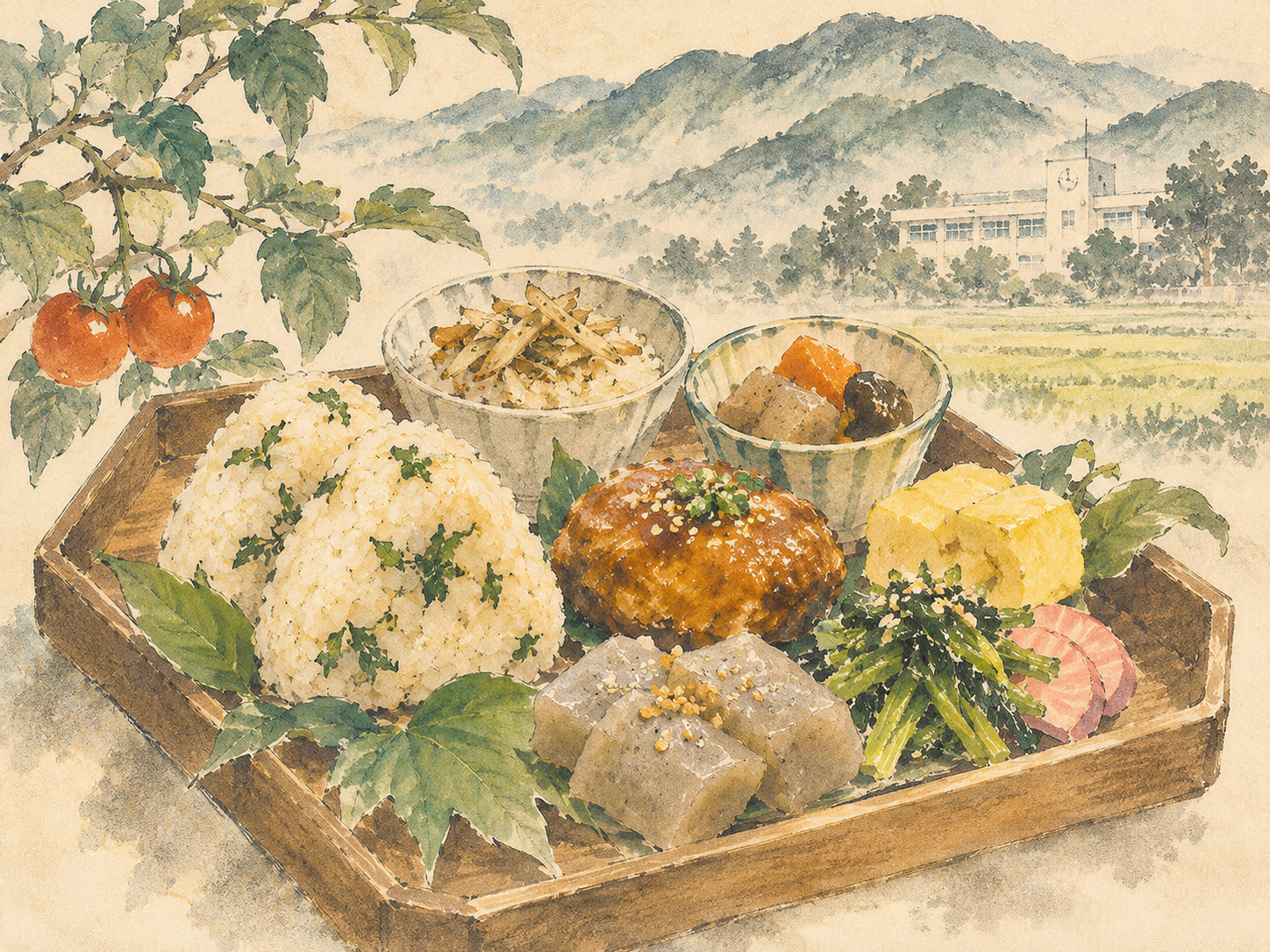
In a school presentation, an idea can win applause. In a supermarket, it must win a place in someone’s basket. A shopper may never know that a teenager developed a recipe or tested a prototype. The product still has to look appealing, taste good, fit a budget and compete with everything around it. That is what makes Gunma’s student–retailer collaborations more than a cheerful back-to-school story.
On November 6, 2026, the Gunma Prefectural Board of Education announced six food products developed by students studying commerce and four retail partners: Fressay, Aeon Retail, Torisen and Beisia. The official list identifies four development schools, not five: Maebashi Commercial, Tatebayashi Commercial and Technical, Ota Municipal and Takasaki Commercial. Maebashi Commercial is responsible for three of the six listed items.
The presentations were scheduled for November 11 at Tone Commercial High School in Minakami. That school hosted the event but is not named as a developer of one of the six products. The distinction matters when counting participating institutions and describing the program accurately.
Six ideas, six different paths to market
One product is an inari-style chirashi sushi. Others put konjac into a hamburger bento and a steak-like preparation, reinterpret fried-chicken-style flavors without frying, or pair chicken with sweet potato. A final name, “Gunma–Okkirimaru,” gestures toward local food culture, though the prefecture’s short release does not establish its ingredients or shape.
The launch schedule is staggered. Four products were slated for November 10 or 11. Beisia’s “Gunma–Okkirimaru” is scheduled for November 25, and the konjac hamburger bento developed with Aeon Retail for January 13, 2027. These are planned dates, not an independently verified inventory report. Prices, participating stores, quantities and sales performance were not supplied in the notice.
A release announcement demonstrates that a product has reached the planned commercialization stage. It does not by itself tell us whether shoppers returned for a second purchase, or whether a company expects to keep the product on its shelves.
| Announced product | Development school | Retail partner | Planned launch |
|---|---|---|---|
| Inari chirashi sushi | Maebashi Commercial High School | Fressay | Nov. 10, 2026 |
| Konjac hamburger bento | Maebashi Commercial High School | Aeon Retail | Jan. 13, 2027 |
| “A-ge-na-i”: two kinds of fried-chicken-style chicken | Maebashi Commercial High School | Torisen | Nov. 11, 2026 |
| Sweet-savory chicken and sweet potato | Tatebayashi Commercial and Technical High School | Torisen | Nov. 11, 2026 |
| “Taking meat’s place”: konjac steak | Ota Municipal High School | Torisen | Nov. 11, 2026 |
| “Gunma–Okkirimaru” | Takasaki Commercial High School | Beisia | Nov. 25, 2026 |
Source: Gunma Prefectural Board of Education, November 6, 2026. These are planned release dates; prices, store availability and stock are not established by the notice.
Why konjac is so much more than a novelty ingredient
Konjac is a particularly revealing choice for Gunma students. This mountain-region crop has long shaped the prefecture’s agriculture and cooking. Japan’s agriculture ministry puts Gunma’s share of national konjac-tuber harvest at 96.7% in its 2024 production figures—49,700 of 51,400 metric tons. The ingredient is a regional economic concern as well as a culinary symbol.
The Ota Municipal High School–Torisen product announces itself as “Taking meat’s place: konjac steak.” It is a marketing proposition as much as a recipe. A food normally treated as a side ingredient is being placed at the center of a meal. Whether consumers accept that repositioning will depend on taste, texture and price.
It would be misleading, however, to assume that the dish is nutritionally equivalent to meat or demonstrably lowers emissions without a verified ingredient list and lifecycle evidence. Nor should the Aeon bento be described as available now: its announced sale date is January 2027.
An old wheat culture enters a new retail vocabulary
“Gunma–Okkirimaru,” the Takasaki Commercial High School and Beisia entry, invites a comparison with okkirikomi, the prefecture’s thick, flat-noodle dish. Gunma’s traditional wheat cuisine grew from a climate that supported grain cultivation, the practice of growing wheat after the rice harvest, and the demands of cold, dry winters.
Japan’s Ministry of Agriculture describes okkirikomi as wide noodles simmered directly in a pot with vegetables and mushrooms, often thickening the broth as they cook. The prefecture’s flour-based culinary traditions have been formally documented as an important part of local folk culture.
Yet the name alone is not enough to tell us how the new Beisia item tastes, looks or is made. A careful account of food heritage must distinguish the association suggested by a product name from a recipe confirmed by the retailer. The planned November 25 launch presents an opportunity for that follow-up.
A history longer than this November’s announcement
The collaboration has roots well before 2026. In 2017, Fressay described working with Maebashi Commercial High School on “Frenchirashi,” a French-inspired adaptation of chirashi sushi. Its report also described plans for students to demonstrate the product in a store. That earlier project gives today’s inari-chirashi item a useful historical parallel without making them the same recipe.
Official Gunma announcements document further groups of six student-developed foods in 2023, 2024 and 2025. Those lineups included a citrus-accented okkirikomi in 2023, a pull-apart yakimanju-inspired bread in 2024, and 2025 products using local spinach and apples. The four retail names reappear in the 2026 announcement.
Recurrence is meaningful: it suggests companies and educators have kept a pathway open between classrooms and retail merchandising. But the notices do not establish long-term financial success, the number of repeat customers, or the career outcomes of participating students. Continuity should not be mistaken for measured impact.
What Japan’s business curriculum actually asks students to learn
Japanese commercial high schools are not simply teaching young people to design eye-catching packaging. The Ministry of Education’s curriculum guidance for “Product Development and Distribution” covers market analysis, defining a target consumer, customer research, writing product proposals, and evaluating and improving an idea after implementation.
That framework helps explain the value of a real retail partnership. A supermarket has strict constraints: food safety, labeling, manufacturing capacity, shelf life, margins, wastage and the store’s understanding of what its customers buy. Good product ideas must operate inside those constraints rather than just impress a classroom jury.
Gunma’s official announcement does not document which students personally performed cost calculations, sourcing, packaging design or promotion. Those details are central to an evaluation of educational outcomes and deserve direct reporting rather than assumptions.
The presentation is not the finish line
The prefecture scheduled a product presentation and feedback session for November 11, 1:35–3:15 p.m., at Tone Commercial High School in Minakami. Students were to describe their work and participating companies were to offer assessments. The venue provides a shared platform for an initiative spanning different schools and retailers.
We have not independently verified the remarks delivered at that session, and this report does not invent dialogue or reactions from students and executives. Its significance is the structure: young developers are expected to explain the commercial logic of their ideas before those ideas meet shoppers.
The most revealing questions would be simple. What customer problem did a product solve? Which ingredient or manufacturing limit forced the biggest change? How did the team decide what buyers would pay? These are questions for follow-up interviews, not answers supplied by the press release.
Who gets value: students, retailers and farmers
Students may gain practical experience negotiating between what they want to make and what a business can sell. Retailers may discover unfamiliar combinations and hear more directly from the generation that will become their future customers. Farmers and regional food producers may benefit when locally associated ingredients find new uses.
Each potential gain has a condition attached. Students need meaningful responsibility, not merely permission to pose beside a product. Retailers need food that shoppers judge on merit, not solely because it has an uplifting backstory. Agricultural benefits depend on actual sourcing and volumes, neither of which is specified here.
The province has not published product prices, margins, sales targets, procurement quantities or regional economic-impact estimates in its November announcement. Any precise claim of commercial success would be premature.
Local food inspiration is not a certificate of local sourcing
A dish can celebrate Gunma without using exclusively Gunma-grown ingredients. Konjac, wheat-based traditions and regional naming supply cultural identity, but do not independently verify the origin of every component. Ingredient labels and supplier confirmations would be necessary before calling a product fully locally sourced.
Gunma has also used a 2026 student shirataki-recipe competition to encourage younger people to cook with konjac. That is a distinct prefectural initiative, not proof that the six retail products belong to the same program. Its relevance is broader: regional food culture is being actively reintroduced to younger audiences.
The interesting connection is not simply nostalgia. It is whether students can translate ingredients and traditions that residents recognize into products that work in contemporary shopping routines.
The next lesson will come from the shelf
The essential follow-up is less photogenic than a launch ceremony: confirm which stores stocked each item, its final retail price, how many units sold, what shoppers said, and whether the products stayed on sale. Equally important is what students learned from recipes that needed to be reworked or marketing assumptions that failed.
For now the verified story is of six announced products and a recurring educational partnership. It is not a story of proven profits, demonstrated health claims or an established new regional export industry. Treating the distinction seriously makes the reporting more useful to educators and business readers alike.
A student-created food has to survive the same test as any other. The achievement is not merely that it bears a clever name. It is that young people have a chance to learn what happens when their ideas leave the safety of a classroom and enter the everyday economy.
Primary sources and reporting limitations
Product names and announced dates follow the prefecture’s notice. Its rendering of “Gunma–Okkirimaru” contains an unmatched closing Japanese quotation mark; we use the product name without the stray mark. No independent interviews, tasting, inventory checks or review of sales data are claimed.
- Gunma Prefecture, November 6, 2026: six products, schools, retail partners and planned launch dates
- Gunma Prefecture, 2025 product collaboration announcement
- Gunma Prefecture, 2024 product collaboration announcement
- Gunma Prefecture, 2023 product collaboration announcement
- Fressay Journal, 2017: Maebashi Commercial High School and Fressay’s French-inspired chirashi
- Ministry of Education: Commercial high-school curriculum guide (product development and distribution)
- Ministry of Agriculture: Gunma food culture and local ingredients
- Ministry of Agriculture: Okkirikomi traditional food
- Ministry of Agriculture: Konjac production background (2024 production figures)
- Gunma Prefecture: 2026 shirataki recipe contest for young people