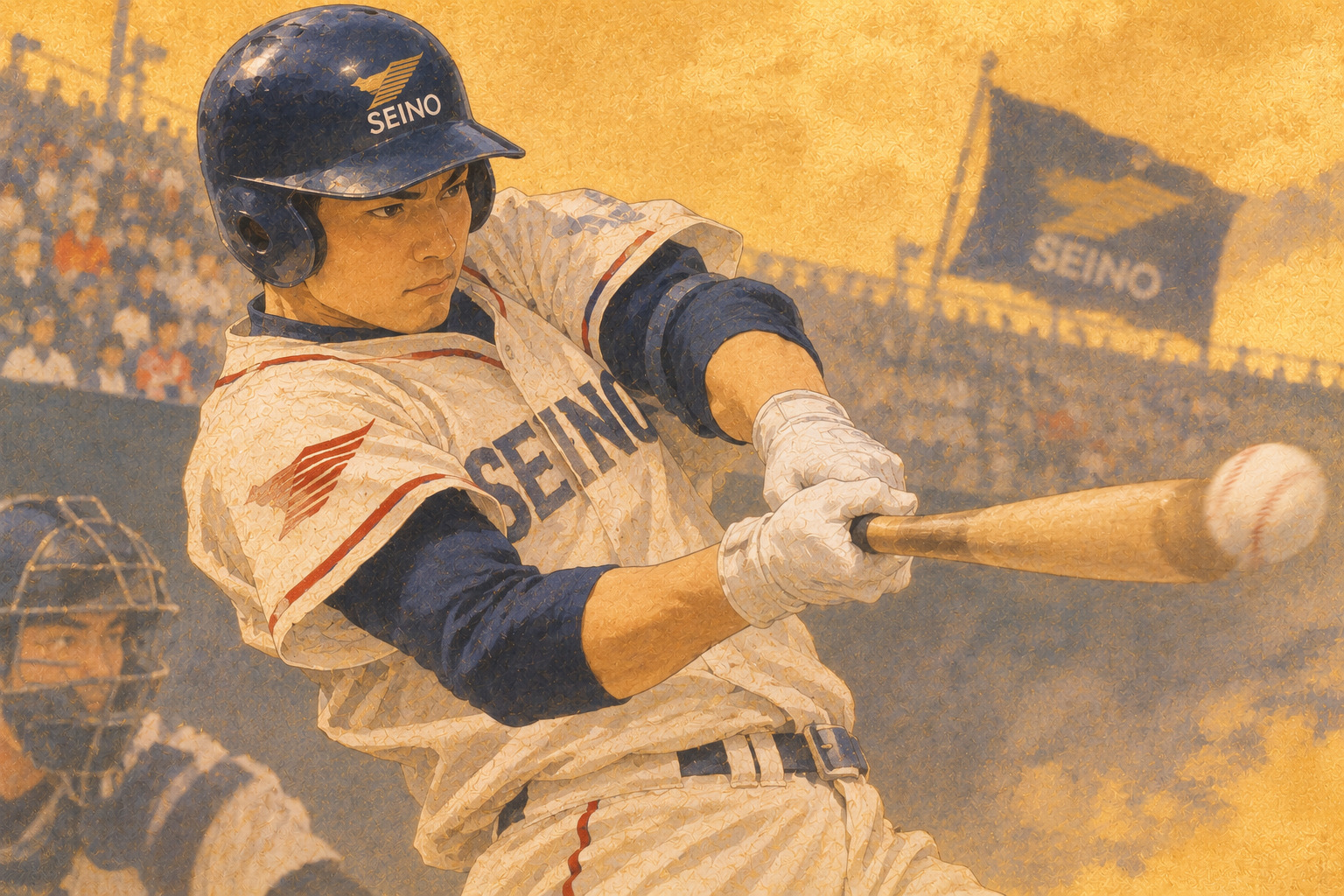
- Two runs, one run allowed—and the shape of a contender
- How the November 5 game turned
- Another 2–1 result was no coincidence
- Why Ogaki celebrated in September
- Japan has two different national stages
- A baseball club founded to unite employees
- What corporate baseball is—and is not
- The players behind a narrow victory
- Next: Yamaha, the other Tokai contender
- A result worth remembering, whatever follows
Two runs, one run allowed—and the shape of a contender
On November 5, Seino Transportation of Ogaki, Gifu Prefecture, beat Mitsubishi Heavy Industries East 2–1 at Kyocera Dome Osaka to reach the quarterfinals of the 51st Japan Amateur Baseball Championship. It was not a slugfest or a spectacular ninth-inning rally. The team equalized in the third inning, moved ahead in the fifth and defended a one-run lead through the final out. The box score shows eight Seino hits, four for its opponent and no Seino errors.
That narrow victory matters in a much bigger story. In September, the same organization won Japan's Intercity Baseball Tournament, bringing Ogaki its second national crown and its first since 2014. As of the November 6 reporting cutoff, Seino's November 8 quarterfinal against Yamaha has not yet been played. The question is whether the summer champion can complete a rare double in Japan's other major corporate baseball tournament.
How the November 5 game turned
Mitsubishi Heavy Industries East drew first blood in the third. With runners at first and third and one out, Koya Yano lifted a sacrifice fly. Seino answered in the bottom half: Kenzo Konaka hit a sacrifice fly of his own. Then in the fifth, cleanup hitter Daichi Nozaki delivered a run-scoring single to left, producing the 2–1 margin that ultimately stood.
Seino started Shuhei Shiomoto, then entrusted the final four innings to Keishi Naito. The relief pitcher allowed no runs from the sixth through the ninth. The team made no errors. In remarks reported by Gifu Broadcasting, manager Saeki emphasized the satisfaction of winning a difficult contest. His comments were reported by the broadcaster; JAPAN.co.jp did not independently interview the manager.
Another 2–1 result was no coincidence
Two days earlier Seino had opened the tournament by edging JR East Tohoku 2–1. That victory ended a stretch in which the club had failed to clear the first round in its previous two appearances, according to local coverage. The scores in successive knockout games were identical, but each required different tactical decisions and individual responses.
To an unfamiliar reader, company baseball can appear to be ordinary league baseball in corporate uniforms. It is not. A knockout championship compresses months of preparation into a few critical decisions: whether to change a pitcher, advance a runner with an out, trust an infielder on a difficult grounder or preserve a reserve player for the late innings. Seino's path in November demonstrates why run prevention can be as consequential as production.
Why Ogaki celebrated in September
On September 6, Seino defeated NTT West Japan 4–3 in the final of the 97th Intercity Baseball Tournament at Tokyo Dome. It was Seino's second Intercity championship and its first in twelve years. Gifu Prefecture subsequently honored the team, while Ogaki City documented an October 11 victory procession down the city's central streets.
The city's November public bulletin estimated that about 28,000 people lined the parade route. That figure is a municipal estimate, not an independently counted attendance total. Yet the celebration illuminates something statistics rarely capture: the club competes as a representative of Ogaki in the Intercity tournament. For a city identified with water, manufacturing and the transportation industry, a championship became a civic event as well as a corporate achievement.
Japan has two different national stages
The Intercity Baseball Tournament and the Japan Amateur Baseball Championship are often described as the twin pillars of Japanese industrial baseball. They are not interchangeable competitions. Intercity baseball has a distinctive municipal identity and permits qualified reinforcement players from other teams under its rules. The autumn championship, established in 1974 after the dissolution of the old industry-based competition, determines a champion from single-team rosters.
The Japan Amateur Baseball Association traces the autumn tournament's founding to October 28, 1974, at Koshien Stadium. The change reflected shifts in the country's postwar industrial structure and a desire to determine a national winner without the Intercity reinforcement system. Winning both in the same year tests organizational depth across formats, venues and months rather than simply repeating one successful tournament.
A baseball club founded to unite employees
Seino's hardball club dates to 1960, when corporate baseball was a potent symbol of workplace identity in an expanding economy. Academic work documenting the team's history describes its founding purpose as bringing together employees scattered through a nationwide transportation network. The club later endured a suspension from 1981 to 1983, a reminder that sports programs depend on continuing institutional support.
Its modern milestones include the first Intercity championship in 2014 and a second in 2026. This history distinguishes Seino from a short-lived promotional project. The club has seen generations of players, managers and colleagues participate in a shared identity. That does not prove an economic return on the investment; recruitment, commercial and community benefits would require separate evidence to quantify. It does make the team an enduring local institution.
What corporate baseball is—and is not
Japan's industrial baseball teams are high-level amateur or nonprofessional organizations operated by companies and other institutions. Their players may have followed elite university or high-school paths and can eventually enter professional baseball, but the tournaments have their own governing bodies, customs and histories. They are not simply farm teams for Nippon Professional Baseball.
Company names are prominent, yet local affiliations are equally important. A team may be supported by employees across the country while representing a specific municipality on the summer stage. This dual identity helps explain why fans and civic officials invested so much in Seino's September title and why the team remains relevant beyond a sporting result.
The players behind a narrow victory
Konaka and Nozaki supplied the decisive offensive moments on November 5. Captain and catcher Tatsuya Shirono organized the defense behind Shiomoto and Naito. In a September feature published under the Japan Amateur Baseball Association's banner, Konaka's role in the Intercity triumph received particular attention. Yet the November win was not a one-man performance. Sacrifice hitting, relief pitching and an error-free defense all had to function together.
Gifu Broadcasting also reported Shirono's ambition to win both summer and autumn competitions. Those words are evidence of the team's objective, not evidence that it achieved the objective. The distinction is especially important for a story scheduled to publish after a game whose result has not yet been established.
Next: Yamaha, the other Tokai contender
Yamaha, based in Hamamatsu, Shizuoka Prefecture, defeated JR East 2–0 on November 5. That result fixed an all-Tokai quarterfinal with Seino, scheduled for Sunday, November 8, at 9 a.m. Japan Standard Time at Kyocera Dome Osaka. The winner would remain in contention for a semifinal place on November 9. The bracket and dates should be checked for updates on the tournament's official pages.
At the research cutoff of November 6, the November 8 game had not taken place. No score, winning pitcher, deciding play or advancement claim can responsibly appear as a confirmed fact. Before publication, editors must verify the official box score, identify the next opponent if Seino advances and revise the story's lead and headline if the outcome materially changes its news value.
A result worth remembering, whatever follows
Seino's 2026 season already connects two kinds of public memory. There is the measurable memory of a September title, a 4–3 final and a November path to the quarterfinals. And there is the civic memory of an Ogaki victory parade, colleagues celebrating and generations of people who kept an industrial baseball team alive through economic and organizational changes.
The November 5 performance demonstrated an old sporting truth: championships often depend as much on what a team prevents as on what it creates. The full account of Seino's autumn campaign still requires the November 8 result. Until that is verified, the story's strongest conclusion is not that a double has been achieved, but that Gifu's summer champions have earned the opportunity to pursue one.
Sources and reporting method
This report uses the governing body, game records, prefectural and city records, and corporate statements as primary sources. Play-by-play and comments are attributed to local reporting. The November 8 quarterfinal had not occurred by the research cutoff.
- Japan Amateur Baseball Association: championship results
- Official-format November 5 inning-by-inning score
- November 8 Seino–Yamaha official-format result page
- Gifu Broadcasting: November 5 game and manager statements
- Gifu Broadcasting: November 3 opening win
- Gifu Prefecture: Intercity title and honors
- Ogaki City: September championship report
- Ogaki municipal bulletin: October victory parade
- JABA: origins of the Japan Championship
- Osaka Gas: championship format and entry routes
- Seino Staff Service: 2026 Intercity championship
- JABA feature: Kenzo Konaka and the Intercity victory