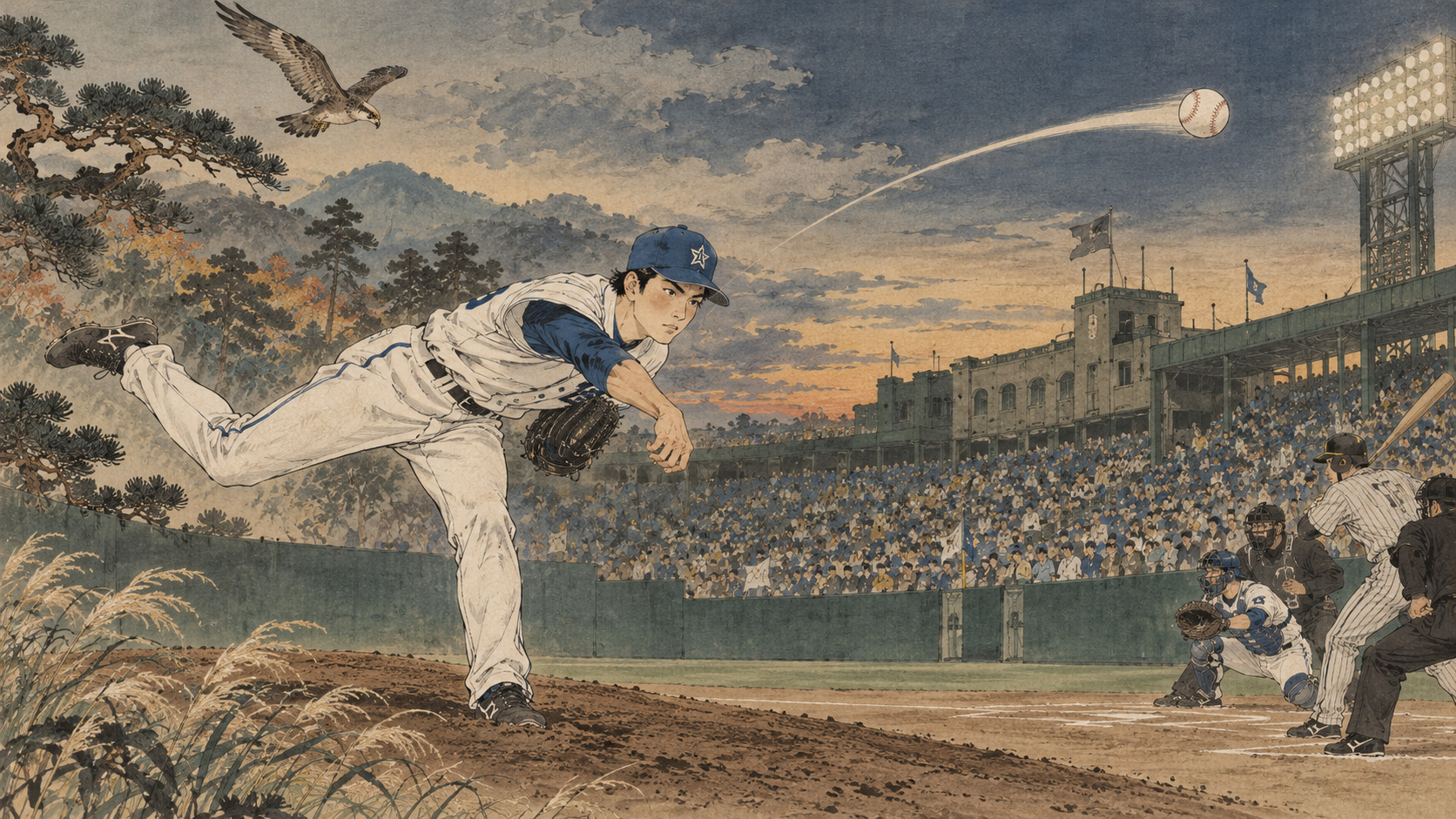
The box score that seemed to tell the wrong story
Forty-two thousand, six hundred and forty-five people watched the opening game of the Central League Climax Series Final Stage at Koshien on October 14. The home team, the pennant-winning Hanshin Tigers, collected seven hits. Visiting Yokohama DeNA BayStars managed three. But the final score was DeNA 2, Hanshin 0. In nine innings, the team with fewer than half the hits scored every run.
The result is a reminder that baseball is not an exercise in accumulating contact. It is about the sequence of events that sends runners home—and about preventing the opponent from doing the same. DeNA took its opening when Toshiro Miyazaki drove in a run in the first inning, then received a sixth-inning solo home run from Keita Sano. An entire pitching staff made those two runs sufficient.
Two decisive swings in a game full of opportunities
Hanshin did not go hitless or fail to put pressure on the visitors. Its seven hits indicate that batters reached base frequently enough for scoring chances to exist. Yet none became a run. DeNA, by contrast, converted a critical first-inning opportunity and later scored without needing a succession of hits: Sano drove a pitch from Hanshin starter Shoki Murakami over the fence.
It is tempting to explain a 2–0 game solely as a pitcher’s duel. That understates the offensive decisions and situational pressure. When a team scores first in a postseason game, each subsequent inning changes the calculations for both dugouts. The second run did not settle the contest, but it forced Hanshin to find more than a single run to level it.
Taira led the shutout; five pitchers completed it
Kentarō Taira earned the win for DeNA, with the club then using Masaki Iwata, Hiromu Ise, Masumi Hamachi and S. Reynolds to complete the scoreless evening. Reynolds recorded the save. Catcher Shion Matsuo handled the battery. That is a combined shutout, not a nine-inning complete game by Taira, a distinction worth preserving when describing the feat.
Murakami took the loss for Hanshin, which used relievers including Masaki Oikawa. The three-hour, 11-minute contest began at 6:01 p.m. and ended at 9:12. The scoreboard showed one run for DeNA in the first inning and one in the sixth; the other seventeen half-innings produced none. In a postseason environment, this is enough to change an entire series without producing a high-scoring spectacle.
A win that only brought the series level
For readers new to Japanese baseball, the biggest complication is invisible in the night’s 2–0 box score. Hanshin arrived in the Final Stage with a one-win advantage because it finished first in the Central League regular season. DeNA’s victory made the official series tally 1–1, rather than putting the BayStars ahead.
Under the 2026 Central League rules, the Final Stage is ordinarily a six-game contest in which the regular-season champion receives that advance win; the first team to reach four wins including the advantage proceeds to the Japan Series. Tiebreaking rules also protect the higher-ranked team. The arrangement seeks to reward a 143-game season while preserving the possibility that a lower-seeded side can win its way into the championship. It means DeNA’s performance was a vital opening blow, not a completed upset.
Why DeNA believes in the long route
Japanese fans hardly need reminding of what happened in 2024. DeNA finished third in the Central League, navigated the Climax Series and then defeated the Fukuoka SoftBank Hawks four games to two to become Japan champion for the first time in 26 years. It was the franchise’s third Japan Series title. The NPB record puts that achievement beyond nostalgia or folklore.
The 2026 teams and conditions differ, so history provides a precedent rather than a prediction. Hanshin’s regular-season record this year was 79–62 with two ties; DeNA’s was 71–69 with three. On that scale, Hanshin earned its favored position. In October, however, a well-placed hit and a sequence of scoreless innings can matter more than the difference between clubs over six months.
Koshien, an old ground for new pressure
Koshien Stadium opened in 1924 and has become part of Japanese baseball’s cultural vocabulary, inseparable from both national high-school tournaments and the Tigers. The intensity of 42,645 spectators is not merely atmospheric; it is the setting in which a team that dominated the league must translate that advantage into a few short games.
To international audiences familiar with Major League Baseball’s expanded postseason, the Japanese structure offers a related but distinctly different question: how much protection should a league champion enjoy from a brief upset? The automatic victory is one answer. DeNA’s October 14 performance supplied the counterargument that the contender should still have an authentic path forward.
The next game, and what this report can verify
As the October 16 edition was being prepared, NPB’s October 15 Game 2 page still showed the fixture before its scheduled 6 p.m. start, listing Hanshin’s Takahashi and DeNA’s Ogata as scheduled starters. This analysis therefore makes no assertion about the outcome of Game 2. Any later result should be checked and appended as a separately verified update, not silently assumed.
What deserves watching is whether Hanshin can turn its batting opportunities into runs and whether DeNA can repeat the precision of a combined shutout. The most useful conclusion from the opener is not that three hits are somehow better than seven. It is that scarcity, timing, bullpen execution and postseason structure together made one of the week’s most revealing results.
Sources and further reading
- NPB official October 14 box score
- Yokohama DeNA BayStars official result
- NPB: 2026 Central League Climax Series format
- NPB 2026 postseason team record
- NPB 2024 Japan Series
- NPB 2024 Central League retrospective
- NPB October 15 Game 2 status
Based on finalized official October 14 records. The October 15 Game 2 result was not available at verification cutoff.