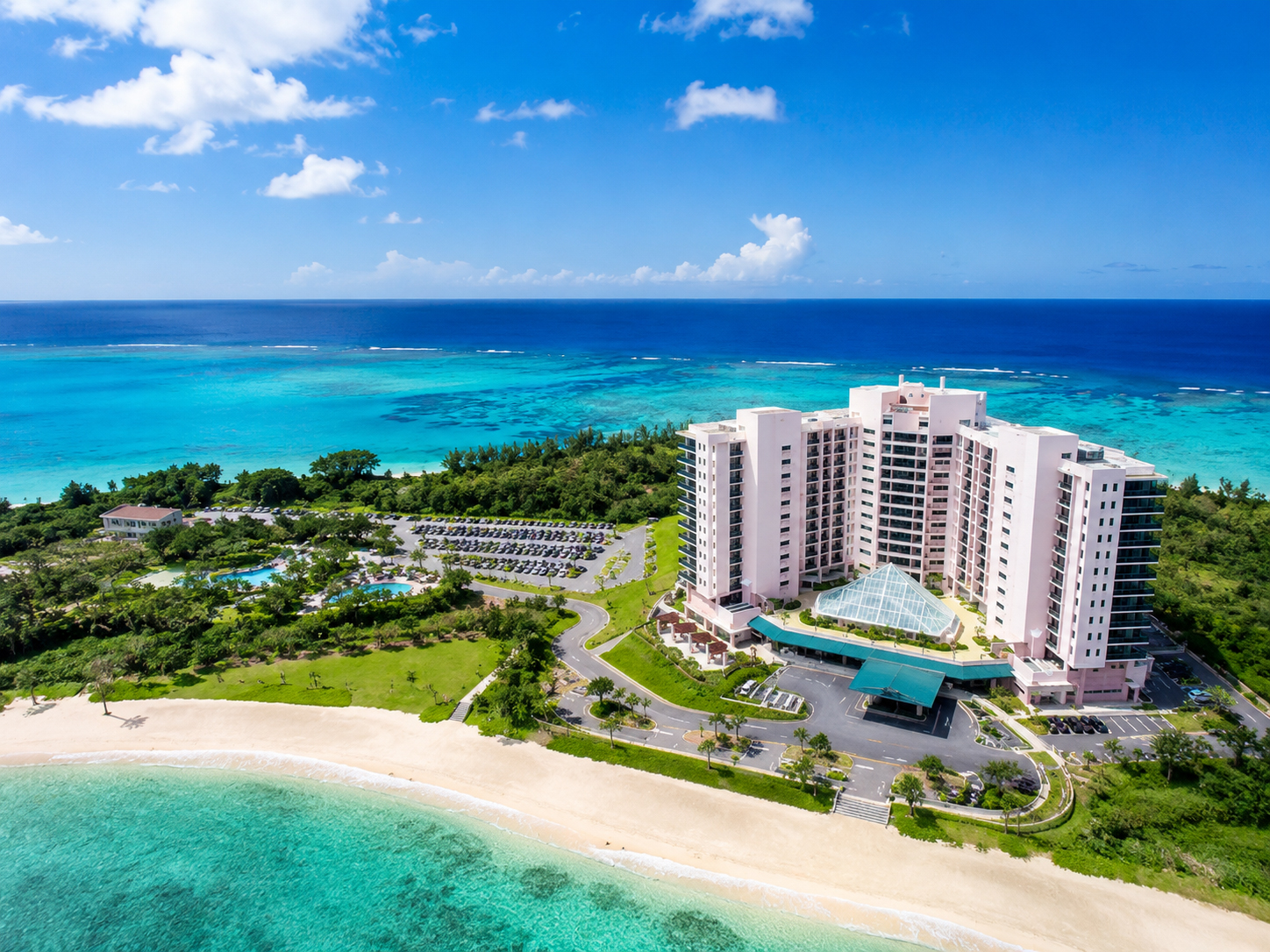
A hotel opening in Okinawa is never just a hotel opening. It is a story about the sea, of course, but also about movement: from Naha to the north, from city travel to coastal rest, from a beach vacation to the deeper landscapes of Yanbaru, from Japanese domestic tourism to global loyalty networks. Courtyard by Marriott Okinawa Resort, which opened on June 15, 2026, on Kise Beach in Nago, sits directly inside that movement.
The 170-room beachfront resort marks Courtyard by Marriott’s debut in Okinawa and is being positioned as Japan’s first beach-resort-style Courtyard. Set on the shores of Nago Bay in northern Okinawa, about an hour by car from Naha Airport, the hotel brings Marriott’s modern, practical hospitality to a coastline better known for turquoise water, coral reefs, relaxed island rhythm and the gateway north toward Yambaru.
What makes an Okinawa hotel matter?
It is easy to describe an Okinawa hotel with postcard language: blue water, white sand, palm trees, summer light. But Okinawa is never only a postcard. It carries the history of the Ryukyu Kingdom, maritime trade with Asia, distinct foodways, music, language, karate, war memory, postwar American influence, base politics, subtropical forests, coral ecosystems and a tourism economy that must keep growing without exhausting the land and sea that make it valuable.
That is why Courtyard by Marriott Okinawa Resort is more interesting than a normal brand announcement. It is not simply an international hotel name arriving at the beach. It is a test of how global hospitality can sit in a place with a very strong identity. Can a practical, globally recognized brand become a useful base for Okinawa without flattening Okinawa into generic resort imagery?
Kise Beach and the geography of arrival
Kise is a quietly powerful setting. It is not central Naha. It is not only the resort strip of Onna. It is not yet the deep forest of northern Okinawa. It is a hinge. From here, travelers can look across Nago Bay, drive toward Busena Marine Park, move north toward Motobu, Nakijin, Kouri Island and Yambaru, or return south toward the more familiar western-coast resort corridor.
Marriott’s official hotel page emphasizes the beachfront location, direct sea access, coastal views, marine activities and nearby natural attractions. The opening announcement describes a 170-room beachfront resort in Nago overlooking Nago Bay, approximately an hour from Naha International Airport, with Busena Marine Park, Kanehide Kise Country Club and UNESCO-linked Yambaru National Park among the nearby draws.
That location is meaningful because Okinawa travel often begins with a transition. The visitor lands in Naha, collects luggage, gets into a rental car, joins the expressway or Route 58, and watches the island open. The city thins out. The water becomes brighter. The air slows down. By the time the traveler reaches Kise, the trip has changed tempo.
A rebrand with local memory
Courtyard by Marriott Okinawa Resort did not appear from nowhere. Travel trade reporting has described the project as a rebrand of the former KANEHIDE Kise Beach Palace, which temporarily closed in October 2025 for a full renovation before reopening under the Courtyard flag. That matters. Rebranding a hotel is not the same as putting a new sign over the door.
A rebrand takes an existing location, a community memory, a building, a customer base and a local operating history, then connects them to a new reservation system, loyalty program, design strategy and service standard. Done well, it gives an existing property new reach without erasing the place. Done poorly, it can make a distinctive local hotel feel interchangeable. The success of this project will depend on whether the resort feels global in service but Okinawan in spirit.
The Courtyard brand goes to the beach
Courtyard by Marriott has long been associated with business travel: useful rooms, functional lobbies, reliable service, a place to work, rest and keep moving. That is what makes the Okinawa opening notable. Here, the brand is not only serving a city traveler between meetings. It is adapting to a resort context where a guest might bring children, book a family room, attend a meeting, go diving, have a wedding, take a morning call and spend the afternoon at the beach.
This is where post-pandemic travel has moved. The old categories have blurred. Business trips add leisure days. Families travel with laptops. Remote workers choose places where the view can do some emotional work. A hotel no longer needs to be either business or leisure. It can be a platform for both.
Rooms, balconies and the value of air
The resort has 170 guestrooms and suites. Official and trade descriptions emphasize contemporary rooms, ocean and mountain views, private balconies, family-friendly accommodation and suites. In Okinawa, a balcony is not a decorative feature. It is part of the stay. It is where a guest hears the water, dries a swimsuit, watches the sky after dinner, drinks coffee before the children wake up, or lets the day cool down before sleep.
The design has been reported as being handled by Kume Sekkei, with interiors inspired by the contrast between the turquoise water sometimes called “Nago Blue” and the golden sands of Kise Beach. That is the right design challenge. The best Okinawa hotels do not compete with the landscape. They frame it. They make the room feel like a threshold between shelter and sea.
Shioka, The Lounge and island flavor
The official hotel page highlights Shioka, an all-day dining restaurant, and The Lounge, a lobby lounge and bar. For a resort like this, food is not a side service. It is where the hotel proves whether it understands the island. Okinawa cuisine has a different rhythm from mainland Japan: goya, island tofu, mozuku, umibudo sea grapes, pork, Okinawa soba, purple sweet potato, jimami tofu and awamori all carry history and climate.
A good hotel breakfast in Okinawa should not merely add a token local dish to a standard buffet. It should help a traveler understand where they have woken up. A good dinner should let the sea and land speak without turning culture into decoration. If Shioka can balance international ease with local ingredients and Okinawan memory, it will become more than a hotel restaurant. It will become part of the stay’s identity.
Busena Marine Park and the practical magic of the sea
One of the strongest nearby attractions is Busena Marine Park. The park’s official information describes an underwater observatory tower located about 170 meters from shore, where visitors can view coral reef and colorful fish from roughly five meters below the surface. Glass-bottom boat rides also give visitors a way to see the reef without diving or snorkeling.
This matters because Okinawa is weather-sensitive. A sunny day can feel like paradise. Wind, rain or rough seas can change the plan. Attractions that allow families, older visitors and non-swimmers to experience the underwater world are unusually valuable. A hotel’s strength in Okinawa is not just the view from the lobby. It is the range of good decisions available when the weather changes.
The gateway to Yanbaru
Nago also functions as the gateway to northern Okinawa. Continue north and the island becomes greener, quieter and more ecological. The northern part of Okinawa Island, together with Iriomote, Amami-Oshima and Tokunoshima, was designated a Natural World Heritage area in 2021. The Yanbaru region is known for subtropical evergreen forest, rare endemic species and a biodiversity story that adds an entirely different dimension to Okinawa travel.
This is crucial for the future of Okinawa tourism. The island cannot be sold only as beach. The more resilient version of Okinawa travel includes forest, food, village life, history, learning, conservation and slower movement. A hotel in Kise can serve as a soft landing for that broader itinerary. Stay by the water, then go north. Swim one day, walk the forest edge the next. Eat at the hotel, then find a local soba shop. This is how Okinawa becomes a layered destination rather than a single image.
Meetings, weddings and the new resort work trip
The resort includes roughly 210 square meters of function space, along with event and wedding possibilities. That sounds like a practical detail, but it tells a larger story. Okinawa is not only a vacation destination. It is also a place for retreats, incentives, team gatherings, training trips, small conferences and celebrations. A beach hotel with meeting space can host a company in the morning and send people to the water in the afternoon.
This hybrid use is increasingly important. The future of resort hospitality is not only honeymooners and summer families. It is also teams that want to think differently, companies that want to reward staff, families that gather across generations, and remote workers who combine obligation with rest. Courtyard’s business-travel DNA may actually help the hotel here.
The light and shadow of Okinawa tourism
Okinawa tourism has power and pressure. It supports jobs and local businesses, but it also places stress on roads, reefs, workers, housing, water, waste systems and communities. New hotels must therefore be read with both excitement and care. A resort that brings more visitors to northern Okinawa also carries responsibility: to employ locally, buy thoughtfully, protect the sea, explain the region, cooperate with local operators and avoid turning Okinawa into a backdrop.
Travelers also have a role. Okinawa is not a stage set. It is a living island chain with its own history. A good stay should include curiosity: about the Ryukyu Kingdom, about local food, about the Battle of Okinawa, about conservation, about why northern forests and coastal reefs matter. The best hotel does not replace that curiosity. It supports it.
Why Nago now?
Naha remains Okinawa’s airport city, political center and urban gateway. Onna Village has long been a resort powerhouse. Nago, however, offers a different advantage: it connects the west coast resort experience with the north. For travelers headed to Motobu, Nakijin, Kouri Island or Yanbaru, Nago can be a base rather than a pass-through point.
That is why the Courtyard opening is significant. It gives international visibility to a part of Okinawa that can support both classic beach travel and more exploratory itineraries. The property’s positioning is not ultra-luxury. It is accessible, functional, branded, family-ready and still scenic. That may be exactly what a large part of the market wants.
| Feature | Why it matters |
|---|---|
| Kise Beach | Gives travelers direct access to a calm, scenic west-coast beach setting. |
| 170 rooms | A mid-sized resort scale suited to families, couples, meetings and business-leisure trips. |
| Private balcony appeal | Turns ocean air, sunset and morning light into part of the room experience. |
| Shioka / The Lounge | Creates the food-and-drink center of the resort, with local flavor potential. |
| Northern gateway | Allows trips to stretch from beach to Yanbaru, Busena, Motobu and beyond. |
Japan.co.jp view
Courtyard by Marriott Okinawa Resort deserves a place in a “Best Hotels in Japan” issue because it represents a practical and important kind of hotel: not the most extravagant, not the most remote, not the most exclusive, but useful, well-positioned and tied to a changing map of Japan travel. It makes northern Okinawa easier to understand for visitors who want beach, comfort, family space, a familiar booking system and access to something beyond the beach.
The hotel’s deeper story is that Okinawa travel is becoming more layered. A visitor can no longer say simply, “I went to Okinawa.” Which Okinawa? Naha and Shuri? The west coast resort belt? Nago Bay? Motobu and the aquarium? Kouri Island? Yanbaru? Ishigaki? Iriomote? Miyako? The answer matters. Each route tells a different story.
Courtyard by Marriott Okinawa Resort adds a new answer: Kise Beach as a base for sea, family, work, food and northern movement. That is compelling. It is also quietly optimistic. It suggests that Okinawa’s next hotel story does not need to choose between global standards and island character. It can try to make them meet.
On a summer morning in Nago, with the water bright and the forested north waiting up the road, that meeting may be exactly what many travelers came to find.
Sources and references
This article is based on public information from Marriott, Hotel Online / Marriott International, TRAICY, Okinawa tourism sources and Busena Marine Park. Hotel services, rates, activities and access details can change, so travelers should confirm current information with official sources before booking.
- Marriott: Courtyard by Marriott Okinawa Resort official hotel page.
- Hotel Online / Marriott International: Courtyard by Marriott debuts in Okinawa, Japan.
- TRAICY Global: Courtyard by Marriott Okinawa Resort to grand open in June.
- PR Newswire / Marriott International: anticipated 2026 Asia Pacific openings.
- Visit Okinawa Japan: Okinawa Natural World Heritage and Yambaru context.
- Visit Okinawa Japan: overview of Okinawa and Ryukyu history.
- Busena Marine Park: underwater observatory and glass-bottom boat information.