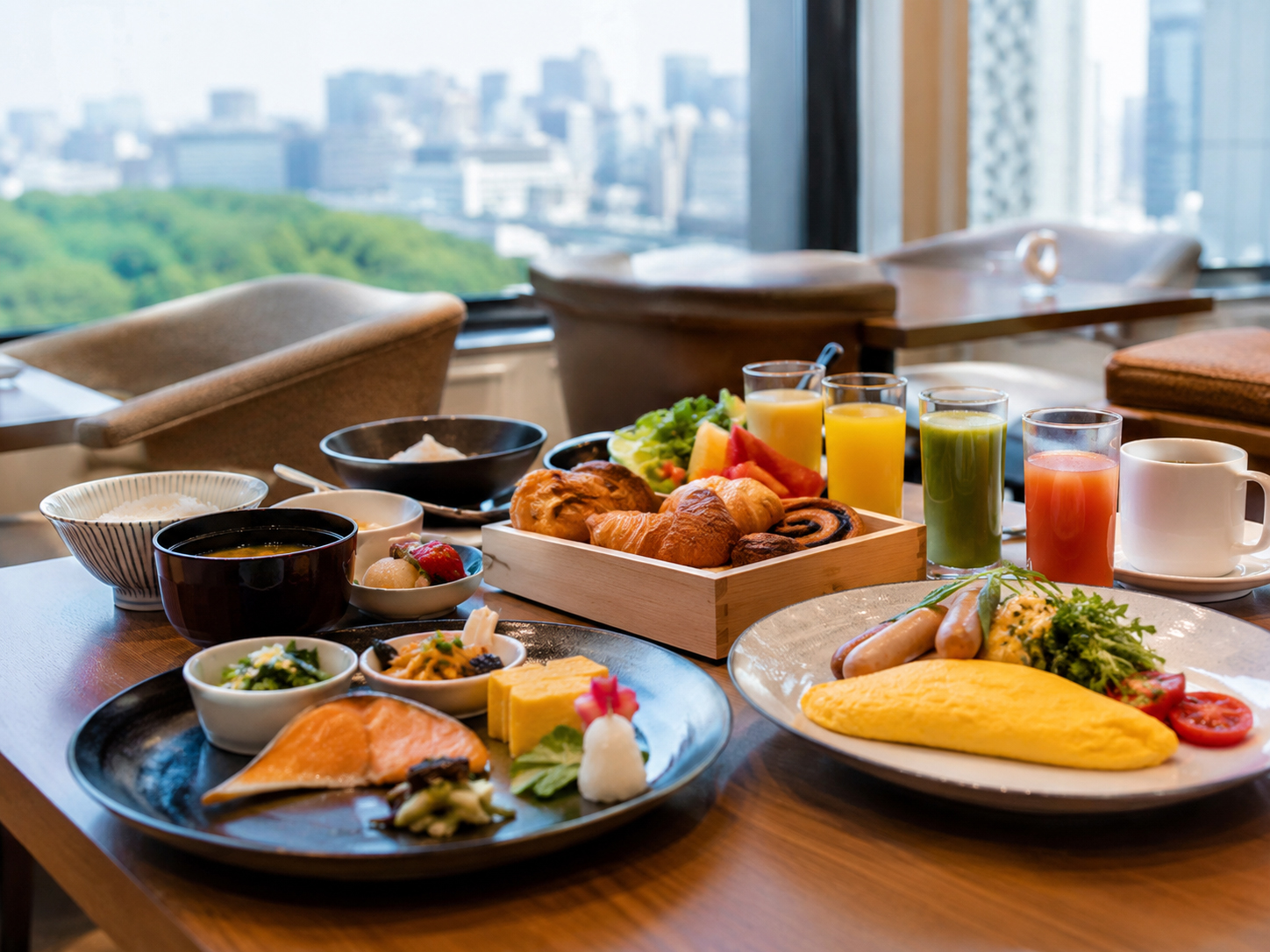
For years, hotel breakfast was treated as a convenience. You chose the hotel for the room, the station, the price or the brand, then checked whether breakfast was included. But in Japan, breakfast can become something richer. A bowl of miso soup can reveal the local stock. Rice can tell you where you are. A grilled fish, a small pickle, a regional soup, a local vegetable, a hot rice ball made in front of you — these are not just foods. They are the first local signals of the day.
The news is breakfast; the story is how travel begins
IHG ANA Hotels Group Japan announced that ANA Crowne Plaza Hotels & Resorts would begin a full nationwide rollout of its premium local breakfast concept, “THE 10,” from June 2026. The theme is a breakfast that lets guests encounter a small moment of “Ah, that’s delicious.” Supervised by brand producer Yoko Shibata, the program reorganizes live cooking, local identity, wellness and the joy of choice into a single morning hotel experience.
According to the announcement, THE 10 is built around the keywords “local,” “creative” and “discovery,” and around ten signature menu elements developed with chefs at ANA Crowne Plaza hotels and resorts across Japan. They include local live-kitchen dishes, ANA Crowne Plaza special omelets, freshly made reward-style rice balls, hometown regional soups, a fifteen-item salad buffet and energy-shot smoothies. This is not merely a menu refresh. It is an attempt to turn the hotel breakfast room into a local editorial desk.
Why breakfast now matters so much
Japan’s hotel competition can no longer be explained only by room size, location, views, hot springs, brand or price. Inbound tourism has matured. Domestic travelers use weekends, workations and short regional trips in more flexible ways. Business travelers are not simply sleeping and leaving; they are answering email, preparing for meetings, adjusting to time zones, and trying to taste a place before the day begins. A hotel is no longer just a box for the night. It is a machine for setting the rhythm of the day.
Breakfast is where that rhythm begins. It wakes the body, helps travelers make decisions, creates a moment for companions to plan, and sets the tone before the city opens. That means a hotel breakfast must be legible. What is light? What is local? What is the chef proud of? What will give energy without slowing the day? THE 10’s emphasis on the pleasure of choice matters because breakfast is also information design.
ANA Crowne Plaza as a Japanese hybrid
ANA Crowne Plaza occupies a distinctive place in Japan’s hotel landscape. It combines the trust associated with ANA and the international operating system of IHG. ANA Holdings and IHG ANA Hotels Group Japan have described their hotel-business strategic alliance as beginning in 2006, combining the expertise cultivated by the ANA Group with the global hotel brands of IHG Hotels & Resorts to develop Japan’s first dual-branded hotel approach.
That history makes THE 10 especially interesting. If a hotel brand standardizes too heavily, breakfast becomes the same everywhere. If it localizes too deeply without structure, it can become difficult for business travelers and international guests to read. ANA Crowne Plaza’s advantage is that it can place local Japanese mornings inside a globally understandable hotel frame. It can give efficiency to the business traveler, discovery to the leisure guest, and rediscovery to the local diner.
The cleverness of “ten”
Hotel buffets can become confusing because abundance hides identity. Bread, eggs, salad, sausage, fish, natto, miso soup, fruit, yogurt and coffee may all be available, but what makes this hotel’s breakfast different? THE 10 solves that by creating ten pillars. A guest does not need to eat everything. The structure itself tells the guest what the hotel thinks matters.
The local live kitchen brings theater to the morning. The special omelet maintains the reassuring grammar of an international hotel. Freshly made rice balls bring back one of Japan’s simplest and most emotional breakfast forms. Regional soup carries climate, agriculture and household memory. Salad and smoothies bring wellness into the room without making breakfast feel medicinal. In that sense, THE 10 is an editing system: Japanese and Western, regional and global, indulgent and healthy, all arranged on one morning table.
How hotels translate Japanese breakfast culture
Japanese breakfast begins at the household table: rice, miso soup, pickles, fish, egg, seaweed, natto. It is not necessarily luxurious, but it is dense with nutrition, season and place. Ryokan added local ingredients, careful vessels and the rhythm of hospitality. A hot-spring inn breakfast — grilled dried fish, mountain vegetables, tofu, local miso, freshly cooked rice — became a way for guests to confirm where they had woken up.
City hotels long emphasized Western standards: omelets, bacon, bread, coffee, fruit. Those remain useful because they are easy for international guests to understand and efficient for business travelers before meetings. But as Japanese travel matures, breakfast is asked to do more. It must keep the standard while revealing the region. It must offer familiar choices and discoveries. THE 10 fits that moment.
Washoku, UNESCO and the hotel morning
In 2013, washoku was inscribed on UNESCO’s Representative List of the Intangible Cultural Heritage of Humanity. UNESCO describes the practice as favoring natural, locally sourced ingredients such as rice, fish, vegetables and edible wild plants, and as a social practice expressing respect for nature. This does not only refer to expensive kaiseki. It also includes everyday wisdom: seasonal soup, local rice, vegetables, preserved foods and the balance of the meal.
Hotel breakfast is one of the gentlest ways to translate that culture for travelers. A formal dinner can be expensive and time-consuming. A specialist restaurant may be intimidating. But at breakfast, guests can try a little at their own pace: a spoon of miso soup, one rice ball, a local vegetable, a small unfamiliar dish. The buffet becomes an unusually effective doorway into washoku.
Local flavor is not decoration
For a local breakfast program to work, locality cannot be cosmetic. A token ingredient is rarely enough. Guests remember food when they understand why it is there: what region it comes from, why people eat it in the morning, how the chef has adapted it, what story it carries. When that is visible, breakfast becomes a small act of storytelling.
In Hokkaido, that might mean dairy, seafood, potatoes and soup curry. In Kanazawa, Kaga vegetables, jibuni, miso and fermentation. In Hiroshima, the Seto Inland Sea, lemons and the memory of oysters. In Okinawa, island vegetables, pork culture, brown sugar, mozuku and tropical fruit. A nationwide brand can still have a local face if breakfast changes meaningfully from city to city.
Breakfast in the age of wellness
THE 10’s inclusion of salad and energy-shot smoothies is also contemporary. Traveling in Japan requires walking: stations, temples, exhibition halls, airports, shopping districts, hotel corridors. Business travelers can be short on sleep; leisure travelers can be over-scheduled. Breakfast is not only about calories. It is about restoring the body for the day ahead.
Wellness does not have to mean a spa retreat or an expensive program. It can mean vegetables in the morning, a warm soup, hydration, protein, and the ability to eat enough without overeating. If a hotel makes those choices easy to see, travel becomes easier. THE 10’s strength is that it does not treat pleasure and health as enemies.
Breakfast reveals a hotel’s editing power
A breakfast room shows what a hotel really values. How does it treat local ingredients? Is it friendly to children? Can international guests understand it? Does it serve business travelers quickly? Does it think about food waste? Can staff explain dishes with pride? Luxury alone is not enough. Breakfast requires operations, local understanding, kitchen creativity and service design.
That is why a national ANA Crowne Plaza breakfast program matters. The brand connects Tokyo, Osaka, Kyoto, Kobe, Kanazawa, Hiroshima, Fukuoka, Sapporo, Chitose, Narita, Okayama, Toyama, Yonago, Kumamoto, Nagasaki, Okinawa and more. Through breakfast, the group can remind travelers that Japan is not one flavor. It changes by city, port, mountain, soup and rice.
A message to Japan’s hotel industry
Japanese hotels face labor shortages, higher food costs, a weak yen, growing inbound demand, uneven domestic travel patterns and the challenge of regional revitalization. Improving breakfast is not cheap. It requires chefs, suppliers, training and service flow. But breakfast strongly influences satisfaction. A good morning can brighten the memory of an entire stay. A weak morning can make even a clean room feel forgettable.
THE 10 tries to move breakfast from an add-on service into a brand experience. That is the right direction. Japan has deep regional food cultures. Hotels have the place where travelers gather. Morning is a rare honest time, when people are ready to begin again. Where those three meet, hotel value becomes visible.
Conclusion: reading Japan at the start of the day
A good trip can change with breakfast. You slow down for one bite. You try something unfamiliar. You remember a local name. Behind the steam of a soup bowl, you sense the life of the place. THE 10 is compelling because it treats breakfast not as a full stomach but as an edited encounter with region, wellness and hospitality.
The traveler leaves the room, rides the elevator and walks into the breakfast restaurant. That short journey may be the first destination of the day. Not a temple. Not a meeting room. Not an airport gate. Breakfast. And on the table, quietly, a little of Japan is already waiting.
Sources and references
This article is based on public information from IHG ANA Hotels Group Japan, IHG, UNESCO, Japan’s Ministry of Foreign Affairs and ANA/IHG corporate materials. Menus, participating hotels, hours and prices may vary by property; travelers should confirm current details with each hotel.
- PR TIMES / IHG ANA Hotels Group Japan: National rollout of THE 10, its supervision, concept and signature menu structure.
- IHG THE 10 Breakfast: Official breakfast program information.
- IHG PLC: Background on the ANA-IHG strategic hotel alliance that began in 2006.
- UNESCO: Washoku and its inscription as intangible cultural heritage.
- Ministry of Foreign Affairs of Japan: Japan’s announcement of washoku’s UNESCO inscription.