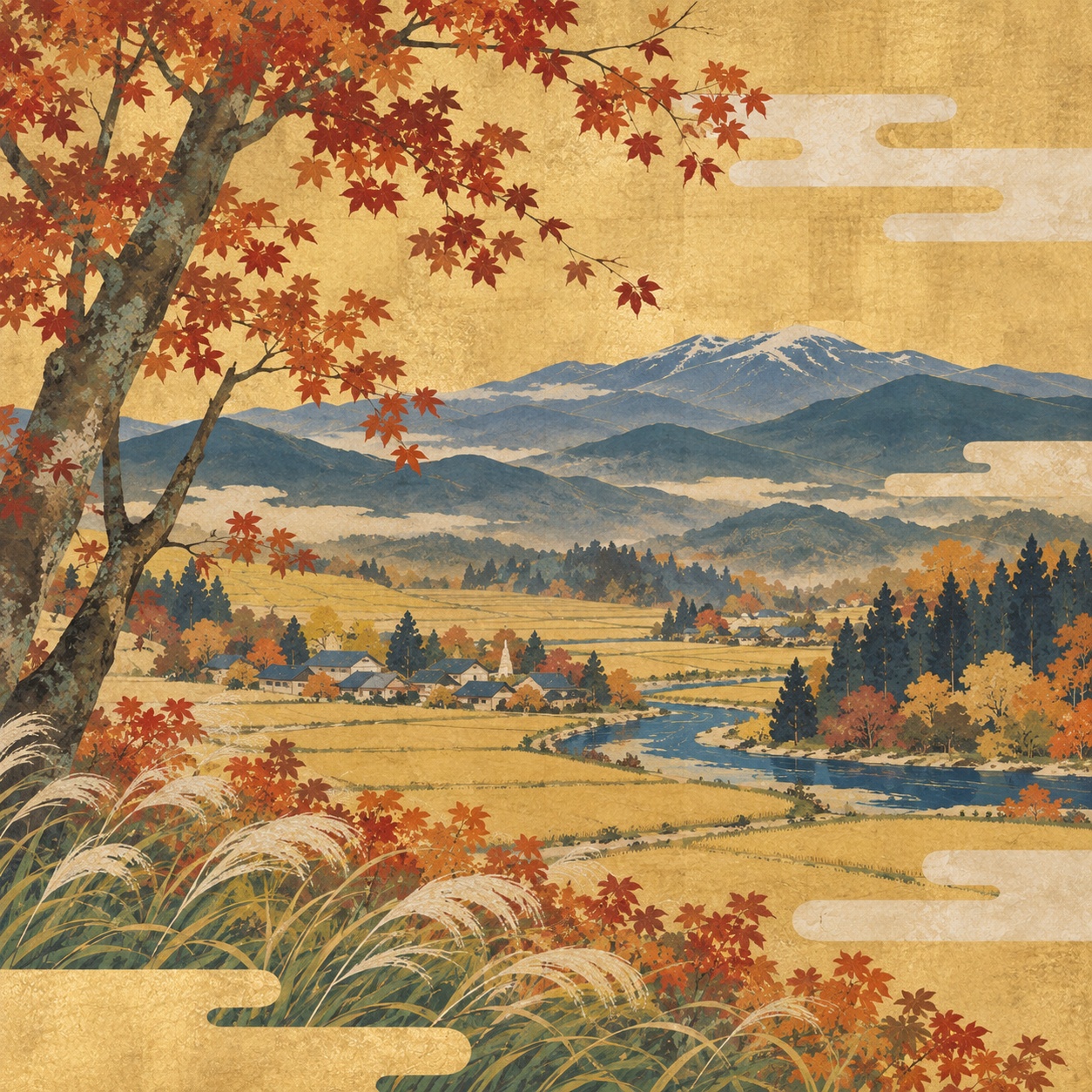
“Akita Prefecture: Still Unnoticed.” It is an unusual way to advertise a destination. Tourism campaigns normally emphasize fame, popularity and must-see attractions. Akita did the opposite: it turned the fact that many travelers do not immediately think of the prefecture into the campaign itself. Launched in May 2026, the Mada Baretenai Akita-ken campaign—roughly, “Akita Prefecture: Still Unnoticed”—paired that self-aware message with accommodation discounts of up to ¥12,000 per person per booking. In June, overnight stays in Akita reached 339,100, up 34.4% from a year earlier—the highest growth rate among Japan’s prefectures in the Japan Tourism Agency’s lodging statistics.[1][2]
The prefecture designed the first phase, covering stays from May 15 through July 31, as more than a discount program. Coupon distribution began May 7. According to an Akita Prefecture release, more than 70% of the initial coupon budget was used within four days, with higher-value packages selling especially quickly. Demand was strong enough that the prefecture added another round of coupons in June.[3]
In a September 8 policy address to the prefectural assembly, Governor Kenta Suzuki said the slogan had resonated and helped attract travelers, with overnight stays in May and June together rising by about 25% from a year earlier. The prefecture also says the first phase reached about 170% of its planned utilization and that more than 95% of surveyed participants expressed an intention to visit again. Those results helped drive a second winter campaign covering stays from November through February.[4][5]
Making low recognition the headline instead of hiding it
Destination marketing usually edits weakness out of the message. “Far away,” “not well known” and “I’ve never thought of going there” are not phrases tourism boards normally put on a poster. Akita reversed that logic.
At a May 11 press conference, Governor Suzuki described the problem directly: Akita has many tourism resources, but they are not sufficiently known. The purpose of “Still Unnoticed” was therefore to create news value beyond a simple discount announcement—to make potential visitors react with something closer to, “I didn’t know Akita had that.” Suzuki highlighted canoeing and stand-up paddleboarding on Lake Tazawa, trekking and other outdoor activities precisely because many people do not automatically associate Akita with that kind of travel.[6]
Official campaign material makes the contrast explicit. Tokyo is about an hour away by air and Osaka about 90 minutes, yet the prefecture says an image of Akita as “far away” persists. It points instead to wild-junsai harvesting, Nyūtō Onsenkyō, Tamagawa Onsen, Inaniwa udon, Hinai-jidori chicken, sake and a broad summer outdoor season. The diagnosis is not a lack of tourism assets. It is weak destination recall.[3]
The fact that expensive packages sold first matters
It would be easy to interpret the program as nothing more than a subsidy. The discounts were large, and price clearly mattered. Yet Akita says the higher-priced packages were among the first to sell out. That suggests at least some travelers were not merely looking for the cheapest possible night; they were willing to buy more expensive combinations of lodging, food and experience when the effective price became attractive.[3]
That fits the prefecture’s broader 2026–2029 tourism strategy. Akita is not focusing only on head count. Its plan calls for higher traveler spending, higher-value accommodation, year-round demand, destination-management organizations, and more targeted use of websites, social media and online travel agencies. The policy goal is to convert Akita-specific experiences into measurable economic value.[7]
The second phase pushes further in that direction. Coupons go on sale October 1 for stays from November 1 through February 28, 2027. Packages that bundle lodging with experiences, meals, local sake or specialty products qualify for larger “add-on” discounts, again reaching as much as ¥12,000. The prefecture has previewed unusually specific offerings, including a snow-mountain walk with an Akita dog named Masa.[5][8]
Did the slogan cause a 34.4% increase?
The headline statistic is real. Japan Tourism Agency data show 339,100 overnight stays in Akita in June 2026, 34.4% more than in June 2025, the fastest prefectural growth rate that month. The prefectural government has said the campaign appears to have contributed.[1][2]
What cannot be established from the public data is that the slogan itself caused the entire increase. Lodging statistics are not a controlled experiment. The coupons, seasonal travel, events, weather, group business, inbound travel and the comparison base from the previous year can all affect overnight volume.
A more defensible conclusion is narrower. Coupon demand greatly exceeded the prefecture’s initial expectations. Overnight stays rose sharply during the campaign period. Surveyed participants reported very high repeat-visit intent. Together, those indicators support the view that the campaign generated real traction. They do not tell us how many percentage points of the 34.4% increase came from humor, how many came from the discount, and how many would have occurred anyway.
Akita’s tourism history has always been tied to access
The “Akita feels far away” problem has a historical basis. The prefecture’s tourism chronology records the opening of the Tazawako Line in 1966, New Akita Airport in 1981, and a major turning point in 1997 when the Akita Shinkansen opened and the Akita Expressway was completed through the prefecture.[9]
The Komachi now links Tokyo directly with Tazawako, Kakunodate, Ōmagari and Akita. From Kakunodate Station, the samurai district is within walking distance; from Tazawako Station, buses connect travelers with Nyūtō Onsenkyō, Tamagawa Onsen and the Akita-Komagatake area. Physical access has improved dramatically over several decades. Perceived distance has not necessarily shrunk at the same pace.[10]
“Still Unnoticed” exploits that gap. The infrastructure already exists. So do the attractions. If Akita still fails to enter the traveler’s mental shortlist, the campaign turns that lack of familiarity into the invitation itself.
Shirakami, Namahage, Kanto: is Akita really unknown?
Akita is not short of internationally significant cultural and natural assets. Shirakami-Sanchi, spanning Aomori and Akita and including Fujisato in Akita Prefecture, was inscribed on UNESCO’s World Heritage List in 1993 for its outstanding primeval beech forest ecosystem.[11]
Oga no Namahage is part of the UNESCO-listed “Raiho-shin, ritual visits of deities in masks and costumes,” inscribed on the Representative List of the Intangible Cultural Heritage of Humanity in 2018. The New Year’s Eve ritual is not simply a tourist performance: masked visiting deities enter homes, admonish idleness, reinforce communal norms and offer blessings for the new year.[12]
Add the Akita Kanto Festival, Kakunodate’s samurai district, Lake Tazawa, Nyūtō Onsenkyō, the Omagari fireworks, Hachimantai, Mount Chokai, kiritanpo, Inaniwa udon, Hinai-jidori, Akita dogs and sake, and the phrase “still unnoticed” begins to sound deliberately exaggerated.
That is the point. The campaign is not saying Akita has nothing. It is saying that the distance between what the prefecture contains and how often travelers think of it is unusually large.
From scenic slogans and Akita dogs to self-aware branding
Akita has been marketing tourism for decades. The prefecture’s chronology records the “New Akita Eight Views” campaign beginning in 1992, a major northern-Tohoku campaign in 1994 and the “Akita Hanamaru” campaign in 1995. In 2017, Akita worked with JR East on a spring campaign using the Akita dog as its symbol and the phrase “Saku, Saku, Akita.”[9][13]
In 2026, the prefecture also introduced a broader tourism catchphrase, “んだ。んだ。秋田。” (Nda. Nda. Akita.), using a local expression meaning roughly “yes, that’s right.” “Still Unnoticed” is separate: it is the sharper promotional identity attached to the accommodation campaign.[14]
The change is tonal. Traditional tourism advertising tells consumers, “We are attractive.” “Still Unnoticed” lets the traveler become an insider: “You can discover this before everyone else does.” It turns the visitor from a passive audience into someone who has found a secret.
Self-deprecating tourism has a failure point
This kind of marketing carries risk. Too much self-deprecation can reinforce the very stereotype a region is trying to escape. Residents may feel that their home is being trivialized. Outsiders may remember the joke but not the destination’s actual strengths.
Akita’s campaign works only if the joke immediately leads to substance. The message does not stop at “you don’t know us.” It pushes travelers toward outdoor activities, hot springs, food, culture and winter experiences. Humor is the doorway, not the product.
There is also the danger of subsidy dependence. Large accommodation discounts will naturally lift demand, but demand generated by public money can disappear when the discounts end. That is why the prefecture’s reported repeat-visit intention of more than 95% is interesting—but intention is not the same as an observed repeat-visit rate. Over the next several years, the stronger test will be whether visitors return without equally large incentives and whether local tourism revenue remains higher.
- Overnight stays: Does growth continue outside the coupon periods?
- Repeat visits: How many travelers actually return, rather than merely saying they intend to?
- Spending per visitor: Does local spending rise after subtracting the public subsidy?
- Geographic spread: Do visitors travel beyond major hubs and famous onsen into more of the prefecture?
The winter campaign is the next hard test
One structural issue for Akita tourism is seasonality. The prefecture’s 2026–2029 strategy explicitly calls for stronger winter and green-season demand to support year-round tourism. Winter gives Akita strong material—snow landscapes, hot springs, Namahage and small-New-Year traditions—but snow and transport uncertainty can also deter travelers.[7]
The winter phase therefore matters. From November through February, the campaign will try to sell not simply discounted rooms but reasons to travel specifically because it is winter: food, sake, snow experiences and highly local activities. The central question is whether a summer campaign built around “actually, Akita is close and full of things to do” can become a winter proposition built around “the snow is part of why you should come.”[5]
Marketing alone cannot answer that question. Flights, rail links, last-mile transportation, staffing at hotels, multilingual information, snow-road guidance, payments and relations with local communities all shape whether first-time visitors become repeat travelers. Akita’s tourism division says its official social-media channels are intended not only to advertise attractions, events and food but to expand the community of “Akita fans.”[15]
In tourism, being famous is not the only competitive advantage
Japan’s tourism demand is heavily concentrated in places such as Tokyo, Kyoto, Osaka and Mount Fuji. For regional destinations, that can be a disadvantage—but also an opening. As some travelers seek less crowded destinations, local food, outdoor experiences and regional culture, being less famous can itself become a positioning strategy.
Akita is not trying to beat Kyoto in name recognition. It is trying to become appealing to travelers who want to feel that they found somewhere before it became obvious. Pairing world-class heritage with tiny experiences—harvesting junsai from a boat, paddling Lake Tazawa or walking a snowy mountain with an Akita dog—makes that strategy tangible.
The summer numbers show that travelers responded. The more consequential test will come later, when the discounts fade and the joke is no longer novel. If Akita becomes better known, “Still Unnoticed” will eventually stop being true.
That may be the campaign’s most elegant feature: success makes its own slogan obsolete. Akita’s next branding problem, if this strategy works, will be deciding what to say after the secret is out.
Sources
- Jiji Press / The Japan Times: Japanese municipalities use low recognition as tourism promotion (Sept. 25, 2026)
- Japan Tourism Agency: Overnight Travel Statistics, June 2026 second preliminary report
- Akita Prefecture Tourism Strategy Division: additional coupons for the first 'Still Unnoticed' campaign (June 16, 2026)
- Akita Prefecture: Governor's address to the September prefectural assembly (Sept. 8, 2026)
- Akita Prefecture Tourism Strategy Division: 'Still Unnoticed Akita – Winter' campaign (Sept. 14, 2026)
- Akita Prefecture: Governor Kenta Suzuki press conference on the campaign (May 11, 2026)
- Akita Prefecture Comprehensive Plan 2026–2029: Tourism and exchange
- Akita Tokutabi Campaign official site, second phase
- Akita Prefecture tourism statistics: chronology of tourism development
- Akita Prefecture: access to Tazawako, Kakunodate and Daisen
- UNESCO World Heritage Centre: Shirakami-Sanchi
- UNESCO Intangible Cultural Heritage: Raiho-shin, including Oga no Namahage
- Akita Prefecture: 2017 spring tourism campaign 'Saku, Saku, Akita'
- Akita Prefecture Tourism Strategy Division: 2026 tourism initiatives
- Akita Prefecture Tourism Strategy Division: official social-media policy
