A hotel is not just a place to sleep. In Japan, it can change the subject of the entire trip. Stay high above Tokyo Station and the story becomes speed, skyline and global luxury. Stay in a Kyoto lane and the story becomes morning temples, wood, stone and silence. Stay on a Setouchi island and the story becomes ferries, cycling, bathhouses and the slow rhythm of a port town.
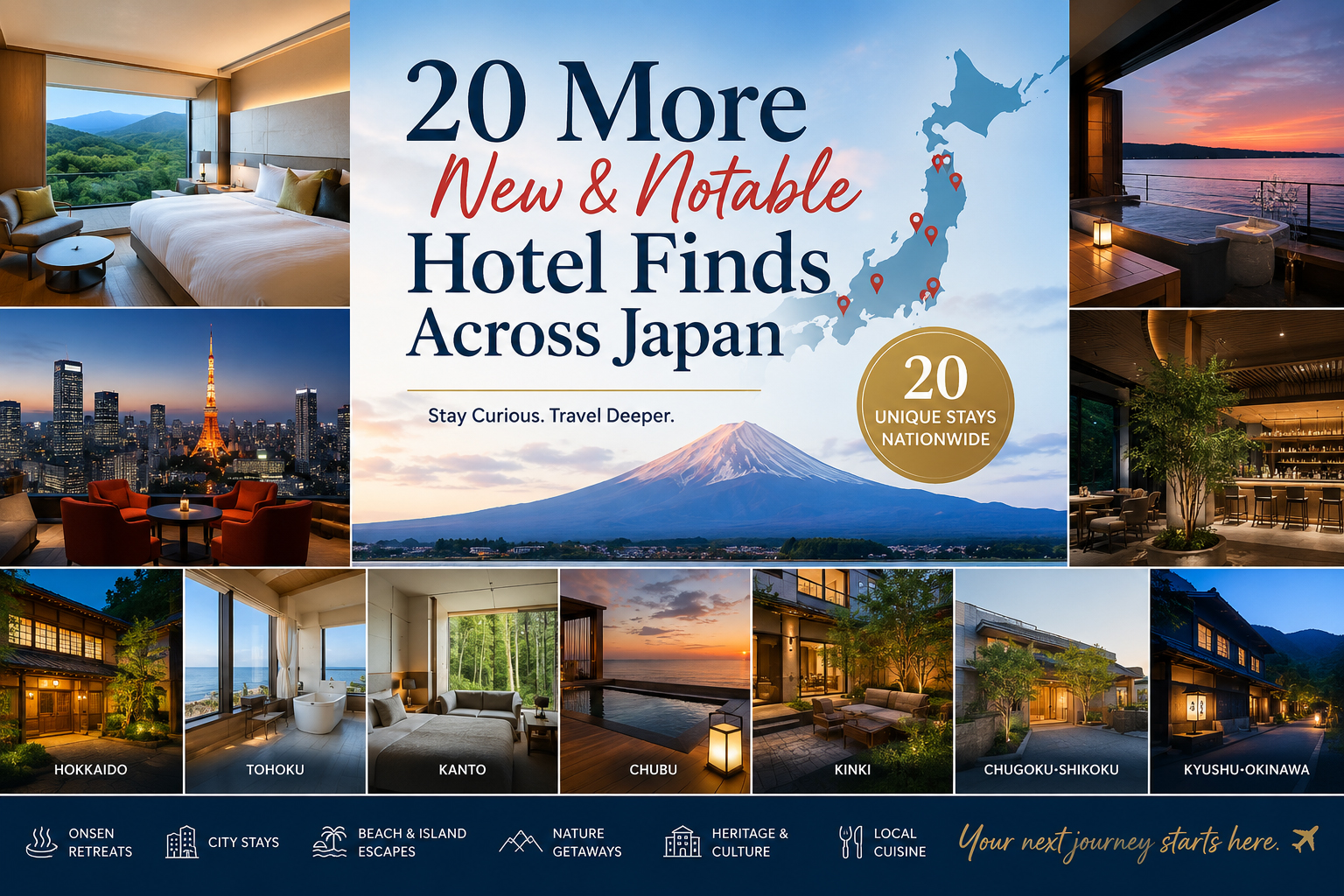
This “20 More New & Notable Hotel Finds Across Japan” guide is not a leftovers list after the main ten stories. It is a discovery guide: a way to help readers plan the next trip by choosing a hotel that opens a city, island, neighborhood or landscape in a different way.
How we chose them: not fame, but doorway value
This guide does not simply chase the most expensive rooms or the loudest openings. We looked for hotels that function as travel gateways: a place with a story, a neighborhood, a useful location, a design point of view, a link to food or craft, or a special way of slowing down the trip.
Tokyo’s hotel map changes dramatically depending on whether you choose Yaesu, Ginza, Azabudai, Otemachi, Shiba Park, Toyosu, Oimachi or Tomigaya. Kyoto is equally layered: Nijo Castle, Takagamine, Nishi Hongwanji, Higashiyama, Yasaka and Karasuma Oike each reveal a different city. Osaka rewards travelers who understand stations, food streets and river districts. Nagasaki, Setouchi and Awaji Island remind us that Japan’s hotel culture is not a Tokyo-Kyoto-only story.
The 20 hotel finds
1. HOTEL THE MITSUI KYOTO, a Luxury Collection Hotel & Spa
Why go: A Kyoto luxury stay on the former Mitsui family estate, facing Nijo Castle, where a restored gate, garden and thermal spring turn family history into a contemporary hotel language.
2. ROKU KYOTO, LXR Hotels & Resorts
Why go: A resort-style Kyoto address in Takagamine, where mountain air, art, gardens and the LXR brand create a quieter counterpoint to the temple-crowd version of Kyoto.
3. Dusit Thani Kyoto
Why go: Thai hospitality meets Kyoto craft near Nishi Hongwanji, giving the ancient capital a graceful cross-cultural hotel story.
4. Six Senses Kyoto
Why go: The brand’s Japan debut brings wellness, sustainability and Higashiyama temple geography into one of Kyoto’s most talked-about new stays.
5. SOWAKA
Why go: A small heritage luxury hotel near Yasaka and Kodai-ji, ideal for travelers who want Kyoto’s lanes, wood, silence and scale rather than a giant lobby.
6. Ace Hotel Kyoto
Why go: A design hotel in the ShinPuhKan complex, joining Kengo Kuma architecture, creative Kyoto and the memory of a 1920s communications building.
7. Janu Tokyo
Why go: Aman’s sibling brand opened its first hotel in Azabudai Hills, making social wellness, city energy and Tokyo Tower views part of the stay.
8. Bvlgari Hotel Tokyo
Why go: Italian glamour rises above Tokyo Station in Midtown Yaesu, proving that Japan’s hotel boom is now also a global luxury-design conversation.
9. The Tokyo EDITION, Ginza
Why go: A compact luxury hotel just off Chuo-dori, built for travelers who want Ginza not as a postcard but as a walkable evening neighborhood.
10. HOSHINOYA Tokyo
Why go: A vertical ryokan in the financial district, translating tatami, onsen and inn culture into one of Tokyo’s most original urban stays.
11. TRUNK(HOTEL) YOYOGI PARK
Why go: A small park-side hotel in Tomigaya, where Tokyo’s creative café culture, Nordic-Japanese design and green space meet.
12. Shiba Park Hotel
Why go: A literary hotel near Tokyo Tower and Zojo-ji, turning shelves, books and quiet common spaces into a gentle Tokyo stay.
13. La Vista Tokyo Bay
Why go: A bay-view urban onsen hotel connected to Shijo-mae Station, useful for Toyosu Market, waterfront walks and skyline watching.
14. Hotel Metropolitan Oimachi Tracks Tokyo
Why go: A new station-linked Tokyo base at Oimachi, with Haneda, Shinagawa, Shibuya and the everyday city all within easy reach.
15. Hotel Indigo Nagasaki Glover Street
Why go: A neighborhood hotel in one of Japan’s most layered port cities, near Glover Garden, churches and the story of international Nagasaki.
16. Azumi Setoda
Why go: A restored island ryokan on the Shimanami Kaido, pairing Setouchi cycling, bath culture and slow-town hospitality.
17. Hotel New Awaji
Why go: A classic Awaji Island onsen resort facing Osaka Bay, rooted in seafood, island history and the Seto Inland Sea’s resort geography.
18. THE GATE HOTEL OSAKA by HULIC
Why go: A new Shinsaibashi station-linked hotel for travelers who want Osaka shopping, food and nightlife without sacrificing grown-up calm.
19. Caption by Hyatt Namba Osaka
Why go: A social, flexible Namba base near Kuromon Market, Dotonbori and Osaka’s kitchenware streets, built for travelers who like the city at street level.
20. RIHGA Royal Hotel Osaka, Vignette Collection
Why go: Osaka’s grand Nakanoshima institution enters IHG’s Vignette Collection, linking old diplomatic glamour with a new international badge.
Read the hotels as a map
Put these 20 hotels on a map and a larger story appears. Tokyo is no longer a single hotel market. It becomes a set of experiences: Tokyo Station glamour, Ginza evenings, Azabudai wellness, Otemachi ryokan culture, Shiba Park books, Toyosu bay views, Oimachi convenience and Tomigaya neighborhood calm. Kyoto is not one postcard either. Nijo, Takagamine, Nishi Hongwanji, Higashiyama, Yasaka and Karasuma Oike all ask the traveler to move differently.
The regional properties matter just as much. Nagasaki’s Minamiyamate tells the story of a Japanese port looking outward. Setoda connects the Shimanami Kaido to bath culture and island life. Awaji Island links Osaka Bay, seafood, hot springs and the ancient food routes of the Seto Inland Sea. The hotel becomes the lens.
Practical travel notes
| Trip style | How to choose |
|---|---|
| First Tokyo trip | Choose by transit and the neighborhood you want to experience after dinner. |
| Deeper Kyoto | Look beyond temple proximity; consider quiet mornings, craft, gardens and material atmosphere. |
| Food travel | Osaka, Nagasaki, Setouchi and Awaji reward hotels that put you near markets, ports and local kitchens. |
| Family or longer stay | Prioritize station access, laundry, kitchen facilities, larger rooms and airport links. |
| Quiet luxury | Look at the public spaces, garden, bath, view and morning rhythm—not just room size. |
Do not choose a hotel from the top of a search result page. Choose backward from the mood of the trip: neon evening or temple morning, bay view or forest air, train convenience or island slowness, family practicality or private retreat. The right hotel is the one that makes the trip more legible.
Sources and direct hotel websites
Addresses, phone numbers and direct websites are listed from official hotel pages or official destination/hotel group pages where available. Always confirm current rates, opening status, room availability and operating hours before travel.
- HOTEL THE MITSUI KYOTO
- ROKU KYOTO
- Dusit Thani Kyoto
- Six Senses Kyoto
- SOWAKA
- Ace Hotel Kyoto
- Janu Tokyo
- Bvlgari Hotel Tokyo
- The Tokyo EDITION, Ginza
- HOSHINOYA Tokyo
- TRUNK(HOTEL) YOYOGI PARK
- Shiba Park Hotel
- La Vista Tokyo Bay
- Hotel Metropolitan Oimachi Tracks Tokyo
- Hotel Indigo Nagasaki Glover Street
- Azumi Setoda
- Hotel New Awaji
- THE GATE HOTEL OSAKA by HULIC
- Caption by Hyatt Namba Osaka
- RIHGA Royal Hotel Osaka, Vignette Collection