- A small exhibition with a much bigger story
- What the publication actually brings together
- Mingei was invented as a modern idea
- Shōya Yoshida: a doctor who became a craft producer
- The regional landscape beyond ceramics
- A conversation about food, objects and belonging
- Why a Tokyo showcase can matter—and where its limits lie
- An unusual convergence in Tokyo in 2026
- What it really means to keep a tradition alive
A small exhibition with a much bigger story
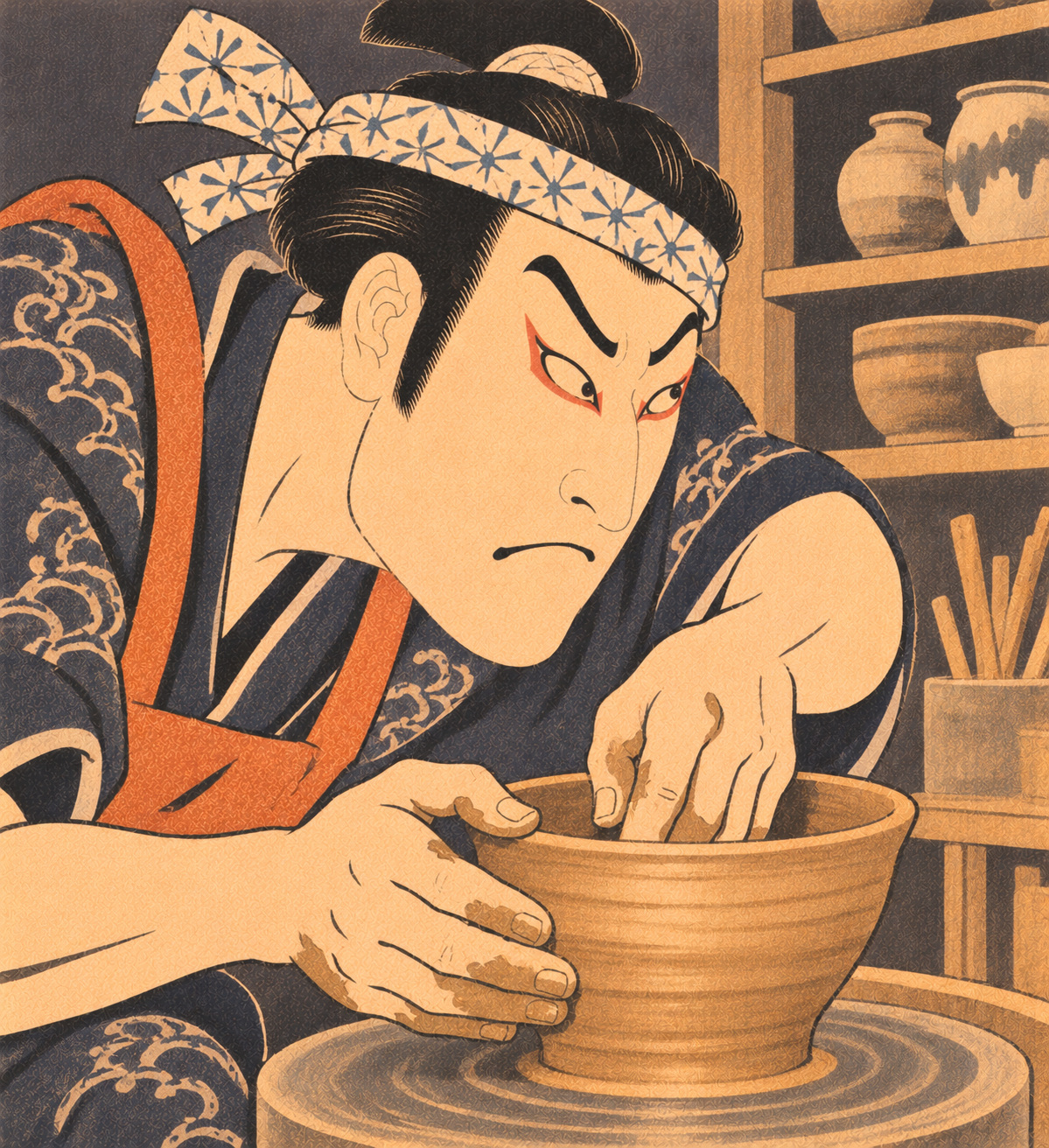
A bowl is not fully understood on a museum plinth. It changes when someone serves a meal in it, washes it, chips it, repairs it and reaches for it again. That living relationship between objects and people is the premise of a new Tottori Prefecture publication—and of a Tokyo event scheduled to open on November 24.
Tottori announced on November 17 that Tottori Mon to Kurasu (roughly, “Living with Tottori Things”) would be accompanied by an exhibition and sale of selected makers’ work at the Tottori–Okayama Shinbashi regional promotion center in Tokyo. The event is scheduled for November 24 through December 7, 2026. The book, issued by the prefecture in November, introduces crafts, food and the ways of life that give them meaning. It is distributed at prefectural events rather than identified in the announcement as a conventional bookstore release.
Behind what might look like a modest promotional event lies a century-long argument about Japanese design: should the beauty of useful objects be preserved in museums, or sustained through a functioning relationship among makers, shops and people who use them? In Tottori, that question has an unusually concrete history.
What the publication actually brings together
The prefecture’s announcement lists makers working in pottery, blades, handmade paper, textiles, bamboo and other fields. Among them are Ushinotoyaki, Hosshōji-yaki Shōka kiln, the pottery tradition of Kamikami, Iwai kiln, Chizu Blue indigo, the Jinjintake bamboo workshop and the Hasegawa paper workshop. The source supplies 19 listing entries, some representing more than one individual; an entry is not necessarily a single maker or an item guaranteed to be on display.
The volume also includes food businesses: Hirao Tofu, Talmarry and the Takada sake producer appear alongside ceramic and textile workshops. This matters. A handmade plate belongs to a meal; a piece of cloth acquires meaning when worn and cared for. Tottori is presenting craft as an activity embedded in daily living, not simply a list of decorative objects.
The announcement does not specify the book’s page count, print run, public retail availability or precisely which objects will be displayed. The exhibition is still forthcoming as of the November 20 edition date.
Mingei was invented as a modern idea
Mingei, commonly translated as “folk craft,” sounds ancient. The word itself is modern. Philosopher and collector Yanagi Sōetsu, together with fellow advocates, coined the term in 1925 as an abbreviation of minshūteki kōgei—crafts of ordinary people. In 1926 they advanced a movement that challenged narrow assumptions about what deserved to be called art.
Yanagi, potters Hamada Shōji and Kawai Kanjirō, and their collaborators drew attention to practical objects made by craftspeople whose names might never enter art histories. Their proposition was not that all anonymous or handmade goods are automatically beautiful. It was that usefulness, material, method and the accumulated intelligence of everyday work deserved serious aesthetic consideration.
Japan Folk Crafts Museum opened in Tokyo in 1936 to collect, study and exhibit such work. But the wider ambition went beyond display: it asked how objects could remain alive in homes while modern industrial production changed the economy of making.
Shōya Yoshida: a doctor who became a craft producer
Tottori’s answer emerged through Shōya Yoshida (1898–1972), a physician from Tottori City. After encountering Yanagi’s thinking, Yoshida launched a “new mingei” movement in his home region in 1931. The prefectural biography describes his encounter with an Ushinotoyaki bowl and his work persuading the local kiln to develop designs that could speak to contemporary life while retaining established skills.
Rather than treating craftspeople as suppliers of quaint relics, Yoshida coordinated design, production and routes to market. He worked across pottery, textiles, woodwork, metalwork and paper. In 1932 he opened the Takumi Craft Shop in Tottori; a Tokyo branch followed in 1933. These outlets were not merely shops attached to a philosophical movement. Selling usable work was how makers could keep making it.
He later helped establish the Tottori Folk Crafts Museum and craft organizations that linked collections, production, education and consumption. His career is a reminder that protecting design heritage requires commerce as well as admiration.
The regional landscape beyond ceramics
Pottery attracts attention because vessels are visible and familiar, but Tottori’s craft world is much broader. The prefecture names bamboo workers, papermakers, indigo dyers, stencil-dyeing makers and a traditional bladesmith among the participants represented in the book. The work depends on distinct combinations of material access, skilled labor and tacit knowledge.
A woven bamboo object is shaped by how strips are cut and bent. Handmade paper depends on plant fiber and water. Indigo-dyed cloth holds the history of repeated immersion, oxidation and handling. None of those processes is fully communicated by a generic image of “Japanese tradition.” The individuality of the makers and their techniques matters.
The announcement alone cannot substantiate claims about the number of apprentices, the commercial health of each workshop, or whether any craft faces imminent disappearance. Those questions demand reporting from makers, not assumptions built on a promotional brochure.
A conversation about food, objects and belonging
The event’s opening night is scheduled to include a discussion between Fumiko Sakuhara, an interior stylist, and Yoichiro Aso, a cook and writer. Both visited Tottori in connection with the publication, according to the prefecture. They are expected to discuss encounters with makers, food, travel and the ways craft enters domestic life.
The talk is scheduled for November 24, 7–8 p.m., with free admission, no reservations and a first-come capacity of 50 people. The venue is Tottori–Okayama Shinbashi-kan, 1-11-7 Shinbashi, Minato-ku, Tokyo; published exhibition hours are 10 a.m.–9 p.m. Aso is also expected to present Tottori ingredients with local tableware during the opening event. Details of servings or quantities are not confirmed.
The event has not yet opened as of this article’s November 20 dateline. Visitors should check the organizer’s latest instructions before traveling.
Why a Tokyo showcase can matter—and where its limits lie
For a regional craft producer, an exhibition in Tokyo offers a chance to reach people who may not visit Tottori. Visitors can inspect proportions, surfaces and weight instead of buying from a small screen. Those tactile judgments are especially important for tools that people will use repeatedly.
But the event’s value cannot be established by attendance alone. Were makers paid fairly? Did shoppers learn who produced an object? Can they seek repairs, replacements or further work after the exhibition? Did temporary attention become lasting relationships with workshops? These are questions worth following after December 7.
Yoshida understood the problem in the 1930s: skill survives when demand is sustained, not just when beautiful work is praised. The same challenge remains.
An unusual convergence in Tokyo in 2026
There is a second Tokyo window into Tottori’s craft history this autumn. Panasonic Shiodome Museum of Art is presenting Shōya Yoshida’s Design: The Future Envisioned by the New Mingei Movement from October 15 to December 20. The museum describes roughly 300 objects and documents charting Yoshida’s synthesis of design, production, distribution and cultural work.
This is a separate exhibition with a different organizer and location, not part of the Shinbashi event. Yet the juxtaposition is revealing. The museum places historical designs and Yoshida’s career in a curated context; the prefecture’s publication and sales event focus on contemporary makers and everyday use. Together they reveal that Tottori’s mingei identity has always moved between cultural preservation and living commerce.
The museum’s online visitor information provides its schedule and admission conditions. This article is based on official documentation rather than an on-site exhibition review.
What it really means to keep a tradition alive
“Preservation” is an easy word to print beside craft objects. The difficult work is helping people make, sell, maintain and value them over decades. That means skills and materials, but it also means prices, distribution, customers and reasons for a younger generation to enter the field.
Tottori Mon to Kurasu may look like a small regional publication. Its ambition is larger: to present the work of making within a landscape of eating, using and living. The project echoes Yoshida’s conviction that craft is most meaningful when it participates in the ordinary life of a community.
When the Tokyo exhibition opens on November 24, its strongest argument may not come from a rare or expensive object. It may come from a bowl that makes someone think differently about dinner—and about the person who made it.
Sources and reporting limitations
This independently written report relies on official Tottori Prefecture announcements, museum records and other primary publications. No independent interviews with makers or on-site exhibition inspection were conducted. Event details may change.
- Tottori Prefecture — 『鳥取もんと暮らす』刊行記念、展示・販売とトークイベント(2026年11月17日)
- Tottori Prefecture — 吉田璋也の歩みと新作民藝運動
- Tottori Folk Crafts Museum — 鳥取の民藝運動と吉田璋也
- Tottori Prefecture — とっとり民工芸案内
- Japan Folk Crafts Museum — 民藝運動の沿革
- Tottori tourism office — 鳥取の民藝の歴史
- Panasonic Shiodome Museum — 吉田璋也のデザイン(2026年展)
- Takumi craft shop — 沿革と取扱工芸
- Shōya Yoshida archive — 吉田璋也年譜
- Japan Mingei Association — 柳宗悦と民藝の思想