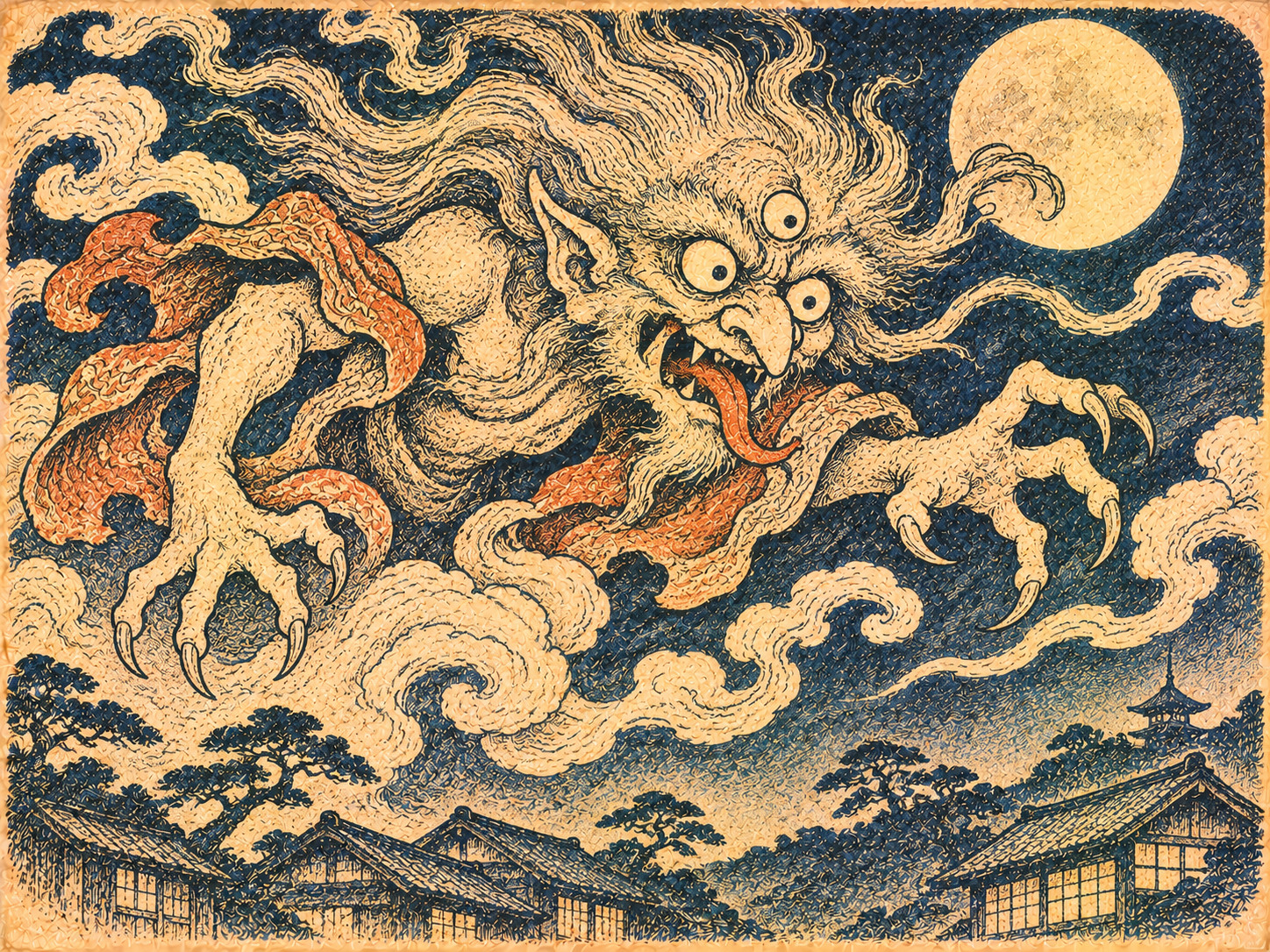
- Why Toriyama Sekien still matters
- The man behind the monsters
- A print artist in the age of Edo publishing
- The four-book monster project
- How Sekien standardized the look of yokai
- Fear, humor and design intelligence
- Haunted household objects and Japanese imagination
- From Sekien to Kuniyoshi, Yoshitoshi and modern pop culture
- Curated image selection
- Why JAPAN.co.jp chose him for November 19
Why Toriyama Sekien still matters
Japan did not invent monsters in the eighteenth century. Ghosts, demons and uncanny beings had appeared in picture scrolls, legends and religious storytelling for centuries. What Toriyama Sekien changed was not the existence of yokai but their visual order. He gave scattered supernatural beings durable faces, names and bodies. Once that happened, monsters became easier to remember, compare, repeat and reinvent.
The National Diet Library’s Image Bank describes Sekien’s Gazu Hyakki Yagyō sequence as a kind of yokai picture encyclopedia. That description is useful because it captures the artist’s true modernity. Sekien was not merely illustrating folktales; he was cataloguing the supernatural. That act of classification—of turning rumor into image and image into a reproducible reference—helps explain why his work still feels astonishingly alive.
The man behind the monsters
The National Diet Library authority record lists Toriyama Sekien as 鳥山石燕, read トリヤマ・セキエン, born in 1712 and deceased in 1788. It also notes the associated names Sano, Toyofusa and Sekien. Much else about his biography must be reconstructed from bibliographic and art-historical fragments rather than from a rich archive of letters or diaries.
Even so, the outline is enough to establish his place. Sekien belongs to mid-Edo visual culture, usually understood in relation to machi-Kanō painting and commercial print culture. He is also remembered in later reference material as a teacher of Kitagawa Utamaro. That connection matters not simply because it links him to a famous name, but because it reminds us that Sekien was embedded in a thriving, technically skilled urban art world rather than operating as a lone eccentric.
A print artist in the age of Edo publishing
The Smithsonian’s National Museum of Asian Art describes Hyakki yagyō as a woodblock-printed book, ink on paper, published in 1776. That matters. Sekien’s monsters were not locked away in one elite painting. They circulated in printed form. Readers could encounter them in the hand, on the page, as part of the wider marketplace of illustrated books. The technology of woodblock print gave his monsters mobility.
The Smithsonian further notes that older handscroll traditions had already pictured night processions of monstrous beings, but that Sekien’s contribution was unusually comprehensive: he presented those creatures one by one, with background elements hinting at their natural environments. In other words, he did for monsters what a natural historian might do for animals. He isolated them, named them and made them legible.
The four-book monster project
The National Diet Library Image Bank sets out the sequence clearly. First came Gazu Hyakki Yagyō in 1776. It was followed by Konjaku Gazu Zoku Hyakki in 1779, Konjaku Hyakki Shūi in 1781, and Hyakki Tsurezure Bukuro in 1784. The Library of Congress, via the World Digital Library material it hosts from the National Diet Library, likewise describes the four-part series and its importance.
What is striking is that the project grows more playful and expansive as it proceeds. The early volumes establish the terms of the world. The later books deepen and widen it. By the time Sekien reaches Hyakki Tsurezure Bukuro, the imagination of haunted utensils and animated household things has become central. The project is at once a monster archive and a sophisticated editorial performance.
| Book | Year | Why it matters |
|---|---|---|
| Gazu Hyakki Yagyō | 1776 | The foundational volume that set the tone and taxonomy. |
| Konjaku Gazu Zoku Hyakki | 1779 | A continuation that broadens the range of beings. |
| Konjaku Hyakki Shūi | 1781 | A supplemental volume expanding the monster archive. |
| Hyakki Tsurezure Bukuro | 1784 | Pushes deeply into haunted-object and tsukumogami imagery. |
How Sekien standardized the look of yokai
Sekien’s importance lies partly in artistic quality and partly in repeatability. The National Diet Library Image Bank explicitly shows later ukiyo-e artists—among them Utagawa Kuniyoshi and Tsukioka Yoshitoshi—working with supernatural subjects that Sekien had helped stabilize. Once a kappa, tengu or kitsunebi takes on a memorable visual form, later artists can adopt, alter or challenge it.
That is why Sekien feels so foundational. He did not invent every creature he drew, but he made many of them visually unavoidable. He turned folklore into something close to a reference system. Modern readers may not know which eighteenth-century text or oral tradition lies behind a given monster, yet they still recognize the type. That recognizability is Sekien’s triumph.
Fear, humor and design intelligence
What makes Sekien more than an archivist of the uncanny is his sense of tone. His monsters are eerie, but they are rarely monotonous. Distorted faces, elegant drapery, long hair, strange claws, absurd proportions and carefully staged emptiness combine to produce an atmosphere that is frightening and funny at once. The grotesque is not only violent; it is expressive.
This is one reason Sekien feels unexpectedly contemporary. Much modern visual culture depends on the ability to make a figure memorable through silhouette and attitude. Sekien understood that instinct centuries ago. He could make a monster startling in an instant, then keep it interesting by giving it personality. A yokai in Sekien is not a blur of fear. It is a designed being.
Haunted household objects and Japanese imagination
If one wants the most outlandish side of Sekien, the haunted-object tradition is essential. The National Diet Library catalog record for Hyakki Tsurezure Bukuro confirms the 1784 publication. The title points toward a world in which utensils and everyday implements acquire supernatural life. This imagination of animated tools and household things is among the strangest and most enduring currents in Japanese monster lore.
Why does it matter? Because it collapses the distance between domestic life and the supernatural. Sekien’s uncanny is not confined to lonely mountains or abandoned graveyards. It can rise from the things people handle every day. That makes his work especially flexible for a modern editorial context: technology, machines, robots and infrastructure can all be reimagined through a Sekien-like lens without losing their recognizability.
From Sekien to Kuniyoshi, Yoshitoshi and modern pop culture
The National Diet Library’s explanatory essay places Sekien at the head of a longer visual tradition. Later artists such as Kuniyoshi and Yoshitoshi took supernatural imagery in more dramatic, theatrical or psychologically charged directions, but Sekien remained an essential reference point. He supplied an illustrated vocabulary that others could intensify.
In modern times that vocabulary survives well beyond art history. Manga, children’s books, film, horror illustration and character design all operate in an environment that Sekien helped make possible. The scholar quoted in the National Diet Library search results even argues that the popular modern image of yokai begins with Sekien and reaches a later culmination in Shigeru Mizuki. Whether or not one frames the history exactly that way, Sekien clearly stands at the beginning of the modern monster image-bank.
Curated image selection
The following three JAPAN.co.jp images were selected as a compact introduction to Sekien’s visual world. They are presented here as curatorial anchors rather than as a full catalog of authenticated individual plates. Each image highlights a different strength of the Sekien universe: density, atmosphere and character.
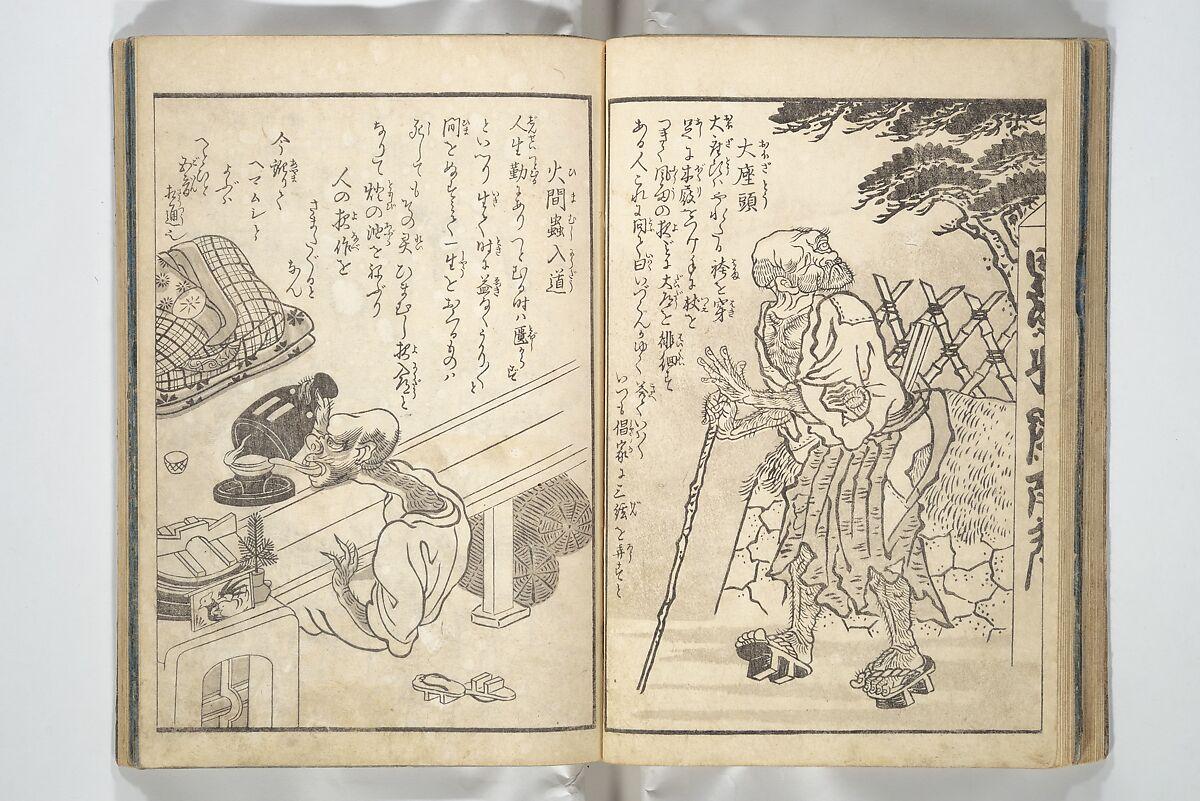
This selection emphasizes the compression and intensity that make Sekien’s monster world unforgettable. Eyes, teeth, curves and abrupt forms work less like portraiture and more like a memory machine.
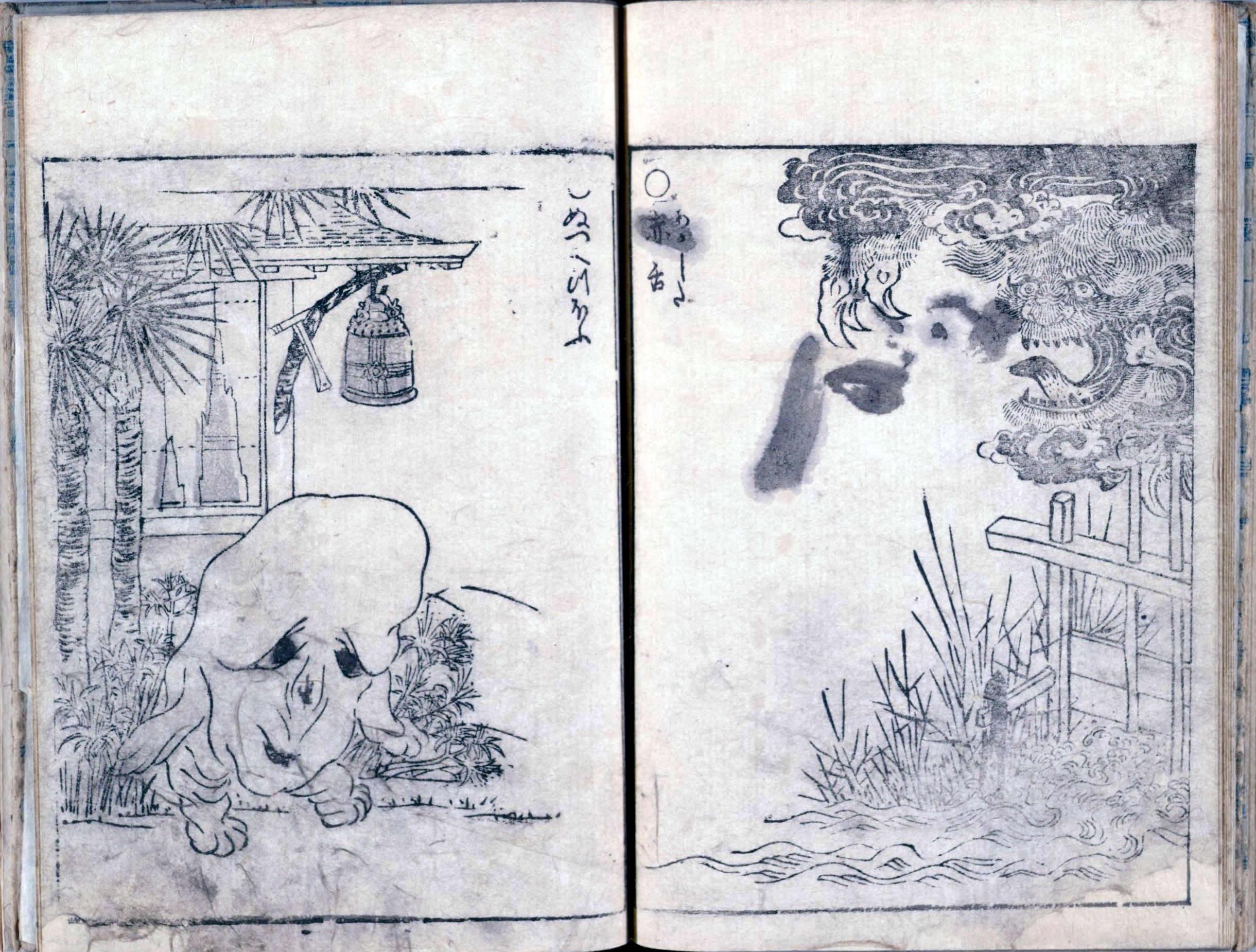
Sekien’s beings are powerful not only because of what they are, but because of how they emerge. Darkness, mist and suspension do much of the storytelling. The supernatural arrives as atmosphere before it arrives as plot.
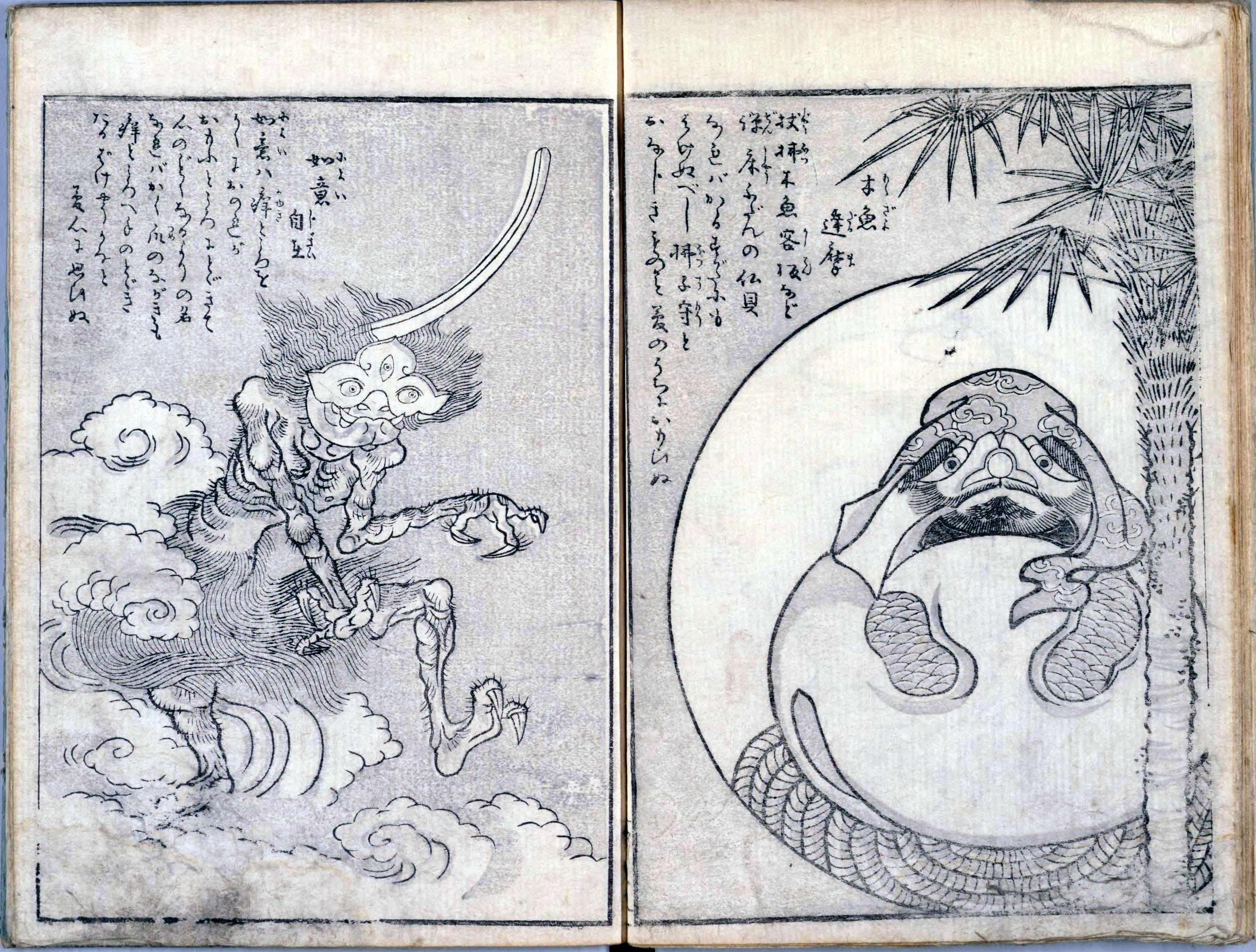
This image highlights the comic edge in Sekien’s grotesque. The creature is odd and unsettling, yet also readable as a personality. That blend helps explain why Sekien’s yokai still adapt so easily to later visual culture.
Why JAPAN.co.jp chose him for November 19
Toriyama Sekien is not merely historical; he is editorially useful. He offers JAPAN.co.jp a distinctively Japanese visual imagination that remains wildly fresh. His work can make a robotics story stranger without making it confusing, a lunar-communications story more mythical without making it inaccurate, and an AI infrastructure story more memorable without sacrificing clarity.
That is why he is such a strong art choice for the November 19 edition. Sekien gives us an eighteenth-century Japanese imagination that still feels almost surrealist today. His monsters are unsettling, absurd, elegant and funny. They are public-domain in origin, unmistakably Japanese in spirit, and rich enough to support a whole edition’s worth of inventive editorial illustration.
Primary sources and institutional references
This article relies chiefly on the National Diet Library, the Library of Congress / World Digital Library presentation of National Diet Library material, and the Smithsonian’s National Museum of Asian Art. No in-person object examination or curator interview was conducted.
- National Diet Library Authority Record: Toriyama Sekien
- National Diet Library Image Bank: The world of yokai through Toriyama Sekien’s monster picture-books
- National Diet Library Image Bank: Yokai drawn by Toriyama Sekien
- NDL Search: Hyakki yagyō / Hundred demons
- NDL Search: Konjaku zoku hyakki
- NDL Search: Konjaku hyakki shūi
- NDL Search: Hyakki tsurezure bukuro
- Library of Congress / World Digital Library: Nocturnal Procession of the Hundred Demons
- Smithsonian National Museum of Asian Art: Hyakki yagyō
- National Diet Library Monthly Bulletin, June 2025