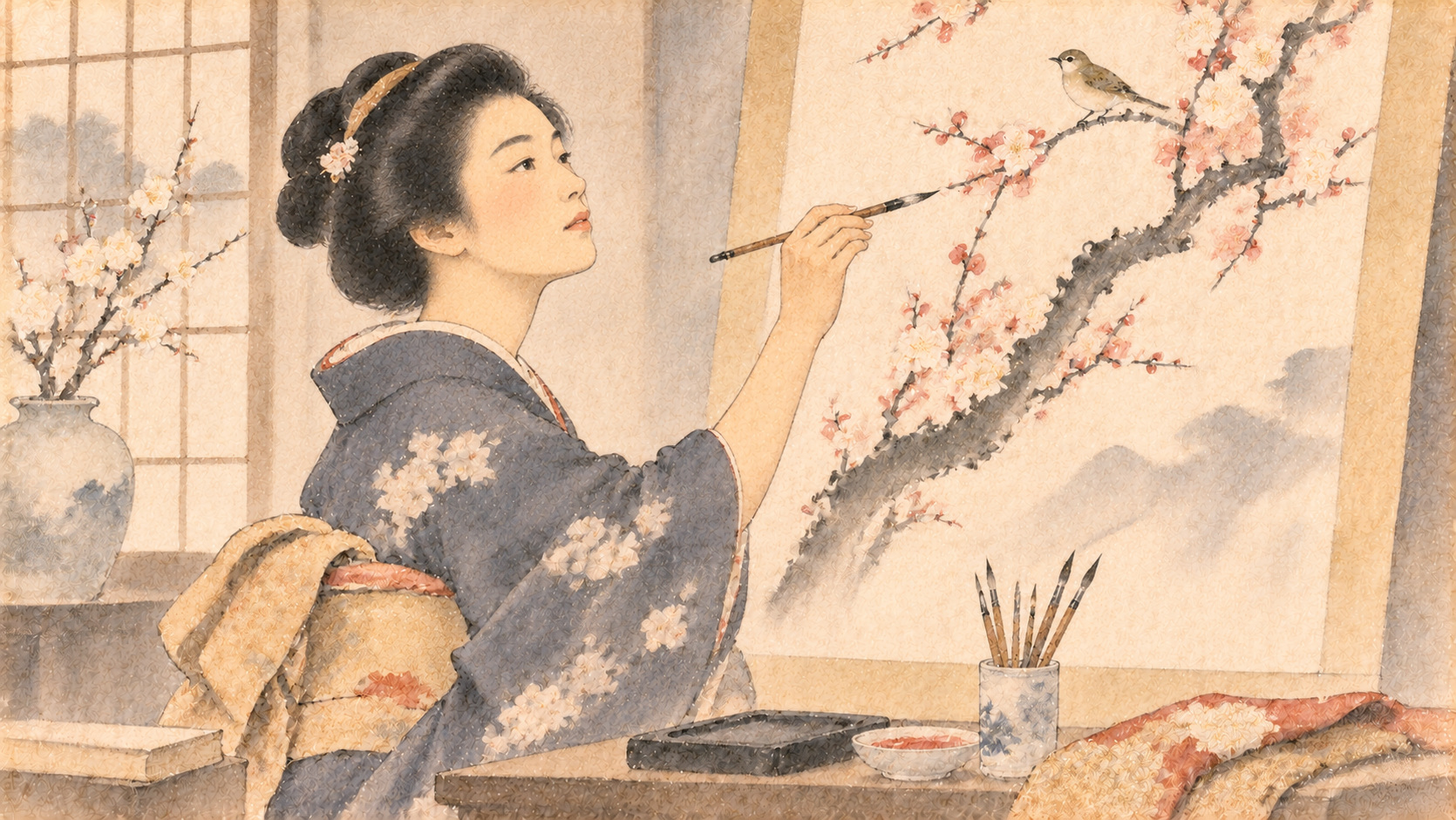
- A hidden treasure with imperial status
- From an Osaka medical household to a professional life in art
- Recognition in exhibitions, schools and the international arena
- What it meant to become the first female Imperial Household artist
- Why “delicate woman painter” is too small a frame
- Curated gallery: five JAPAN.co.jp images and the history behind them
- Why her fame narrowed after her death
- Why Noguchi Shōhin is the right Art Choice for November 21, 2026
A hidden treasure with imperial status
Noguchi Shōhin (1847–1917) is exactly the kind of figure who tests the gaps in collective memory. In specialist art history she is not obscure at all: she appears in museum collections, in exhibition scholarship and in reference works as a major woman painter of the Meiji era. But outside those circles, her name has largely receded. That fading matters because Shōhin was not a marginal artist during her lifetime. She became the first woman appointed Official Artist of the Imperial Household.
That distinction alone would justify renewed attention. Yet it is only the beginning. Her career reaches into the making of the modern Japanese art world: new exhibitions, art education for elite women, international expositions, imperial patronage and the possibility of a woman living by painting.
This JAPAN.co.jp Art Choice feature introduces Shōhin as both subject and lens. It also curates five companion images published on the site—each one a contemporary editorial interpretation designed to guide readers through the major visual worlds she inhabited: bird-and-flower painting, bamboo, literati landscape and figure painting.
From an Osaka medical household to a professional life in art
The National Diet Library records that Shōhin was born in Osaka as Noguchi Chika, daughter of the physician Matsumura Shuntai. She studied under the Kyoto literati painter Hine Taizan and was also trained in Chinese learning. Those two foundations—brush practice and classical literacy—were central to the Nanga tradition in which she matured.
The Asian Art Museum adds a crucial biographical dimension: after her father died, Shōhin painted to support herself and her mother. This is the point at which biography becomes social history. She was not simply a talented woman who happened to paint. She was a professional artist making economic life through her work in a period when women faced substantial barriers to such careers.
That fact gives her present-day appeal far beyond connoisseurship. Shōhin’s story belongs to the history of art, but it also belongs to the history of labor, family responsibility and female self-determination in modern Japan.
Recognition in exhibitions, schools and the international arena
Japanese biographical references and museum notes show Shōhin moving through the new public institutions of Meiji art. She exhibited in domestic competitions, won prizes, taught at the Kazoku Girls’ School and built a reputation that was both critical and official.
The Metropolitan Museum of Art notes that her work won recognition at the 1893 World’s Columbian Exposition in Chicago. That international appearance matters because it places her within the outward-facing narrative of modern Japanese culture—not only as a national painter, but as part of Japan’s self-presentation abroad.
Too often, women artists are remembered through the language of exception: exceptional for a woman, exceptional because she reached a male world. In Shōhin’s case the evidence suggests something stronger. She was operating inside the institutions that mattered and earning real authority within them.
What it meant to become the first female Imperial Household artist
Sources from the National Diet Library and Yamanashi Prefectural Museum of Art agree that Shōhin was appointed Official Artist of the Imperial Household in 1904. In modern Japan this was one of the highest forms of artistic recognition. It signaled not only prestige, but a relationship to court culture and to state-sponsored hierarchies of value.
The Museum of the Imperial Collections gives that status concrete form. Its entry for “Lanting Gathering” presents a major 1901 work purchased after exhibition and describes it as a key example from her mature period. The museum also identifies Shōhin as the first woman in the Imperial Household artist system.
Yamanashi’s museum further notes that she was later commissioned to paint screens for the ceremonies surrounding Emperor Taishō’s enthronement. This was not honorary symbolism. It was labor entrusted at the highest ceremonial level.
Why “delicate woman painter” is too small a frame
The most important corrective to Shōhin’s modern reputation may come from the Metropolitan Museum’s bamboo painting “Profound Refinement, Escaping the Dust of the World.” The museum explicitly pushes back against the lazy habit of calling her work simply delicate. The painting’s scale and brush power prove otherwise.
This matters because Shōhin worked in Nanga, or literati painting, a tradition that could easily be misread in modern terms as decorative, old-fashioned or mannered. In reality it was an intellectually charged idiom built on brush control, cultivated allusion and an ability to transform inherited Chinese models into modern Japanese expression.
Shōhin moved across landscape, bird-and-flower painting and figure painting with unusual breadth. Her accomplishment lies not only in doing many things, but in doing them without losing command. Grace and force, refinement and ambition, scholarship and visual pleasure all coexist in her art.
Curated gallery: five JAPAN.co.jp images and the history behind them
The following five images are curated as an interpretive gallery. They are not museum-object photographs. Instead, they are editorial images selected and described to help readers understand the themes, techniques and historical context most central to Shōhin’s career. When a closely related historical work can be identified with confidence, that connection is noted.
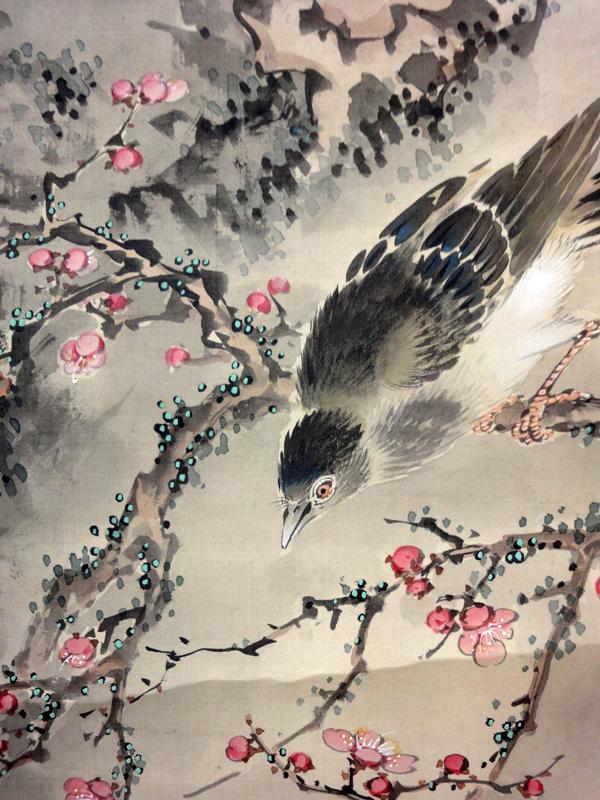
Birds and Pink Plum Blossoms
One of the most recognizable motifs in Noguchi Shōhin’s art is the pairing of plum blossoms and small birds. In East Asian painting, plum often signals resilience, refinement and the first stirring of spring. This JAPAN.co.jp image should be understood as a contemporary editorial interpretation shaped by Shōhin’s bird-and-flower manner and the spacious composition of literati painting—not as a documentary reproduction of a single verified museum object. Public records describe closely related plum-and-bird works, but this website image is best read as an interpretive homage rather than an exact facsimile.
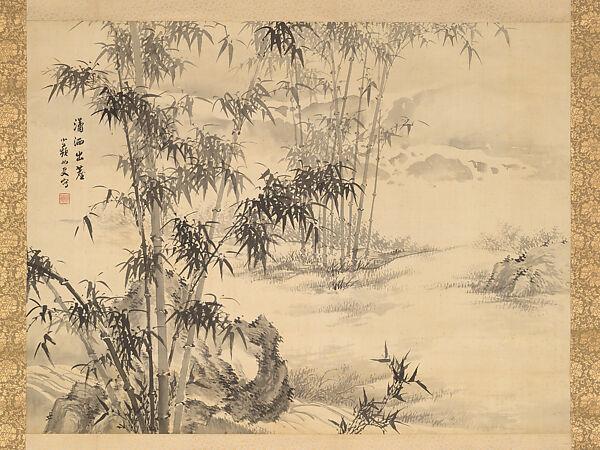
Bamboo Grove Ink Landscape
Bamboo is central to the literati tradition, where its flexibility and upright joints made it a symbol of integrity and cultivated self-discipline. The Metropolitan Museum’s “Profound Refinement, Escaping the Dust of the World” is crucial because it reveals how forceful Shōhin’s brushwork could be. This JAPAN.co.jp image draws on that rediscovered strength. It invites readers to move beyond the old habit of treating women painters as merely delicate and to recognize the scale, energy and authority that Shōhin could command.
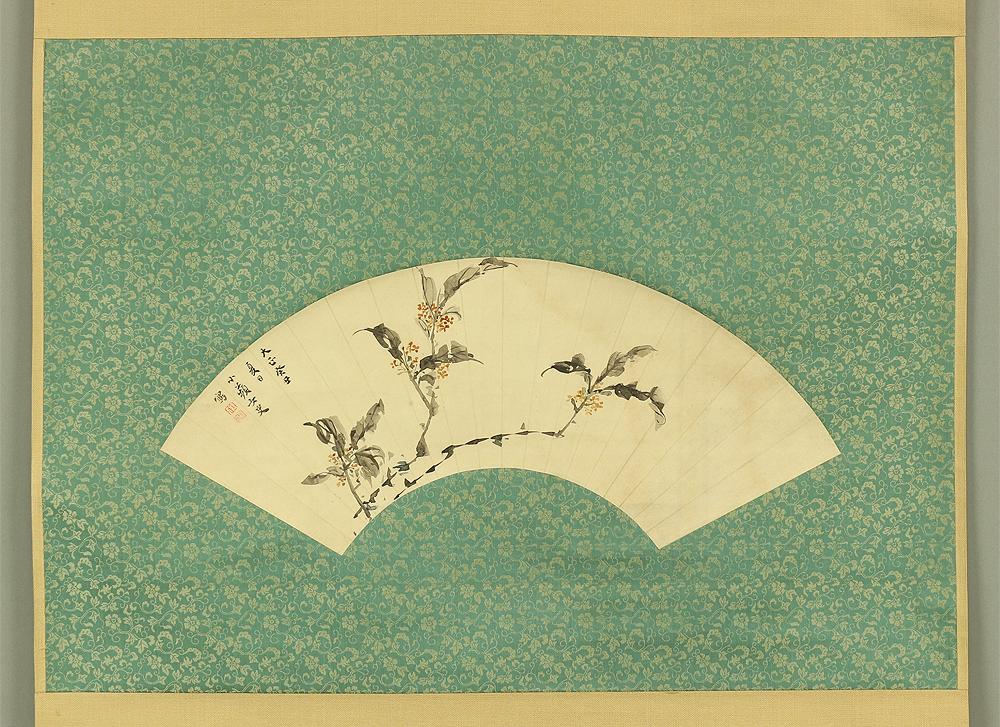
Flowering Branches Fan Painting
The fan is a deeply familiar pictorial format in Japan, while flowering branches belong to the core of Shōhin’s bird-and-flower vocabulary. This image was curated to show how decorative format and literati brushwork can meet. We have not verified a single historical prototype matching this website image, so it is presented here as an editorial composition conveying Shōhin’s floral sensibility and her ease with elegant surface design. It reminds readers that Nanga was not only about austere landscapes; it could also move through domestic beauty and refined objects.
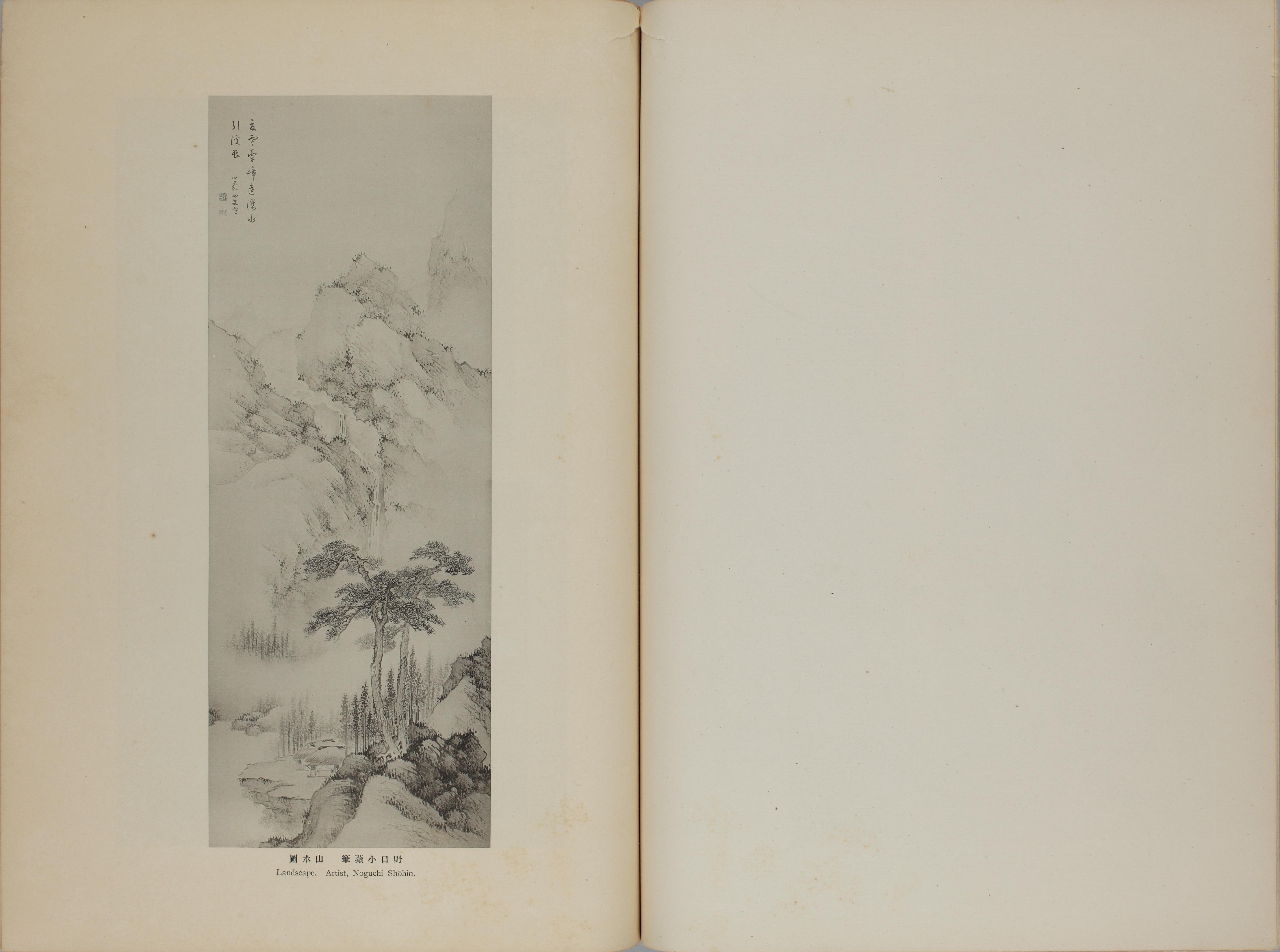
Mountain Waterfall Landscape
The Asian Art Museum’s “Summer Mountains, Clear Autumn Weather” shows that Shōhin remained a serious painter of literati landscape well into the twentieth century. Bridges, pavilions, waterfalls and distant peaks belonged to the imagined Chinese world that Japanese Nanga painters inherited and reworked. This curated image helps readers enter that tradition. The contrast between fine lines in the falling water and the mass of the rocks conveys the structural intelligence that makes Shōhin’s landscapes more than decorative scenery.
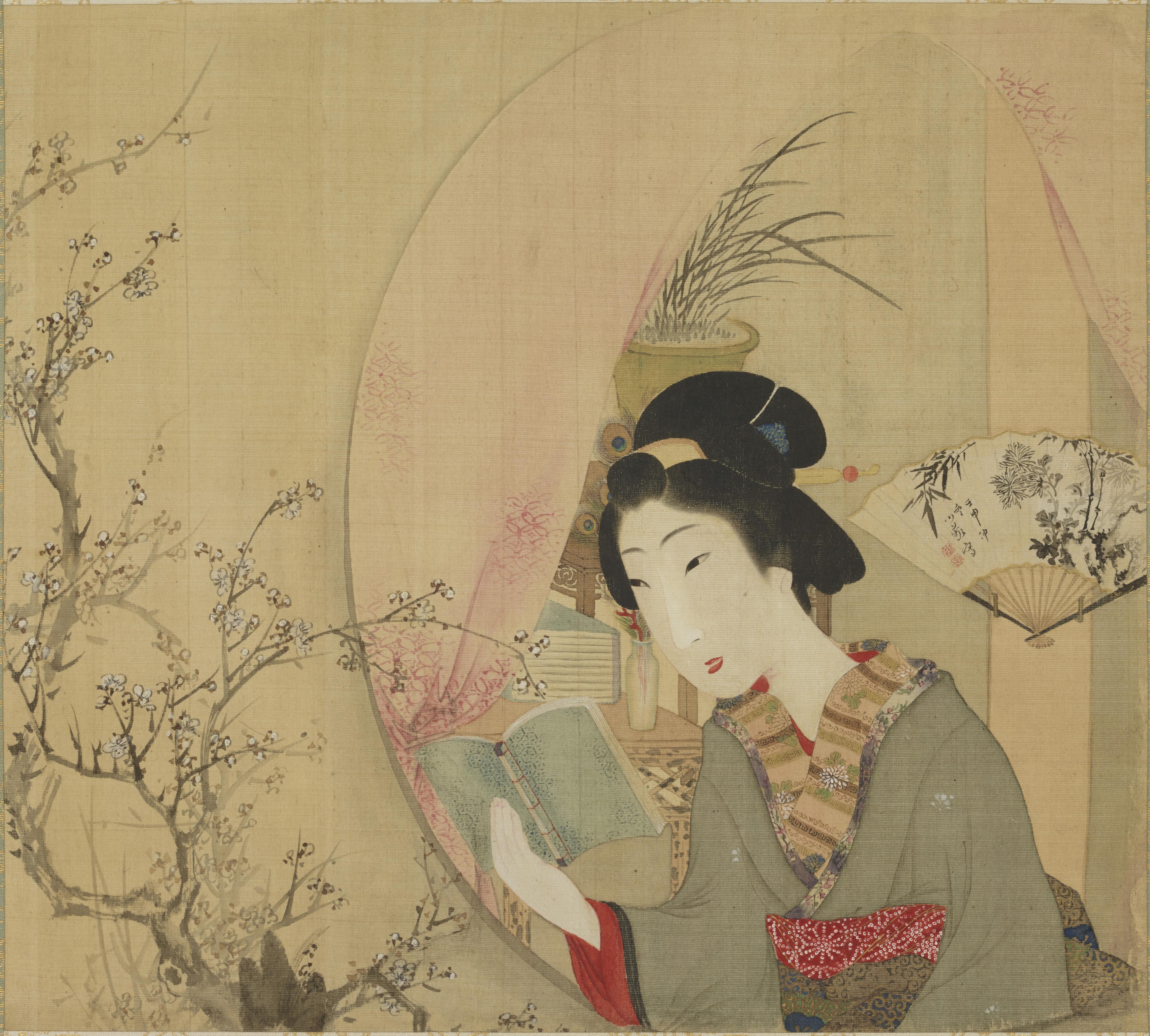
Woman Reading Among Plum Blossoms
Yamanashi Prefectural Museum of Art’s “Beauty with a Fan” is important because it reveals Shōhin’s command of figure painting as well as landscape and flora. Its books and writing table imply a woman connected to literacy and cultivated leisure. This JAPAN.co.jp image extends that idea into an editorial reinterpretation: a woman reading amid plum blossoms, joining intellectual life to seasonal elegance. It is also the most suggestive image for Shōhin’s own biography—a woman who made a profession out of painting, supported her family and eventually entered imperial circles.
Why her fame narrowed after her death
If Shōhin achieved so much, why does she remain under-recognized? Part of the answer lies in how modern art history has been written. Canon formation tends to simplify. It privileges a handful of towering names, decisive movements and easily summarized narratives. A woman painter who worked inside literati traditions, served the court, taught, exhibited internationally and crossed genres does not fit a neat box.
Another part of the answer is the unstable status of Nanga itself within narratives of modern Japanese art. Because it looked back to Chinese literati ideals even as Japan modernized, it has often occupied an awkward space between “classical” and “modern.” Shōhin’s work sits precisely in that productive tension.
But difficulty of classification should not be mistaken for secondary importance. If anything, it is what makes her so valuable now. She helps us see how incomplete the standard map of Meiji painting remains.
Why Noguchi Shōhin is the right Art Choice for November 21, 2026
Choosing Shōhin for JAPAN.co.jp’s Art Choice is more than a matter of introducing a little-known painter. It is a statement about the kind of cultural journalism the site wants to practice: rigorous, historically grounded and willing to recover artists whose significance has outlasted their fame.
She also gives readers a compelling visual world. Plum blossoms, birds, bamboo groves, mountain waterfalls and women associated with books or cultivated interiors are not generic “Japanese motifs” here. They are entry points into a life that joined professional labor, artistic ambition and public recognition.
A hidden treasure is not merely a forgotten name. It is someone whose rediscovery changes the story around her. Noguchi Shōhin does exactly that.
Primary sources and editorial notes
Dates, titles and institutional claims are drawn from museum and reference sources listed below. The five JAPAN.co.jp images are treated here as editorial interpretations inspired by Shōhin’s art. Where an exact historical prototype for a website image has not been verified, the article says so directly.
- National Diet Library portrait and biography: Noguchi Shōhin
- Yamanashi Prefectural Museum of Art: Beauty with a Fan
- Asian Art Museum: Summer Mountains, Clear Autumn Weather
- The Metropolitan Museum of Art: “Profound Refinement, Escaping the Dust of the World”
- Museum of the Imperial Collections: Lanting Gathering
- Art Platform Japan: Cold Moon Illuminating Plum Blossoms
- AWARE: Noguchi Shōhin
- Kotobank reference entry: Noguchi Shōhin