- Three Days, and the Hierarchy Is Already Under Pressure
- The Gold Star That Announced Fujiryoga
- Onosato: A Yokozuna Cannot Live on Reputation
- The Unexpected Unbeaten Group
- Tamawashi and the Meaning of Endurance
- A Historic Rank for Okinawa
- Injuries and Absences: What Is Known
- Reading the Banzuke and the Match
- Why Fukuoka Matters to Sumo
- What the November 13 Edition Can and Cannot Report
Three Days, and the Hierarchy Is Already Under Pressure
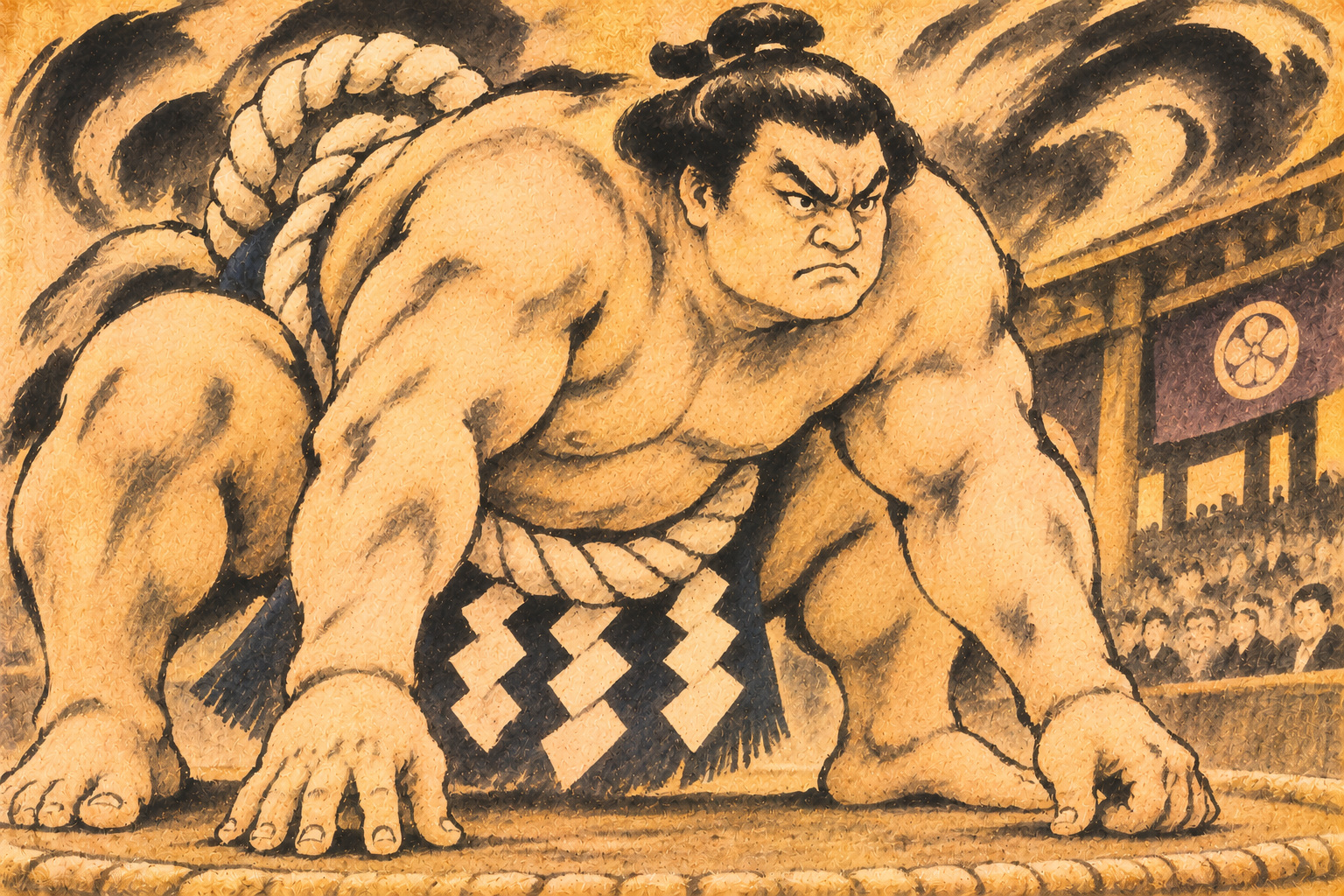
A sumo tournament is designed to be an examination of consistency, not a single-night spectacle. The November Grand Sumo Tournament opened in Fukuoka on November 8, and by the close of Day 3 on November 10 it had produced an early reminder that rank offers no immunity from surprise. Top-division newcomer Fujiryoga toppled yokozuna Hoshoryu; sekiwake Atamifuji was unbeaten; and September champion Onosato had recovered to 2–1 after losing on opening day. None of this establishes a champion. Twelve days of the 15-day event still remained when these results were recorded. But it makes the first week an unusually compelling study of how a centuries-old ranking system is tested every afternoon.
The Gold Star That Announced Fujiryoga
Fujiryoga Masaharu, a 23-year-old of Fujishima stable, entered the tournament ranked west maegashira No. 1 after an 8–7 September showing lower down the top division. His first three opponents illustrate the ordeal facing a rising contender: he beat ozeki Kotozakura, lost to yokozuna Onosato, then defeated yokozuna Hoshoryu by oshitaoshi, or frontal push-down, on November 10. That victory earned his first kinboshi—a “gold star” awarded when a rank-and-file maegashira defeats a yokozuna. It has historical and career meaning beyond the standings. The next challenge is not to relive the upset but to keep producing competitive sumo against highly ranked opponents.
Onosato: A Yokozuna Cannot Live on Reputation
Onosato Taiki won the September championship with a 12–3 record, according to his official profile. At Fukuoka, however, komusubi Yoshinofuji beat him on opening day. Wins over Fujiryoga on Day 2 and Asanoyama on Day 3 restored his record to 2–1. The questions are tactical as much as psychological: can he seize the initiative at the tachiai, control hand position, and prevent opponents from redirecting his momentum at the edge? A yokozuna carries expectations unlike those of an ordinary contender. His position is secure in rank, but each defeat will become a measure of whether his championship form has returned.
The Unexpected Unbeaten Group
Sekiwake Atamifuji moved to 3–0 by pushing out Daieisho on November 10. He was not the only unbeaten top-division wrestler. Kinbozan, Takanosho and newcomer Dewanoryu were also 3–0 after the third day. Such records should not be compared mechanically. Match strength, finishing technique, injuries and the evolving schedule all shape what three victories mean. For Dewanoryu, a newcomer to makuuchi, the experience is itself significant: the top division is where the daily pressure, media attention and quality of opposition change sharply. A good sports feature follows the process beneath the win column.
Tamawashi and the Meaning of Endurance
Age brings one of this tournament’s most powerful human stories. Tamawashi returned to the top division at 41 years and 11 months and, according to Japanese match reporting, celebrated his 1,500th makuuchi appearance by defeating Daiseizan on November 10. Long careers in sumo are not just a matter of holding a title. They require daily training, recovery and constant adjustments as younger rivals arrive. In an event that markets youth and new stars, Tamawashi shows another way to measure excellence: the ability to remain physically and tactically relevant over an extraordinary span of professional competition.
A Historic Rank for Okinawa
Mino-umi, newly promoted to komusubi, is the first Okinawa-born wrestler to enter the sanyaku ranks, according to the Japan Sumo Association. He reached that level at 33 years and five months, one of the oldest postwar first-time sanyaku promotions. His first victory in his new rank came on Day 3, when he threw sekiwake Fujinokawa with uwatenage, an overarm throw. The distinction deserves more than a celebratory statistic. It highlights a sporting path from the southern islands into the intensely hierarchical national system, where promotion requires accumulated performance rather than an individual tournament invitation.
Injuries and Absences: What Is Known
The Association’s November 10 absence notice reported that top-division Kotoeiho withdrew beginning on Day 3. It also listed second-division Hitoshi as absent from Day 2 and Shirokuma from the first day. An official withdrawal entry establishes the absence; it does not by itself supply a complete diagnosis or a reliable date of return. Injury rumors travel fast during the 15-day competition, particularly when a prominent wrestler is missing. Responsible coverage should keep the official kyujo notice separate from medical explanations that have not been confirmed by the wrestler, stable or Association.
Reading the Banzuke and the Match
Six official grand tournaments are held each year, each lasting 15 days. Makuuchi and juryo wrestlers generally compete once per day against changing opponents. Eight or more victories constitute a kachi-koshi, a winning record; a losing record can push a wrestler down the next ranking sheet, or banzuke. Yokozuna sits above ozeki, sekiwake, komusubi and the numbered maegashira. The outcome of a bout depends on whether a wrestler steps outside the ring or touches down with a part of the body other than the soles. Techniques differ: oshidashi is a frontal push-out, yorikiri a frontal force-out using a grip, and uwatenage an overarm throw. Knowing those terms turns a blur of impact into a readable contest.
Why Fukuoka Matters to Sumo
Modern professional sumo grew from early modern Japanese wrestling spectacles and fundraising exhibitions, evolving into a nationwide institution shaped by ceremonial forms, stable life, commercial broadcasting and local loyalties. The six-tournament calendar was established in the late 1950s; today three championships take place in Tokyo, and one each in Osaka, Nagoya and Fukuoka. The November meeting gives Kyushu a permanent annual place on the calendar. Fukuoka Kokusai Center offers a distinct atmosphere from Ryogoku’s Kokugikan, reminding spectators that this is not merely a Tokyo-centered sport traveling for novelty. Regional pride, ticket demand, local businesses and fans are all part of the tournament’s identity.
What the November 13 Edition Can and Cannot Report
November 13 is scheduled as Day 6. The Japan Sumo Association says the day’s match list should appear by 8 a.m., and provides an approximate 3:40 p.m. start for the makuuchi ring-entering ceremony. The match records cited here end on November 10. They must not be presented as the scores after November 11, 12 or 13. Before publication, editors should update the official results, new withdrawals, matchups and any notable injuries. The opening days have already shown how quickly a supposedly settled pecking order can change. What remains unknown is which wrestlers can make that early promise survive the grind of 15 afternoons.
Sources and verification notes
Scores are accurate to the end of November 10, Day 3, subject to the official live results and corrections when publication takes place.