A festival cannot survive as a museum exhibit
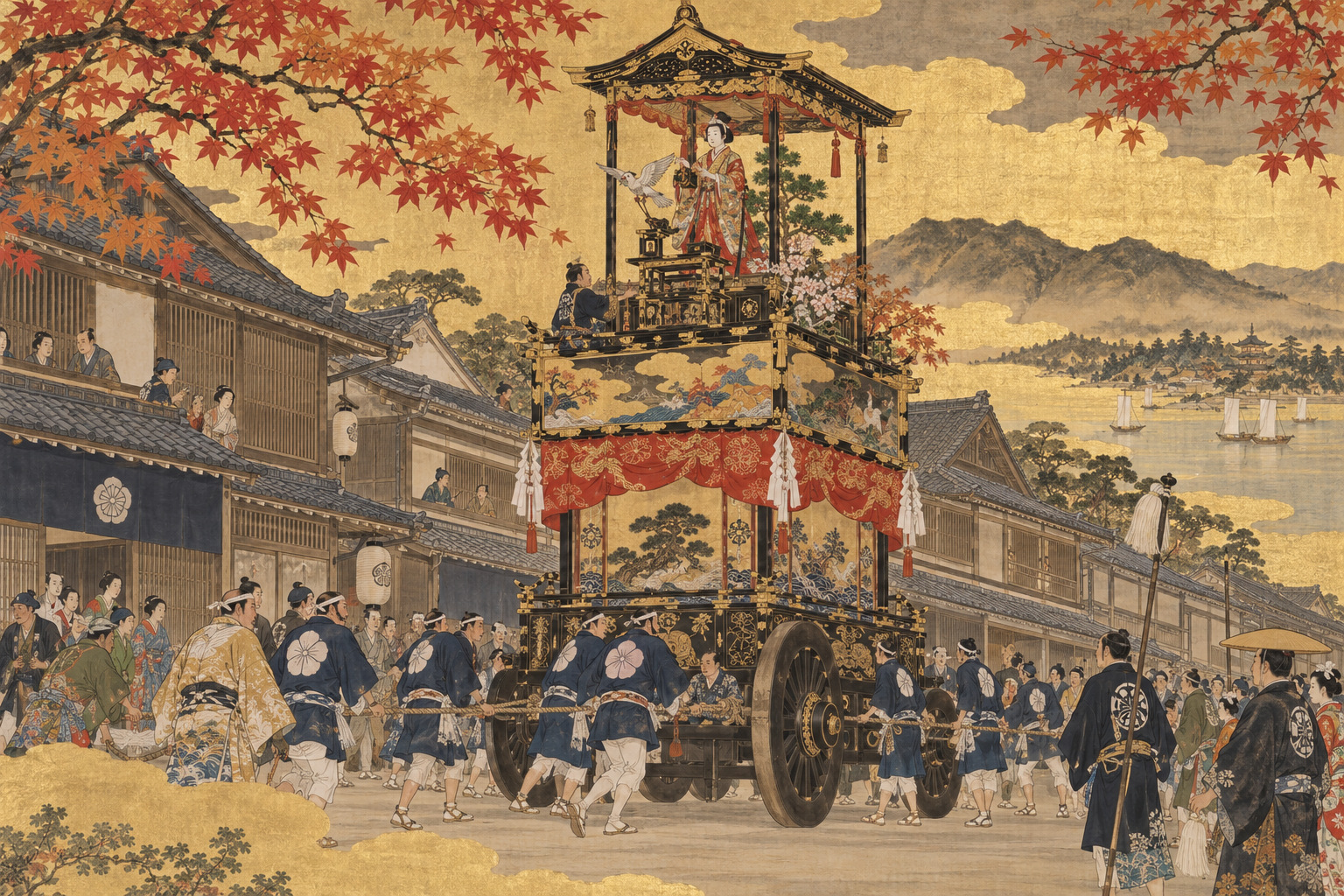
For a few autumn days, the streets of Otsu become a moving archive. Thirteen ornate floats carry mechanical puppets, musicians and decorations through a city on the southwestern shore of Lake Biwa. The moment a puppet moves may last seconds. The work that makes it possible occupies much of a year.
Otsu entered the 2026 festival season with a new international distinction: its float ritual was added in December 2025 to UNESCO’s existing inscription of Japan’s Yama, Hoko, Yatai float festivals. The first festival after that recognition was scheduled for October 10 and 11, 2026. The harder question is what recognition can do for the people who assemble, transport, repair and interpret a living ritual.
What UNESCO recognized—and what it did not
The inscription is often compressed into the phrase “UNESCO World Heritage,” but that would be inaccurate. This is intangible cultural heritage, not a new World Heritage Site, and not an entirely separate inscription created just for Otsu. Japan’s collective Yama, Hoko, Yatai inscription was expanded to include the Otsu Festival float ritual.
The distinction matters because the protected object is not merely an old carriage or a decorative puppet. The heritage exists in performance: setting up the floats, playing festival music, negotiating the city streets, operating puppets and passing routines through a neighborhood community. A preserved float behind glass would tell only part of that story.
The 2026 calendar and a critical caution
The Otsu Festival Float Federation, an incorporated nonprofit association, announced assembly on October 4, the eve-of-festival celebrations on October 10 and the main procession on October 11. It is the festival of Tenson Shrine, a nationally designated Important Intangible Folk Cultural Property, and one of Shiga’s best-known traditional festivals.
Some older subpages of the official festival site retain inconsistent years and weekdays. For the 2026 schedule, the current federation homepage, its calendar and the October 9 Shiga Prefecture report agree on the October 10–11 dates. This report does not invent a verified attendance total, first-hand eyewitness account or complete procession outcome where no reliable post-event accounting has been obtained.
From a merchant in a tanuki mask to thirteen floats
The most memorable origin story begins not with a patron or a government, but with a merchant who danced while wearing a raccoon-dog mask. Records preserved by the festival association attribute that beginning to a man named Shioya Jihei. What began as performance gradually acquired a mobile platform, puppetry and wheels. Historians treat the early accounts as a combination of documentary evidence and transmitted tradition.
The oldest of today’s floats, Saigyōzakura Tanukiyama, traces its founding to 1635. Shiga Prefecture’s history describes fourteen floats built between that date and 1776, of which thirteen remain. Otsu’s wealth as a Lake Biwa port and a stopping point on the Tōkaidō highway helped support the artisans, fabrics and elaborate performances of its urban merchant culture.
The small stage on a moving platform
Each float is a theatre as well as a vehicle. Its karakuri puppets perform scenes drawn from legends, classical literature and the Noh repertoire. The performance is called shōmon, a festival-specific reading explicitly clarified by the organizers. Floats stop at designated points so the audience can watch the mechanism and the story unfold.
The Saigyōzakura Tanukiyama puppet evokes the poet Saigyō debating a spirit emerging from a cherry blossom. The Shōjō float features a character of the same name from Noh drama; on the Seiōbo float, a peach reveals a child. These are miniature episodes of cultural memory. They are not demonstrations of autonomous artificial intelligence, even though they invite fascination with preindustrial mechanical ingenuity.
How knowledge lives in wood and hands
A puppeteer must know far more than when to pull a string. The weight and balance of moving figures, the condition of aged wood, the interaction of frames and fabric, and the rhythms of accompanying music all matter. The actual procedures differ between floats and should not be flattened into a single universal mechanism.
Repair history and exact current costs for each of the thirteen floats were not available in the primary materials reviewed. Rather than invent a repair bill or quote a craftsperson never interviewed, the practical reporting question is clear: who can diagnose wear, restore a part without erasing historical material and train the next person to operate it?
The surprising international story inside a Japanese festival
Otsu’s floats themselves document centuries of international circulation. Municipal heritage materials identify European Gobelin-style woven fabrics and Chinese textiles among their decorative furnishings. Imported artistry became part of a Japanese religious procession, demonstrating that cultural continuity has long involved exchange rather than isolation.
The lacquer, carvings, roof structures, embroidered hangings and painted surfaces each demand specialized conservation decisions. Public recognition may raise the profile of those skills, but it cannot automatically supply the people, funds and time needed to keep them in use.
A citywide network behind the spectacle
The nonprofit Otsu Festival Float Federation has organizational roots dating to 2004 in its present legal form. It coordinates a festival supported by neighborhood associations, musicians, guides and volunteers. Its Nagara-shū supporters include graduates of the Otsu Machinaka University festival program, who assist with interpretation and operations.
The federation lists practical contributions including float pulling, crowd guidance, cleaning and safety work. These are not secondary to the puppets. Each is part of what makes a crowded urban procession possible. Whether UNESCO recognition has changed sponsorship, volunteer recruitment or local participation in measurable ways is not yet documented in the public evidence reviewed.
The tension between visitors and continuity
A successful cultural festival can attract visitors, businesses and attention far beyond its host neighborhoods. That creates opportunities for local commerce and heritage education. It can also demand additional safety staffing, traffic management, wear protection and communication with residents. Those trade-offs are particularly important when historic floats move through working streets.
It would be premature to claim that Otsu’s new UNESCO status has already solved shrinking volunteer pools, increased tourism spending by a specified amount or funded particular restorations. Those claims need association accounts, city data and interviews. The value of this story lies in identifying the questions before celebratory language overwhelms them.
A tradition with a different meaning of innovation
Contemporary Japan is often identified with robotics. Otsu offers an older and equally instructive picture of invention: a crafted mechanism that only comes fully alive in a social performance. The ingenuity belongs to the woodworker, operator, musician, designer and community that sustain its purpose.
For engineers and artists, the karakuri are fascinating mechanisms. For residents, they are also part of worship, neighborhood identity and shared responsibility. Neither dimension should be ignored. A festival that is treated only as machinery would lose its spiritual and theatrical context; one treated only as picturesque scenery would obscure the ingenuity embedded in its construction.
What preserving the next four centuries requires
The floats are assembled, displayed, moved and then disassembled for storage. This annual cycle is a form of active preservation. It gives opportunities to inspect structures and transmit skills, but it also exposes materials and people to the practical pressures of a public event.
The next measures of success should go beyond whether the procession draws impressive crowds: are more residents learning the craft? Can each neighborhood sustain a safe operating team? Are vulnerable objects documented and repaired responsibly? Can younger people find meaningful ways into the tradition? These are proposals for accountability, not outcomes already measured for 2026.
The moment after the festival
When the lanterns go out, a float returns to storage. In the silence, its carved details and puppets become objects once more. They will be brought back to life only if somebody knows how to put them together—and somebody else wants to learn.
That is why the first Otsu Festival after UNESCO recognition deserves more than a postcard-style account of beautiful floats. Its future will be decided as much in workshops, neighborhood meetings and lessons as on the celebrated autumn streets. The real achievement would be ensuring that the people of Otsu can make the festival happen again, generation after generation.
Sources and reporting notes
- 大津市「大津祭について」 / Otsu City: About the Otsu Festival
- 滋賀県「ユネスコ無形文化遺産登録後初催行」2026年10月9日 / Shiga Prefecture, Oct. 9, 2026
- 滋賀県「ユネスコ無形文化遺産に登録」2025年12月12日 / UNESCO recognition
- 大津祭曳山連盟「2026年の祭礼日程」 / Festival association, 2026 schedule
- 大津祭曳山連盟「大津祭の歴史」 / Historical documentation
- 大津祭曳山連盟「からくり」 / Karakuri documentation
- 大津祭曳山連盟「13基の曳山」 / 13 floats
- 大津祭曳山連盟「活動・長柄衆」 / Volunteers and organization
- 大津市「広報おおつ」2026年2月1日号 / Otsu City cultural history
Source review: October 12, 2026 (JST). No unverified festival attendance, repair expenditure, or organizer quotation is presented as fact.